A map game that shows where our favorite foods came from
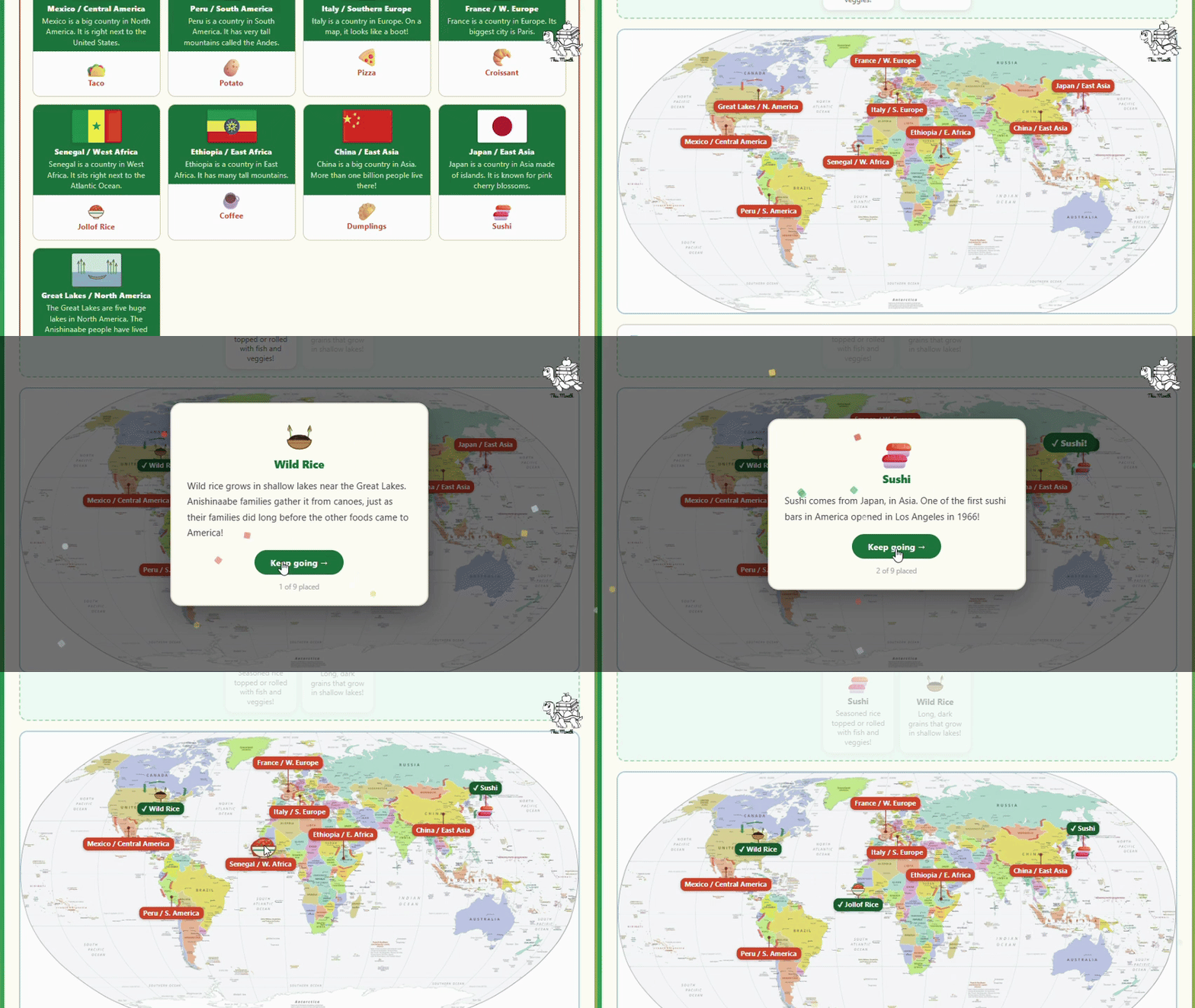
Taste Travels turns a world map into a food history lesson. Students meet a food, learn where it comes from, and drag it onto the map at its point of origin. A correct placement opens a fact card and adds the food to a running timeline of when it reached America, and the round closes with a Timeline Challenge. This instant lesson gives teachers and families everything they need, with a level for Grades K-1, 2-3, 4-5, and Middle School and up.
How Taste Travels works
Students preview each food on a study screen, then place it on the map by dragging, by tapping the card and then tapping a region, or by selecting it with the keyboard and pressing Enter. A wrong drop offers a hint rather than a penalty. At Grades K-1 the map works at the continent level with six foods, one per continent. At Grades 2-3 students place nine foods at country level with a hint on every food. At Grades 4-5 all fifteen foods are in play with the regions labeled, and at Middle School and up the labels stay hidden until a food is placed correctly.
Fifteen foods, three centuries of arrivals
The timeline runs from coffee in the 1660s to jollof rice in the 1990s, and the routes differ. Some foods came with immigrant families, others through trade, colonization, or farming. Wild rice is the exception that anchors the whole set, because it never arrived at all. Anishinaabe people have harvested it in the Great Lakes for generations.
Standards and learning goals
The lesson aligns the game to Georgia, North Carolina, New Jersey, New York, Michigan, and Common Core standards for locating places on a map, sequencing events on a timeline, and explaining why people migrate. It also includes vocabulary cards, discussion question flip cards with teacher notes, and extension activities for every band. Please check the alignments against your own state or district standards. You can read more in the Common Core State Standards and the Georgia Standards of Excellence.