ARTEMIS II IS ON ITS WAY!
Yesterday morning, four astronauts lifted off and began humanity’s first journey beyond low Earth orbit in over 50 years.
🚀 Yesterday, something AMAZING happened! A giant rocket blasted off from Florida, and four brave astronauts are now flying through space! They are heading all the way around the Moon and coming back to Earth. Nobody has been this far from home in over 50 years! The rocket is called SLS and the spaceship is called Orion. Everything went perfectly! 🌟
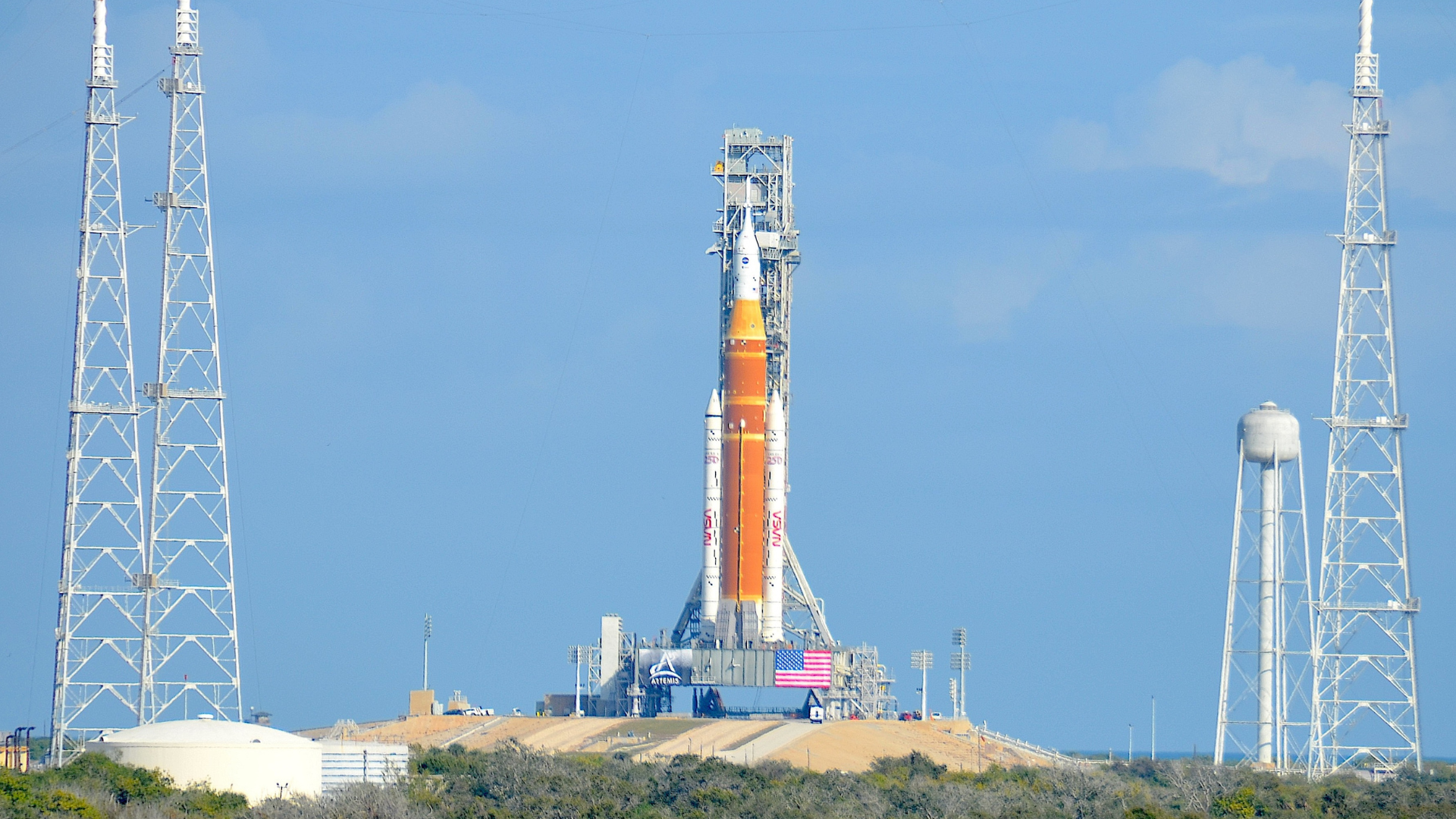
On the morning of April 1, 2026, NASA’s Artemis II mission lifted off from Kennedy Space Center in Florida — and everything went exactly as planned. Four astronauts are now aboard the Orion spacecraft, launched on top of the most powerful rocket NASA has ever built: the Space Launch System (SLS). Their 10-day mission will take them on a looping path around the Moon’s far side — farther from Earth than any humans have traveled since Apollo 17 in 1972. This is not a Moon landing — it’s a critical test flight. But it is already historic.
At liftoff on April 1, 2026, NASA’s Space Launch System Block 1 rocket carried the Orion Multi-Purpose Crew Vehicle off LC-39B at Kennedy Space Center — executing a nominal ascent trajectory and placing the crew in orbit to begin the 42-hour systems checkout phase. The mission marks humanity’s first crewed voyage beyond low Earth orbit since Apollo 17 in December 1972. Artemis II does not include a lunar landing; it follows a crewed hybrid free-return trajectory, looping around the lunar far side at approximately 4,000 nautical miles altitude before natural gravitational forces curve Orion back toward Earth for Pacific splashdown. The primary mission objective is deep-space systems verification with crew aboard — validating all human-rated hardware before Artemis III attempts a landing, currently targeted for 2028.
“The rocket worked perfectly. Now the astronauts are really in space — going farther than almost anyone before them!”
“Lift off was nominal. The crew is healthy and Orion is performing exactly as designed. This is what we trained for.”
“All vehicle performance data through Trans-Lunar Injection is nominal. Orion is on the free-return trajectory. The crew is healthy and the mission is go.”
— NASA MISSION CONTROL, APRIL 1, 2026 (REPRESENTATIVE STATEMENT)We made a special space simulator just for you! See how the spaceship goes around the Moon! Works on your school’s smartboard, on a laptop, or on your phone or tablet! 🚀
We built an interactive Artemis II Mission Simulator that lets you explore the real trajectory, fire the engines at the right moments, and see what happens at each mission phase — just like NASA Mission Control! Try it on a smartboard, laptop, or your phone.
We built an interactive Artemis II Physics Simulator that models the actual free-return trajectory. Explore all 14 mission phases, visualize the gravitational mechanics, and see real mission data — optimized for smartboards, laptops, and mobile devices.
These four amazing astronauts launched yesterday and are flying through space RIGHT NOW! 🌟
As of this morning, these four astronauts are in orbit, checking all of Orion’s systems before heading to the Moon. Each one is making history in a unique way!
Currently in the 42-hour Earth orbit systems checkout phase, this crew represents landmark milestones in human spaceflight. Each member breaks a barrier that has stood since the Apollo program ended in 1972.
The rocket launched yesterday! Here is what is happening next 🚀🌕🌊
Launch went perfectly on April 1st. Here are all the big steps, starting from where the crew is right now:
Launch was nominal April 1st. The mission is currently in the Earth orbit checkout phase. All 14 defined phases of the crewed hybrid free-return profile:
If they’re going ALL the way to the Moon, why don’t they land? 🤔
Think of learning to ride a bike! First you practice. THEN you try the hard part. Artemis II is the “practice run” — testing the spaceship to make sure everything works perfectly with real astronauts inside. Then future astronauts can safely land! The landing mission is called Artemis III — planned for 2028! 🌕
Artemis II is a test flight with people aboard. NASA needs to be certain that Orion works perfectly with real astronauts inside before risking a Moon landing. Think of it like a test pilot testing a new airplane before it carries passengers.
A Moon landing also requires extra equipment — a separate lunar lander and more fuel. Artemis II proves all the critical systems work first. Artemis III, planned for 2028, will be the actual landing!
The flyby-before-landing sequence mirrors the Apollo program: Apollo 8 orbited the Moon before Apollo 11 landed. Artemis II validates the human-rated systems required for landing missions, specifically: the Environmental Control & Life Support System (ECLSS) in the deep-space radiation environment beyond the Van Allen Belts; heat shield performance at lunar-return velocities; manual handling qualities of Orion’s propulsion; and deep-space communications. Artemis III (targeting 2028) adds SpaceX Starship as the Human Landing System (HLS). Without Artemis II verification data, landing mission risk remains unacceptably high.
People went to the Moon before — a long, LONG time ago! It was called the Apollo program. Now NASA is going back with Artemis — named after Apollo’s twin sister in ancient myths! 🌟
Understanding the Apollo program shows why yesterday’s launch — and this whole mission — is such a historic moment:
You can see where the spaceship is RIGHT NOW on a special NASA website! Ask a grown-up to help. You can see how far the astronauts are from Earth and the Moon — and we also have our very own space simulator you can try! 🗺️🌍🌕
NASA has a free tool called AROW (Artemis Real-time Orbit Website) that shows exactly where Orion and the crew are at any moment — their distance from Earth, distance from the Moon, and their path through space. All live, all free! We also built our own interactive simulator (works on smartboards, laptops, and phones) so you can explore the mission yourself.
NASA’s AROW (Artemis Real-time Orbit Website) provides live telemetry from sensors aboard Orion — transmitted to Mission Control at Johnson Space Center and shared publicly. State vectors and ephemeris data are available for students to build tracking projects, physics models, or data visualizations. We’ve also published our own Physics Simulator (compatible with smartboards, laptops, and mobile) that models the free-return trajectory and all 14 mission phases.
📱 Also in the NASA app with augmented reality — point your phone at the sky to see where Orion is relative to your location!
Our simulator lets you explore the spaceship’s whole trip — from launch to splashdown! Try it on the smartboard at school or on any device at home! 🌙
Our interactive simulator shows all 14 steps of the Artemis II mission. See the free-return trajectory, fire the engines, and follow along with the real mission — all from your classroom smartboard, laptop, or phone.
Our Physics Simulator models the Artemis II crewed hybrid free-return trajectory. Explore all 14 mission phases with real physics, interactive trajectory visualization, and mission data — built for classroom smartboards and optimized for mobile.
This trip matters because 🌟 it shows ALL kids that anyone can be an astronaut! Scientists will learn how to keep future astronauts safe. And it’s the first step toward going back to the Moon — and someday even to Mars! 🔴
Artemis II is important for several big reasons. For the first time since 1972, humans are traveling beyond low Earth orbit. A woman, a person of color, and a Canadian astronaut are each going farther than any person from their group has gone before. The data gathered makes future Moon landings safer. And one day, what NASA learns from Artemis will help send people all the way to Mars!
Artemis II carries significance across multiple dimensions. Scientifically: it validates beyond-LEO human spaceflight systems dormant since Apollo 17. Socially: the crew breaks barriers standing for 50+ years. Strategically: it builds toward the Artemis III lunar landing (2028), the Lunar Gateway station, and eventual crewed Mars missions in the 2030s–2040s. Internationally: CSA astronaut Hansen represents growing allied space partnerships — Canada’s Gateway contributions earned this flight opportunity. The mission also demonstrates NASA’s commitment to open public science through real-time data sharing via AROW.
🖍️ Draw the Moon Trip — While It’s Happening!
- Draw a big circle in the middle — that’s Earth! 🌍
- Draw a smaller circle to the right — that’s the Moon! 🌕
- Draw a tiny rocket orbiting Earth right now — that’s Orion! 🚀
- Draw an arrow that goes all the way around the Moon and curves back to Earth — that’s the free-return path!
- Draw 4 stick figures inside the rocket — one for each astronaut who is up there RIGHT NOW!
- Color your drawing and label Earth, the Moon, and Orion! ✨
🗣️ Talk about it: The astronauts launched yesterday! How do you think they felt seeing Earth from space for the first time? What would YOU bring on a 10-day space trip?
🗺️ Mission Mapping & Live Research
- On paper, draw Earth on the left and the Moon on the right. Draw the mission path as a numbered loop — and mark Step 1 as already done!
- Visit nasa.gov/trackartemis with a grown-up. Write down how far Orion is from Earth today. Check again tomorrow — did it change?
- Try the This Month™ Artemis II Simulator on your smartboard or tablet. What mission step are the astronauts on right now?
- Research the “Earthrise” photo from Apollo 8 (1968). Write 2 sentences about it — and compare it to what the Artemis II crew might see.
- Write 3 sentences about why it matters that Victor Glover, Christina Koch, and Jeremy Hansen are each making history on this mission.
🔭 Live Mission Analysis Project (Chromebook / Smartboard Ready)
- Track It Live: Visit nasa.gov/trackartemis daily during the 10-day mission. Record Orion’s distance from Earth each day and create a line graph. On which day does the distance increase most sharply?
- Simulator Mission: Launch the This Month™ Artemis II Physics Simulator on a smartboard or laptop. Identify the moment of Trans-Lunar Injection — how does the trajectory change? How does that connect to Newton’s First Law?
- Speed Math: Orion travels approximately 590,000 miles round trip in 10 days. Calculate the average speed in miles per hour. Compare: how many times faster is that than a commercial airplane (~575 mph)?
- Apollo 13 vs. Artemis II: Both used free-return trajectories — one by accident, one by design. Research Apollo 13. Write a paragraph explaining how Artemis II’s design builds on lessons from that mission.
- Standards Connection: How does this mission connect to SS5H6.d — the space program’s impact on American history and society? Write a paragraph tying the two together.
This Instant News piece connects to the following Georgia Standards of Excellence:
Social Studies: SS5H6.d — Describe the impact of the space program on American society, including the Apollo program and its legacy.
ELA — Informational Text: Asking and answering questions about key details; describing connections between events; integrating information from multiple sources; research writing (grades 4–5).
Computer Science: Computational thinking; data collection, analysis, and visualization via the AROW live-data project and the Artemis II Physics Simulator (grades 3–5).
Note: Georgia Science GSE alignment pending receipt of the Science standards CSV file.