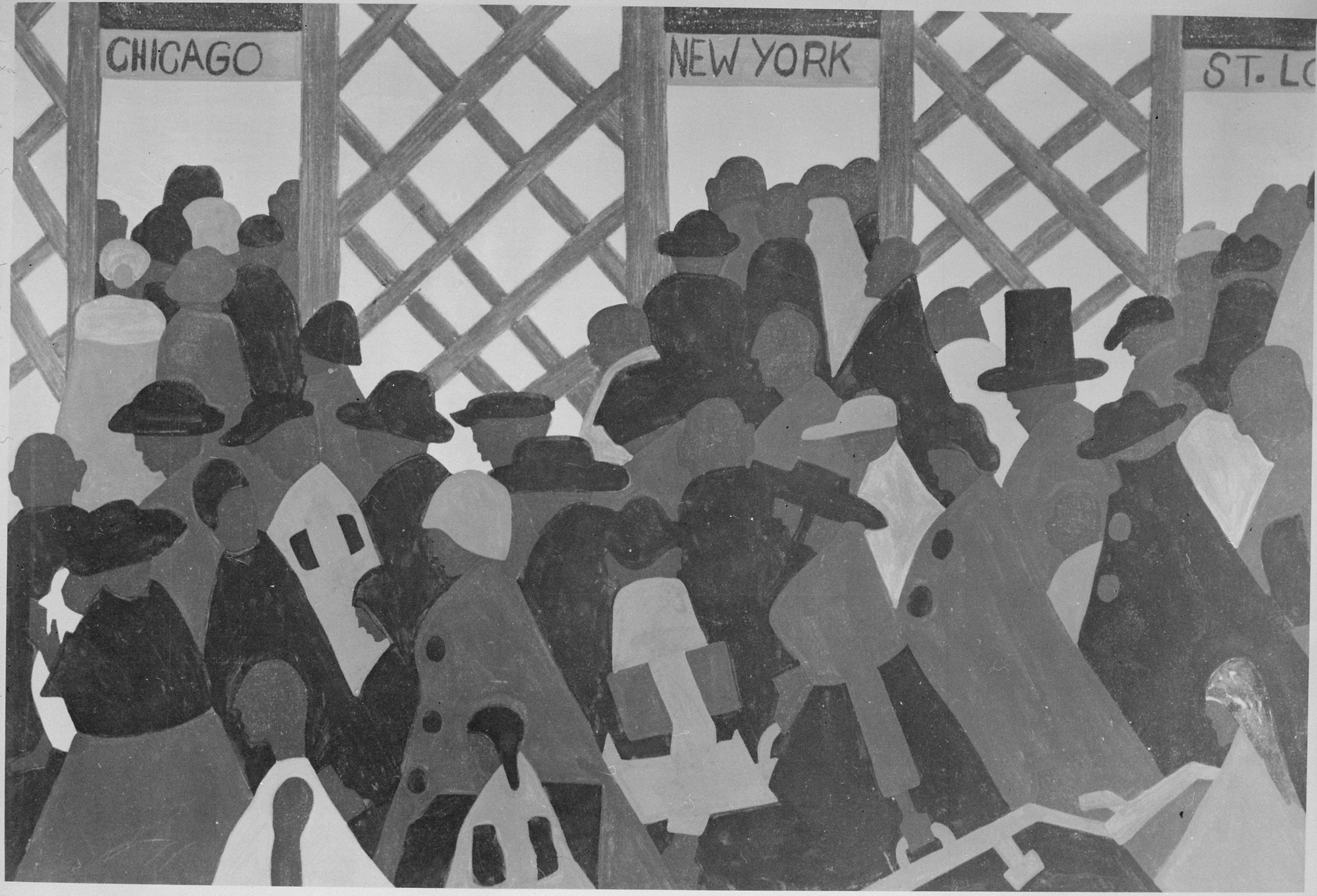
Teacher’s Guide to the Great Migration
The Great Migration was one of the most important events in American history. Between the 1910s and 1970s, more than 6 million African Americans left the South and moved to cities in the North, Midwest, and West.
Quick Facts:
- Time Period: Approximately 1910-1970 (with major waves in 1910s-1920s and 1940s-1970s)
- How Many People: More than 6 million African Americans
- From Where: Southern states (especially Mississippi, Alabama, Georgia, South Carolina, Louisiana)
- To Where: Northern and Western cities (Detroit, Chicago, New York, Philadelphia, Los Angeles, Oakland)
- Why: Seeking freedom from Jim Crow laws, better jobs, safety, and economic opportunity
Teaching Context: This wasn’t just about finding jobs—it was about seeking true freedom. African Americans wanted full political and economic citizenship, things they had been denied in the Jim Crow South.
Common Misconception to Address:
The Great Migration is often taught as a story of African Americans seeking factory jobs. While that’s part of the truth, many migrants were also seeking business opportunities and the chance to work for themselves. This guide will help you tell that fuller, more complete story.
Life Under Jim Crow
After the Civil War and Reconstruction, Southern states created laws called “Jim Crow laws” that enforced racial segregation and denied African Americans basic rights.
What Jim Crow Meant:
- Segregation: Separate (and unequal) schools, restaurants, water fountains, buses, and more
- Voting Restrictions: Poll taxes, literacy tests, and violence prevented Black people from voting
- Economic Limitations: Difficulty owning land or starting successful businesses
- Violence: Lynchings and racial terrorism threatened anyone who challenged the system
The Threat of Racial Violence
Many Black entrepreneurs decided to leave the South after experiencing or witnessing racial violence. Some examples:
- The Tulsa Race Massacre (1921): White mobs destroyed “Black Wall Street,” a thriving African American business district
- Daily Threats: Successful Black business owners faced constant harassment and threats
- Personal Stories: Berry Gordy Sr. (who would later found Motown Records with his son) left Georgia for Detroit after white neighbors threatened him over a large business payment he received
Push and Pull Factors
“Push” Factors (Reasons to Leave):
- Jim Crow laws and segregation
- Lack of economic opportunity
- Threat of racial violence
- Difficulty owning land or businesses
- Poor schools for Black children
“Pull” Factors (Reasons to Move North/West):
- Factory jobs with better wages (especially during World War I and II)
- Business opportunities
- Ability to vote
- Better schools
- Freedom from Jim Crow laws
- Growing Black communities and cultural centers
Detroit became one of the most important destinations for African Americans during the Great Migration. The city’s Black population grew dramatically:
Detroit’s Growth:
- 1910: About 5,700 African Americans lived in Detroit
- 1920: 40,838 African Americans (611% increase!)
- 1925: 85,000 African Americans
- 1950: 300,000 African Americans
By 1926, 85% of Detroit’s Black population were migrants from the South.
Why Detroit?
People were attracted to Detroit for several reasons:
- Auto Industry Jobs: Henry Ford’s famous $5-a-day wage (introduced in 1914) attracted workers from across the country
- Manufacturing Boom: World War I and II created demand for factory workers
- Business Opportunities: Growing Black population created demand for Black-owned businesses
- Word of Mouth: Early migrants wrote letters home telling family and friends about opportunities
The flourishing Black business district in Detroit, Michigan, photographed in 1942. (Arthur S. Siegel via the Library of Congress, CC BY-ND)
The Untold Story
While many history books focus on factory workers, Black entrepreneurs were essential to the Great Migration. These business owners:
- Provided essential services to newly arrived migrants
- Created jobs in the Black community
- Built wealth and economic independence
- Made Detroit a more welcoming place for Southern migrants
As historian Carter G. Woodson wrote in 1918:
“In most parts of the South the Negroes are still unable to become landowners or successful business men. Conditions and customs have reserved these spheres for the whites.”
This lack of opportunity drove many aspiring entrepreneurs to move North.
Real Examples: Migrant Entrepreneurs in Detroit
Willis Eugene Smith – Funeral Home Owner
From: The South
Business: Established a funeral home in Detroit
Why He Left: Danger of racial violence in the South
Impact: Provided dignified funeral services to the Black community
Berry Gordy Sr. – Entrepreneur & Father of Motown
From: Georgia
Businesses: Grocery store and contracting business in Detroit
Why He Left: In his 1979 memoir “Movin’ Up: Pop Gordy Tells His Story,” Gordy explained that white neighbors began threatening him after he received a large business payment. His sister warned: “You fool ’round here, they’re liable to beat us out of it, take all our money.”
Impact: Built successful businesses and raised the family that would create Motown Records, one of the most important music labels in American history
Creole Hand Laundry
From: New Orleans, Louisiana
Business: Laundry service at 542 Watson Street
Marketing: Their 1933 advertisement proudly stated “From New Orleans, La.”—letting customers know they brought Southern expertise
Impact: Served the needs of Southern migrants who appreciated their style and quality
Home Milling Company
Established: Around 1922
Business: Processed hominy grits, cornmeal, and whole wheat flour
Special Service: Made cornmeal from white corn instead of yellow corn because “Southern Negroes do not relish meal made from yellow corn”
Impact: Provided familiar foods that reminded migrants of home
Fred and Callie Allen – Supreme Linen and Laundry
From: Mississippi
Business: Founded in 1929, supplied uniforms, tablecloths, and napkins to Black-owned restaurants and hotels
Impact: By 1936, employed at least 41 Black workers and supported the growing restaurant and hotel industry in Detroit’s Black neighborhoods
Why These Businesses Mattered
Black-owned businesses weren’t just about making money—they were essential to making migration possible:
- Places to Stay: Boarding houses gave travelers a safe place to rest
- Familiar Foods: Restaurants and grocery stores sold Southern foods migrants missed
- Personal Services: Barbershops, hair salons, and laundries served the community
- Community Centers: These businesses became gathering places where people shared information and built networks
- Economic Independence: Business ownership allowed families to build wealth outside of white-controlled industries
A Thriving Community
By the 1940s, Detroit had earned a reputation for having more Black-owned businesses than any other city in the United States. Most of these businesses were concentrated in two adjoining neighborhoods:
Black Bottom
A residential and commercial neighborhood that got its name from the rich, dark soil in the area. Despite the name’s origins, it became one of Detroit’s most important Black communities.
Paradise Valley
The entertainment district featuring:
- Jazz clubs and music venues
- Restaurants and cafés
- Theaters and dance halls
- Hotels and businesses
Famous musicians like Duke Ellington, Billie Holiday, and Ella Fitzgerald performed in Paradise Valley’s clubs.
The Detroit Housewives’ League
Black business women, particularly those in the Detroit Housewives’ League, were instrumental in building Detroit’s business community in the 1930s and 1940s.
What They Did:
- Encouraged Black families to “buy Black” and support community businesses
- Hosted annual business exhibitions
- Created educational programs for entrepreneurs and consumers
- Published directories and information about Black-owned businesses
- Grew to over 10,000 members
Why This Matters: The Housewives’ League showed how organized community action could build economic power and help migrants succeed.
The End of a Dream
Just as Black Bottom and Paradise Valley were thriving, government policies destroyed these communities in the 1950s and 1960s through what was called “urban renewal.”
What Happened:
- Freeway Construction: The city built freeways directly through Black neighborhoods, dividing communities
- Forced Displacement: Families and businesses were forced to leave
- Broken Promises: The city promised new housing and development but didn’t deliver
- Wealth Destroyed: Business owners lost everything they had built
Why This Matters Today
Urban renewal wasn’t just about building roads—it was part of systemic racism that:
- Prevented Black families from passing wealth to their children
- Destroyed thriving business districts
- Contributed to the racial wealth gap we still see today
- Showed how government policies can harm communities
Teaching Point: This history helps students understand that the racial wealth gap isn’t just about individual choices—it’s about systematic policies that destroyed Black wealth and opportunity.
What Students Can Learn:
- How communities build wealth and prosperity
- How government policies can harm or help communities
- Why history matters for understanding present-day inequality
- The resilience and determination of the Black community
About August Wilson (1945-2005)
August Wilson was one of America’s greatest playwrights. Born in Pittsburgh’s Hill District—a neighborhood much like Detroit’s Black Bottom—Wilson wrote ten plays that tell the story of African American life in the 20th century. Each play takes place in a different decade, creating what’s called the Century Cycle or Pittsburgh Cycle.
Why These Plays Matter: Wilson documented African American experiences that had been ignored or forgotten. His plays preserve history while bringing it to life on stage. The themes of the Great Migration—seeking freedom, building communities, facing racism, and maintaining cultural identity—run through all his work.
The Ten Plays (In Chronological Order by Decade)
Gem of the Ocean
Setting: Pittsburgh, just after the Civil War era
Story: Citizen Barlow, like many freed African Americans, travels north to Pittsburgh seeking a new life. He meets Aunt Ester, a 285-year-old spiritual guide who helps people find their identity and purpose.
Great Migration Connection: Shows the earliest movement of African Americans out of the South, searching for freedom and meaning after slavery ended
For Students: Introduces themes of journeying to find freedom and building new communities
Joe Turner’s Come and Gone
Setting: A Pittsburgh boarding house during the early Great Migration
Story: Herald Loomis and his daughter travel from boarding house to boarding house, searching for his wife. After being illegally enslaved for seven years by Joe Turner (a bounty hunter), Herald is also searching for his own identity and freedom.
Great Migration Connection: Boarding houses like the one in this play were essential stops for migrants traveling north. The characters represent different generations and reasons for migrating.
For Students: Shows how migrants helped each other and the importance of community support during the journey north
Ma Rainey’s Black Bottom
Setting: Chicago recording studio (the only play not set in Pittsburgh)
Story: Blues singer Ma Rainey and her band record music during the Harlem Renaissance. The play explores how Black artists were exploited by white producers while creating revolutionary art.
Great Migration Connection: The 1920s brought the Harlem Renaissance, a cultural movement celebrating Black art, music, and literature. Migrants brought their musical traditions north, creating new forms like jazz and blues.
For Students: Shows how African Americans created amazing art and culture even while facing discrimination
The Piano Lesson
Setting: Pittsburgh during the Great Depression
Story: Siblings Berniece and Boy Willie argue over what to do with the family piano—an object carved with images of their enslaved ancestors. Should they sell it to buy land, or keep it to honor their history?
Great Migration Connection: The piano represents the difficult choice migrants faced: hold onto Southern roots and history, or embrace new opportunities in the North?
For Students: Explores how families remember their past while building their future
Awards: Won the Pulitzer Prize
Seven Guitars
Setting: Pittsburgh backyard, post-World War II
Story: Blues singer Floyd “Schoolboy” Barton is released from prison and hopes to restart his music career by moving to Chicago. The play shows the week leading up to his death.
Great Migration Connection: After World War II, many African American veterans returned seeking better opportunities. Some continued migrating to new cities seeking success.
For Students: Shows how people kept dreaming and striving even after facing setbacks
Fences
Setting: Pittsburgh during intense segregation
Story: Troy Maxson, a talented baseball player whose career was destroyed by the color barrier (before Jackie Robinson broke it), works as a garbage collector. He struggles with bitterness while providing for his family and fighting for Black workers’ rights.
Great Migration Connection: Shows how migrants built stable lives in the North but still faced discrimination and lost opportunities due to racism. Troy fights to become the first Black garbage truck driver at his company.
For Students: Explores how past injustices affect families and why fighting for justice matters
Awards: Won the Pulitzer Prize and Tony Award
Film: Made into a movie in 2016 starring Denzel Washington and Viola Davis
Two Trains Running
Setting: Memphis’s diner in Pittsburgh during the Civil Rights Movement
Story: As civil rights protests rage across the nation, the regulars at Memphis’s diner feel cynical and worn down by ongoing injustice. The city wants to buy the diner as part of gentrification.
Great Migration Connection: Shows how migrants who came north decades earlier were now seeing their communities threatened by gentrification—similar to what happened in Detroit’s Black Bottom.
For Students: Explores what happens to communities when progress feels slow and neighborhoods face destruction
Jitney
Setting: Unlicensed taxi cab station in Pittsburgh
Story: “Jitney” drivers provide taxi service to Black neighborhoods that regular cabs won’t serve. When the city condemns their building, owner Becker and his recently released son Booster must fight to save the business.
Great Migration Connection: Shows how Black entrepreneurs created services for their communities when mainstream businesses wouldn’t serve them. Also shows gentrification threatening these businesses.
For Students: Demonstrates how communities create their own solutions and the importance of Black-owned businesses
King Hedley II
Setting: Pittsburgh during the Reagan era
Story: An ex-convict tries to build a legitimate life by selling refrigerators to save money for a video store, but struggles against poverty and limited opportunities in a declining neighborhood.
Great Migration Connection: Shows the economic struggles of African Americans in the 1980s as industrial jobs disappeared and neighborhoods declined—the consequences of broken promises and disinvestment.
For Students: Explores how economic changes affected Black communities and the ongoing struggle for opportunity
Radio Golf
Setting: Pittsburgh in the late 1990s
Story: Harmond Wilks, a successful entrepreneur, wants to become Pittsburgh’s first Black mayor. His redevelopment project would tear down old buildings including Aunt Ester’s house at 1839 Wylie Avenue.
Great Migration Connection: Brings the cycle full circle—showing how the neighborhood where migrants once built thriving communities now faces “progress” that threatens to erase that history.
For Students: Raises questions about progress, gentrification, and whether we should preserve historic communities
Teaching with August Wilson’s Plays
Why These Plays Matter for Your Classroom:
- Human Stories: Wilson’s plays turn history into personal, relatable stories about real people’s dreams and struggles
- Complete Century: Together, the plays show how the Great Migration affected multiple generations
- Multiple Themes: Each play can teach different lessons about family, identity, economic opportunity, and justice
- Cultural Preservation: Wilson documented African American experiences that might otherwise be forgotten
Age-Appropriate Access:
- Elementary (K-5): Share simplified plot summaries and themes; use picture books about the Great Migration alongside Wilson’s stories
- Upper Elementary (4-5): Read excerpts or watch age-appropriate clips from the filmed versions of Fences and The Piano Lesson
- Beyond Elementary: Wilson’s plays are performed regularly in theaters across the country—some teachers arrange field trips for older students
✅ DO:
- Emphasize agency and choice: African Americans actively sought better lives
- Highlight entrepreneurship and business creation, not just factory work
- Discuss both accomplishments AND obstacles faced
- Connect to ongoing issues of racial equity and wealth inequality
- Use primary sources: letters, photographs, oral histories
- Invite students to share family migration stories (any culture)
- Acknowledge that this history affects present-day communities
- Celebrate the resilience and achievements of migrants
❌ DON’T:
- Present African Americans as only victims or only heroes
- Suggest that moving North “solved” racism
- Focus only on famous figures; everyday people built these communities
- Imply that the South was “bad” and North was “good”—racism existed everywhere
- Skip the difficult parts (urban renewal, ongoing discrimination)
- Treat this as “past” history disconnected from today
- Make assumptions about students’ family histories
Truth-Telling in Age-Appropriate Ways
Younger Students (K-2): Focus on the positive aspects of community-building and people helping each other, while being honest that people moved because life was unfair in the South.
Middle Elementary (3-4): Introduce Jim Crow laws and explain why people left, emphasizing both push and pull factors.
Upper Elementary (5th): Discuss systemic racism, economic systems, and urban renewal policies—connecting history to present-day inequality.
Grades K-1:
- Focus on journeys and movement: “Many families traveled from one part of our country to another”
- Use maps to show where people moved from and to
- Read picture books about migration (all types, including the Great Migration)
- Discuss reasons people move: jobs, family, safety, better opportunities
- Simple concept: People moved to cities where they could work and start businesses
- Activity: Create a simple map showing the journey from South to North
Grades 2-3:
- Introduce the term “Great Migration” and basic timeline
- Discuss push and pull factors in age-appropriate terms
- Read stories about specific migrants and their experiences
- Explore different types of businesses migrants started
- Compare migration then to migration/immigration today
- Activity: Create a timeline of one family’s journey
- Math connection: Graph population growth in Northern cities
Grades 4-5:
- Study Jim Crow laws and their impact
- Analyze primary sources: letters, photographs, oral histories
- Research specific entrepreneurs and business success stories
- Understand urban renewal and its impact on wealth
- Connect to present-day issues: racial wealth gap, gentrification
- Read simplified versions of August Wilson play summaries
- Critical thinking: “How did government policies help or harm Black communities?”
- Research project: Compare the Great Migration to other mass migrations in history
Language Arts
- Letter Writing: Write a letter from a migrant to family members still in the South
- Narrative Writing: Create a story about a family’s journey north
- Poetry: Write poems about hope, journey, and new beginnings
- Reading: Picture books and chapter books about the Great Migration
- Oral History: Interview family members about their migration stories
Math
- Population Growth: Create graphs showing Detroit’s population changes
- Distance Calculation: Measure distances from Southern states to Northern cities
- Percentages: Calculate percentage increases in city populations
- Economics: Compare wages in the South vs. North
- Business Math: Calculate profits and expenses for a small business
Social Studies
- Geography: Map migration routes and destination cities
- Economics: Study how businesses support communities
- Government: Understand Jim Crow laws and urban renewal policies
- Timeline: Create a Great Migration timeline 1910-1970
- Comparative Study: Compare to other migrations (immigration, Dust Bowl, etc.)
- Current Events: Connect to present-day gentrification and housing issues
Art
- Jacob Lawrence: Study his famous Migration Series paintings
- Romare Bearden: Examine his collages depicting Black life (inspired August Wilson)
- Create Art: Students make artwork showing journeys or new beginnings
- Photography: Study historical photographs of Black communities
- Architecture: Design buildings for a thriving business district
Music
- Blues and Jazz: Listen to music that migrants brought north
- Motown: Study how Berry Gordy Jr. created Motown Records in Detroit
- Gospel: Learn about church music in Black communities
- Timeline: Show how musical styles evolved during the Great Migration
K-2nd Grade:
- “Why do people move from one place to another?”
- “What would you pack if your family was moving to a new city?”
- “How did people help each other when they moved to new cities?”
- “What kinds of stores and businesses do neighborhoods need?”
3rd-5th Grade:
- “What does freedom mean? Did moving North give African Americans complete freedom?”
- “Why was it important for migrants to start their own businesses?”
- “How did Black-owned businesses help build communities?”
- “What happened to Black Bottom and Paradise Valley? Was this fair?”
- “How does the destruction of Black neighborhoods affect families today?”
- “Why is it important to remember these stories?”
- “How are August Wilson’s plays like history books written for the stage?”
- “What can we learn from the Great Migration about courage and determination?”
Picture Books (K-3):
- “The Great Migration: Journey to the North” by Eloise Greenfield
- “The Journey: Stories of Migration” by Francesca Sanna (general migration)
- “Coming Home: From the Life of Langston Hughes” by Floyd Cooper
- “Freedom Summer” by Deborah Wiles (Civil Rights era)
- “This Is the Dream” by Diane Z. Shore and Jessica Alexander
Chapter Books (Grades 3-5):
- “Finding Langston” by Lesa Cline-Ransome (Great Migration story)
- “One Crazy Summer” by Rita Williams-Garcia
- “Stella by Starlight” by Sharon M. Draper
- “Bud, Not Buddy” by Christopher Paul Curtis (set during Great Depression)
Reference Books for Teachers:
- ★ ESSENTIAL: “The Warmth of Other Suns” by Isabel Wilkerson (Pulitzer Prize-winning history – the definitive work on the Great Migration. Follow three real families through their entire journeys. This book should be every teacher’s primary reference.)
- “Freedom Enterprise: Black Entrepreneurship and Racial Capitalism in Detroit” by Kendra D. Boyd (April 2025)
- “Making Their Own Way: Southern Blacks’ Migration to Pittsburgh, 1916-1930” by Peter Gottlieb
- “Caste: The Origins of Our Discontents” by Isabel Wilkerson (connects past to present)
Art Resources:
- Jacob Lawrence’s “Migration Series” (60 paintings, available online at MoMA)
- Romare Bearden’s collages and paintings
- Gordon Parks’ photography
Online Resources:
- National Museum of African American History and Culture (Smithsonian)
- Library of Congress: “The African American Odyssey” collection
- PBS: “The Great Migration” documentary resources
- August Wilson African American Cultural Center (Pittsburgh)
Films (For Teachers’ Professional Development Only):
These films are recommended for teachers to deepen their own understanding of the Great Migration and its themes. They are NOT intended for K-5 classroom viewing due to mature content.
- “Fences” (2016) – Rated PG-13. August Wilson adaptation starring Denzel Washington and Viola Davis
- “The Piano Lesson” (2024) – August Wilson adaptation. Explores family legacy and the Great Migration
- “Selma” (2014) – Rated PG-13. Provides context on the Civil Rights Movement that followed the Great Migration
- PBS documentaries about the Great Migration (various; check ratings and content)
- More Than Factory Workers: The traditional narrative focuses on industrial jobs, but Black entrepreneurs were essential to making migration possible and successful.
- Active Choice: African Americans didn’t just “flee” the South—they actively sought freedom, opportunity, and the chance to build wealth and communities.
- Community Building: Migrants created thriving neighborhoods, businesses, and cultural institutions. Detroit had more Black-owned businesses than any other American city by the 1940s.
- Women’s Leadership: Black women, especially through organizations like the Detroit Housewives’ League, were crucial in building economic power and supporting Black businesses.
- Systematic Destruction: Urban renewal policies in the 1950s-60s deliberately destroyed thriving Black business districts, contributing to today’s racial wealth gap.
- Ongoing Impact: The Great Migration shaped modern America and its effects—both positive and negative—continue to affect communities today.
- Cultural Legacy: The migration brought Southern traditions, music, food, and culture to Northern cities, transforming American culture. August Wilson’s plays preserve these stories for future generations.
About Isabel Wilkerson
Isabel Wilkerson is a Pulitzer Prize-winning journalist and author who transformed how we understand the Great Migration. In 1994, she became the first African American woman to win the Pulitzer Prize for journalism while working as Chicago Bureau Chief of The New York Times.
Personal Connection: Wilkerson is herself a daughter of the Great Migration—her parents journeyed from Georgia and southern Virginia to Washington, D.C., where she was born and raised. When she won the Pulitzer Prize, she paused to think of all those who paved the way, realizing that many prominent 20th-century African Americans—Ray Charles, Bill Russell, Jesse Owens, and countless others—were children of migrants who left the South seeking better lives.
The Warmth of Other Suns (2010)
Wilkerson devoted 15 years to researching and writing The Warmth of Other Suns: The Epic Story of America’s Great Migration. She interviewed more than 1,200 people, unearthed archival works, and gathered voices of the famous and unknown to tell this epic story.
Why This Book Matters:
- Monumental Achievement: Called “an American masterpiece” by scholars
- Historic Recognition: In 2024, The New York Times ranked it as the second best book of the 21st century and the best nonfiction book
- Multiple Awards: National Book Critics Circle Award, Anisfield-Wolf Book Award, Heartland Prize, and many others
- Accessible Storytelling: Makes complex history deeply personal and readable
- Educational Impact: Named to NYU’s “Top Ten Works of Journalism of the Decade”
The Three Lives That Tell the Story
Rather than just presenting statistics, Wilkerson follows three real people through their entire lives, from childhood in the South to their deaths in the North and West. These stories make the Great Migration come alive for students.
Ida Mae Brandon Gladney (Mississippi to Chicago, 1937)
Background: Sharecropper’s wife from rural Chickasaw County, Mississippi
Journey: Traveled “up the middle” of the country during the 1930s Great Depression
Daily Reality: Picked cotton under oppressive conditions—”like picking a hundred pounds of feathers”—and was constantly cheated out of fair wages
New Life: Built a stable life in Chicago, becoming part of the city’s growing Black community
Legacy: Her grandson would later meet President Barack Obama, showing the long-term political impact of the Great Migration
Teaching Connection: Ida Mae represents the majority of migrants—working-class people seeking dignity and fair treatment
George Swanson Starling (Florida to New York, 1945)
Background: Grew up watching his sharecropper grandfather get cheated every year by plantation owners who always claimed they “broke even”
Journey: Fled up the East Coast after standing up to orange grove owners and facing a lynch mob
Act of Courage: Tried to organize workers for fair wages, which made him a target for violence
New Life: Became a railroad porter in Harlem, ironically working on the same Silver Meteor train line that had brought him north to freedom
Character: “Sharp and quick-tempered”—unwilling to accept injustice
Teaching Connection: George represents those who actively resisted Jim Crow and had to flee for their lives
Robert Joseph Pershing Foster (Louisiana to California, 1953)
Background: Educated physician and former Army Captain from Louisiana
Journey: Drove west in 1953 seeking to build a medical practice
Hardship: Had to drive through three states before finding a hotel that would accept a Black guest
Success: Eventually became personal physician to legendary musician Ray Charles and achieved significant financial success in Los Angeles
Representation: Shows that the Great Migration included educated professionals, not just laborers
Teaching Connection: Robert represents the aspirations and achievements possible when talent meets opportunity
Key Themes from Wilkerson’s Work
The Great Migration as “Unrecognized Immigration”
Wilkerson compares the Great Migration to other historic migrations (Irish, Italian, Jewish immigration) but notes a crucial difference: these were American citizens moving within their own country, yet they had to flee as if they were refugees.
The Decision to Leave
All three protagonists experienced frightening brushes with Jim Crow violence before deciding to migrate. Wilkerson shows that leaving wasn’t easy—it required tremendous courage to abandon everything familiar.
Not a Simple Story of Success
Wilkerson honestly portrays the dual nature of life in the North: segregation was illegal, but discrimination continued in indirect ways. Housing crises, poverty, and racism persisted—yet migrants still found more freedom than they’d had in the South.
Primary Source Article:
Boyd, K. D. (2025, January 29). The story of the Great Migration often overlooks Black businesses that built Detroit. The Conversation. Retrieved from https://theconversation.com/the-story-of-the-great-migration-often-overlooks-black-businesses-that-built-detroit-249006
About Dr. Kendra D. Boyd:
Dr. Kendra D. Boyd is Assistant Professor of History at Rutgers University and author of the forthcoming book “Freedom Enterprise: Black Entrepreneurship and Racial Capitalism in Detroit” (University of Pennsylvania Press, April 2025).
Isabel Wilkerson’s Essential Work:
Wilkerson, I. (2010). The Warmth of Other Suns: The Epic Story of America’s Great Migration. Random House.
- Winner: National Book Critics Circle Award for Nonfiction
- Winner: Anisfield-Wolf Book Award
- Ranked #2: The New York Times’ 100 Best Books of the 21st Century (2024)
- 15 years of research, 1,200+ interviews
- Named to 30+ Best of the Year lists
Additional Historical Context:
This article is republished from The Conversation under a Creative Commons license.
August Wilson Resources:
- Court Theatre: “August Wilson’s Century Cycle”
- Ford’s Theatre: “August Wilson’s Century Cycle”
- August Wilson Society: “The American Century Cycle”
- Two River Theater: “August Wilson’s Changing Hill”
- Breaking Character: “August Wilson’s American Century Cycle: 10 Plays About the Black Experience”
Historical References:
- Woodson, Carter G. (1918). A Century of Negro Migration
- Gordy, Berry Sr. (1979). Movin’ Up: Pop Gordy Tells His Story
- Detroit Bureau of Governmental Research (1926). The Negro in Detroit
Essential Reading for Teachers:
- Wilkerson, I. (2010). The Warmth of Other Suns: The Epic Story of America’s Great Migration. Random House. [The definitive work on the Great Migration—essential reading for all educators teaching this topic]
- Wilkerson, I. (2020). Caste: The Origins of Our Discontents. Random House. [Examines systemic inequality in America]
- Sugrue, Thomas J. (1996). The Origins of the Urban Crisis: Race and Inequality in Postwar Detroit.
- Trotter, Joe William Jr. (1985). Black Milwaukee: The Making of an Industrial Proletariat, 1915-1945.