 Preview
A Halloween time travel challenge for grades K-5
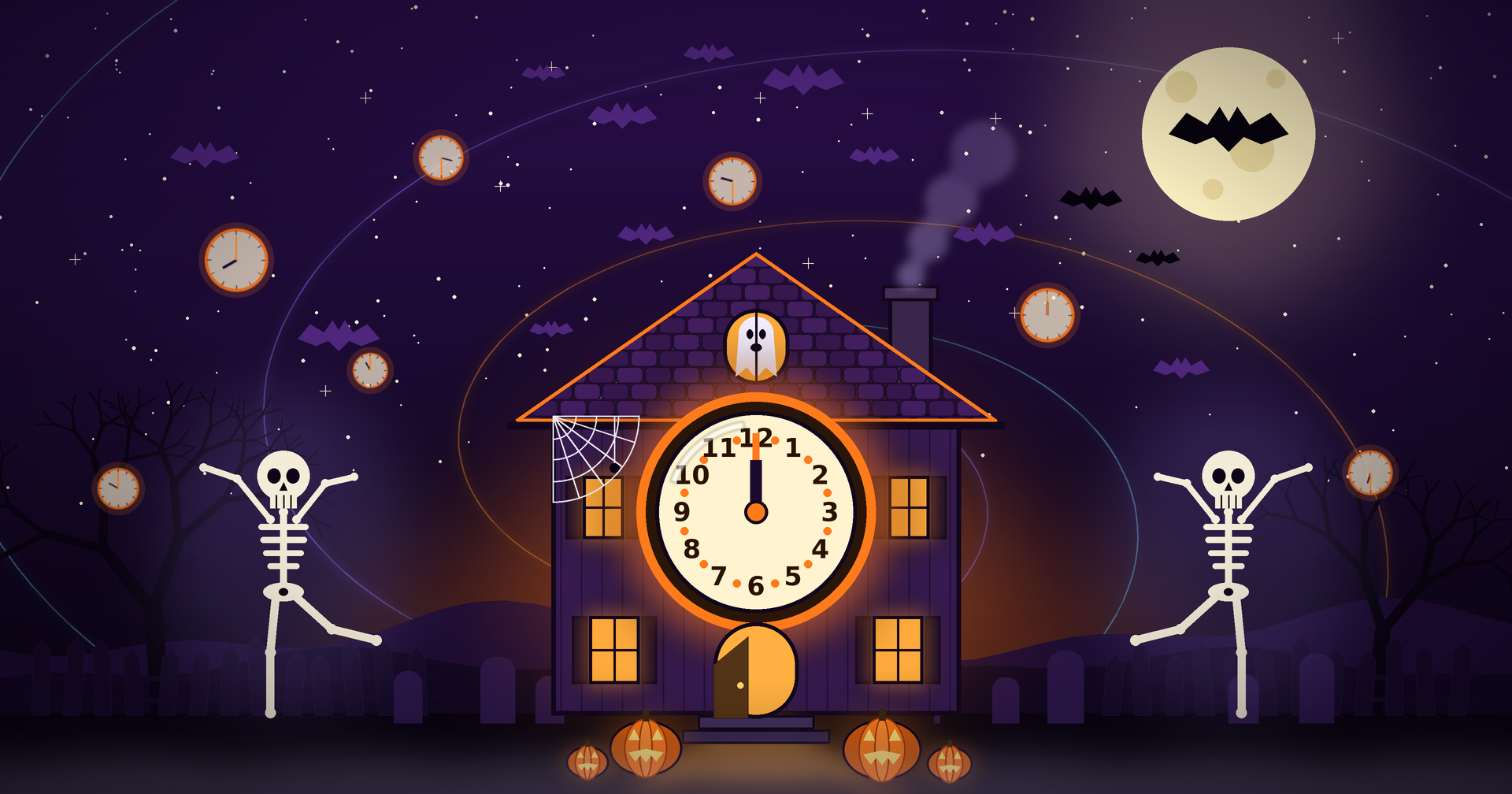
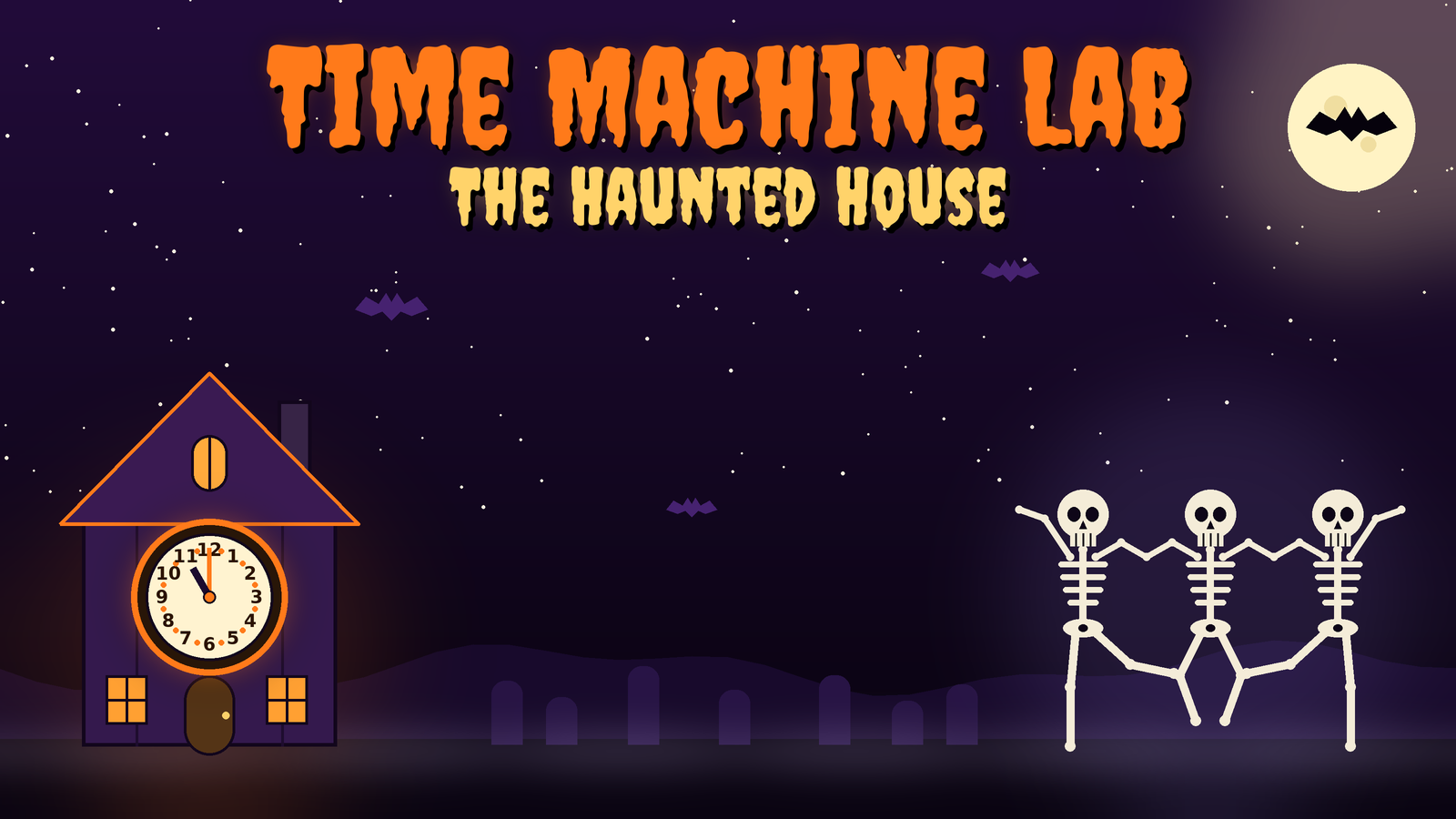
Students step into a haunted house that is also a time machine. In each of eight spooky rooms they read a riddle, set the clock on the front of the house, and launch to unlock a scene from a classic 1929 skeleton cartoon. Every riddle is about time, and the older grades add dates and years. After each scene, a short Animation Time Capsule shows what was happening in animation history, from the first public animation show in 1892 to the first full-length computer-animated movie in 1995.
How this haunted house time machine works
Each room starts with a riddle. The student reads it (or taps the speaker button to hear it), sets the short hand and long hand on the clock, and launches the house. A correct answer shakes the house and unlocks a clip from The Skeleton Dance, a 1929 Walt Disney Silly Symphony. If an answer is not right, the game shows which part to check, so students can try again. The riddles follow one long night, from eleven o’clock through midnight and the small hours to sunrise.
Time, date and year practice for kindergarten through grade 5
Three levels match the riddles to what students are ready for:
- Grades K-1: a clock riddle in every room, using hours and half hours. Students place the short hand on or halfway between the numbers.
- Grades 2-3: the same clock riddles plus a date plate where students enter the month, day and year. The year is given to them.
- Grades 4-5: the same clock and date riddles, and students work out the year themselves by counting back from the current year.
Reading the clock when the hand is between numbers
At half past the hour, the short hand sits halfway between two numbers. The clock has small dots between the numbers so students can see where the short hand goes. A riddle might say the short hand is between six and seven and the long hand points straight down, and students set the clock to match.
Travel through animation history
International Animation Day is celebrated every year on October 28, and the game begins and ends on that date. The rooms visit real milestones: the first public animation show in Paris in 1892, the film Fantasmagorie in 1908, Gertie the Dinosaur in 1914, Steamboat Willie in 1928, The Skeleton Dance in 1929, Snow White and the Seven Dwarfs in 1937, and Toy Story in 1995. After each clip, the Time Capsule card gives the year and one fact in kid-friendly words.
Standards and learning goals
Teachers can match this game to the following standards from the Common Core State Standards for Mathematics:
- 1.MD.B.3: Tell and write time in hours and half-hours using analog and digital clocks.
- 4.NBT.B.4: Fluently add and subtract multi-digit whole numbers using the standard algorithm.
You can read more in the Common Core State Standards for Mathematics.
Why riddles make time stick
Reading an analog clock takes practice, and a story gives students a reason to keep trying. Each riddle describes where the hands point, so students match words to the dial. Each room asks for a different time, so students practice many positions without repeating the same answer.
Tips for playing at home or in class
Play together and ask the student to say where each hand points before they move it. Younger students can use the hint button, which explains what the short hand and long hand mean. For older students, ask them to predict the year before they enter it. After each Time Capsule, talk about what has changed in cartoons since then. The game takes about as long as a lunch break, and you can stop and start over any time.
How to play
To try the haunted house time machine, choose Play Full Screen to open it in its own tab. Pick a grade level at the top, then solve the riddle in each room. It works on Chromebooks, tablets, phones and computers, and there is nothing to install. Turn the sound on to hear the music in the clips.
Scenes in the game are adapted from The Skeleton Dance (1929), a Walt Disney Silly Symphony.