Why have we chosen a classroom focus on these Giant Tortoises?
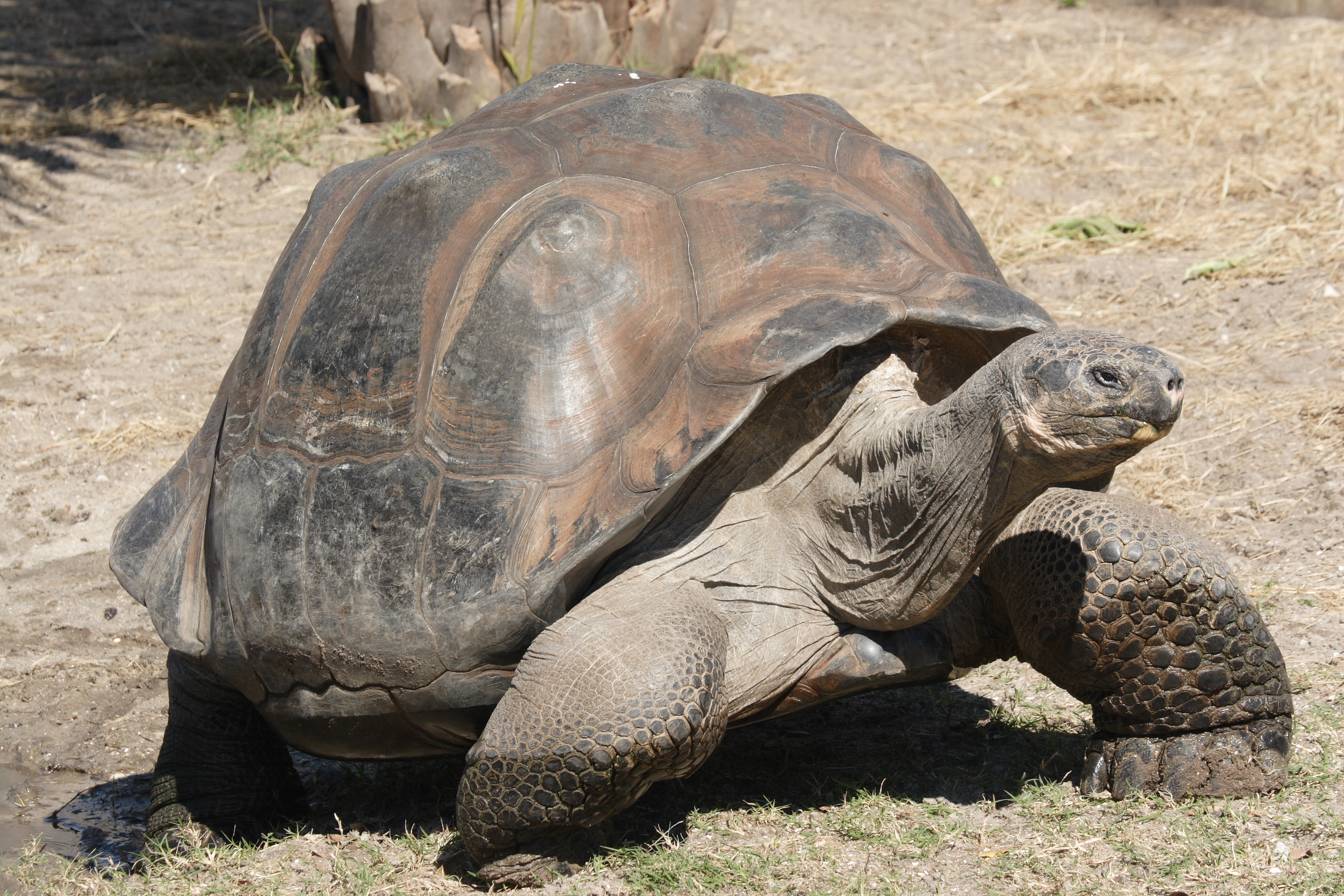
As a biologist who loved studying these magnificent creatures through the lens of Darwin’s research, I’ve poured my fascination with Galápagos giant tortoises into this comprehensive K-5 instant guide. These ancient reptiles—the largest tortoises on Earth—captivate me not just for their size, but for what they teach us about adaptation. Students explore how dome-shelled tortoises thrived in humid highlands while saddleback tortoises survived in arid lowlands, each subspecies perfectly adapted to its island home. Through three grade-differentiated levels, learners encounter Charles Darwin’s groundbreaking 1835 observations that helped shape his theory of evolution by natural selection—the very discoveries that sparked my own passion for evolutionary biology.
Our This Month™ logo features TEJ, a Galápagos tortoise who embodies the resilience and steady persistence these creatures represent—qualities that define not just tortoise survival, but the patient, determined approach to learning that transforms students into scientists.
This guide traces the tortoise population’s dramatic journey from over 250,000 individuals in the 16th century to near-extinction in the 1970s, then celebrates the inspiring conservation comeback that has restored populations to over 19,000 today. Students meet Lonesome George, examine captive breeding programs, and understand how scientists are using genetic analysis to potentially recover extinct subspecies. Real photographs of dome and saddleback tortoises, distribution maps, and images of hatchlings make these abstract concepts tangible for young learners. Our This Month™ logo features TEJ, a Galápagos tortoise who embodies the resilience and steady persistence these creatures represent—qualities that define not just tortoise survival, but the patient, determined approach to learning that transforms students into scientists.
Aligned to Georgia Standards of Excellence, Common Core ELA, NGSS, New York NYSSLS, Michigan Science Standards, and New Jersey NJSLS-Science, this guide integrates life science content with literacy skills across K-5 grade bands. Teachers can toggle between three complexity levels to match instruction to student readiness while maintaining engagement with the same core narrative about adaptation, biodiversity, human impact on ecosystems, and evidence-based conservation science. Like TEJ, who reminds us that learning is a marathon not a sprint, these tortoises teach us that understanding the natural world requires both wonder and persistence.
-Dr. Katherine M. Schlatter