A This Month News Spotlight Ideal For Middle School Life Science Reading
Scientists have spent a century trying to save the American chestnut. Read what they hoped for in 2016, then what they learned by 2026.
A gene from wheat looks like a breakthrough.
Real forests tell a more complicated story.
As you read, ask yourself
- What did the scientists know in 2016 that turned out to be true?
- What did they not yet know?
- When new test results surprise researchers, what do they do next?
Read in order, on purpose. Seeing what scientists believed in 2016 shows why the 2026 findings matter. In Part 1, notice where the author sounds certain and where he admits what he cannot yet know. Then look for the same spots in Part 2.
For teachers
- Hindsight is a teaching tool. Students see a claim made with real evidence, then see what longer testing revealed, so the idea that researchers revise their conclusions becomes something students observed rather than a slogan.
- Time scales differ. Lab results can arrive in months, but a tree that lives for centuries needs years in the field. The 2026 article also notes that field-trial restrictions are likely one reason the problems took so long to surface.
- Claims need evidence, and so do authors. Both writers are researchers invested in their own approaches. That makes this a good exercise in asking what evidence supports each claim and who is making it.
- The 2016 article contains its own hints. It discusses unintended consequences, regulatory review, and combining methods. Students can check what it anticipated and what it did not.
Both articles below are republished in full and unchanged from The Conversation under a Creative Commons license (CC BY-ND). The introduction, notes, vocabulary, timeline, and questions are our own and are not part of either article.
Chestnut word hunt
Select a word to see what it means and which article to search. Then find it in the reading and mark it found. Words from the 2016 article are tagged 2016, words from the 2026 article are tagged 2026, and words in both are tagged Both.
The definition opens just below the group you choose from.
New genetically engineered American chestnut will help restore the decimated, iconic tree

American chestnut trees were once among the most majestic hardwood trees in the eastern deciduous forests, many reaching 80 to 120 feet in height and eight feet or more in diameter.

The “then boundless chestnut woods” Thoreau wrote about in Walden once grew throughout the Appalachian mountains. They provided habitat and a mast crop for wildlife, a nutritious nut crop for humans and a source of valuable timber. Because of their rapid growth rate and rot-resistant wood, they also have significant potential for carbon sequestration, important in these days of climate change.
The species has a sad story to tell. Of the estimated four billion American chestnut trees that once grew from Maine to Georgia, only a remnant survive today.

The species was nearly wiped out by chestnut blight, a devastating disease caused by the exotic fungal pathogen Cryphonectria parasitica. This fungus was accidentally introduced into the United States over a century ago as people began to import Asian species of chestnut. It reduced the American chestnut from the dominant canopy species in the eastern forests to little more than a rare shrub.

After battling the blight for more than a century, researchers are using the modern tools of breeding, bio-control methods that rely on a virus that inhibits the growth of the infecting fungus, and direct genetic modification to return the American chestnut to its keystone position in our forests.
To restore this beloved tree, we will need every tool available. It’s taken 26 years of research involving a team of more than 100 university scientists and students here at the not-for-profit American Chestnut Research and Restoration Project, but we’ve finally developed a nonpatented, blight-resistant American chestnut tree.
One genetic tweak
My research partner, Dr. Chuck Maynard, and I work with a team at the SUNY College of Environmental Science and Forestry (ESF) that includes high school students, undergraduate and graduate students, postdoctoral fellows, colleagues from other institutions and volunteers. Our efforts focus on direct genetic modification, or genetic engineering, as a way to bring back the American chestnut.

We’ve tested more than 30 genes from different plant species that could potentially enhance blight resistance. To date, a gene from bread wheat has proven most effective at protecting the tree from the fungus-caused blight.
This wheat gene produces an enzyme called oxalate oxidase (OxO), which detoxifies the oxalate that the fungus uses to form deadly cankers on the stems. This common defense enzyme is found in all grain crops as well as in bananas, strawberries, peanuts and other familiar foods consumed daily by billions of humans and animals, and it’s unrelated to gluten proteins.
We’ve added the OxO gene (and a marker gene to help us ensure the resistance-enhancing gene is present) to the chestnut genome, which contains around 40,000 other genes. This is a minuscule alteration compared to the products of many traditional breeding methods. Consider the techniques of species hybridization, in which tens of thousands of genes are added, and mutational breeding, in which unknown mutations are induced. Genetic engineering allows us to produce a blight-resistant American chestnut that’s genetically over 99.999 percent identical to wild-type American chestnuts.
Gene transfers happen all the time
For some, this raises a question: isn’t moving genes between species unnatural? In short: no. Such movement has been essential to the evolution of all species. Researchers are discovering that horizontal (between-species) gene transfer happens in nature and even in our own bodies. In fact, the same organism (Agrobacterium) that we use to move blight-resistance genes into chestnuts has also permanently modified other plants in the wild. For example, all the sweet potato varieties on the market today were genetically engineered by this bacterium around 8,000 years ago.
There is another logical question: what about unintended consequences? Of course undefined questions are impossible to answer, but logically the method producing the smallest changes to the plant should have the fewest unintended consequences. We have not observed nontarget transgene effects – that is, changes that we didn’t intend – on our trees or on other organisms that interact with our trees, for example with beneficial fungi.
And at any rate, unintended consequences aren’t constrained to the genetic lab. Chestnut growers have seen unintended consequences resulting from their hybrid breeding of chestnuts. One example is the internal kernel breakdown (IKB) seen in chestnut hybridization, caused by crossing a male sterile European/Japanese hybrid (“Colossal”) with Chinese chestnut. By mixing tens of thousands of genes with unknown interactions through traditional breeding, occasionally you get incompatible combinations or induced mutations that can lead to unintended outcomes like IKB or male sterility.

One of the key advantages of genetic engineering is that it’s far less disruptive to the original chestnut genome – and thus to its ecologically important characteristics. The trees remain more true to form with less chance of unforeseen and unwanted side effects. Once these genes are inserted, they become a normal part of the tree’s genome and are inherited just like any other gene. They have no more chance of moving to other species than do any of the approximately 40,000 genes already in chestnut.
Next steps for the blight-resistant American chestnut
One of the challenges of genetic engineering that is not faced by any other methods of genetic modification also serves as a safeguard. We must shepherd these trees through federal regulatory review by the U.S. Department of Agriculture, the Environmental Protection Agency and the Food and Drug Administration. Our plan is to submit these applications as we finish collecting the necessary data; we expect the process to take three to five years. Once we receive (anticipated) approval, we will quickly make the trees available to the public.
This project is unique because it is the first to seek approval of a transgenic plant to help save a species and restore a forest’s ecology. Our forests face many challenges today from exotic pests and pathogens such as Emerald Ash Borer, Hemlock Wooly Adelgid, Sudden Oak Death, Dutch Elm Disease, and many more. The American chestnut can serve as a model system for protecting our forest’s health.
Direct genetic modification will likely not be used in isolation. Integration might improve the outcomes of both the conventional hybrid/backcross breeding program of the American Chestnut Foundation and our genetic engineering program. Allowing crosses between the best trees from both programs will allow gene stacking – having multiple and diverse resistance genes in a single tree – with each working in a different way to stop the blight. This would significantly decrease the chances that the blight could ever overcome the resistance. The two programs working together would also allow the addition of resistance genes for other important pests, such as Phytophthora, which causes a serious root rot in the southern part of the chestnut range. And combining methods increases the chances that the resistance will be long-lasting and reliable, which is very important for a tree that in good health can live for centuries.

A unique aspect of the genetically engineered American chestnut trees is their ability to rescue the genetic diversity in the small surviving population of American chestnut trees. When we cross our blight-resistant transgenic trees to these surviving “mother” trees, directly in the wild or from nuts gathered from them and grown in orchards, we’re helping preserve the remaining wild genes.
Half the resulting offspring will be fully blight-resistant, while also containing half the genes from the mother tree. By making these crosses, the restoration trees will be ecologically adapted to the diverse environments in which they’ll grow. These trees could also be used to boost the genetic diversity of the hybrid/backcross breeding program, or used directly for restoration and left to fend for themselves, allowing natural selection to make the final determination of the effectiveness of our efforts.
The American chestnut was one of the most important hardwood tree species in the eastern forests of North America, and it can be again. This tiny change in the genome will hopefully be a huge step toward putting the American chestnut on a path to recovery.
William Powell, Professor in the Department of Environmental and Forest Biology, State University of New York College of Environmental Science and Forestry
This article is republished from The Conversation under a Creative Commons license. Read the original article.
New genetic approaches raise hopes for restoring the American chestnut to its former glory

The American chestnut tree was a dominant and iconic species in many Appalachian forests until it was devastated by an introduced fungus from Asia called chestnut blight.

A majestic forest tree, an American chestnut was typically 50 to 100 feet (15 to 30 meters) in height, but could grow as tall as 150 feet (45 meters) over its several-hundred-year lifespan. Its leafy canopy provided shade and beauty from Maine to Mississippi. The chestnuts it produced had helped to nourish wildlife, Indigenous peoples and European settlers alike. Its rot-resistant wood was also prized for lumber.
People first noticed the blight fungus in New York City in 1904, when it began killing trees at the Bronx Zoo. Over subsequent decades, it spread south and east through the chestnut’s range, killing nearly every mature tree in its path.

Chestnut lovers, foresters and scientists – many under the umbrella of the American Chestnut Foundation – have been working for about a century to bring the trees back. The main strategy has been the use of conventional crossbreeding methods to create blight-resistant varieties.
Resistance is exceedingly rare in the American chestnut itself. So breeders have relied on hybridization, crossing the American chestnut with the naturally resistant Asian chestnut by putting pollen from one into the flowers of the other. They recross the hybrids with American chestnut and pick out offspring that are blight-resistant and look like American chestnuts in growth and form. However, progress had been limited.
More recently, scientists have learned more about the tree’s genome – its complete set of DNA – including how its genes are expressed, interact and give rise to traits. Now, researchers are turning to genome science for new strategies for chestnut restoration.
I am a forest biotechnologist who has been studying and teaching about the genetics and engineering of forest trees and other plants for more than 40 years. My laboratory has been using genomic methods, and developing gene transfer and editing methods, for a variety of tree species, including the American chestnut. Our goal is to develop improved genetic transformation techniques to facilitate the restoration of American chestnuts to their dominant role in Eastern forests.
OXO excites, then disappoints
The first major genetic engineering approach focused on inserting a single gene from bread wheat into the American chestnut. This gene encodes a protein called OXO, short for oxalate oxidase, which breaks down oxalic acid, the fungus’s key weapon for invading and killing plant tissues.
For about 20 years, it appeared the OXO gene could produce fully blight-resistant and healthy chestnuts. This work was pioneered by the late William Powell and his colleagues in the College of Environmental Science and Forestry at the State University of New York in Syracuse.
Unfortunately, recent field results suggest that this approach is not working as well as hoped. Many of the trees with the OXO gene unexpectedly developed large abnormal growths called galls, grew slower and showed other symptoms of poor health. Although work to expand and refine the OXO approach continues, new methods and insights from the ongoing genomics revolution in biology have provided new options.
Genomics is helping in two distinct ways
Scientists using genome-guided breeding can rapidly identify thousands of DNA segments that, when used together, can predict blight resistance in young, healthy plants. Then researchers can choose individual trees for making crosses, and for field testing, that have genomes that contain those same DNA segments.
This method enables much faster breeding progress, as breeders can quickly zero in on the best parent trees and progeny, rather than waiting five or more years for the baby tree to grow to see how it fares against the blight. By improving the precision of field studies and disease evaluation, it can save time and money.

The second genomic approach, often just called “omics,” focuses not just on DNA segments, but on genes and what they do. The goal is to figure out how the presence or absence of a particular gene, the matching mRNA transcripts or cellular biochemicals that a gene codes for relates to blight resistance.
Scientists have now identified numerous genes and expressed molecules that are statistically associated with blight resistance in Asian chestnuts. These are logical targets for genetic transformation approaches – that is, using genetic engineering methods to modify naturally occurring genes or introduce genes from one organism into another. My lab has been practicing these techniques for many years in poplars, eucalypts, hops and, recently, chestnut.
The goal is to insert genes from Asian chestnuts, or modify American chestnut genes to act more like those in Asian chestnuts. Genomics-informed studies have been carried on in a modest way for some time, but they are poised to expand rapidly given all the new genomics-informed leads now in hand, together with highly efficient gene-editing technologies like CRISPR.
There are also some surviving large American chestnuts, some of which have heritable blight resistance. Genomic studies of these rare survivors can provide additional insight into the critical genes and processes keeping them healthy, potentially informing both genome-guided breeding and transformation approaches.

Challenges beyond the science
From a scientific viewpoint, genomics-guided breeding and genetic transformation approaches are complementary technologies. The former integrates easily into conventional breeding because it’s just another way to choose parents for crossing and field testing. Transformation approaches enable researchers to create or refine novel mechanisms that are not easily accessible by simple breeding. In practice, however, both tactics add significant costs to conventional breeding.
To make matters worse, transformation approaches also face two additional noneconomic barriers to adoption. First, for reasons scientists don’t yet understand, chestnut remains technically challenging to genetically transform. It is often hard to insert genes into chestnut cells; and even once the DNA is in cells, it can be very difficult to get those modified cells to develop into normal plants.
Another limiting factor is that most previous transformation approaches have relied on tissues from developing seeds that are only available during limited times of the year and require very specialized culturing methods. My lab is currently working on a new and hopefully more efficient approach that we hope will mitigate this bottleneck.

Genetic transformation approaches also face major social barriers in the form of government regulations. Though any kind of chestnut hybrid can be grown in the field freely, those produced with most transformation methods – even when using chestnut genes as the “active ingredients” – cannot.
Transformation-modified trees require strict containment and federal inspections during field studies. Pollen or seed movement – which are very difficult to restrict from mature trees – would violate federal guidelines. Limits on field trials are likely one of the reasons that the problems with OXO were not revealed for many years.
The Agriculture Department has recently begun considering regulatory changes that I hope lead to regulations more in line with consensus scientific advice about genetically engineered crops; these should ease the burdens of conducting field tests. But similar moves over past decades have failed or been reversed due to legal challenges.
Market restrictions also come into play. All the major green certifiers, such as the Forest Stewardship Council, do not allow any materials that result from transformation approaches in certified forest products. These prohibitions on gene editing and transfer reduce the land area where trees created with transformation approaches could be grown, and dampen interest in associated research.
As a scientist, I hope that the barriers to transformation approaches for chestnut, which also apply to the many other forest trees under threat from exotic pathogens and climate stresses, fade. Genomic methods in all their forms have the potential to help protect and restore forests.
Steve Strauss, University Distinguished Professor of Forest Biotechnology, Oregon State University
This article is republished from The Conversation under a Creative Commons license. Read the original article.
Timeline: the long view
Select an event to open it. Each one points to the part of the reading where you can find more.
-
The fungus was first spotted in New York City, where it began killing trees at the Bronx Zoo. Over the following decades it spread south and east through the chestnut’s range, killing nearly every mature tree in its path. Part 1 adds that it was accidentally introduced into the United States as people began importing Asian chestnut species.
Think about it: The fungus came from Asia. What does Part 2 say about resistance in American chestnuts compared with Asian chestnuts?
-
For about a century, chestnut lovers, foresters, and scientists, many of them working with the American Chestnut Foundation, tried to bring the trees back. Breeders crossed American chestnuts with naturally resistant Asian chestnuts, recrossed the hybrids with American chestnuts, and picked the offspring that resisted blight and still looked like American chestnuts. Progress was limited.
Think about it: Why would breeders keep crossing hybrids back to American chestnuts instead of planting the hybrids as they were?
-
Powell writes that his team at SUNY ESF had worked for 26 years, with more than 100 university scientists and students involved. They tested more than 30 genes from different plants, and a gene from bread wheat worked best. It makes an enzyme called oxalate oxidase (OXO), which breaks down the oxalate the fungus uses to form deadly cankers.
Think about it: What advantage might there be in disabling the fungus’s weapon instead of changing the tree’s own defenses?
-
Powell describes an engineered, blight-resistant tree (pictured as ‘Darling 54’) and says the team expects federal review to take three to five years. He also discusses unintended consequences, and suggests that combining engineering with traditional breeding could make the resistance last longer.
Think about it: Find where Powell raises the question of unintended consequences. How does he answer it?
-
Strauss writes that for about 20 years it appeared the OXO gene could produce fully blight-resistant, healthy chestnuts. Then field results showed that many OXO trees unexpectedly developed large abnormal growths called galls, grew more slowly, and showed other signs of poor health. Work to expand and refine the OXO approach continues. He adds that limits on field trials are likely one reason the problems were not revealed for many years.
Think about it: Why might a problem show up only after trees have grown for years outdoors?
-
Strauss describes two genomic approaches. Genome-guided breeding uses DNA information to predict which young trees will resist blight, so breeders do not have to wait five or more years to find out. The ‘omics’ approach studies which genes and molecules are linked to resistance, which could point the way for gene editing tools such as CRISPR. He also notes that the U.S. Department of Agriculture has recently begun considering regulatory changes that he hopes will ease field testing, though similar moves in the past have failed or been reversed.
Think about it: According to the article, what besides the science could slow these new approaches down?
Discussion questions
- What did Powell’s team expect to happen after 2016? What actually happened?
- Why might field trials reveal problems that lab tests miss?
- How did regulations affect how quickly the problem was discovered?
- Is this a story of researchers failing, or of researchers learning from new test results? Use evidence from both articles.
- Strauss describes two new approaches. How are they different from the OXO approach?
- A tree can live for centuries. How does that change how scientists must test and decide?
Standards connections: MS-LS4-5 MS-LS3-1 MS-LS2-5
I also wrote a personal reflection on chestnut season in Ticino, where my family now lives.
A Beloved Autumn Harvest: Reflections From a Swiss Returnee
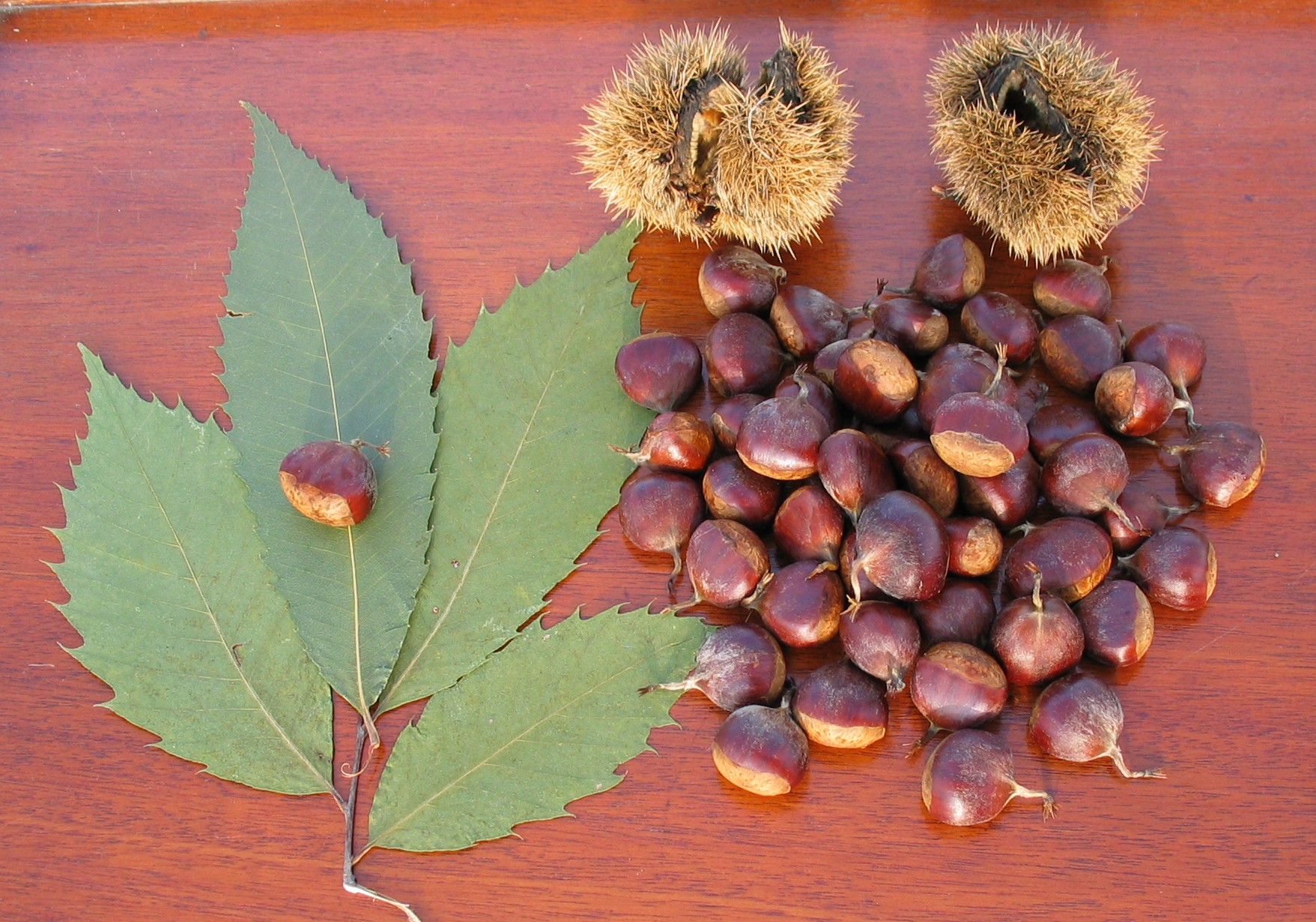
Every autumn, my daughter and I walk the mountain trails of Ticino with our eyes glued to the ground, gathering chestnuts. The prickly burrs hide beneath the fallen leaves, and once we find one, we do what folks here do, a kind of shuffle: we press and squeeze the burrs open with the soles of our sneakers and roll them until the shiny brown nuts come popping out.
Typically three nuts grow side by side inside each burr, but often only one is good enough to pluck out. The spiny shell looks as soft as fur. It is not. We learned from experience that one careless grab feels like a cactus spine in the hand.
The harvest teaches patience, and it also teaches us something about climate. After a very hot summer, the chestnuts can be smaller or fewer, and more of them show rot and worm holes. Our family harvest is a quiet report card on the year’s weather.
It also teaches care. Another tree often grows nearby, the horse chestnut, whose nuts are toxic to people. Children in this region learn early to tell the two apart. Horse chestnut burrs look less furry, and the nuts lack the little tail that sweet chestnuts have.
Near us is a village called Castagnola, at the foot of Monte Brè on the shore of Lake Ceresio. The village is linked to the word castagna, the Italian word for chestnut. I knew the name before I understood it. During our first autumn here, it became clear that chestnuts mark the change of season, from the long warm months to the arrival of wetter, chillier weather.
Recently I found myself wondering whether America has chestnut festivals too. I remembered only taking my older children apple picking and to a pumpkin patch every fall. Then I found two detailed articles on The Conversation and thought about how well they would serve Middle School life science lessons: how fragile a species of tree can be, how conservation efforts can be nuanced and experimental, and how researchers refine their approaches and knowledge through trial and error. I recommend that all STEM teachers read about the American chestnut. A century ago it towered over forests from Maine to Mississippi. A fungus from Asia was first noticed in New York in 1904, and within decades the blight had killed nearly every mature American chestnut.
What moved me is that scientists and ecologists never stopped trying to bring it back. In our News Spotlight, two scientists, ten years apart, describe that effort. The first was full of hope about a gene from wheat. The second reports that the hope did not fully hold up in real forests, and that new genomic tools are now being tried. The two articles can anchor a strong reading comprehension exercise, introducing vocabulary and concepts that are new or that build on Middle School science in biology, ecosystems, genetics, chemistry, and lab work. They can also ground a conversation about how research is practiced: it is all about learning from past results, forming new hypotheses, and using each finding to reassess what we know.