Teacher’s Guide to
Rare Disease Day
Rare Disease Day is observed on the last day of February each year — falling on February 29 in leap years, making it literally one of the rarest days on the calendar. The date is not accidental; it was chosen because February 29 is a “rare” day, mirroring the experience of the millions of people living with rare diseases around the world.
How It Began
The first Rare Disease Day was coordinated by the European Organisation for Rare Diseases (EURORDIS) on February 29, 2008, observed across numerous European nations and Canada. The timing also marked the 25th anniversary of the passage of the Orphan Drug Act in the United States — landmark legislation that created incentives for pharmaceutical companies to develop treatments for conditions affecting small numbers of patients.
In 2009, the observance went global as organizations in the United States, China, Australia, Taiwan, Latin America, and many more countries joined the effort. Today it is one of the most widely recognized health awareness days in the world.
🌈 The Colors of Rare Disease Day
Rare Disease Day is represented by four colors — pink, purple, green, and blue — inspired by the look of zebra stripes. In medicine, the zebra is a symbol for rare diseases: medical students are famously taught “When you hear hoofbeats, think horses, not zebras” — meaning common explanations are usually correct. But for the millions with rare diseases, the hoofbeats really do belong to a zebra.
Why It Matters for Educators
Many students either live with a rare disease themselves, have a family member who does, or will meet classmates who do. Teaching about Rare Disease Day builds empathy, reduces stigma, encourages scientific curiosity, and shows students that every person’s story — and every person’s health — deserves attention and care.
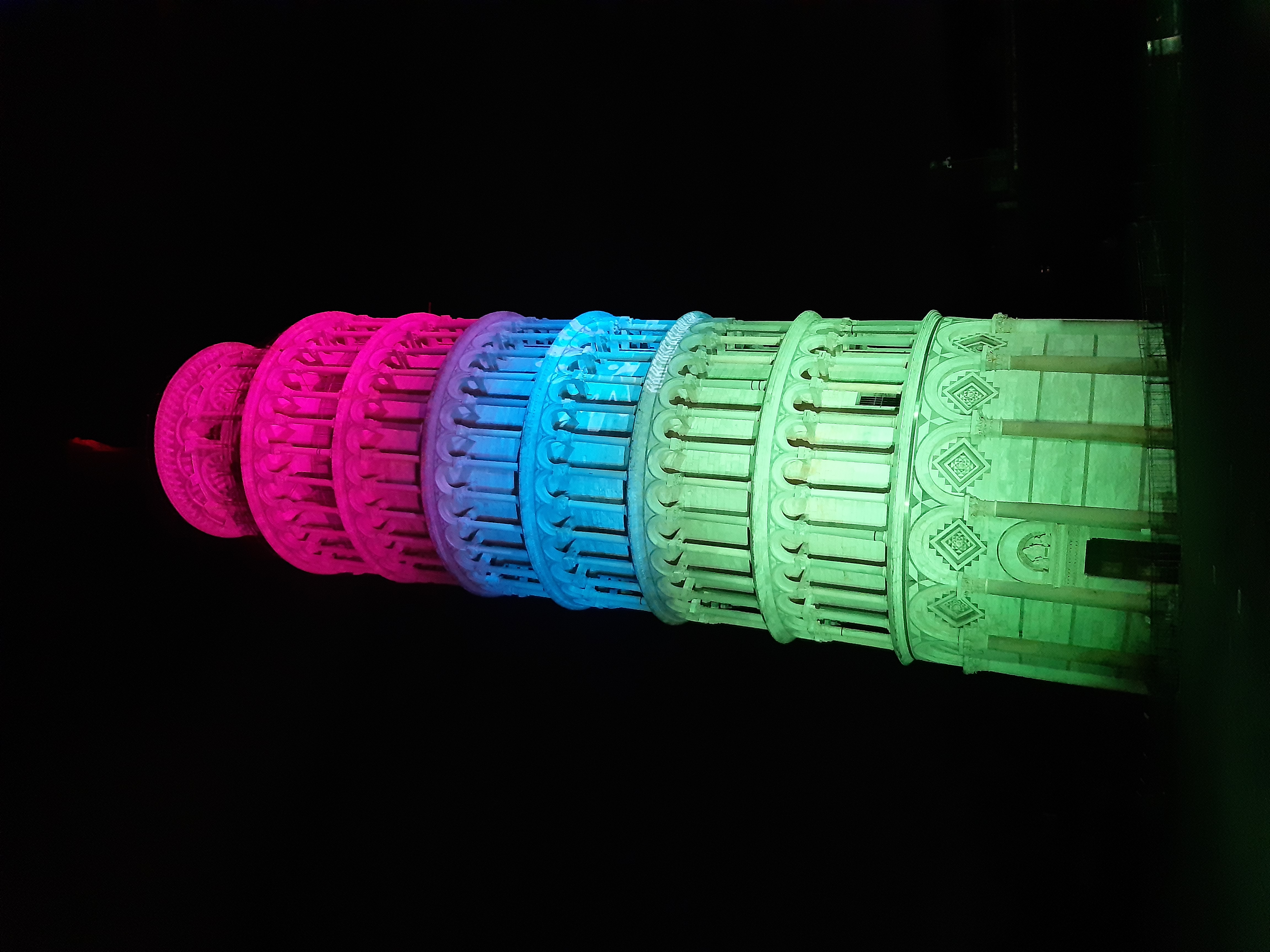
One of the most visually striking ways Rare Disease Day is celebrated is through the Light Up for Rare campaign — a global initiative where iconic landmarks and buildings around the world are lit up in the four Rare Disease Day colors: pink, purple, green, and blue.
From the Tokyo Tower in Japan to the Leaning Tower of Pisa in Italy, from hospitals to science parks, communities show solidarity with people affected by rare diseases by transforming their local landmarks into beacons of awareness.

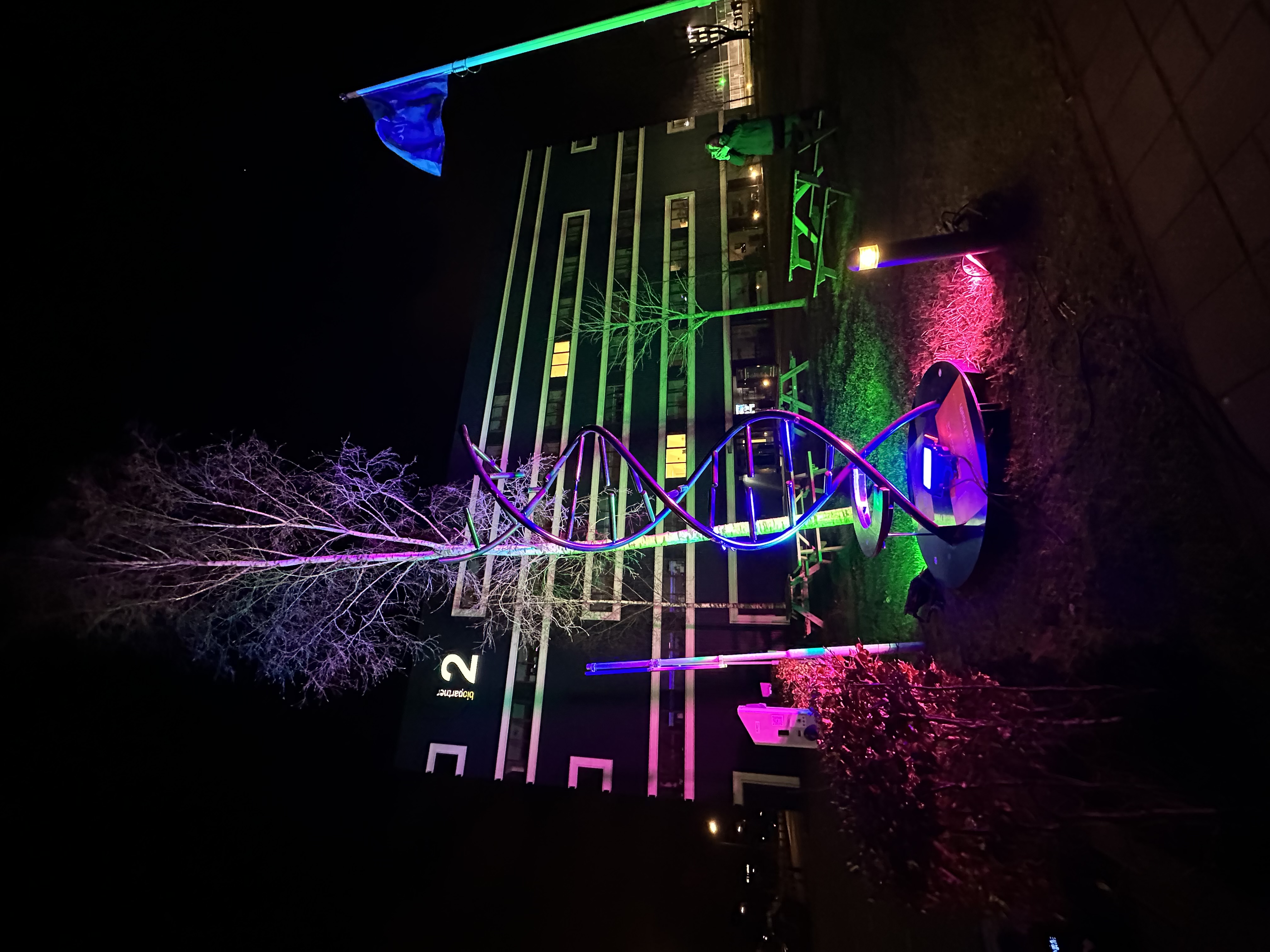
A Science Hub Shines: Leiden Bio Science Park
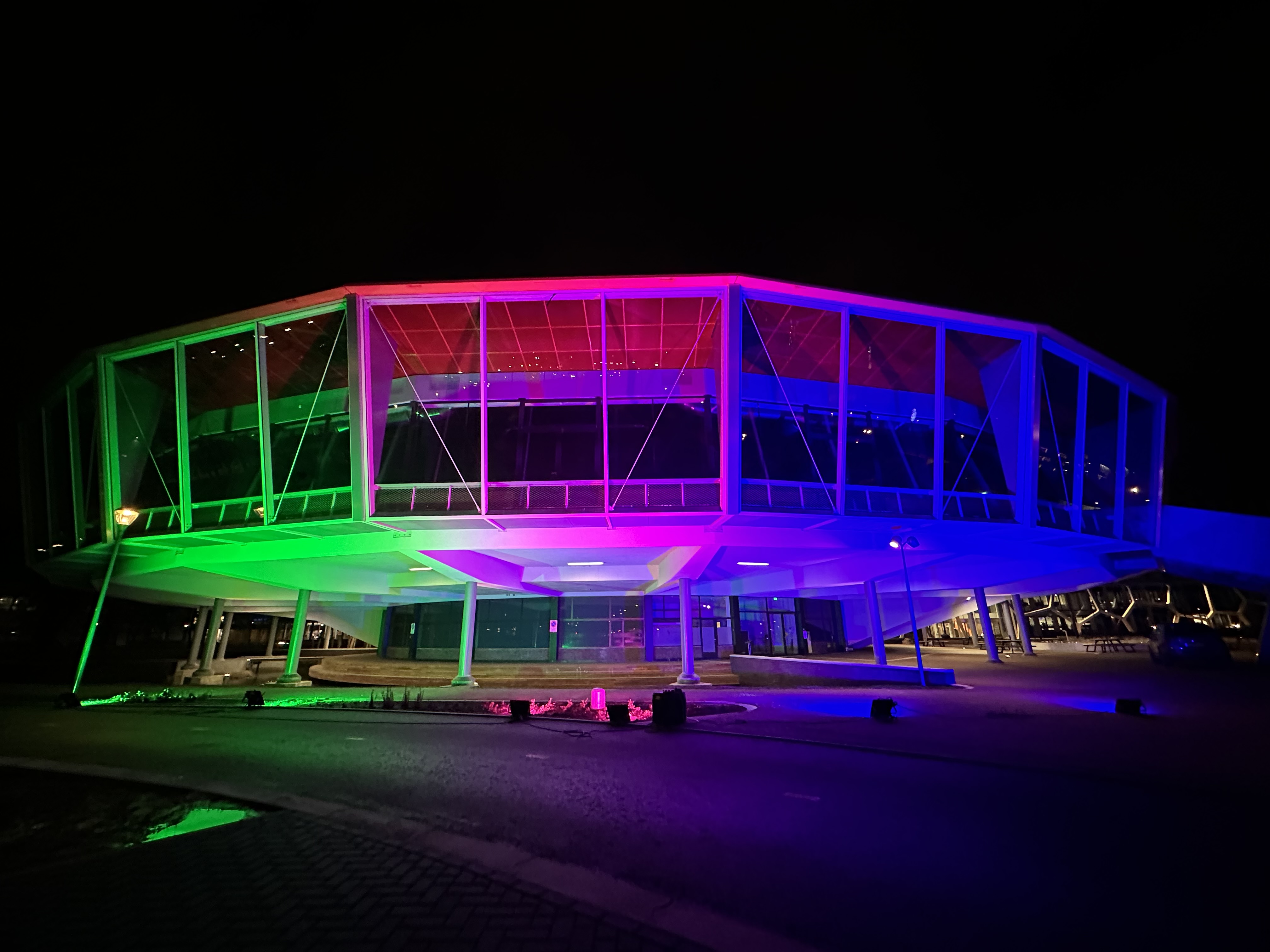
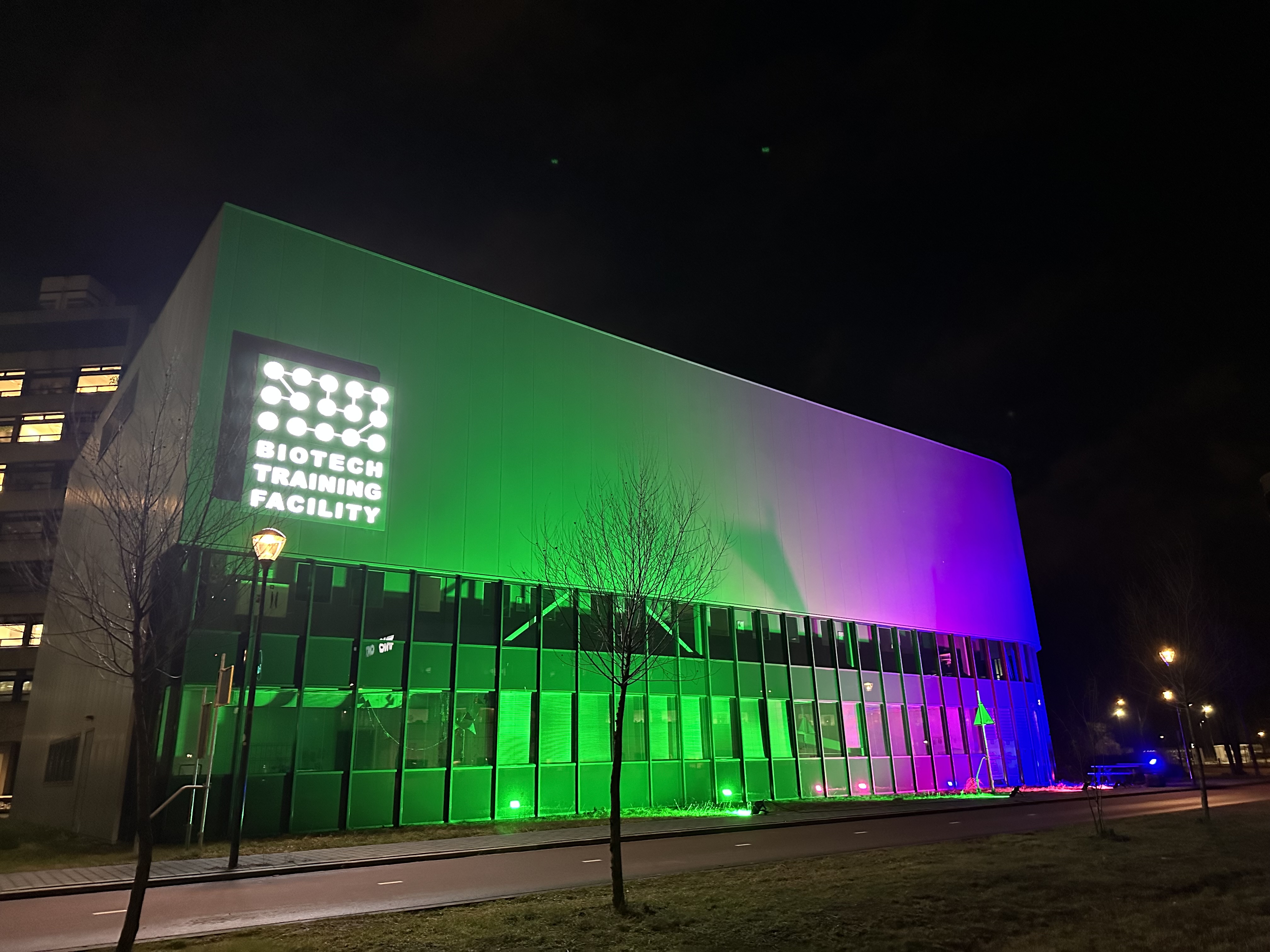
In 2025, the Leiden Bio Science Park in the Netherlands dedicated its entire campus to Rare Disease Day. Multiple buildings — including the Biotech Training Facility, the Gorlaeus Building of Leiden University, and the BioPartner Hub — were illuminated in the campaign’s colors. This was especially meaningful because Leiden is home to many researchers working on treatments for rare diseases, making the light-up a powerful symbol of science and solidarity combined.
🏛️ Classroom Connection: Landmarks & Light
Ask students: “What famous buildings or places near us could we ‘light up’ if we wanted to show support for people with rare diseases? How would you use color and light to tell a story?” This sparks both empathy and creative thinking!
The official Rare Disease Day video playlist is a wonderful way to introduce students to real stories and the spirit of this global observance. Videos are especially effective for younger learners who connect with faces, voices, and visual storytelling.
💡 Before You Press Play
Preview videos before showing them to your class. Some videos may include personal stories about serious medical challenges. Preview each one to make sure it’s appropriate for your students’ ages and your classroom context. Use it as an opportunity for a brief, calming discussion before and after.
Discussion Starters After Watching
- What did you learn that surprised you?
- How do you think it feels to have a disease that most people haven’t heard of?
- What are some ways people in the video are helping each other?
- What is one thing you could do to be a good friend or ally to someone with a rare disease?
Building vocabulary before and after a lesson helps students engage more deeply with the topic. Introduce these words in a way that feels natural and connected to students’ own experiences with health, bodies, and community.
🌱 Grades K–1: We All Have Different Bodies
Learning objective: Help students understand that all bodies are different, and that some people need extra help to feel well — and that’s okay.
- Book connection: Read a picture book about a child who has a health challenge or is “different” in some way. Discuss: How did the character feel? What did friends do to help?
- Colorful zebra art: Explain that a zebra is the symbol for rare diseases (every zebra has a unique stripe pattern!). Have students make their own paper zebras, decorating the stripes with the four Rare Disease Day colors. Discuss: “Just like no two zebras have the same stripes, no two people’s bodies are exactly the same.”
- Empathy circle: Ask students to think of a time when they felt sick or needed help. How did that feel? Who helped them? Reinforce that helping someone who is sick is a kind and important thing to do.
🌿 Grades 2–3: Rare But Real
Learning objective: Students understand the concept of rare diseases, the role of doctors and researchers, and what it means to raise awareness.
- The Zebra Metaphor: Teach students the “horses and zebras” saying used in medicine. What does it mean for people with rare diseases when doctors don’t think about the “zebra” possibility?
- Light Up for Rare map activity: Show photos of Tokyo Tower and the Leaning Tower of Pisa lit up for Rare Disease Day. Find these landmarks on a world map. Why do you think people choose to shine lights on big, famous buildings to send a message?
- Awareness poster: Have students design a poster for Rare Disease Day using the four colors and a message of inclusion. Display in the hallway!
- Interview a doctor (video/read aloud): Read short, age-appropriate accounts of what scientists and doctors do to find treatments for rare diseases. Discuss what it might be like to be a researcher trying to solve a puzzle that nobody has solved before.
🌳 Grades 4–5: Advocacy, Science & Global Action
Learning objective: Students explore the science of rare diseases, the history of advocacy and legislation, and what students can do as young advocates.
- Research project: Students choose one rare disease to research (with teacher guidance). They present: What is it? Who does it affect? Is there a treatment? What are patient organizations doing about it?
- The Orphan Drug Act: Discuss why laws sometimes need to be created to encourage scientists to study rare diseases. What would happen if there were no incentives? This can connect to civics discussions about how government policy affects real people.
- Global growth timeline: Starting with 2008 in Europe, map the global spread of Rare Disease Day participation (by 2014, 84 countries). Analyze: Why do you think more and more countries join each year?
- Letter-writing advocacy: In 2008, people wrote en masse to government representatives as part of the first Rare Disease Day. Have students draft a short letter to a school leader or local official asking them to recognize Rare Disease Day or support health equity in your community.
- Science ethics discussion: If only a small number of people have a certain disease, should scientists still work to cure it? Explore the ethical dimensions of resource allocation in medicine.
Cross-Curricular Connections
- Science: Human body systems, genetics (basics for older grades), the scientific method in medical research
- Social Studies: Global community, advocacy, how laws are made, equity and access
- ELA: Informational reading, writing to inform and persuade, vocabulary development
- Art: Zebra stripe artwork, awareness posters, “Light Up” architectural drawings
- Math: Understanding fractions and statistics (what does “1 in 2,000 people” mean?), graphing participation across years
- SEL: Empathy, inclusion, self-advocacy, supporting peers with different abilities
Teaching about rare diseases requires a thoughtful, student-centered approach. Some of your students may be living with a rare disease, or have a family member who is. The following guidance will help you create a safe, inclusive classroom conversation.
✅ Do
- Center the conversation on empathy and inclusion rather than fear or tragedy
- Use person-first language (e.g., “a child who has a rare disease,” not “a sick child” or “a diseased child”)
- Acknowledge that having a rare disease is part of someone’s life — it doesn’t define who they are as a whole person
- Allow students to share experiences from their own lives if they choose to, but never require it
- Affirm that scientists and doctors are always learning and working hard to help
- Highlight the strength, creativity, and community of people living with rare diseases
- Connect the lesson to broader themes of fairness, access, and being a good community member
🚫 Don’t
- Don’t focus exclusively on suffering or worst-case scenarios, especially with younger students
- Don’t ask students to publicly identify whether they or a family member has a rare disease
- Don’t use language like “afflicted with,” “suffering from,” or “a victim of” — use “living with”
- Don’t imply that rare diseases are contagious or something to be afraid of catching
- Don’t promise that all diseases will be cured — acknowledge uncertainty honestly and age-appropriately
- Don’t treat all rare diseases as the same — each one is different with its own story
⚠️ A Note on Student Disclosure
If a student volunteers that they or a family member has a rare disease, respond with warmth and gratitude for their trust. Do not make them the “classroom expert” unless they explicitly want to be. After class, check in privately to make sure they felt comfortable and safe during the discussion.
🗝️ Language Matters
The language we use shapes how students think about disability and illness. Modeling respectful, person-centered language in class helps students carry those habits into the hallways, playground, and beyond.
Families are essential partners in deepening any learning around health, community, and empathy. Here are ways to bring families into the conversation — whether through a class communication, a homework activity, or an in-person sharing opportunity.
Inviting Families to Share
If you are aware that a family in your class has a connection to rare disease — or if a family volunteers to share — this can be a profoundly moving classroom experience. Before extending any such invitation:
- Reach out privately first. Never assume a family wants to share publicly.
- Allow families to share in whatever format is most comfortable — a brief in-person visit, a short video, a letter, or a Q&A with student questions submitted in advance.
- Prepare students to be respectful listeners and ask thoughtful questions. Practice together beforehand.
- After the visit, debrief as a class: What did we learn? How can we show care for this family and others like them?
Family Take-Home Activities
🏠 Family Conversation Starter
Send home a note or email inviting families to discuss: “Did you know that over 300 million people worldwide live with a rare disease? Tonight, ask someone in your family: What does it mean to take care of people who need extra help? How do we show we care?”
- Zebra drawing challenge: Students design a “zebra” at home with a family member, each person drawing one half of the stripes. Bring it back to share!
- Awareness ribbon craft: Using the four Rare Disease Day colors, families make a paper ribbon together and write one word on each stripe: something they want for people living with rare diseases (e.g., hope, research, community, cures).
- Find a landmark: Families look up whether any buildings near them participate in Light Up for Rare. If so, can they go see it?
Community Connections
Consider reaching out to local hospitals, medical schools, or patient advocacy groups in your area to see if there are age-appropriate ways to connect your class to the broader Rare Disease Day community. Even a brief video call or letter exchange with a researcher or patient advocate can make this observance feel real and relevant.
Grades K–1
- What is something your body does every day that helps you stay healthy?
- If a friend was feeling sick a lot, what could you do to be a good friend?
- What colors make you think of hope and kindness? Why?
- What do you notice about zebra stripes? How is every zebra unique?
Grades 2–3
- What does the word “rare” mean? Can you think of other rare things?
- Why do you think people use lights and famous buildings to send a message about rare diseases?
- If you found out your classmate had a rare disease, how would you treat them the same? How might you support them differently?
- What do scientists do when they are trying to understand a disease that nobody has studied very much?
Grades 4–5
- Why might it be hard to get doctors to pay attention to rare diseases? What could change that?
- Rare Disease Day started in Europe in 2008 and now involves more than 95 countries. What does that growth tell us about the power of global community action?
- What does fairness mean when it comes to medical research? Should scientists work on diseases that affect fewer people?
- People at the first Rare Disease Day wrote letters to their governments. Why is it important that governments hear from citizens about health issues?
- How can someone be an advocate — a person who speaks up — for someone with a rare disease even if they don’t have one themselves?
Official Organizations
- Rare Disease Day: rarediseaseday.org — Official global website with events, stories, and resources
- EURORDIS: eurordis.org — European Organisation for Rare Diseases, co-founder of Rare Disease Day
- NORD (National Organization for Rare Disorders): rarediseases.org — U.S.-based patient advocacy organization with disease-specific resources
- Global Genes: globalgenes.org — Rare disease advocacy, including educational materials
Classroom Reading Suggestions
When selecting books about children with health differences or disabilities, look for titles that center the child’s voice, joy, and full humanity — not just their diagnosis. Your school librarian can be an excellent partner in finding age-appropriate titles that align with your curriculum and community.
Citation & Image Credits
Background information: “Rare Disease Day.” Wikipedia. https://en.wikipedia.org/wiki/Rare_Disease_Day. Accessed February 2026.
Light Up for Rare photographs: Images of Tokyo Tower (2024), Leaning Tower of Pisa (2024), Leiden Bio Science Park — Biotech Training Facility, Gorlaeus Building (Leiden University), and BioPartner Hub (2025) courtesy of Rare Disease Day / EURORDIS campaign partners. Used for educational purposes.
Video content: Official Rare Disease Day video playlist. YouTube. Rare Disease Day Playlist.
THIS MONTH™ Teacher’s Guide developed for educational use in K–5 classrooms. Content reflects publicly available information and is intended to support educators in teaching empathy, health awareness, and global citizenship.
THIS MONTH™ Teacher’s Guide to Rare Disease Day
Observed the last day of February | rarediseaseday.org
This guide is intended for educational use. Always preview video content before sharing with students.