Why do leaves fall to earth when they dry out, and why do bits of comet dust glow over our heads every November? Both stories start with gravity. Explore it with our guide and simulator, then read how a scientist answered a four-year-old’s question.
Our guide: gravity and the Leonid meteors.
Curious Kids: how does gravity pull things down to Earth?
As you read or listen, ask yourself
- What decides how strong the pull of gravity is?
- Why do planets circle the Sun instead of falling into it?
- What makes a meteor glow, and where does its speed come from?
Read in order, on purpose. Part 1 starts in space with comet dust and ends with a hands-on test you can try at home. Part 2 starts at the park with a football and travels out to the Moon, the Sun, and the sea. As you read or listen to Part 2, look for ideas you already met in Part 1.
For teachers
- Two sources, one idea. Part 1 is ours and is written for three reading levels. Part 2 is a scientist’s answer to a four-year-old, so it works well as a read-aloud for Grades K-3 and as an independent read for older students.
- Talk beyond the room. While reading, pause and invite students to wonder about things that are not in front of them: what a football would do on the Moon, or what Earth looks like from the Sun’s side. Open prompts such as “What do you think would happen if…” tend to draw out longer answers than quiz questions do.
- Mass, heavy, and weight. Part 2 says “heavy” and “massive” where Part 1 says mass, and it uses weight for the pull between you and a planet or moon. Students may need help seeing that heavy and massive point to the same idea, and that mass and weight are not the same thing.
- The simulator has two settings. In Drop, a dust grain starts at rest and falls straight in, like the football. In Sideways push, it starts moving sideways and bends into a loop, like a planet. The numbers are simple and made up, so the model shows the idea and not real distances or speeds.
- Where a meteor’s speed comes from. Earth’s gravity pulls on every meteoroid, but most of a Leonid’s speed comes from its own motion around the Sun, which meets Earth almost head on. Earlier versions of this lesson put too much weight on gravity, so this version says it differently.
- Dates matter. The viewing details in Part 1 are for 2026. Part 2 was first published in 2018 and later updated, so its facts about gravity hold, but check any date or detail before quoting it.
- Safety. For the drop test, drop from about chest height over carpet or grass with an adult nearby. For night watching, students should go with an adult.
Part 2 is republished from The Conversation under a Creative Commons license (CC BY-ND), as published, with its bylines, image credits, and original link. The one thing we left out is its closing invitation to email in a child’s name, age, and town, which we do not ask students to do. Part 1, the simulator, the vocabulary, the journey guide, and the questions are our own and are not part of the article.
Gravity word hunt
Select a word to see what it means and which part to search. Then find it in the reading and mark it found. Words from our guide are tagged Guide, words from the Curious Kids article are tagged Article, and words in both are tagged Both.
The definition opens just below the group you choose from.
This month in space: the Leonid meteor shower
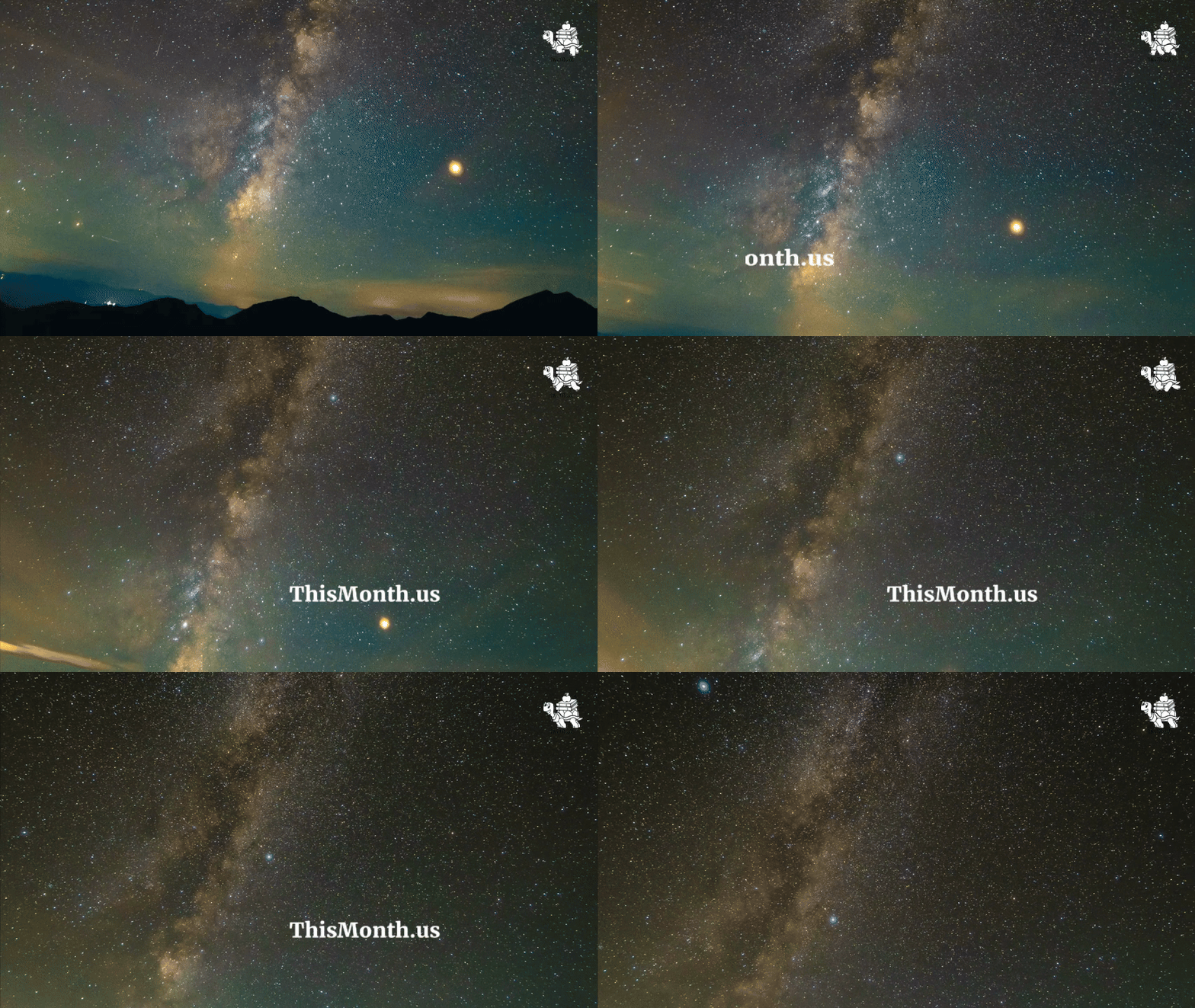
Every November, Earth’s path around the Sun crosses a trail of dust and tiny rocks left behind by Comet Tempel-Tuttle. Bits of that trail rush into the air above us at enormous speed. The air heats them until they glow, and Earth’s gravity keeps pulling on them the whole way. The streaks of light are called meteors, and a night with many of them is a meteor shower.
So what is gravity, and what does it have to do with a glowing streak? Pick your reading level.
What is gravity?
Gravity is a pull. Earth pulls on everything on it and near it, and that pull is the reason why:
- A ball you throw up comes back down
- You land on the ground when you jump
- Leaves fall from trees and rain falls from clouds
- Your toys stay on the floor instead of floating away
Cool fact: Earth pulls toward its center. That is why people in every part of the world stay on the ground, even though Earth is round like a ball.
Gravity and the Leonid meteors
In November, tiny bits of space dust and rock, called meteoroids, zoom toward Earth. When they rush through the air, they get hot and glow. A glowing streak is called a meteor, or a shooting star.
Shooting stars are not stars. Most are tiny, from the size of a grain of sand to the size of a pea. Earth’s gravity pulls on them all the way down.
Talk together: What do you think would happen if you dropped a ball on the Moon?
Understanding gravity
Gravity is a pulling force between all objects. The more mass an object has, the stronger its pull. Mass is the amount of stuff an object is made of.
- Earth’s pull is strong because Earth has a huge amount of mass, and we are standing right on it.
- The Moon’s pull is weaker because the Moon has less mass than Earth. Astronauts on the Moon can jump about six times higher than on Earth.
- The Sun’s pull is the strongest in our solar system, because the Sun has far more mass than anything else here. It keeps all the planets circling around it.
- You pull on things too, but your pull is far too small to notice.
Amazing fact: Planets do not fall into the Sun because they are also moving sideways. The Sun’s pull keeps bending their path into a loop called an orbit.
The Leonid meteor shower and gravity
Comet Tempel-Tuttle circles the Sun, and as it travels it leaves a trail of dust and small rocks behind it, like a dirt path behind a bicycle. Every November, Earth’s orbit crosses that trail.
Bits of the trail rush into Earth’s atmosphere at up to 44 miles per second. That is so fast that the air around them heats them until they glow, making the streaks of light we call meteors. Earth’s gravity pulls on each piece, but most of a meteor’s speed comes from its own motion through space.
Science connection: Most Leonid meteoroids are tiny, from a grain of sand to a pea. They look bright because they are moving so fast.
The science of gravity
Gravity is a force of attraction between all objects that have mass. Isaac Newton worked out that the strength of the pull depends on two things:
- Mass: the amount of matter in an object. More mass means a stronger pull.
- Distance: how far apart the objects are. Farther apart means a weaker pull. In fact, the pull drops with the square of the distance, so doubling the distance leaves one quarter of the pull.
Earth’s pull on us is strong because Earth’s mass is enormous, about 6,000,000,000,000,000,000,000,000 kilograms, and we are standing close to its center. The Sun has far more mass than Earth, which is why its pull holds Earth and the other planets in orbit.
Scientific principle: Gravity causes acceleration. Near Earth’s surface, and ignoring air, a falling object speeds up by about 9.8 meters per second every second (9.8 m/s²).
The Leonids: a case study
The source
The Leonids come from Comet 55P/Tempel-Tuttle, which circles the Sun about every 33 years and is due back near the Sun around 2031. When the comet is near the Sun, heat turns some of its ice to gas, which frees dust and rock and leaves a stream of debris along its path.
Earth’s crossing
Each November, Earth’s orbit crosses this debris stream. Pieces of it, called meteoroids, enter the upper atmosphere about 100 kilometers above the ground. Three things then matter:
- Gravity: Earth’s pull bends the paths of the pieces toward Earth and adds a little to their speed, but only a small part of the total.
- Collisions with air molecules: Even thin air heats a fast meteoroid so much that its surface vaporizes. The glow comes from the hot vapor and the air around it.
- Heat: Surface temperatures reach roughly 1,650°C, which is why even a grain-sized piece makes a bright streak.
Where the speed comes from
Leonid meteoroids meet the atmosphere at about 71 kilometers per second (about 160,000 miles per hour), among the fastest of any shower. Most of that speed is not from Earth’s pull. The dust circles the Sun in the opposite direction from Earth, so the two speeds add together: Earth moves about 30 km/s and the dust about 41 km/s, giving a head-on crossing speed near 71 km/s.
Peak activity: The Leonids peak around November 17 to 18. In a normal year, observers under dark skies see about 10 to 15 meteors per hour. Some years have been far stronger. Great Leonid storms were seen in 1833 and 1966, and strong displays in 2001 and 2002. The years around the comet’s return give the best chance, but not every return produces a storm, and none is expected in 2026.
Gravity Simulator
Click or tap anywhere in the dark box, away from the Sun, to release a dust grain. You can also use the Add button. Choose how it starts, then watch what the Sun’s pull does.
In Drop, a grain starts at rest and falls straight toward the Sun, like a football falling toward the ground. In Sideways push, it starts moving sideways, and the Sun’s pull bends its path into a loop, which is how real planets and comet dust stay on their paths. Try both, then compare. This model is about the Sun’s pull and sideways motion only. What lights up a real meteor is Earth’s air.
Try this at home: the gravity drop test
Does gravity pull some things faster than others? Make a prediction, then test it.
What you need: a small ball, a sheet of paper, a safe place to drop them (over carpet or grass), and a helper to watch.
- Step 1: Hold the ball and the flat sheet of paper at the same height, about chest high.
- Step 2: Predict which will land first, and why.
- Step 3: Drop them at exactly the same time and watch.
- Step 4: Crumple the paper into a tight ball, predict again, and repeat the drop.
What you will find: The flat paper drifts down slowly because it catches a lot of air. The crumpled paper catches much less air, so it lands at about the same time as the ball. Gravity pulls on both. The air is what makes the difference. Where there is no air, everything falls together.
See it in action: Apollo 15 on the Moon
In 1971, Apollo 15 Commander Dave Scott dropped a hammer and a feather on the Moon, where there is almost no air. Watch what happens.
Video credit: Apollo 15 Commander Dave Scott demonstrates that the mass of an object does not affect the time it takes to fall, using a hammer and a feather on the Moon.
Date: August 1971. Source: NASA/NSSDC.
This file is in the public domain because it was created by NASA. NASA material is not protected by copyright unless noted.
How to watch the Leonid meteor shower
When: The peak night in 2026 is November 17 into November 18, but Leonids can be seen from about November 6 to 30.
Best time: After midnight until dawn, when your part of Earth is turned toward the front of its path around the Sun, where the meteors come from.
The Moon in 2026: The Moon is at first quarter on November 17, so moonlight can wash out faint meteors early in the night. Check when the Moon sets where you live, and plan to watch after it sets.
Where to look: The meteors seem to spread out from the constellation Leo, the Lion, but you can see them anywhere in the sky.
- Find a dark place away from lights, and go with an adult.
- Give your eyes 20 to 30 minutes to adjust, and keep phone screens away.
- Lie back and look up. You do not need a telescope.
- Dress warmly and bring a blanket.
- Be patient. At best you might see 10 to 15 meteors an hour.
Read it aloud. This article was written to answer a four-year-old, so it works well read aloud to a classroom or to a child at home. Pause at each stop (the park, the Moon, the Sun, the seaside) and invite listeners to say what they think will happen next.
Curious Kids: how does gravity pull things down to Earth?

This is an article from Curious Kids, a series for children of all ages. The Conversation is asking young people to send in questions they’d like an expert to answer. All questions are welcome: find details on how to enter at the bottom.
How does gravity pull things down to Earth? – Gabriel, age four, Stewartby, UK
Gravity is a force, which means that it pulls on things. But the Earth isn’t the only thing which has gravity. In fact, everything in the universe, big or little, has its own pull because of gravity – even you.
Isaac Newton was one of the first scientists to figure out the rules of how gravity behaves. The story goes, he was sitting under an apple tree when one of the fruits fell off. As he saw the apple fall down to the ground, he started to wonder why it didn’t go up to the sky instead.
After lots of experiments, and some very clever thinking, he worked out that the force of gravity depends on how heavy objects are, and that the pull of gravity between objects gets smaller, the further apart they are. To see how gravity works in our universe, we’re going to take a journey, with a few stops along the way.
First off, we’ll go to the park and play a game of football. When you kick the football into the air, the Earth’s gravity pulls it back down. But that’s not the only thing that’s happening: the gravity of the football is also pulling on the Earth. The thing is, the Earth is very heavy – much heavier than the football – so it’s unaffected by the pull of the football, while the football itself is pulled back down to Earth.
Our next stop is the moon, and as we journey up into space, there’s a good chance you’ll see the sun. Now, the sun is much, much bigger than the Earth, which means its pull is very powerful indeed.
You might be wondering why the Earth (and all the other planets) don’t just fall into the sun, the same way the football falls to Earth. The answer is that the planets are all moving, and the balance between the force of gravity and the speed of their movement (which comes from when they were first made, about 4.5 billion years ago) keeps them circling round the sun.
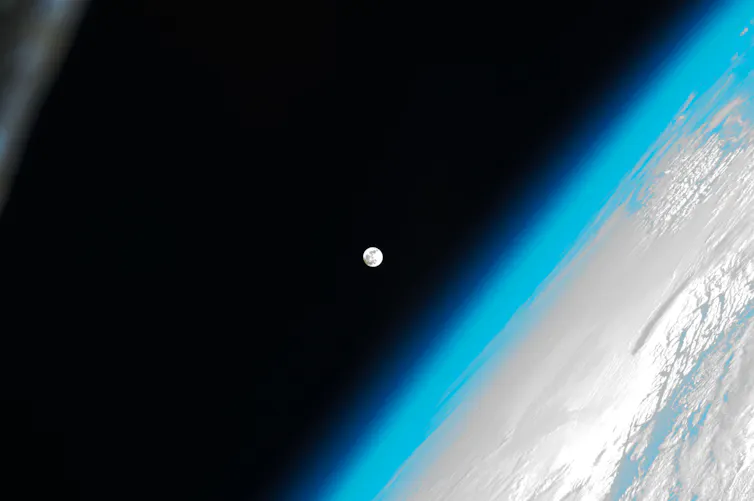
When we arrive on the moon, you’ll see that the pull of gravity is not the same everywhere. It is related to how heavy – or how massive – an object is. If you jump on the moon, you’ll be able to go much higher than you can on Earth. This is because the Earth is bigger than the moon, so the force between you and the Earth – which is what we call weight – is bigger than the force between you and the moon. On the moon, you seem to weigh less than on Earth, so you can jump higher.
Our final stop is the seaside. Sitting on the beach, you can see the sea gradually getting closer and closer to you – this is the tide coming in. After some time, the sea seems to get further away – now, the tide is going out. But the sea is not actually moving in and out – it is moving up and down. As the sea level rises, the water gets closer to you, because the beach you are sitting on slopes upwards away from the sea. And as as the sea level drops down, the water gets further away from you.
This is also an effect of gravity, and it happens because the moon is close to the Earth. Unlike the football, the moon is heavy enough to have an effect – just a little one, because the Earth is still much heavier – but it’s enough for us to notice when we watch the tides. As the water level rises, it is being pulled towards the moon, and the tide comes in. Then the tide goes out, and the water level drops, as the moon rotates around the Earth.
An interesting question is why we don’t have enormous tides caused by the sun pulling on the Earth. We know that the sun is much bigger than the moon – so surely it ought to be able to pull water towards it? Actually, it does – but much less than the moon. This is because although the sun is much bigger than the moon, it is much, much further away – and the pull of gravity gets weaker the bigger the distance between objects.
So, next time you’re kicking a football around in the park, you’ll know how gravity is bringing the football back down to Earth.

More Curious Kids articles, written by academic experts:
How do SIM cards make a phone work? – Leo, age five, Sydney, Australia
What’s it like to be a fighter pilot? – Torben, age eight, Sussex, UK
This article has been updated to more clearly describe the effect of gravity between the Earth, the moon and the football, as well as the movement of the planets.
Monica Grady, Professor of Planetary and Space Sciences, The Open University
This article is republished from The Conversation under a Creative Commons license. Read the original article.
Follow gravity: from the park to the night sky
Select a stage to open it. Each one points to the part of the reading where you can find more.
-
When you kick a football, Earth’s gravity pulls it back down. The article adds that the football pulls on Earth too, but Earth is so much heavier that only the football seems to move.
Think about it: If everything pulls on everything else, why do we never see the Earth move when we kick a ball?
-
The Moon has less mass than Earth, so the force between you and the Moon is smaller than the force between you and Earth. On the Moon you weigh less and can jump much higher. With no air to slow things, a hammer and a feather land together.
Think about it: Part 2 explains the higher jump. What does the Apollo 15 clip in Part 1 add that the jump does not show?
-
The Sun’s pull is very powerful, yet the planets do not fall into it, because they are moving. The balance between the Sun’s pull and a planet’s sideways speed keeps it circling in an orbit.
Think about it: Try the simulator with Drop, then with Sideways push. What changes, and why?
-
The tide comes in as the water level rises, pulled toward the Moon. The Sun is far bigger than the Moon, yet it causes smaller tides, because it is much, much farther away and the pull weakens with distance.
Think about it: Mass and distance both matter. In this story, which one wins, and how do you know?
-
Comet Tempel-Tuttle circles the Sun and leaves a stream of dust and small rocks along its path. Each November, Earth’s orbit crosses that stream. The dust is also circling the Sun, held on its path by the same kind of pull that holds the planets.
Think about it: Why does Earth meet the dust at the same time every year?
-
Meteoroids hit the thin upper air at about 71 kilometers per second. Collisions with air molecules heat them until they glow. Earth’s gravity pulls on them throughout, but most of their speed comes from their own motion around the Sun.
Think about it: Which part of a meteor’s story comes from gravity, and which part comes from the air?
-
The 2026 peak is the night of November 17 into November 18, and the Moon is at first quarter on the 17th. The best sky is dark, away from lights, after the Moon has set and after your eyes have adjusted.
Think about it: Before you watch, predict how many meteors you will count in one hour. What could make your count go up or down?
Discussion questions
- Part 2 says everything has its own pull, even you. Why don’t we notice the pull between two people? Use the idea of mass in your answer.
- When a football is kicked, Earth pulls on the ball and the ball pulls on Earth. Why does only the ball seem to move?
- Why can you jump higher on the Moon? Use evidence from Part 2.
- Part 2 says the planets do not fall into the Sun. What keeps them circling? Use the simulator’s two settings as evidence.
- Why does the Moon cause bigger tides than the Sun, even though the Sun is much bigger? Use the word distance.
- Part 1 says most of a Leonid meteor’s speed comes from its own motion around the Sun, not from Earth’s pull. What evidence in Part 1 supports that? (Grades 4-5)
- In the drop test, why did the crumpled paper land with the ball while the flat paper floated down? What does this show about gravity and air?
Standards connections: K-PS2-1 3-PS2-1 5-PS2-1