🎭 Teacher’s Guide to Carnival 🎉
Carnival (also known as Shrovetide or Fastelavn in some regions) is a festive season celebrated in many countries around the world. It typically occurs in the weeks leading up to Lent, the Christian period of fasting and reflection before Easter.
Key Characteristics:
- Timing: Usually occurs in late February or early March, ending on “Shrove Tuesday” (also called Mardi Gras, meaning “Fat Tuesday” in French)
- Duration: Can last from a few days to several weeks, depending on the region
- Purpose: Originally a time of feasting and celebration before the fasting period of Lent
- Spirit: Celebration, joy, community unity, cultural expression, and temporary reversal of social norms
The Name “Carnival”:
The word “carnival” comes from Latin. Scholars believe it derives from either:
- “Carne levare” – meaning “to remove meat” (referring to the upcoming fast)
- “Carne vale” – meaning “farewell to meat”
- Some interpretations use “farewell to the flesh” – embracing the festival’s carefree, celebratory spirit
Universal Themes Across Carnival Celebrations:
- 🎭 Masks and Costumes: Allowing people to temporarily shed their everyday identity
- 🎶 Music and Dance: Creating community through shared rhythm and movement
- 🎉 Parades and Street Parties: Public celebrations that bring communities together
- 🍖 Feasting: Enjoying rich foods before a period of fasting
- ⚖️ Role Reversal: Temporary suspension of social hierarchies
Ancient Roots:
Carnival traditions draw from ancient European festivals that predate Christianity:
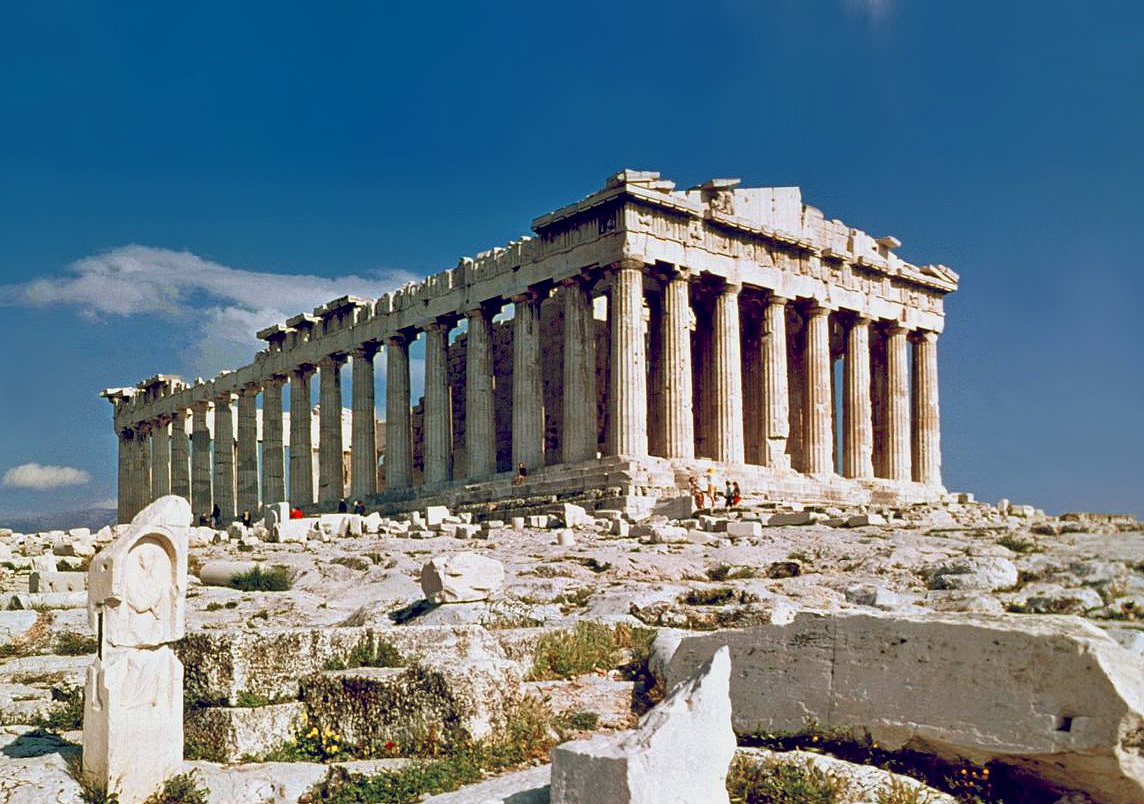
🏛️ Ancient Rome: Saturnalia
A December festival honoring the god Saturn, featuring role reversals where enslaved people were temporarily treated as equals, masks, feasting, and gift-giving. The festival involved a temporary overthrow of social order.
🍇 Ancient Greece: Dionysian Festivals (Anthesteria)
Celebrations honoring Dionysus, the god of wine, featuring processions with masked participants, theatrical performances, and the temporary suspension of social norms.
❄️ Germanic Tribes: Winter’s End Celebrations
Rituals to drive out winter spirits and welcome spring, featuring processions with people in animal disguises and elaborate costumes, celebrating the return of fertility and light.
Medieval Development:
During the Middle Ages, Carnival evolved into a distinctly Christian celebration:
- Practical Purpose: Communities consumed all perishable winter food stores (meat, butter, lard) before they spoiled, as these items wouldn’t last until spring harvest
- Spiritual Purpose: People confessed their sins and prepared spiritually for the solemn Lenten season
- Social Function: Provided an outlet for daily frustrations, with the ruling class playfully mocked through masks and disguises
- Duration: Could last from Christmas to the beginning of Lent (nearly two months)
Church Response:
Religious authorities attempted to regulate Carnival celebrations:
- Pope Gregory the Great (590-604) established Ash Wednesday as the start of Lent, creating a clear division between celebration and penance
- The Synod of Leptines (742, near present-day Belgium) condemned excessive celebrations
- Despite official disapproval, Carnival traditions persisted and evolved
Teaching Point: Carnival represents a fascinating blend of pre-Christian traditions, Christian customs, and cultural adaptation. It shows how traditions evolve over centuries while maintaining core themes of community, celebration, and seasonal change.
While Carnival shares common themes worldwide, each region has developed unique traditions:
🇺🇸 New Orleans, Louisiana (Mardi Gras)
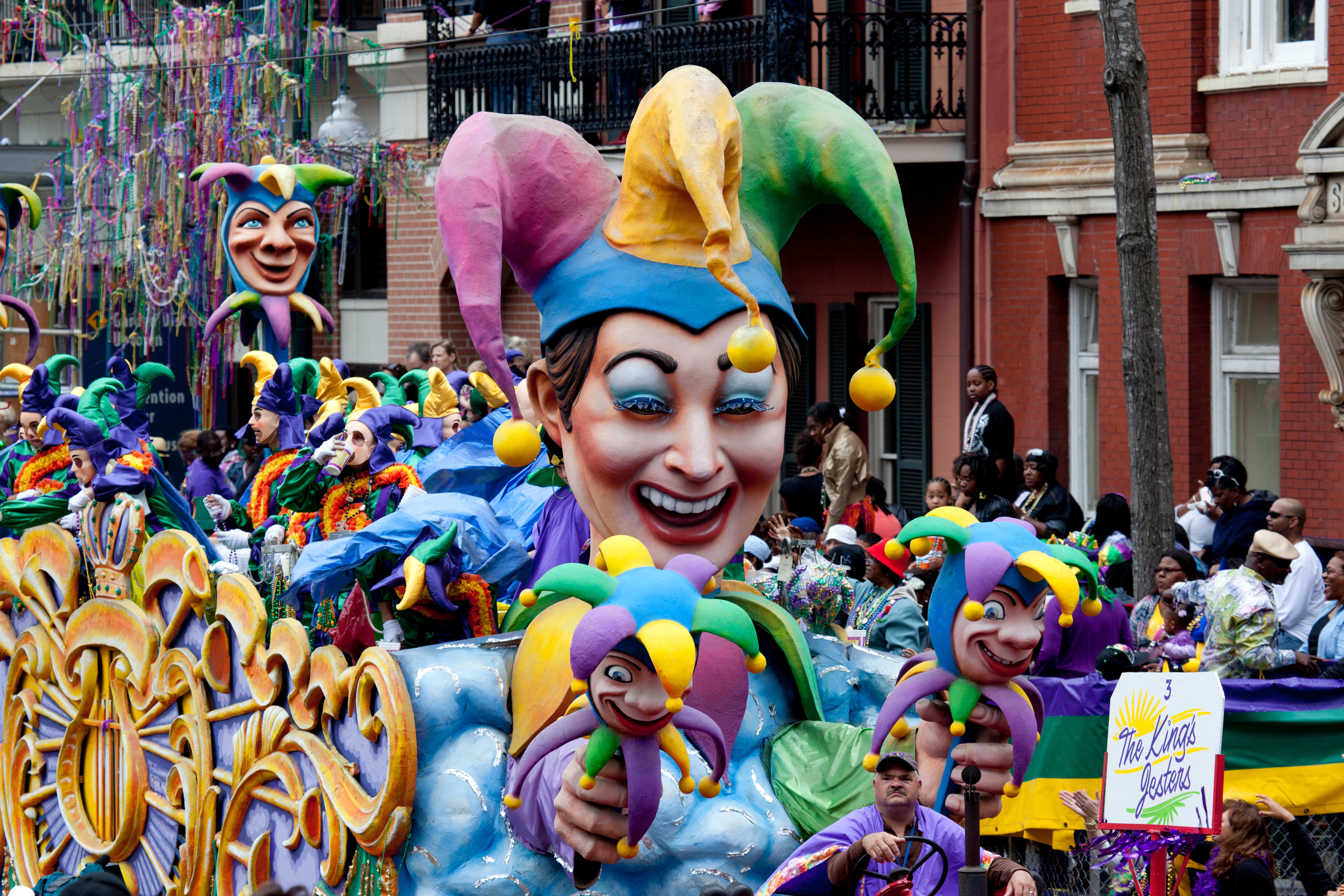
Mardi Gras parade in New Orleans, Louisiana. Photo: Library of Congress
What makes it unique: America’s most famous Carnival celebration, organized by “krewes” (social clubs), featuring elaborate parades, masked balls, and the iconic tradition of throwing beads and other items to crowds.
Historical Background:
- First celebrated in Louisiana in 1699 at the mouth of the Mississippi River
- 1856: The Mistick Krewe of Comus founded, creating the first organized parade
- 1872: Rex krewe established, introducing the official Mardi Gras colors
- 1875: Louisiana declared Mardi Gras a legal state holiday
- 1909: Zulu Social Aid & Pleasure Club founded by African American New Orleanians, initially as a satirical response to Rex’s exclusion of Black participants
The Krewes: Social organizations that organize parades and balls
- Traditional Old-Line Krewes: Comus (1856), Rex (1872), Momus, Proteus
- “Super Krewes”: Endymion, Bacchus (known for celebrity guests and massive parades)
- Zulu Social Aid & Pleasure Club: Predominantly African American krewe famous for hand-decorated coconuts
- Women’s Krewes: Krewe of Muses (known for throwing decorated shoes)
- Satirical Krewes: Krewe du Vieux, ‘tit Rex (featuring satirical commentary on politics and current events)
The Official Colors: Purple, Green, and Gold
- Purple: Justice
- Green: Faith
- Gold: Power
- First specified by Rex organization in 1872
- Based on heraldic principles to create a royal “kingdom” symbolism
Unique Traditions and Throws:
- Beads: Plastic beads thrown from floats (originally glass from Czechoslovakia, now mostly from China)
- Doubloons: Commemorative coins created by krewes, first introduced in 1959
- Zulu Coconuts: Hand-decorated coconuts (must be handed, not thrown since 1988 for safety)
- Specialty Throws: Decorated shoes (Muses), cups, stuffed animals, themed items
- King Cake: Oval pastry with a hidden plastic baby; whoever gets the baby hosts the next party or buys the next cake
Parade Schedule:
- Season begins on Epiphany (January 6) – “Twelfth Night”
- Major parades concentrate in the final two weeks before Mardi Gras Day
- Mardi Gras Day highlights: Zulu parade (morning), Rex parade (afternoon), truck parades, walking clubs
- Traditional route: St. Charles Avenue to Canal Street
- Walking parades: Krewe du Vieux through French Quarter and Marigny
Mardi Gras Indians: African American tradition featuring elaborate hand-sewn suits with feathers and beads, honoring both African heritage and solidarity with Indigenous peoples. Different “tribes” parade through neighborhoods.
Flambeaux Carriers: Traditional torch bearers who originally lit night parades before electric lights. Descendants of formerly enslaved people, they perform elaborate movements with flaming torches fueled by naphtha.
Cultural Blend:
- French colonial traditions (name “Mardi Gras,” Catholic celebration)
- Spanish influences (colonial period contributions)
- African traditions (rhythms, second-line dancing, Mardi Gras Indians)
- Caribbean connections (music, celebration style)
- American innovations (krewe system, throws, commercialization)
Social Significance: Brings 1.4 million visitors annually, generating crucial revenue for the city. Represents community resilience, especially after Hurricane Katrina (2005) and COVID-19 pandemic (parades cancelled 2021, returned 2022).
Modern Challenges:
- Environmental impact of plastic beads and parade waste
- Safety concerns (crowd control, tandem float accidents)
- Tensions between traditional exclusivity and calls for inclusivity
- Balance between tourist-focused celebration and local tradition
- 2021 innovation: “Yardi Gras” – residents decorated homes as “house floats” during parade cancellation
🇧🇷 Rio de Janeiro, Brazil
What makes it unique: The world’s largest Carnival celebration, featuring elaborate samba parades, competitive performances by samba schools, and street parties (blocos) throughout the city.
Key features: Sambadrome parades, intricate costumes requiring months of preparation, African-Brazilian cultural influences, year-round preparation by community organizations.
Music: Samba, with its African rhythms brought by enslaved people, blended with Portuguese influences.
Duration: Officially 5 days, but celebrations begin weeks earlier.
🇻🇪 Venezuela (Various Cities)
What makes it unique: Each region has distinct traditions. El Callao features Calypso music and Caribbean influences, while other areas celebrate with devils (diablos) and traditional dances.
Key features: Water balloon fights, foam parties, elaborate floats, and the burning of symbolic figures.
🇹🇹 Trinidad and Tobago
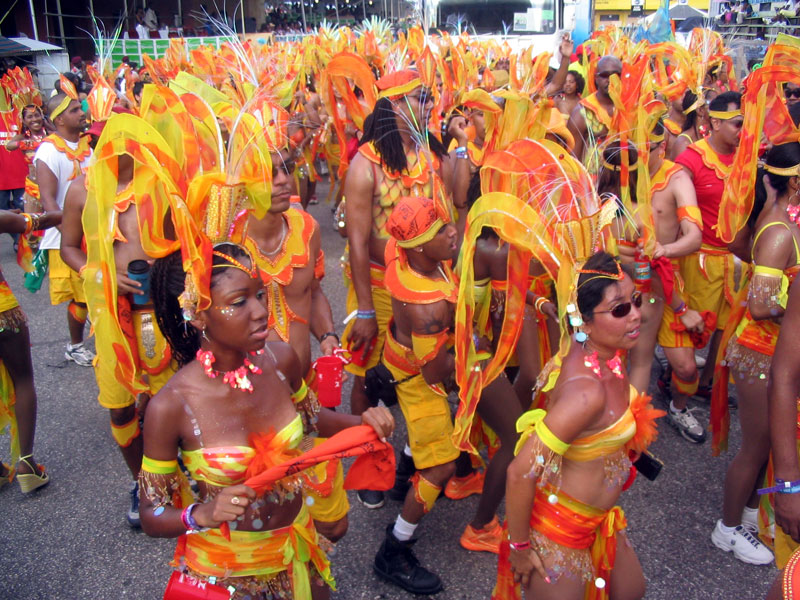
Carnival masqueraders in stunning costumes parade through Trinidad’s streets
What makes it unique: Calypso and soca music, steel pan drums (invented in Trinidad), elaborate costumes with themes like birds, butterflies, and historical scenes. Trinidad Carnival is considered one of the most influential Carnival celebrations in the world.
Historical Origins (1780s-present):
- 1780s: French planters and “free coloureds” (free people of mixed race) emigrated from French West Indies, bringing masquerade ball traditions
- Pre-1834: Enslaved Africans created parallel celebration called “Canboulay” (from French “cannes brûlées” – burnt cane), featuring drums, stick-fighting (calinda), and their own rituals mocking masters’ balls
- 1834: Emancipation – Freed Africans began celebrating during Carnival season, carrying burning sugarcane to commemorate their freedom
- 1881 & 1884: Canboulay Riots – Colonial government attempts to suppress Carnival led to civil disorder and resistance
- 1884: Peace Preservation Act banned torches, drumming, horns, stick-fighting, attempting to control the celebration
The Birth of Steel Pan (National Instrument):
- 1881: Stick fighting and African drums banned after Canboulay Riots
- Bamboo-Tamboo: People beat bamboo sticks together as replacement – these were also eventually banned
- 1937: Creative revolution – Musicians transformed frying pans, dustbin lids, and oil drums into instruments
- 1941: U.S. Navy arrival helped popularize steel pan internationally
- Today: Steel pan (or “pan”) is Trinidad’s national instrument and central to Carnival, with major competitions (Panorama)
J’ouvert (“Break of Day”):
- Starts early Monday morning (around 2-4 AM), symbolizing the official beginning of Carnival
- Participants cover themselves in oil, mud, paint, and powder
- Features satirical and homemade costumes (contrast to elaborate costumes later)
- Rooted in Canboulay traditions of resistance and celebration
- Music trucks with live bands or DJs parade through streets
- Celebration of freedom, letting go of inhibitions, equality through messiness
Music Evolution:
- Calypso: Developed in 17th century from West African Kaiso. Enslaved people used it to mock slave masters and communicate (since talking was forbidden). Sung originally by “griots” (storytellers) in French Creole
- Soca: Modern fusion genre (soul + calypso), now more popular than traditional calypso for Carnival
- Competition: Calypso Monarch, Soca Monarch, Chutney Soca competitions during Carnival season
Costume (Mas) Culture:
- Elaborate costumes can take months to create
- Major “bands” (costume groups): Harts, Tribe, Bliss, and many others
- Themes vary: birds, butterflies, African royalty, fantasy, historical tributes
- Costumes feature feathers, beads, rhinestones, and increasingly elaborate designs
- “Playing mas” means wearing costume and dancing in the parade
Key Carnival Events:
- Band Launch Fetes: Pre-Carnival parties where costume bands reveal their themes
- Dimanche Gras: Sunday night show featuring Calypso Monarch finals
- J’ouvert Monday: Early morning mud and paint celebration
- Carnival Monday: First full day of street parades
- Carnival Tuesday: Grand finale and biggest parade day
- Panorama: Steel band competition (finals on Carnival Saturday)
Historical Note – Cultural Resistance: After emancipation in 1834, formerly enslaved people reclaimed Carnival as a celebration of freedom. Trinidad Carnival became a powerful expression of African-Caribbean cultural identity and resistance to colonial oppression. The Canboulay Riots represented direct confrontation with colonial attempts to suppress Black celebration and cultural expression.
Global Influence: Trinidad Carnival has inspired celebrations worldwide:
- Toronto: Caribana (now Toronto Caribbean Carnival)
- London: Notting Hill Carnival (second-largest street festival in world)
- New York: Labor Day Carnival (Brooklyn)
- Miami: Miami Carnival
- Houston: Carifest
Cultural Significance: Trinidad Carnival represents the triumph of African-Caribbean culture over oppression, the creative genius born from resistance, and the transformation of instruments of control (banned drums → steel pan) into symbols of national pride. It’s a living museum of cultural resilience and innovation.
🇮🇹 Venice, Italy
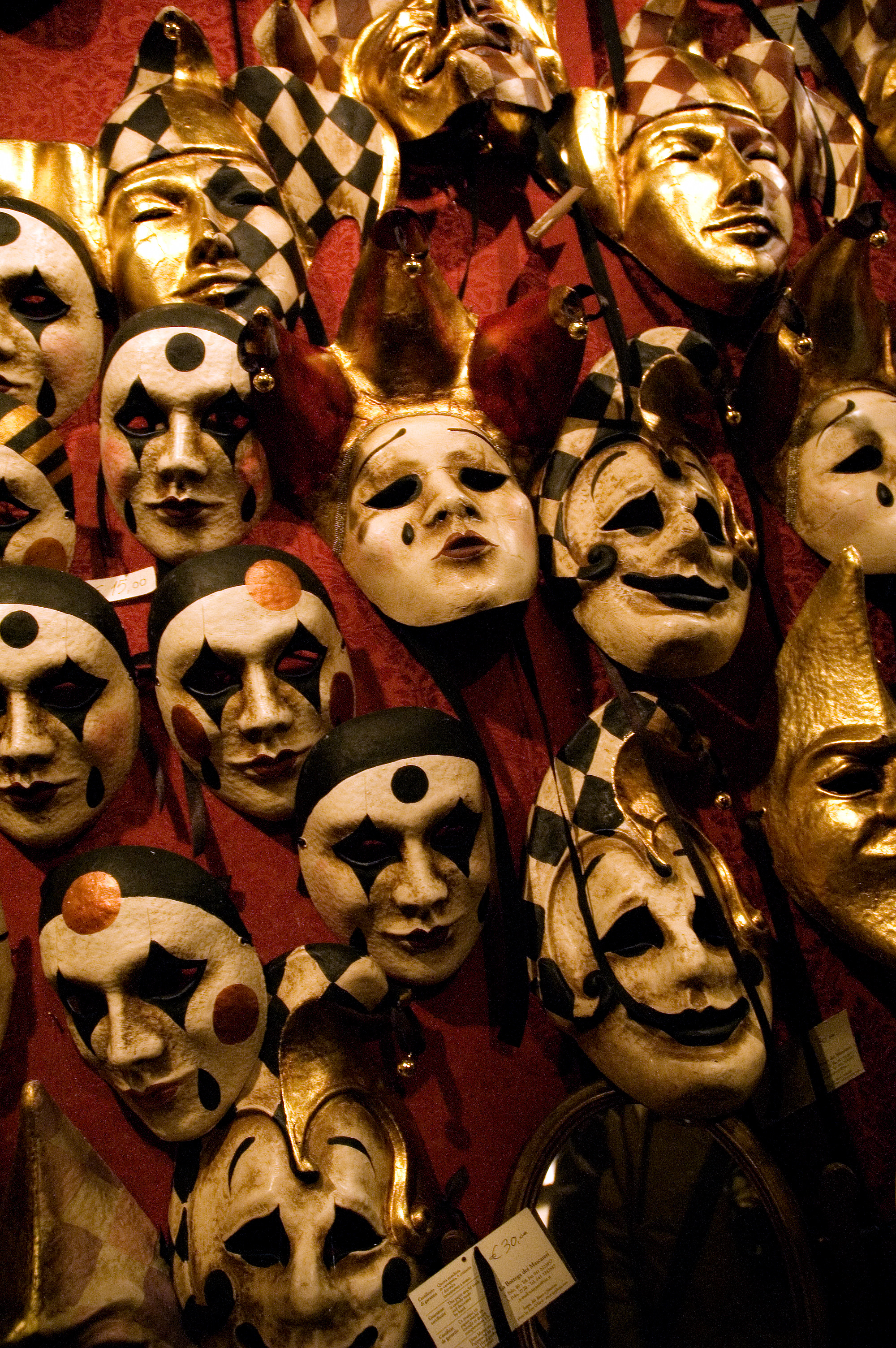
Traditional Venetian Carnival masks showcasing the elegant, mysterious aesthetic of Venice’s celebration
What makes it unique: Elegant masked balls, sophisticated costumes based on commedia dell’arte characters, and a focus on mystery and artistry rather than street parties.
Key features: Ornate Venetian masks (like the Bauta, Colombina, and Medico della Peste), historical costume parades, masquerade balls in historic palaces.
History: Dating back to 1162, Venice’s Carnival was banned in 1797 and revived in 1979.
🇧🇪 Binche, Belgium (Gilles of Binche)
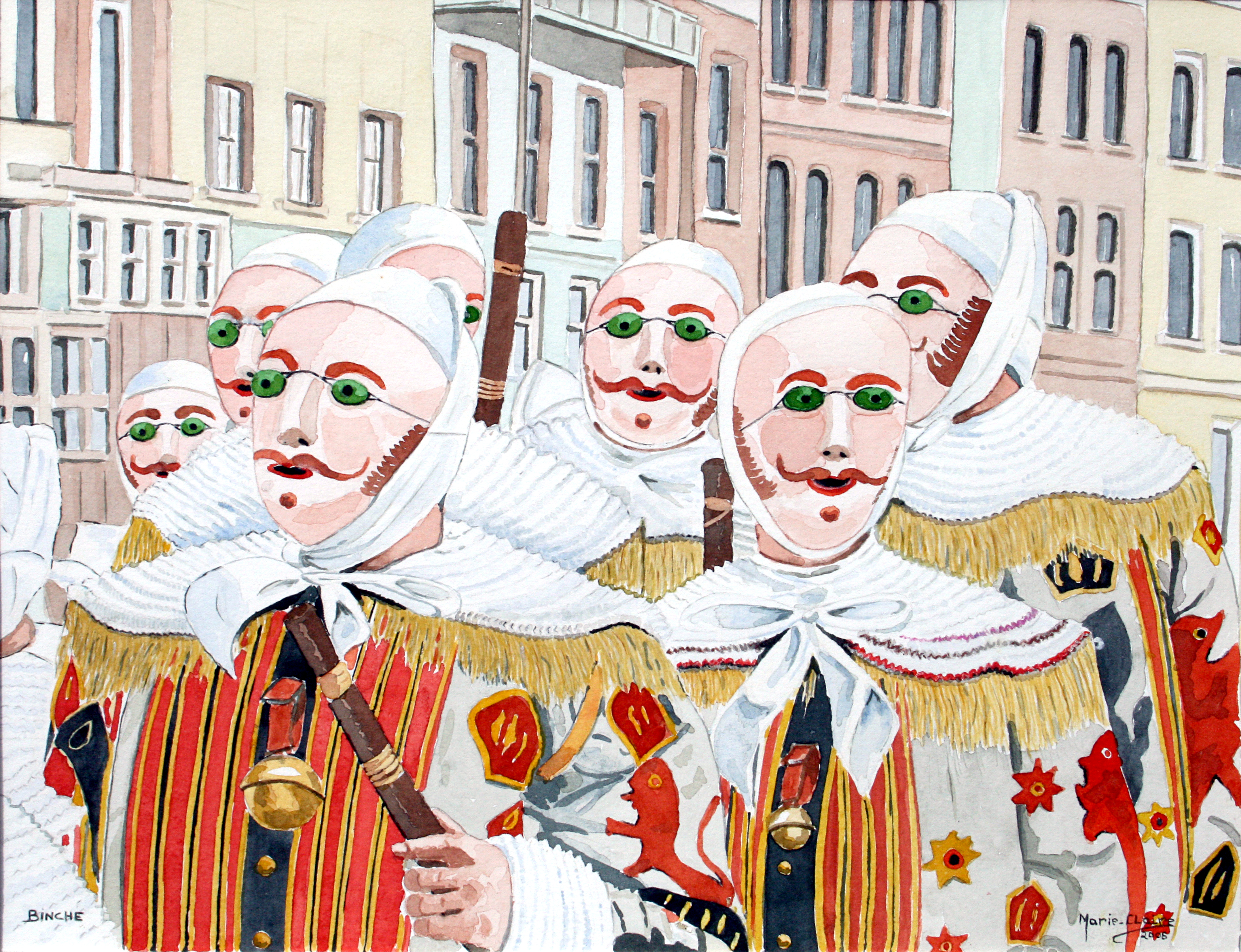
Gilles of Binche wearing their traditional wax masks. Photo: Marie-Claire Lefebure, 2005
What makes it unique: UNESCO World Heritage tradition featuring the Gilles, performers in elaborate costumes with wax masks, ostrich feather headdresses, and wooden shoes.
Key features: Orange throwing (symbolizing prosperity), morning drummers, afternoon parade with 3-foot tall ostrich plume hats.
Historical note: Dating back to the 14th century, this is one of Europe’s oldest Carnival celebrations.
🇩🇪 Germany (Karneval/Fasching)
What makes it unique: Opens on 11/11 at 11:11 AM, features satirical floats mocking politicians, elaborate parades in Cologne, Düsseldorf, and Mainz.
Key features: Rosenmontag (Rose Monday) parade, “Büttenrede” (satirical speeches), costume balls, the “Carnival cry” varies by city.
🇪🇸 Spain (Varies by Region)
Canary Islands: Influenced by Latin American traditions, featuring elaborate costumes and murgas (satirical musical groups).
Cádiz: Famous for satirical song groups (chirigotas) that write new material each year criticizing politicians and current events.
🇨🇴 Barranquilla, Colombia
What makes it unique: UNESCO World Heritage celebration blending Indigenous, African, and Spanish traditions.
Key features: Battle of the Flowers parade, cumbia dance, marimonda masks (satirical figures), elaborate floats.
🇸🇳 Senegal (West African Carnival)
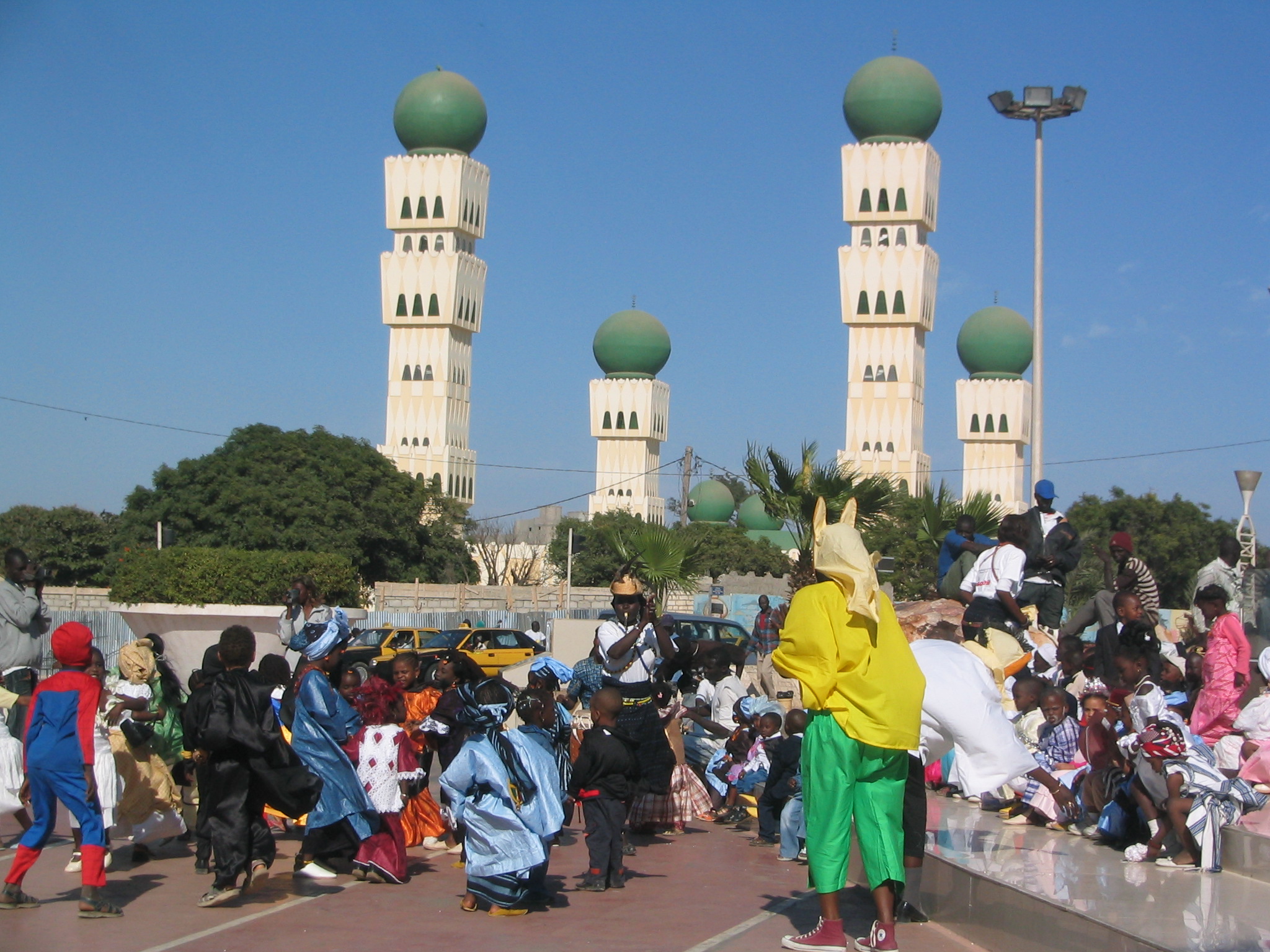
Mardi Gras celebration in Dakar, Senegal, showcasing the African roots and modern evolution of Carnival traditions
What makes it unique: Represents the African origins of many Carnival traditions, particularly those that influenced celebrations in the Americas and Caribbean through the transatlantic slave trade.
Key features: Vibrant costumes, traditional West African drumming and dance, community processions, blend of indigenous traditions with influences from French colonial period.
Cultural significance: Demonstrates the full circle of cultural exchange – while European colonizers brought Carnival traditions to Africa, African rhythms, dance styles, and spiritual practices had already profoundly shaped Carnival in the Americas. Senegalese Carnival represents both preservation of local traditions and creative adaptation of global influences.
Teaching note: This is an important addition to understanding Carnival as a truly global phenomenon with deep African roots, not just a European or Latin American tradition.
🇬🇧 Notting Hill Carnival, London, England
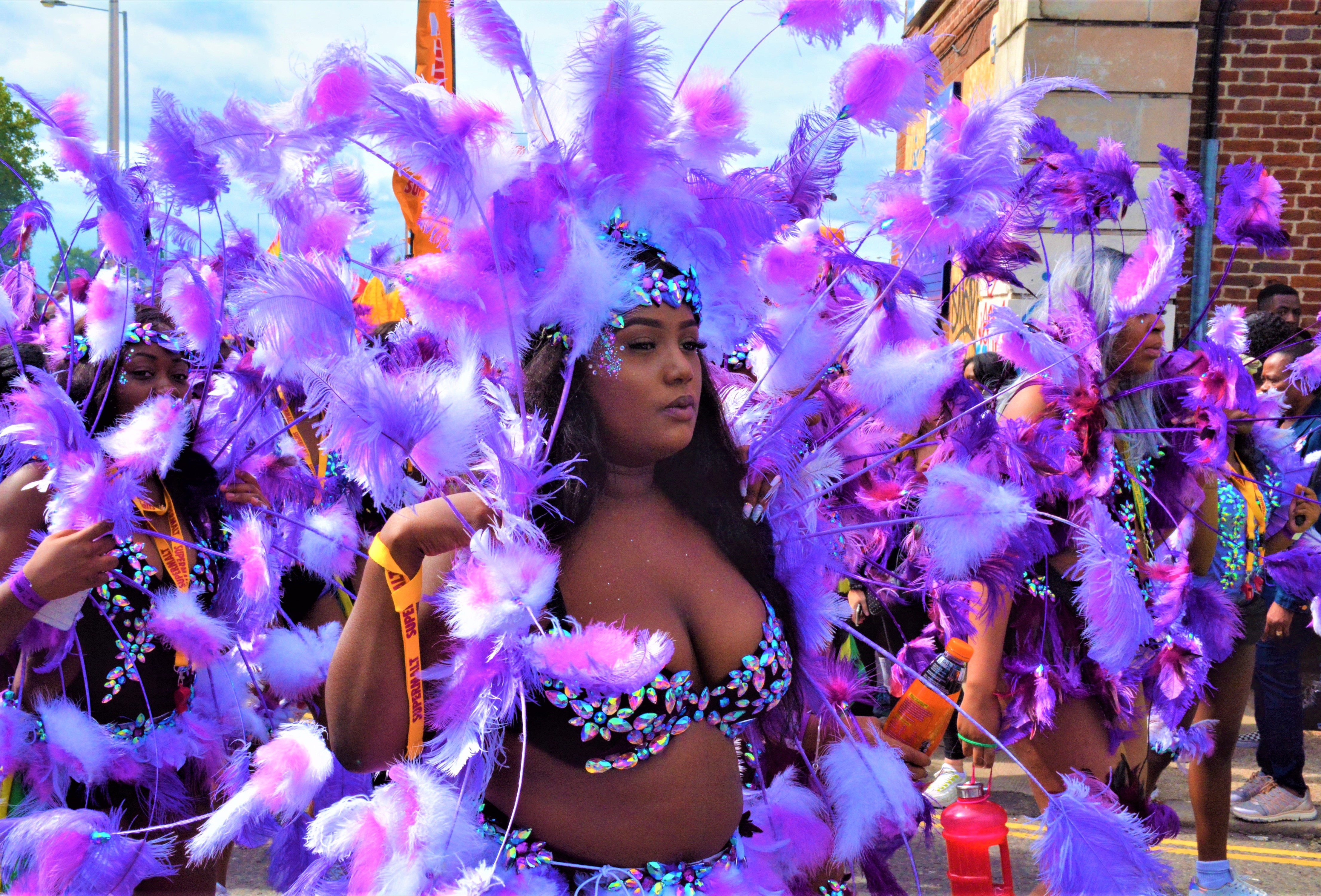
Notting Hill Carnival 2018 – Europe’s largest street festival celebrating Caribbean culture in London
What makes it unique: Europe’s largest street festival, held annually since 1966, celebrating British Caribbean community and culture. Attracts around 2 million people each year over the August Bank Holiday weekend.
Historical Background:
- 1959: First indoor “Caribbean Carnival” organized by Trinidadian journalist Claudia Jones (often called “the mother of Notting Hill Carnival”) in response to the 1958 Notting Hill race riots
- 1966: First outdoor street event organized by Rhaune Laslett; Russell Henderson’s steel band turned a children’s street party into a carnival procession
- 1973: Duke Vin brought the first sound system to the carnival; Leslie “Teacher” Palmer introduced costume bands, steel bands, and generators
- 1975: Became a major festival under Palmer’s leadership
- 1976: Marred by riots; some called for it to be banned (Prince Charles was a notable supporter)
- 2006: UK public voted it onto a list of “Icons of England”
The “Five Disciplines of Carnival”:
- Masquerade: Elaborate costumes and costume bands representing various Caribbean islands
- Calypso: Traditional Caribbean music with social commentary
- Soca: Modern Caribbean dance music (soul + calypso)
- Steelpan: Steel drum bands, including the Panorama competition on Saturday
- Sound Systems: Mobile DJ systems playing reggae, dancehall, and other music
Schedule and Events:
- Saturday: Panorama – steelpan band competition
- Sunday: Children’s Day with shorter parade route for young people and families
- Monday: Main adult parade (Bank Holiday Monday)
Cultural Significance:
- Response to Racism: Born from the 1958 race riots, the carnival became a powerful assertion of Caribbean identity and resistance to discrimination
- Community Building: Creates unity among British African Caribbean and British Indo-Caribbean communities
- Diaspora Identity: Maintains cultural connections to Trinidad, Jamaica, Barbados, and other Caribbean nations
- Integration of Traditions: Blends Trinidad Carnival, Crop Over (Barbados), and British cultural elements
- Reviving British Tradition: Scholars note it revived historical British carnival traditions (like Bartholomew Fair and Southwark Fair) that were banned in the 18th century
Musical Innovation:
- Created “bridge between carnival cultures” – calypso, soca, reggae, and British club music
- Sound systems brought from Jamaica by Duke Vin and others
- Emphasis on bass and rhythm – participants feel the vibrations from massive speaker systems
- Influenced UK music scene including jungle, drum and bass, and grime
Social and Political Context:
- 1970s: Controversy and calls to ban or relocate; seen as act of resistance by Caribbean community
- Economic Impact: 2002 study estimated £93 million contribution to London economy
- 2017: Minute’s silence for Grenfell Tower fire victims; many wore “green for Grenfell”
- 2020-2021: Cancelled due to COVID-19 pandemic
- 2022: Returned with 72-second silence for 72 Grenfell victims
Teaching Opportunities:
- Immigration and Diaspora: Windrush generation and Caribbean migration to Britain post-WWII
- Cultural Resistance: How marginalized communities use celebration to claim space and assert identity
- Urban Geography: How festivals transform and territorialize urban space
- Music and Social Change: Role of sound systems and musical innovation in community formation
- Contemporary Issues: Gentrification in Notting Hill, relationship between carnival and local residents
Key Figures:
- Claudia Jones: Trinidadian activist who organized first indoor Caribbean Carnival (1959)
- Russell Henderson: Steel band leader whose walkabout created first street procession
- Duke Vin: Brought first sound system from Jamaica (1955), co-founder of carnival
- Leslie “Teacher” Palmer: Transformed carnival into major festival (1973-1975)
Discussion Point for Students: While all these celebrations are called “Carnival,” each reflects the unique history, culture, and values of its community. Ask students: What do these differences teach us about how global traditions adapt to local cultures?
Why Carnival Matters:
🎭 Identity and Transformation
Masks and costumes allow participants to temporarily set aside their everyday identity. This tradition serves several purposes:
- Creates equality: Rich and poor, powerful and powerless become anonymous behind masks
- Enables social commentary: People criticize authority through satire and performance
- Facilitates self-expression: Individuals can explore different aspects of their personality
- Builds community: Shared experience of transformed identity creates social bonds
⚖️ Social Reversal and Critique
Carnival has historically been a “reversal ritual” where normal social rules are temporarily suspended:
- The powerful are mocked through satirical performances
- Social hierarchies are playfully inverted
- Marginalized communities claim public space and visibility
- Political and social critique is expressed through art, music, and performance
🌍 Resistance and Cultural Preservation
In many places, Carnival became a way for colonized and oppressed peoples to preserve their culture:
- Brazil and Caribbean: Enslaved Africans incorporated African rhythms, dances, and spiritual practices into Carnival, preserving cultural traditions
- Trinidad: After emancipation, formerly enslaved people reclaimed Carnival as a celebration of freedom
- Indigenous communities: Blended Catholic and Indigenous traditions in Carnival celebrations
🤝 Community and Belonging
Carnival strengthens social bonds through:
- Months of collaborative preparation in communities and schools
- Intergenerational knowledge transfer (costume-making, music, dance)
- Neighborhood and community pride
- Shared cultural heritage and identity
🎨 Artistic Expression
Carnival celebrations showcase incredible creativity:
- Costume design and construction (some taking a year to create)
- Musical composition and performance
- Choreography and dance
- Float design and construction
- Mask-making and visual arts
Important Context for Teachers: While Carnival is joyful and celebratory, it’s important to acknowledge its complex history. In some regions, Carnival traditions emerged from colonial oppression and enslavement. These celebrations represent both cultural preservation and resistance. Teach about these aspects age-appropriately, recognizing both the joy and the historical struggles embedded in the tradition.
Ages 5-7 30-45 minutes
🎭 Activity 1: Simple Mask Making
Materials: Paper plates, craft sticks, markers, crayons, glitter, feathers, stickers, glue
Instructions:
- Show students images of Carnival masks from different countries (Venice, Brazil, Trinidad)
- Discuss: “Why do you think people wear masks at Carnival?” (Simple answers: to pretend, to have fun, to be someone else)
- Have students decorate their own masks using bright colors
- Attach craft stick as a handle
- Host a mini “parade” around the classroom or schoolyard
Learning Objectives: Fine motor skills, creativity, cultural awareness, following directions
🎶 Activity 2: Rhythm and Movement
Materials: Music from different Carnival traditions (samba, calypso, etc.), simple percussion instruments (shakers, tambourines)
Instructions:
- Play music from different Carnival celebrations
- Let students move and dance to different rhythms
- Discuss: “How does the music make you feel?” “Which music do you like best?”
- Create a simple parade line around the classroom
- Students take turns leading with their instrument
Learning Objectives: Gross motor skills, rhythm recognition, cultural appreciation, self-expression
🌈 Activity 3: Color Exploration – Carnival Colors
Materials: Construction paper in purple, green, gold/yellow, tempera paint, brushes
Instructions:
- Introduce Mardi Gras colors: Purple (justice), Green (faith), Gold (power)
- Keep it simple: “These are special Carnival colors!”
- Have students create Carnival-themed artwork using these colors
- Make paper chains in these colors to decorate the classroom
Learning Objectives: Color recognition, symbolism introduction, creativity
📚 Activity 4: Story Time – Celebrations Around the World
Books to read:
- “To Carnival!: A Celebration in Saint Lucia” by Paul Baptiste
- “Carnival Queen” by Donette Williams-Harry
- “C is for Carnival” by Yolanda T. Marshall
Discussion: “What celebrations does your family have?” “How do you celebrate with your family?” Connect Carnival to students’ own celebration experiences.
🎊 Activity 5: Confetti Art
Materials: Tissue paper in bright colors, glue, paper
Instructions:
- Tear tissue paper into small pieces (confetti)
- Create a collage design using the colorful pieces
- Discuss: “At Carnival, people throw confetti to celebrate. What makes you want to celebrate?”
Age-Appropriate Discussion Points:
- Keep it simple: “Carnival is a big party that happens in many countries”
- Focus on universal themes: costumes, music, dancing, parades
- Connect to their experience: “Have you experienced celebrations?”
- Emphasize joy, creativity, and community celebration
Ages 8-11 45-60 minutes
🌍 Activity 1: Carnival Around the World Geography Project
Materials: World map, markers, research materials, poster board
Instructions:
- Divide class into groups, assigning each a different country/region (Brazil, Venice, New Orleans, Trinidad, Germany, etc.)
- Each group researches:
- When their region’s Carnival takes place
- Unique traditions and customs
- Types of music and dance
- Traditional costumes or masks
- Special foods
- Create a poster presentation with images and key facts
- Mark their country on a large world map in the classroom
- Present findings to the class
Learning Objectives: Geography, research skills, cultural comparison, presentation skills, teamwork
🎭 Activity 2: Elaborate Mask Design Project
Materials: Cardboard, papier-mâché supplies, paint, feathers, sequins, beads, elastic cord, hot glue (teacher-supervised)
Instructions:
- Study different mask styles: Venetian (elegant), Brazilian (colorful, large), Trinidadian (elaborate headpieces)
- Students sketch their design first, explaining their choice of colors and decorations
- Create masks over several class periods using papier-mâché technique
- Paint and decorate once dry
- Write an artist’s statement: “I designed my mask to represent…”
- Display in a classroom “Carnival gallery”
Learning Objectives: Art techniques, planning and design, cultural appreciation, written expression
Extension: Research a historical Venetian mask character (Colombina, Plague Doctor, Bauta) and create that specific style
🎵 Activity 3: Music and Culture Connection
Materials: Audio recordings of samba, calypso, steel drum, polka/march (German Carnival), videos of different Carnival parades
Instructions:
- Listen to music from different Carnival traditions
- Discuss:
- How are the rhythms different?
- What instruments do you hear?
- How does the music reflect the culture?
- Learn basic samba rhythm or simple steel drum pattern
- Create simple percussion instruments (shakers with beans/rice, drums from containers)
- Perform a mini Carnival parade with your instruments
Learning Objectives: Music appreciation, cultural context, rhythm skills, performance
📝 Activity 4: Compare and Contrast Essay/Venn Diagram
Materials: Research resources, Venn diagram templates, writing paper
Instructions:
- Choose two different Carnival celebrations to compare
- Create a Venn diagram showing:
- What’s unique to each celebration
- What they have in common
- Write a short essay (2-3 paragraphs) explaining:
- How the celebrations are similar
- How they are different
- Why these differences might exist (geography, history, culture)
Learning Objectives: Critical thinking, comparative analysis, writing skills, understanding cultural context
🎪 Activity 5: Design Your Own Float
Materials: Cardboard boxes, construction paper, paint, scissors, glue, decorative materials
Instructions:
- Research Carnival parade floats from different countries
- In groups, choose a theme (animals, seasons, story/myth, current topic of study)
- Sketch the float design showing:
- Overall shape and structure
- Color scheme
- Decorations and features
- Build a scale model using cardboard and craft supplies
- Present the float to the class, explaining the design choices and theme
Learning Objectives: Design thinking, engineering basics, collaboration, presentation skills, artistic expression
📚 Activity 6: Historical Timeline
Materials: Long paper/bulletin board, markers, research materials
Instructions:
- Create a timeline showing the evolution of Carnival from ancient festivals to modern celebrations
- Include key events:
- Ancient Roman Saturnalia
- Medieval Carnival traditions
- Carnival in the Americas (post-colonization)
- Modern Carnival celebrations
- Add illustrations for each time period
Learning Objectives: Understanding historical continuity and change, timeline construction, research skills
Discussion Questions for Grades 3-5:
- Why might different countries celebrate Carnival in different ways?
- How does geography affect celebration traditions? (Weather, available materials, etc.)
- What does Carnival tell us about what people in different cultures value?
- How have Carnival traditions changed over time? Why?
- What celebrations does your family have? How are they similar to or different from Carnival?
Ages 11-14 60-90 minutes or multi-day projects
📊 Activity 1: Cultural Diffusion and Carnival
Objective: Understand how cultural traditions spread and transform through migration and colonization
Materials: Research resources, maps, presentation software
Instructions:
- Research how European Carnival traditions spread to the Americas and Caribbean
- Map the movement of people (European colonizers, enslaved Africans, Indigenous populations)
- Trace how traditions blended:
- European religious customs
- African rhythms, dances, and spiritual practices
- Indigenous traditions
- Create a multimedia presentation showing:
- Original European traditions
- Transformation in new contexts
- Unique elements created through cultural blending
Critical Discussion: Discuss the difference between cultural exchange and cultural appropriation. How did power dynamics affect how traditions evolved?
✊🏾 Activity 2: Carnival as Resistance and Identity
Objective: Understand how marginalized communities used Carnival for cultural preservation and resistance
Case Studies to Research:
- Trinidad Carnival: Canboulay riots, stick fighting traditions, reclaiming celebration after emancipation
- Brazilian Samba Schools: Community organization in favelas, preserving African-Brazilian culture
- New Orleans Second Lines: African-American jazz traditions, social aid and pleasure clubs
- Notting Hill Carnival (London): Caribbean immigrant community celebration, response to discrimination
Assignment: Write a 2-3 page essay examining how one of these communities used Carnival to maintain identity, resist oppression, or claim public space. Include primary sources if available (photos, oral histories, music).
Learning Objectives: Critical analysis, understanding social movements, empathy development, research skills
🎭 Activity 3: Satire and Social Commentary Project
Objective: Understand how Carnival traditions use satire to comment on politics and society
Background: Many Carnival celebrations feature satirical performances:
- German Carnival: Political floats and speeches
- Cádiz (Spain): Chirigota song groups
- Trinidad: Calypso commentary on current events
Project Options:
- Option A: Research historical satirical Carnival performances. What issues were being criticized? How did authorities respond?
- Option B: Create your own satirical Carnival performance (song, skit, poster design) addressing a current social issue (school appropriate). Explain your creative choices.
Discussion: Why is satire an effective form of social critique? What protections does humor provide? What are its limitations?
🌍 Activity 4: Globalization and Cultural Tourism
Debate Topic: “Modern Carnival celebrations: Cultural preservation or commercialization?”
Research Areas:
- Economic impact of Carnival tourism
- Changes to traditions to accommodate tourists
- Community voices: Do locals still feel ownership?
- Comparison of community-based vs. tourist-focused celebrations
- Intellectual property and cultural appropriation concerns
Debate Format:
- Divide class into teams arguing different perspectives
- Each team presents research-backed arguments
- Rebuttals and counter-arguments
- Class discussion: What’s the most ethical way forward?
Learning Objectives: Critical thinking, argumentation, understanding complexity, ethical reasoning
🎨 Activity 5: Documentary Film Project
Objective: Create a 5-10 minute documentary about Carnival
Topics could include:
- A specific regional Carnival celebration
- The evolution of Carnival music in one location
- Costume creation process and artistry
- Interview project: “Carnival in our community” (if applicable)
- Comparative study of Carnival across three countries
Requirements:
- Historical context
- Cultural significance
- Visual elements (archival footage, photos, student-created content)
- Narration explaining key points
- Music from the tradition being studied
- Credits citing all sources
Learning Objectives: Media literacy, research synthesis, video editing, storytelling, collaboration
📝 Activity 6: Anthropological Field Study Simulation
Objective: Practice ethnographic research methods
Instructions:
- Read excerpts from anthropological studies of Carnival
- Learn about participant observation, field notes, and cultural relativism
- If your community has Carnival or similar celebrations:
- Interview participants (with permission)
- Observe preparations or events
- Take field notes
- Analyze findings
- If not available locally:
- Watch documentary footage
- Analyze as if conducting field work
- Compare multiple sources about the same celebration
- Write an ethnographic report with analysis
Learning Objectives: Research methodology, cultural analysis, observation skills, writing in academic style
Critical Thinking Questions for Grades 6-8:
- How do power structures influence cultural celebrations? Who gets to participate? Whose version is “official”?
- What is the relationship between religious traditions and secular celebration in Carnival?
- How has colonialism shaped modern Carnival celebrations?
- What role does Carnival play in community identity and cohesion?
- How do traditions balance preservation and innovation?
- What can we learn about a society by studying its celebrations?
Ages 14-18 Multi-day projects or semester-long units
📖 Activity 1: Literary Analysis – Carnival in Literature
Texts to Study:
- “The Merchant of Venice” by Shakespeare (Act 2, Scene 5 – Carnival references)
- Contemporary literature featuring Carnival (select culturally relevant texts)
- Poetry about Carnival and celebration
- Derek Walcott’s poetry about Caribbean Carnival
Analysis Questions:
- How is Carnival used as a literary device?
- What does the depiction of Carnival reveal about the author’s cultural context?
- How is the theme of transformation or reversal used?
- What social commentary is embedded in these depictions?
Assignment: Write a literary analysis essay examining the symbolic function of Carnival in the chosen text(s).
🏛️ Activity 2: Comparative Religion and Cultural Studies
Research Topic: How pre-Christian traditions merged with Christian calendars to create Carnival
Comparison Points:
- Roman Saturnalia → Medieval Carnival → Modern celebrations
- Greek Dionysian festivals → Carnival themes of reversal
- Germanic winter expulsion rituals → European Carnival traditions
- African spiritual practices → Afro-Caribbean Carnival
- Eastern Orthodox Maslenitsa vs. Western Carnival (different but related)
Thesis Paper: 5-7 pages examining how religious and cultural syncretism created modern Carnival traditions. Include analysis of:
- Historical processes of cultural blending
- Power dynamics in cultural transmission
- Evolution of meaning over time
- Contemporary significance
⚖️ Activity 3: Carnival and Social Justice – Historical Case Study
Topics to Research:
- Canboulay Riots (Trinidad, 1881): Resistance to colonial restrictions on Carnival
- Samba Schools in Brazilian Favelas: Community organization and political voice
- Notting Hill Carnival (London): Response to racism and violence against Caribbean immigrants
- Mardi Gras Indians (New Orleans): African-American and Indigenous cultural convergence
- NYC Caribbean Carnival: Immigrant community building and representation
Research Paper Requirements:
- Historical context: What were the social conditions?
- Form of resistance: How was Carnival used?
- Opposition faced: How did authorities respond?
- Outcomes: What changed? What remained the same?
- Legacy: How does this history shape the celebration today?
- Primary sources: Include first-hand accounts, photographs, news articles
- Analysis: What does this teach us about cultural resistance?
Presentation: Create a multimedia presentation for the class with discussion questions
🎵 Activity 4: Musicology and Cultural Analysis
Project: Trace the evolution of a Carnival music tradition
Options:
- Samba: African rhythms → Brazil → global influence
- Calypso: African, French, Spanish influences → Trinidad → social commentary tradition
- Steel Pan: Invention in Trinidad → percussion revolution → international instrument
- Soca: Calypso + Indian influences → modern fusion
Analysis Should Include:
- Musical characteristics (rhythm, instrumentation, structure)
- Cultural origins and influences
- Social and political context
- Evolution over time
- Global spread and adaptation
- Contemporary significance
Creative Component: Create a playlist with liner notes explaining the musical evolution, or compose an original piece inspired by the tradition (respecting cultural context)
🎬 Activity 5: Film Studies – Documentary Analysis
Watch and Analyze Carnival Documentaries:
- “Ôrí” (Brazil, 1989) – Afro-Brazilian culture and resistance
- “The Other Side of Carnival” (2010)
- “Carnival: They Can’t Steal Our Joy” (2025)
- Contemporary Carnival documentaries from various regions
Analysis Framework:
- Filmmaker perspective and positionality
- Whose voices are centered? Whose are missing?
- How is the culture represented?
- What narrative is constructed?
- Technical choices (cinematography, editing, music)
- Impact and reception
Essay: Critical analysis of documentary representation (4-6 pages)
💡 Activity 6: Interdisciplinary Capstone Project
Project: Create a comprehensive, interdisciplinary study of Carnival
Components:
- Historical Research: Trace development from ancient times to present
- Anthropological Analysis: Examine social functions and cultural meaning
- Economic Study: Analyze economic impact (tourism, employment, cultural industry)
- Artistic Documentation: Analyze costume design, visual arts, performance
- Political Context: Examine relationship between Carnival and governance/authority
- Contemporary Issues: Address current debates (commercialization, authenticity, appropriation)
Final Product Options:
- Research paper (15-20 pages) with multimedia appendix
- Documentary film (20-30 minutes) with written component
- Museum-style exhibition with catalog
- Digital humanities project (website, interactive timeline)
Presentation: Defend your research to the class, answer questions, facilitate discussion
🗣️ Activity 7: Socratic Seminar – Complex Ethical Questions
Seminar Topics (choose one or series):
- Is cultural appropriation of Carnival elements ever acceptable? What distinguishes appreciation from appropriation?
- How should communities balance cultural preservation with economic development through tourism?
- What responsibilities do governments have to support or not interfere with Carnival celebrations?
- How do we understand celebrations that emerged from oppression? What’s the relationship between joy and trauma in cultural memory?
- Should there be limits on satirical expression during Carnival? Who decides?
Preparation:
- Read scholarly articles presenting different perspectives
- Prepare evidence-based arguments
- Consider multiple viewpoints
- Practice active listening and respectful disagreement
Advanced Discussion Questions for Grades 9-12:
- How do we understand “authenticity” in cultural practices that have always been hybrid and evolving?
- What is the relationship between individual expression and collective cultural ownership?
- How do celebrations function as sites of resistance while simultaneously being co-opted by commercial or political forces?
- What can Carnival teach us about the construction and performance of identity?
- How should historical violence and oppression be remembered within joyful celebration?
- What role does spectacle play in political consciousness and community formation?
Making It Relevant:
For Students from Carnival-Celebrating Cultures:
- Validate Their Experience: Invite students to share their family’s Carnival traditions (with permission and only if they’re comfortable)
- Expert Role: Position these students as cultural experts who can educate their peers
- Multi-generational Stories: Encourage students to interview family members about their Carnival memories
- Diaspora Connections: Discuss how families maintain traditions when living far from their country of origin
For All Students – Universal Connections:
- Celebration and Joy: “What celebrations does your family have? What do you look forward to?”
- Community Gathering: “When does your community come together? How does it feel?”
- Creativity and Expression: “When do you get to be creative and express yourself?”
- Music and Dance: “What music makes you want to move? How does rhythm bring people together?”
- Costume and Identity: “Have you ever worn a costume? How did it make you feel?”
- Food and Tradition: “What special foods does your family make for celebrations?”
Comparative Analysis (Age-Appropriate):
Activity: Celebration Comparison Chart
Have students create a comparison chart showing:
- Their family’s celebration vs. Carnival traditions
- Similarities: music, food, gathering, special clothing, etc.
- Differences: timing, meaning, specific customs
- Universal themes: What do all celebrations have in common?
Discussion: “While we celebrate differently, what needs do all celebrations meet? Why do humans across all cultures have celebrations?”
Contemporary Connections:
- Social Media: How do students see Carnival on social media? What aspects are most visible? What’s missing?
- Music Influence: How has Carnival music influenced popular music they listen to? (Reggaeton, Latin pop, etc.)
- Local Festivals: Are there parades or festivals in your community? How are they similar to or different from Carnival?
- Global Youth Culture: How do young people around the world participate in Carnival today?
Important Reminder: Never pressure students to share personal cultural practices. Always make sharing optional and respect students’ privacy. Some students may not celebrate any holidays due to religious or family reasons – ensure these students feel included in discussions about celebration as a universal human practice without being singled out.
Books for Different Age Groups:
Elementary (K-5):
- “Malaika, Carnival Queen” by Nadia L Hohn
- “To Carnival!: A Celebration in Saint Lucia” by Paul Baptiste
- “Carnival Queen” by Donette Williams-Harry
Middle School (6-8):
- Cultural studies texts about specific regions
- Age-appropriate documentaries (preview for content)
High School (9-12):
- “The Other Side of Carnival” (documentary)
- “Carnival: They Can’t Steal Our Joy” (documentary)
- “The Trinidad Carnival: Mandate for a National Theatre” by Errol Hill
- Academic articles and ethnographies (available through educational databases)
Online Resources:
- Smithsonian Folklife Festival: Resources and recordings from Carnival celebrations featured
- Library of Congress: Historical photos, recordings, and documents
- UNESCO Intangible Cultural Heritage: Information on protected Carnival traditions (Belgium’s Gilles, Barranquilla, etc.)
- National Geographic: Photo essays and articles about Carnival worldwide
- Local Cultural Centers: Brazilian, Caribbean, German, Italian cultural organizations may have educational resources
Music Resources:
- Spotify/YouTube: Curated playlists of Carnival music from different regions
- Documentaries: Films featuring Carnival music traditions
- Educational Music Sites: Lessons on samba, calypso, steel drum, etc.
Virtual Experiences:
- Virtual Tours: Some Carnival organizations offer virtual experiences or recorded parades
- Live Streams: During Carnival season, many celebrations are live-streamed
- 360° Videos: Immersive Carnival experiences available on YouTube
Community Connections:
- Invite community members from Carnival-celebrating cultures to speak (with appropriate protocols)
- Visit cultural centers or museums with relevant exhibits
- Attend local Carnival or similar multicultural festivals (if available and appropriate)
- Connect with schools in Carnival-celebrating countries for cultural exchange
Professional Development for Teachers:
- Cultural competency training related to Latin American and Caribbean cultures
- Workshops on teaching about colonialism and cultural resistance
- Training on facilitating difficult conversations about history and power
- Ancient and Evolving: Carnival traditions stretch back thousands of years, demonstrating remarkable continuity while constantly adapting to new contexts.
- Universal Human Experience: While specific customs vary, the human need for celebration, community gathering, and periodic release from daily constraints is universal.
- Cultural Complexity: Modern Carnival celebrations are products of cultural blending – European, African, Indigenous, and other influences creating unique regional traditions.
- Power and Resistance: Carnival has historically functioned as a space for social critique, resistance to oppression, and cultural preservation by marginalized communities.
- Identity and Expression: Through masks, costumes, music, and dance, Carnival allows both individual expression and collective cultural identity formation.
- Living Tradition: Carnival is not a museum piece but a vibrant, evolving practice that continues to adapt to contemporary social, political, and cultural contexts.
- Economic and Social Impact: Beyond celebration, Carnival has significant economic importance and serves crucial social functions in community cohesion and cultural transmission.
- Diverse Perspectives: Approach Carnival from multiple angles – historical, cultural, artistic, economic, political – to give students a comprehensive understanding.
- Respectful Engagement: Teach about Carnival with cultural humility, recognizing your own position and the importance of centering voices from within celebrating communities.
- Critical Thinking: Use Carnival as a lens to explore complex topics: cultural diffusion, colonialism, resistance, commercialization, globalization, and cultural ownership.
Teaching Carnival Responsibly:
- Avoid Stereotypes: Present the diversity within and across Carnival celebrations, not simplified or exotic stereotypes
- Context is Crucial: Always provide historical and cultural context – don’t treat Carnival as just colorful entertainment
- Center Authentic Voices: Use resources created by people from celebrating communities when possible
- Acknowledge Complexity: Don’t shy away from discussing difficult historical topics (colonialism, enslavement) in age-appropriate ways
- Respect Current Debates: Be aware of ongoing discussions about cultural appropriation, commercialization, and authenticity
- Celebration with Understanding: If doing hands-on activities, connect them to deeper cultural learning, not just surface-level crafts