Why 900,000 insect species need one day of appreciation more than ever
Sculpt North American Insects Out of Clay
A hands-on sculpting craft that teaches insect anatomy for K–5th grade learners.
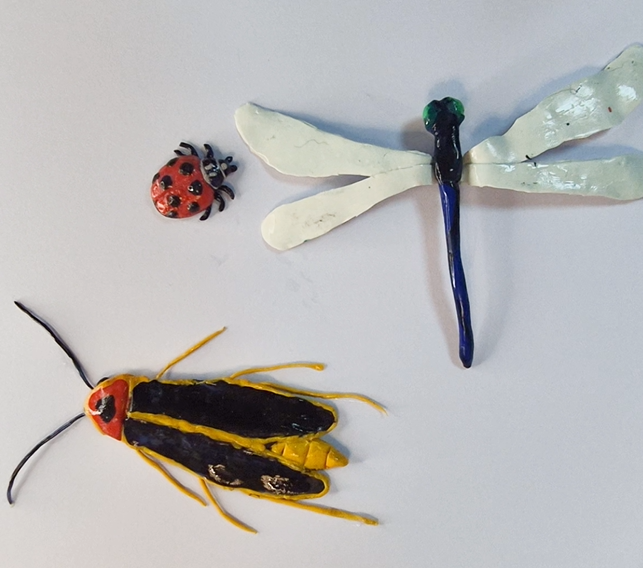
Students choose 1–3 insects to sculpt from air dry or polymer clay, learning about insect anatomy (head, thorax, abdomen, six legs, antennae, and more) while they create. Watch our resident artist Nikita Lai Jing Tse demo the full project below, then download the instruction sheet to get started!
What is National Insect Appreciation Day and why does it matter for K–5 science?
National Insect Appreciation Day is observed on June 8th each year to celebrate the vital role insects play in ecosystems. With over 900,000 known insect species worldwide, and thousands living across North America insects are the most diverse group of animals on Earth. For K–5 students, the day is an opportunity to explore insect anatomy, habitats, and ecological importance through hands-on science activities that connect classroom learning to the natural world outside.
Insects are often overlooked or even feared, but they are essential to life on Earth. They pollinate the plants we eat, decompose organic matter, and serve as a food source for birds, fish, and other animals. By introducing students to North American species they already know, like the monarch butterfly, the dragonfly, and the ladybug. This craft gives a familiar entry point into bigger ideas about biodiversity and ecological interdependence. It also ties naturally to life science standards across K–5 grade levels.
What do students learn about insect anatomy in this clay sculpting craft?
In this clay sculpting craft, K–5 students learn that all insects share the same basic body plan: three main body segments (head, thorax, and abdomen), six legs attached to the thorax, two antennae, and often one or two pairs of wings. By sculpting these features in clay, students build a tactile, three-dimensional understanding of insect anatomy that reinforces life science concepts far more effectively than diagrams alone.
Students choose one to three North American insects to sculpt, options include the monarch butterfly, dragonfly, ladybug, firefly, and praying mantis. Each insect gives students a chance to observe how the shared insect body plan expresses itself differently: the dragonfly’s four transparent wings versus the ladybug’s hard elytra, or the monarch’s scaled wings versus the praying mantis’s elongated thorax. The instruction sheet and demo video by resident artist Nikita Lai Jing Tse walk students through each step, from rolling the abdomen to attaching the antennae.
What materials do students need for the clay insect sculpting craft?
Students need air dry clay or polymer clay, basic sculpting tools, acrylic paint and a small brush for finishing, and a flat surface to work on. The project takes 45 to 60 minutes and is suitable for K–5th grade. A free downloadable instruction sheet with a full materials list, step-by-step guide, and clay tips is available below.
Looking for another nature-centered game to play with students? Check out our World Environment Day Crossword Puzzle.