A Diwali Tambola lesson plan for Grades K-2
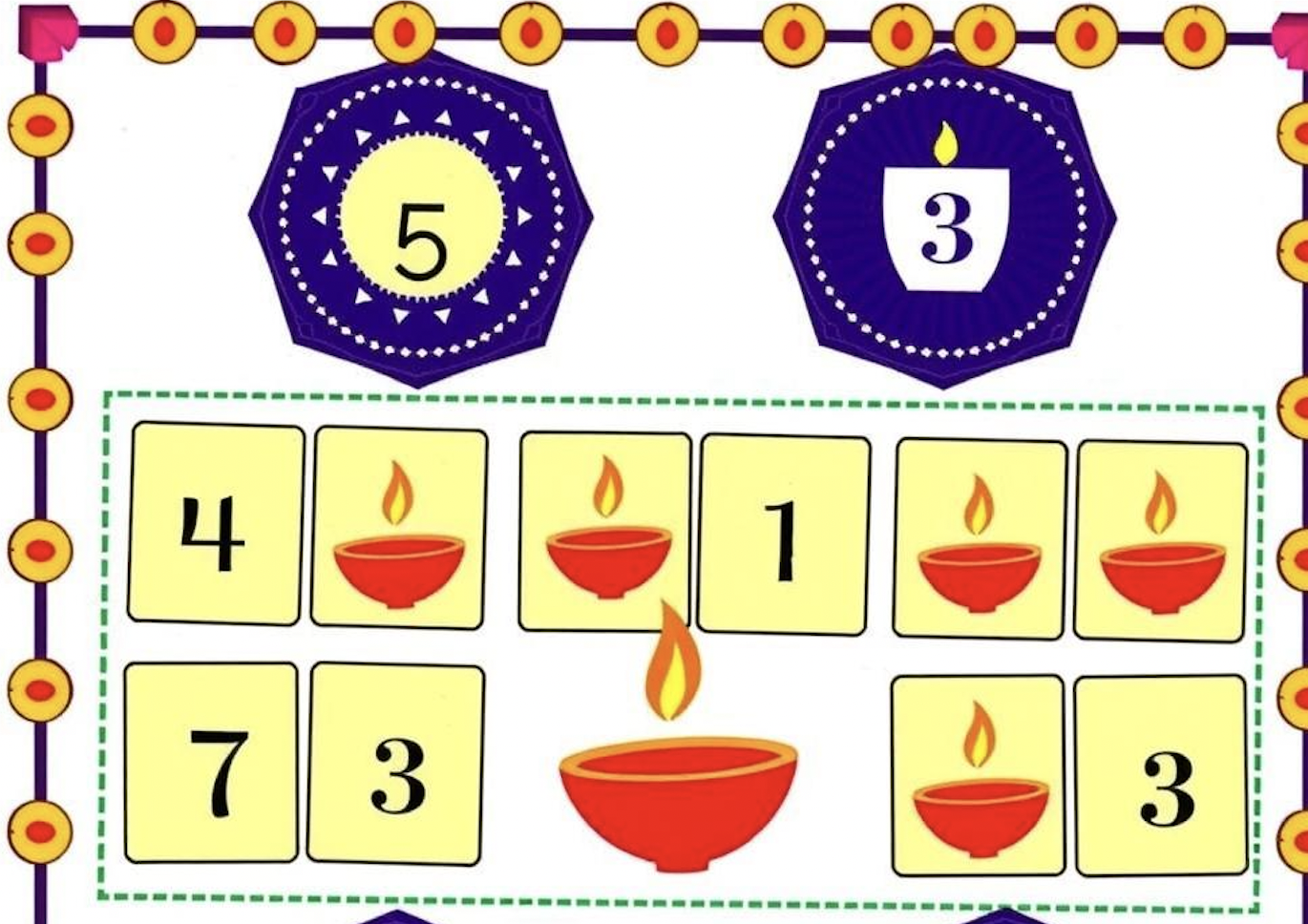
This Diwali Tambola lesson plan gives teachers everything they need to run the Diwali Tambola game in class. Tambola is the name used in India for a number-calling game much like bingo. Children each get a printed card with nine numbers from 1 to 20, the caller shows a number or a math problem, and the first player with three in a row wins. Diwali falls on Sunday, November 8, 2026, so this Miraculous Math Moments™ lesson is a timely way to bring the festival of lights into math time.
What is in this Diwali Tambola lesson plan
The Diwali Tambola lesson plan is organized into short sections that open and close, so teachers can jump to what they need. It covers the learning objectives, a materials list, three ways to play, ideas for each grade, extension activities and what to look for during play. The Print lesson plan button opens every section and lists the full standards for every state, so the printed copy has everything in one place.
Three ways to play the Diwali Tambola game
Every class is different, so the plan offers three formats that use the same printed cards:
- Whole class on the big screen: the teacher runs the on-screen caller while children mark their cards. This is the best way to introduce the game.
- Small groups or math centers: one child is the caller on a tablet or laptop, and the winner of each round becomes the next caller.
- No-tech version: children draw numbers or problems written on index cards from a bag, so the game works without a screen.
Math for Kindergarten, Grade 1 and Grade 2
The Diwali Tambola game has four call types, and the Diwali Tambola lesson plan explains how to use each one. Just numbers is a warm-up where children find a called number. Kindergarten calls ask for 1 more or 1 less than a number. Grade 1 calls are addition and subtraction problems within 20, where one number is always 5 or less. Grade 2 calls are harder facts within 20, which build fluency with mental strategies such as making ten. For each grade, the plan suggests supports like a number line or ten frames, along with stretch ideas like a Blackout round where children cover all nine numbers.
A Diwali connection for every classroom
Diwali is celebrated by Hindus, Sikhs, Jains and many others in India and around the world. The Diwali Tambola lesson plan includes a short opening where children look at pictures of diyas, the small clay lamps lit during Diwali, and rangoli patterns. Children who celebrate are invited to share how their family marks the day, if they would like to, and children who do not celebrate can learn about a holiday that many classmates and neighbors love. For more background, read these facts about Diwali from National Geographic Kids.
Standards and assessment
Teachers can match this Diwali Tambola lesson plan to their math standards for Georgia, North Carolina, New York, Michigan and New Jersey. The standards are written out in full in the Standards Alignment section at the bottom of the plan. Choose a state to see every grade. The assessment section lists what to watch for during play, such as whether children find numbers quickly, which strategies they use for addition and subtraction, and whether Grade 2 students can solve most facts before the answer is shown.
Play the Diwali Tambola game
The lesson goes hand in hand with the Diwali Tambola game, where teachers make 4 to 24 printable cards and run the on-screen caller. It is built to work on computers, Chromebooks, tablets and phones, and there is nothing to install. Print the cards once and use them for many rounds all season long.
More games to try
Looking for more seasonal fun? Try Wormly’s Halloween word search, Wormly’s first Halloween spelling edition or Wormly’s WordFit sentence game.