🧊 Instant Guide to the Arctic vs Antarctic 🧊
🌍 Earth has TWO frozen places at the very top and very bottom!
🧭 The North Pole is called the Arctic. It’s frozen ocean water at the top of the Earth!
🧭 The South Pole is called Antarctica. It’s a huge icy land at the bottom of the Earth!
Both places are SUPER cold and covered in ice and snow. But they’re VERY different! Let’s find out how! ❄️
🌍 Our planet Earth has two extremely cold regions called the polar regions. They’re located at the very top and bottom of our planet!
🧭 The Arctic (North Pole): This is the northern polar region. It’s mostly frozen ocean surrounded by land. Countries like Canada, Russia, and Greenland border the Arctic Ocean.
🧭 The Antarctic (South Pole): This is the southern polar region. It’s a massive continent covered in ice! Antarctica is the coldest, driest, and windiest place on Earth.
Even though both poles are frozen, they have very different features. Antarctica is much colder, and the Arctic has more wildlife! Let’s explore why these differences exist. ❄️
🌍 Earth’s polar regions—the Arctic and Antarctic—represent the planet’s coldest environments, located at opposite ends of our planet’s axis.
🧭 The Arctic (North Pole): The Arctic is primarily a frozen ocean (Arctic Ocean) surrounded by landmasses including northern Canada, Greenland, Russia, and Scandinavia. The ice here is mostly sea ice that floats on the ocean surface, and its extent varies dramatically between winter and summer seasons.
🧭 The Antarctic (South Pole): Antarctica is Earth’s fifth-largest continent, completely covered by an ice sheet averaging 1.6 miles thick! It’s surrounded by the Southern Ocean. Antarctica holds about 90% of the world’s ice and 70% of its fresh water.
Despite both being frozen polar environments, these regions have vastly different characteristics due to their geographical differences. Antarctica’s land-based ice and higher elevation make it significantly colder than the Arctic. Understanding these differences helps scientists study climate patterns and how our planet’s ice affects global systems. ❄️
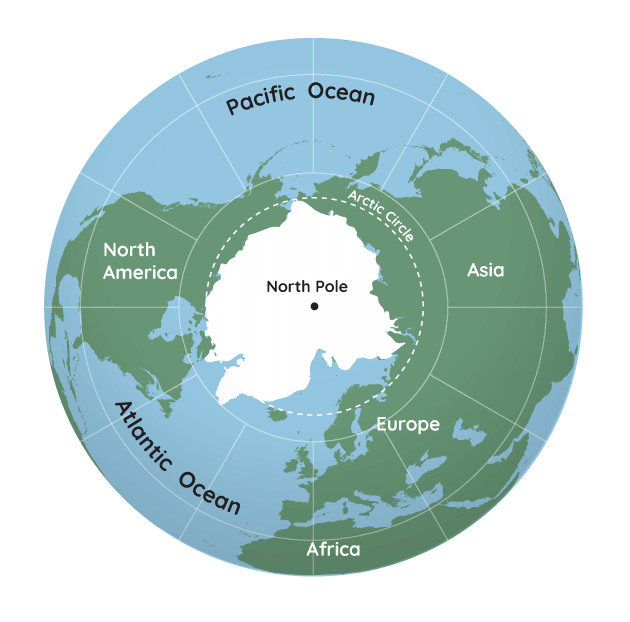
Frozen ocean water! Like a giant ice cube floating in the sea! 🌊
REALLY cold! About as cold as your freezer! 🥶
Polar bears, seals, walruses, and people too! 🐻❄️
The Arctic is a frozen ocean surrounded by land. The ice floats on water!
Winter: about -40°F (-40°C)
Summer: around 32°F (0°C)
Polar bears, Arctic foxes, seals, whales, and Indigenous peoples including the Inuit!
The ice grows bigger in winter and shrinks in summer!
The Arctic is an ocean basin (Arctic Ocean) covered by floating sea ice, surrounded by land from multiple continents.
Winter: -40°F to -30°F (-40°C to -34°C)
Summer: around 32°F (0°C)
Warmest recorded: 100.4°F (38°C) in Siberia!
Home to diverse wildlife including polar bears, Arctic foxes, caribou, and marine mammals. Approximately 4 million people live in the Arctic, including Indigenous communities.
Sea ice extent varies seasonally—maximum in March (~6 million sq mi) and minimum in September (~1.5 million sq mi). The ice is typically 2-3 meters thick.
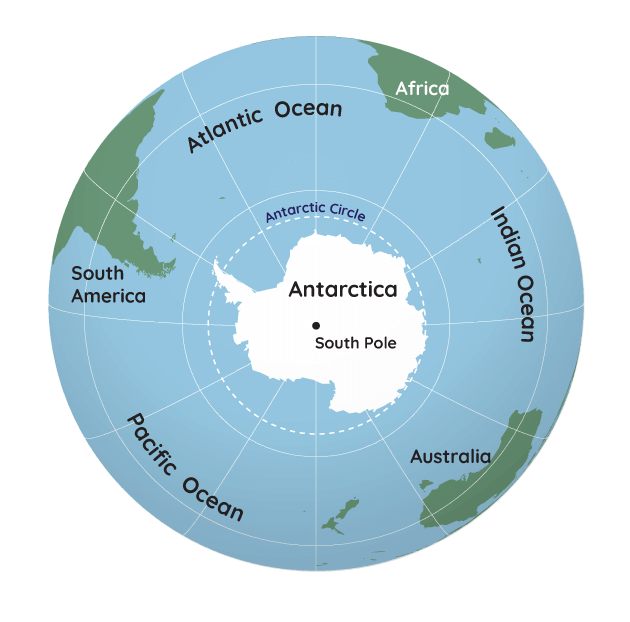
A huge land covered in REALLY thick ice! Like a mountain of ice! 🏔️
SUPER DUPER cold! Way colder than your freezer! 🥶🥶
Penguins and seals! NO polar bears! No people live there all the time. 🐧
Antarctica is a continent (land) covered by a massive sheet of ice—some places the ice is 3 miles deep!
Winter: about -76°F (-60°C)
Summer: around -18°F (-28°C)
Coldest ever: -128.6°F (-89.2°C)!
Penguins, seals, and whales! Scientists visit, but nobody lives there permanently. NO polar bears here!
It’s the coldest, driest, and windiest place on Earth! It almost never rains or snows.
Antarctica is a continent covered by an ice sheet averaging 1.6 miles (2.6 km) thick. The landmass beneath the ice has mountains and valleys, with some peaks reaching over 16,000 feet.
Winter: around -76°F (-60°C)
Summer: around -18°F (-28°C)
Record low: -128.6°F (-89.2°C) at Vostok Station—the coldest temperature ever recorded on Earth!
No permanent human residents. Wildlife includes penguins, seals, and whales. About 1,000-5,000 scientists and support staff work at research stations temporarily. Notably, NO polar bears—they’re only in the Arctic!
Contains approximately 90% of the world’s ice and 70% of its fresh water. If all this ice melted, global sea levels would rise about 200 feet! The ice sheet is so heavy it actually depresses the bedrock beneath it.
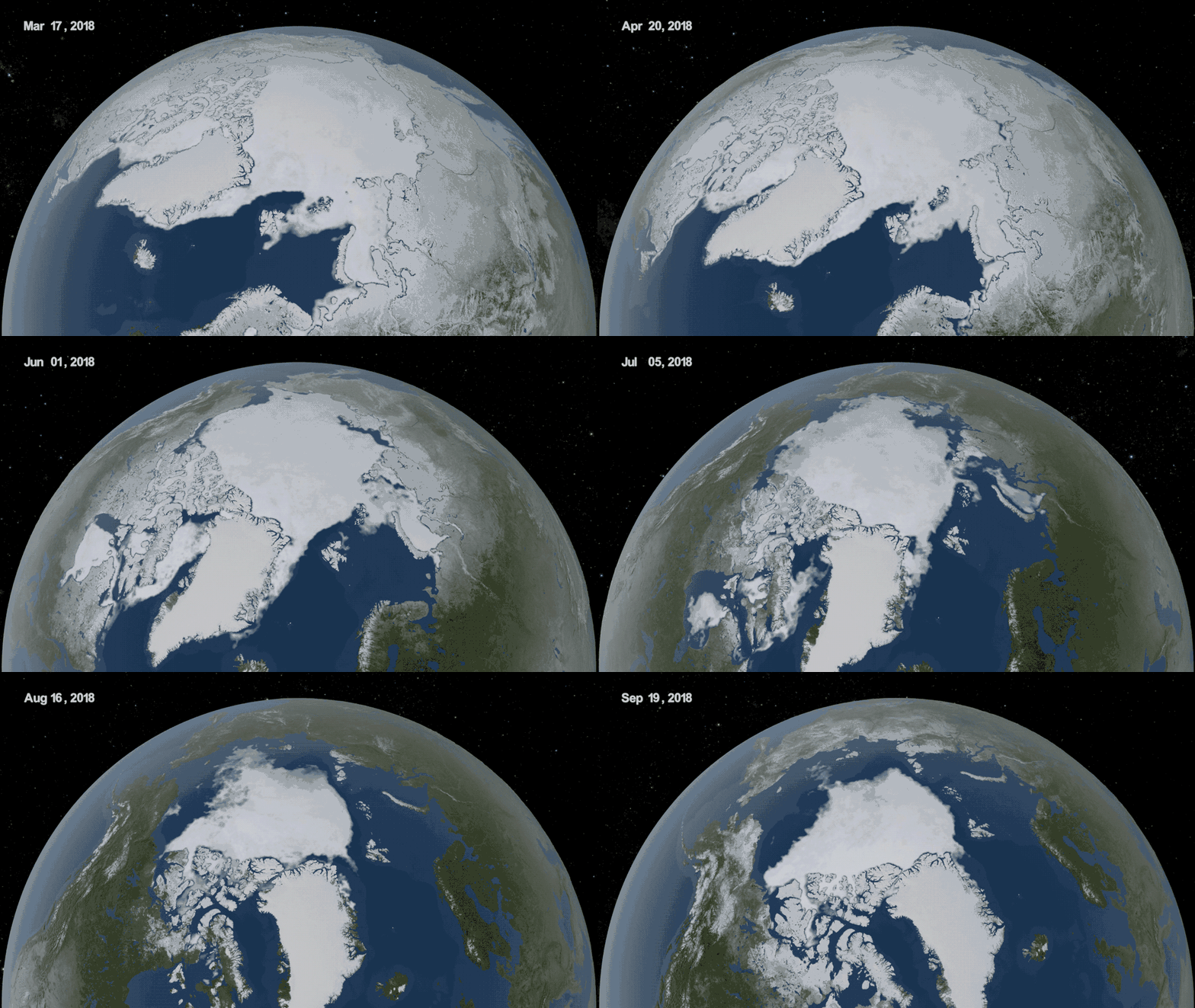
Watch how the ice changes at both poles! These videos from NASA show real data from the 1990s. 🎥
These NASA animations show real satellite data of sea ice from the 1990s. Notice how the ice changes size throughout the seasons—it grows in winter and shrinks in summer! 🎥
These NASA visualizations are based on satellite data from the 1990s, showing the seasonal dynamics of sea ice at both poles. Observe the extent of ice coverage changes between seasons and how these patterns differ between the Arctic and Antarctic regions. 🎥
Video: NASA
Video: NASA
Three big reasons Antarctica is colder:
1. 🏔️ It’s HIGH up! Antarctica is like a giant ice mountain. The higher you go, the colder it gets—just like when you climb a mountain!
2. 🌊 It’s land, not water! The Arctic is frozen ocean. Water stays warmer than land, so it keeps the Arctic a bit warmer. Antarctica is land covered in ice, so it gets MUCH colder!
3. 💨 Super strong winds! Antarctica has really strong winds that blow around it in a circle. These winds keep warm air away, so Antarctica stays super cold!
⚠️ Important: Both poles get the SAME amount of sunlight each year! 🌞 The sun isn’t what makes Antarctica colder. It’s colder because it’s high up like a mountain, it’s land instead of ocean, and it has super strong winds that keep warm air away!
💡 Source: NASA Science – “Which Pole is Colder?”
Antarctica is MUCH colder than the Arctic for three main reasons:
1. 🏔️ Elevation (Height): Antarctica sits at an average height of 7,545 feet above sea level—that’s taller than many mountains! The air gets colder the higher you go. The Arctic Ocean is at sea level (0 feet), so it’s naturally warmer.
2. 🌊 Ocean vs Land: The Arctic Ocean stores heat from summer and slowly releases it during winter, keeping temperatures warmer. Antarctica’s thick ice sheet on land doesn’t store heat the same way, so it gets much colder. Think of it this way: if you put water and dirt in a freezer, the water would take longer to freeze because it holds onto heat better!
3. 💨 Wind Patterns: Antarctica is surrounded by ocean on all sides. Strong winds called the “Antarctic Circumpolar Current” blow around it in a circle without any land to slow them down. These powerful winds act like a wall, keeping warm air from places like South America and Africa from mixing with Antarctica’s cold air. The Arctic has land around it that slows down winds, so warmer air can sometimes mix in.
⚠️ Important: Both poles actually get the SAME amount of sunlight over the year! The sun shines low on the horizon at both poles, and both have 6 months of daylight and 6 months of darkness. So sunlight isn’t what makes Antarctica colder—it’s the elevation, the ocean vs land difference, and the strong circling winds!
💡 Source: NASA Science – “Which Pole is Colder?”
Antarctica experiences significantly lower temperatures than the Arctic due to three primary factors:
1. 🏔️ Elevation: Antarctica’s average elevation is approximately 7,545 feet (2,300 m), making it Earth’s highest continent. Atmospheric temperature decreases with altitude at a rate of about 3.5°F per 1,000 feet (6.5°C per km). This means Antarctica’s high elevation contributes roughly 25-30°F of additional cooling compared to sea level locations.
2. 🌊 Ocean thermal inertia vs continental ice sheet: Water has a high specific heat capacity, meaning it takes considerable energy to change its temperature. The Arctic Ocean acts as a thermal reservoir, absorbing heat during summer and slowly releasing it during winter, moderating temperature extremes. The parts of the Arctic Ocean not covered in sea ice actively help warm the air above. Antarctica’s continental ice sheet (up to 3 miles thick!) lacks this thermal buffer. Since ice sits on land rather than floating on water, there’s no liquid ocean beneath to moderate temperatures, allowing them to drop much lower during the polar night.
3. 💨 Antarctic Circumpolar Current and wind isolation: Antarctica is surrounded by the Southern Ocean on all sides, allowing the Antarctic Circumpolar Current—the world’s strongest ocean current—to flow unimpeded around the continent. The winds associated with this current system are not blocked by any landmasses, creating extremely strong circumpolar westerlies. These powerful winds effectively isolate Antarctica, preventing warmer air masses from lower latitudes (Africa, South America, Australia) from mixing with the polar air. In contrast, the Arctic is surrounded by landmasses (North America, Europe, Asia) that disrupt and slow wind patterns, allowing warmer air from the south to occasionally mix with Arctic air.
⚠️ Critical Scientific Note: A common misconception is that Antarctica receives less sunlight than the Arctic. In reality, both poles receive the same amount of sunlight over the course of a year. At both poles, when the sun is visible during summer, it stays low on the horizon rather than rising high overhead like at the equator. Both poles experience approximately 6 months of continuous daylight (polar day) and 6 months of continuous darkness (polar night) due to Earth’s 23.5° axial tilt. The difference in temperature is NOT due to differences in solar radiation received, but rather to the factors explained above: elevation, thermal properties of land vs ocean, and atmospheric circulation patterns.
Additional factor—Albedo consistency: While both poles have high albedo (reflectivity) from ice and snow (80-90%), Antarctica’s more consistent ice cover year-round maintains this high reflectivity constantly, while the Arctic’s seasonal sea ice variation creates periods where darker ocean water is exposed, absorbing more solar energy during summer months.
💡 Source: NASA Science – “Which Pole is Colder?”
The ice at both poles is changing! Let’s learn about it. 🌊
🧊 Arctic Ocean Ice: The Arctic has a thin layer of ice floating on top of the ocean. This ice melts a little bit in summer and grows back in winter. But scientists have noticed that more ice is melting than before!
🏔️ Antarctica Ice: Antarctica has REALLY thick ice on land (up to 3 miles!), plus sea ice around the edges. The sea ice around Antarctica acts differently than Arctic ice!
Why are they different? The Arctic is an ocean with ice on top. Antarctica is land with ice on top! They act like two different things because they ARE two different things!
Even though both poles have sea ice, they behave very differently! 🌊
🧊 Arctic Sea Ice
What it is: A thin layer of ice floating on the Arctic Ocean. Scientists call the oldest, thickest ice “perennial sea ice.”
What’s happening: Since satellites started measuring in 1979, Arctic sea ice has been getting smaller, thinner, and less voluminous. Summer sea ice extent is at its lowest level since 1850! Each summer, the ice melts back toward the North Pole, then re-grows in winter—but the overall trend shows continued decline.
Why it’s sensitive: The Arctic Ocean is very deep and closely connected to weather and climate systems around it, making it more sensitive to climate changes.
🏔️ Antarctic Sea Ice
What it is: Antarctica is a continent covered by a very thick ice cap (land ice), surrounded by a rim of sea ice and the Southern Ocean.
What’s happening: Antarctic sea ice patterns are more complex. Over the past decades, it first increased, then declined. The sea ice surrounds the continent like a ring.
Why it’s different: Antarctica’s thick continental ice sheet and surrounding ocean create different conditions than the Arctic. The Antarctic is more isolated from other climate systems.
🔬 Key Difference: The Arctic is an ocean covered by ice and surrounded by land. Antarctica is land covered by ice and surrounded by ocean. This geographical difference is why their sea ice behaves so differently!
Understanding the contrasting behaviors of polar sea ice requires examining their fundamental geographical and oceanographic differences. 🌊
🧊 Arctic Sea Ice: In Decline
Geography: The Arctic Ocean is covered by a thin layer of perennial sea ice (the oldest and thickest multi-year ice) surrounded by landmasses. This ocean is very deep and intimately linked with adjacent climate systems.
Historical Context: For centuries of human Arctic exploration, sea ice covered the Arctic Ocean year-round. However, satellite observations beginning in 1979 have documented systematic declines in extent, thickness, and volume.
Current Trends: Average Arctic sea ice extent is at its lowest level since 1850. The seasonal cycle shows ice edge retreating toward the North Pole during summer melt (July-September), followed by winter re-growth. However, the long-term trend driven by anthropogenic warming shows continued summer sea ice loss, with projections suggesting potential ice-free Arctic summers within decades.
Climate Sensitivity: The Arctic Ocean’s deep connectivity with surrounding climate systems makes it particularly sensitive to climate change. Feedback mechanisms like ice-albedo feedback (where darker ocean water absorbs more heat than reflective ice, accelerating melting) amplify warming effects.
🏔️ Antarctic Sea Ice: Complex Patterns
Geography: Antarctica is a continent covered by an immensely thick ice cap (averaging 1.6 miles, up to 3 miles in places) and surrounded by a rim of sea ice within the Southern Ocean. This represents a fundamentally different configuration than the Arctic.
Dual Ice Systems: It’s critical to distinguish between Antarctic land ice (the continental ice sheet) and Antarctic sea ice (frozen ocean surrounding the continent). These respond differently to climate forcings.
Sea Ice Trends: Antarctic sea ice patterns are more complex than Arctic patterns. Historical data shows periods of increase followed by decline. This complexity stems from multiple factors including wind patterns, ocean currents (particularly the Antarctic Circumpolar Current), precipitation patterns, and freshwater inputs from ice shelf melting.
Isolation Factor: Antarctica’s isolation by the Southern Ocean and the Antarctic Circumpolar Current creates different climate dynamics than the Arctic’s direct connections to temperate regions. Regional variability is also significant—some Antarctic regions show sea ice increases while others show decreases.
🔬 Primary Geographical Difference
Arctic: An ocean covered by a thin layer of perennial sea ice, surrounded by land. Deep connectivity with surrounding climate systems creates high sensitivity to warming.
Antarctic: A continent covered by a very thick ice cap, surrounded by a rim of sea ice and the Southern Ocean. Geographical isolation and dual ice systems (land and sea ice) create more complex dynamics.
This fundamental geographical distinction—ocean vs. continent—drives the contrasting behaviors of polar sea ice and their differential responses to climate change. Satellite monitoring since 1979 continues to document these evolving patterns, providing critical data for understanding global climate systems.
Different animals live at each pole! Let’s meet them! 🦭
Who lives here?
🐻❄️ Polar Bears – The biggest bears! They hunt seals.
🦭 Seals – They swim and rest on ice.
🦊 Arctic Foxes – Small white foxes!
🐋 Whales – Big swimmers like narwhals and belugas.
🦌 Caribou (Reindeer) – They live on land near the Arctic.
🦦 Walruses – Big animals with long tusks!
Who lives here?
🐧 Penguins – Birds that can’t fly but swim really well!
🦭 Seals – Different kinds than Arctic seals!
🐋 Whales – Like huge blue whales and orcas!
🦐 Krill – Tiny shrimp that LOTS of animals eat.
🐦 Seabirds – Like albatrosses with huge wings!
⚠️ NO polar bears here! Only penguins at the South Pole!
Each pole has unique animals adapted to survive in extreme cold! 🦭
Mammals & Birds of the North:
🐻❄️ Polar Bears: Top predators! They hunt seals on sea ice and can swim long distances.
🦭 Arctic Seals: Including ringed seals, harp seals, and bearded seals. They’re the polar bear’s main food!
🦊 Arctic Foxes: Their white winter coats turn brown in summer for camouflage.
🐋 Marine Mammals: Narwhals (with tusks!), beluga whales, and bowhead whales.
🦦 Walruses: Use their tusks to pull themselves onto ice and dig for clams.
🦌 Caribou/Reindeer: Migrate across Arctic tundra in huge herds.
🐦 Birds: Arctic terns, snowy owls, and puffins visit in summer.
Life in the Extreme South:
🐧 Penguins: Emperor penguins (the biggest!), Adélie, chinstrap, and gentoo penguins. They huddle together to stay warm!
🦭 Antarctic Seals: Leopard seals (fierce hunters!), Weddell seals, crabeater seals, and elephant seals.
🐋 Whales: Blue whales (largest animals on Earth!), humpback whales, minke whales, and orcas (killer whales).
🦐 Antarctic Krill: Tiny shrimp-like creatures that form the base of the food chain. Billions of them!
🐦 Seabirds: Albatrosses with 11-foot wingspans, petrels, and skuas.
🐟 Fish: Antarctic icefish have special antifreeze proteins in their blood!
⚠️ Important: NO land mammals live in Antarctica—it’s too cold and isolated!
Polar animals have evolved remarkable adaptations to survive in Earth’s harshest environments. 🦭
Adapted for Survival:
🐻❄️ Polar Bears (Ursus maritimus): Apex predators with thick blubber (up to 4.5 inches) and water-repellent fur. They can detect seals under 3 feet of ice and snow. Excellent swimmers—can paddle 60+ miles!
🦭 Pinnipeds: Ringed, harp, bearded, and hooded seals. Adaptations include blubber insulation, ability to hold breath 15+ minutes, and specialized blood that prevents ice crystals from forming.
🦊 Arctic Fox (Vulpes lagopus): Smallest Arctic carnivore with the warmest fur of any mammal. Changes coat color seasonally. Can survive -70°C!
🐋 Cetaceans: Narwhals (males have 8-foot tusks—actually a tooth!), beluga whales (echolocation experts), bowhead whales (can live 200+ years).
🦦 Pacific Walrus (Odobenus rosmarus): Use sensitive whiskers to find clams. Tusks can be 3 feet long!
🦌 Caribou (Rangifer tarandus): Undertake longest land migration of any mammal—up to 3,000 miles annually.
🐦 Avian Species: Snowy owls, Arctic terns (migrate 44,000 miles annually!), and puffins.
Extreme Adaptations:
🐧 Penguins: 8 species, including Emperor penguins (Aptenodytes forsteri)—can dive to 1,850 feet and hold breath for 22 minutes! Males incubate eggs during winter in -40°C temperatures for 64 days without eating. Adélie, chinstrap, gentoo, and macaroni penguins are other species.
🦭 Antarctic Seals: Leopard seals (apex predators with 3-inch teeth), Weddell seals (dive deeper than 2,000 feet), crabeater seals (most abundant seal species—7-75 million!), elephant seals (males can weigh 8,800 pounds).
🐋 Cetaceans: Blue whales (largest animals ever—up to 200 tons!), humpback whales (migrate 16,000 miles), orcas (hunt in coordinated pods), minke whales.
🦐 Antarctic Krill (Euphausia superba): Foundation of Antarctic food web. Swarms can be massive—visible from space! Single swarm can contain 2 million tons of krill.
🐟 Notothenioid Fish: Produce antifreeze glycoproteins (AFGPs) that prevent ice crystals from forming in their blood and tissues—allowing survival in -1.9°C water.
🐦 Seabirds: Wandering albatross (largest wingspan—up to 11.5 feet!), Antarctic petrels, south polar skuas.
🔬 Interesting Note: Antarctica has no land-based mammals due to isolation by the Southern Ocean and extreme temperatures. All mammals are marine species that feed in the ocean.
🎮 Play the Polar Animals Sorting Game!
Test your knowledge! Can you sort the animals into their correct polar habitats? Meet each animal, learn their adaptations, then drag them to either the Arctic or Antarctic!
🐻❄️ Play Sorting Game Now! 🐧✨ Interactive drag-and-drop learning experience!
- 🧊 Ocean vs Land Experiment: Fill one bowl with water and one with dirt or sand. Put both in the freezer. Check every 30 minutes. The dirt gets colder faster than water! This is why Antarctica (land with ice) is colder than the Arctic (ocean with ice)!
- 🐧 Draw Polar Animals: Draw a polar bear in the Arctic and a penguin in Antarctica. Remember—they never meet! Put the Arctic at the top of your paper and Antarctica at the bottom. Then play the sorting game to learn about more polar animals!
- 🌓 Day and Night Game: Have an adult help you shine a flashlight on a globe. See how one pole gets light while the other stays dark? This shows why the poles have 6 months of day and 6 months of night!
- 🎮 Animal Sorting Challenge: After playing the online sorting game, can you remember which animals go where? Draw your own sorting chart with Arctic on one side and Antarctic on the other!
- 🧊 Freezing Experiment: Fill two identical containers—one with water, one with dirt. Put both in the freezer. Check every 30 minutes. The dirt (like Antarctica) will get colder faster than the water (like the Arctic ocean)!
- 📊 Temperature Comparison Chart: Create a chart comparing Arctic and Antarctic temperatures throughout the year. Use the data from this guide. Color-code it: blue for Arctic, white for Antarctic. Which is consistently colder?
- 🗺️ Map the Poles: Using a world map or globe, identify and label: the Arctic Ocean, Antarctica, countries bordering the Arctic, and the Southern Ocean. Mark where polar bears and penguins live!
- 🌓 Simulate Polar Day/Night: Use a flashlight (Sun) and a basketball (Earth). Tilt the ball and spin it slowly. Watch how the “poles” get constant light or darkness depending on the position!
- 🎮 Animal Adaptation Study: After playing the polar animals sorting game, choose 3 animals from each pole. Research their special adaptations (like thick fur, blubber, or antifreeze blood) and create a comparison poster!
- 🧊 Thermal Inertia Demonstration: Design an experiment to test how different materials hold and release heat. Fill identical containers with water, sand, and gravel. Measure temperature changes when placed in sunlight then moved to shade. Record data every 15 minutes for 2 hours. Graph your results and explain how this relates to ocean vs land ice at the poles.
- 📊 Sea Ice Data Analysis: Research historical sea ice extent data from NSIDC (National Snow and Ice Data Center). Create graphs showing seasonal variations in Arctic and Antarctic sea ice from 1980 to present. Calculate the rate of change and write a summary of your findings.
- 🌍 Albedo Effect Investigation: Test how different surfaces reflect light (albedo). Use a light meter or temperature sensor with surfaces like white paper (ice), black paper (open ocean), and aluminum foil (snow). Measure how much heat each absorbs. Calculate percentages and explain implications for polar regions.
- 🗺️ Geographic Analysis: Using topographic data, create elevation profiles of both polar regions. Calculate average elevations and analyze how elevation affects temperature using the lapse rate (temperature decreases ~6.5°C per km). Present findings in a report with graphs and calculations.
- 🐧 Biodiversity Research Project: After completing the polar animals sorting game, research food webs for both poles. Compare and contrast Arctic and Antarctic ecosystems, analyzing endemic species and their adaptations. Create a presentation explaining why these regions, despite similar climates, have such different wildlife. Include discussion of convergent evolution (why Arctic and Antarctic seals look similar despite being different species).
- 🔬 Adaptation Analysis: Select 5 animals from the sorting game—compare their physiological and behavioral adaptations. Research topics like: antifreeze proteins in fish, counter-current heat exchange in flippers, blubber thickness variations, and metabolic adjustments. Present findings in a scientific report format with diagrams.
Check out NASA’s Science for Kids for more cool facts about Earth’s poles and space!
Explore NASA’s Earth Science for Kids to discover more about polar regions, climate, and how scientists study our planet!
Continue your exploration with NASA’s comprehensive Earth science resources, including current satellite data, research findings, and interactive tools for studying polar regions and climate science.