Gravity and Meteors Instant Lesson
The pull that holds the planets in their loops, and lights up the night sky
This Month in Space: Meteors and Gravity
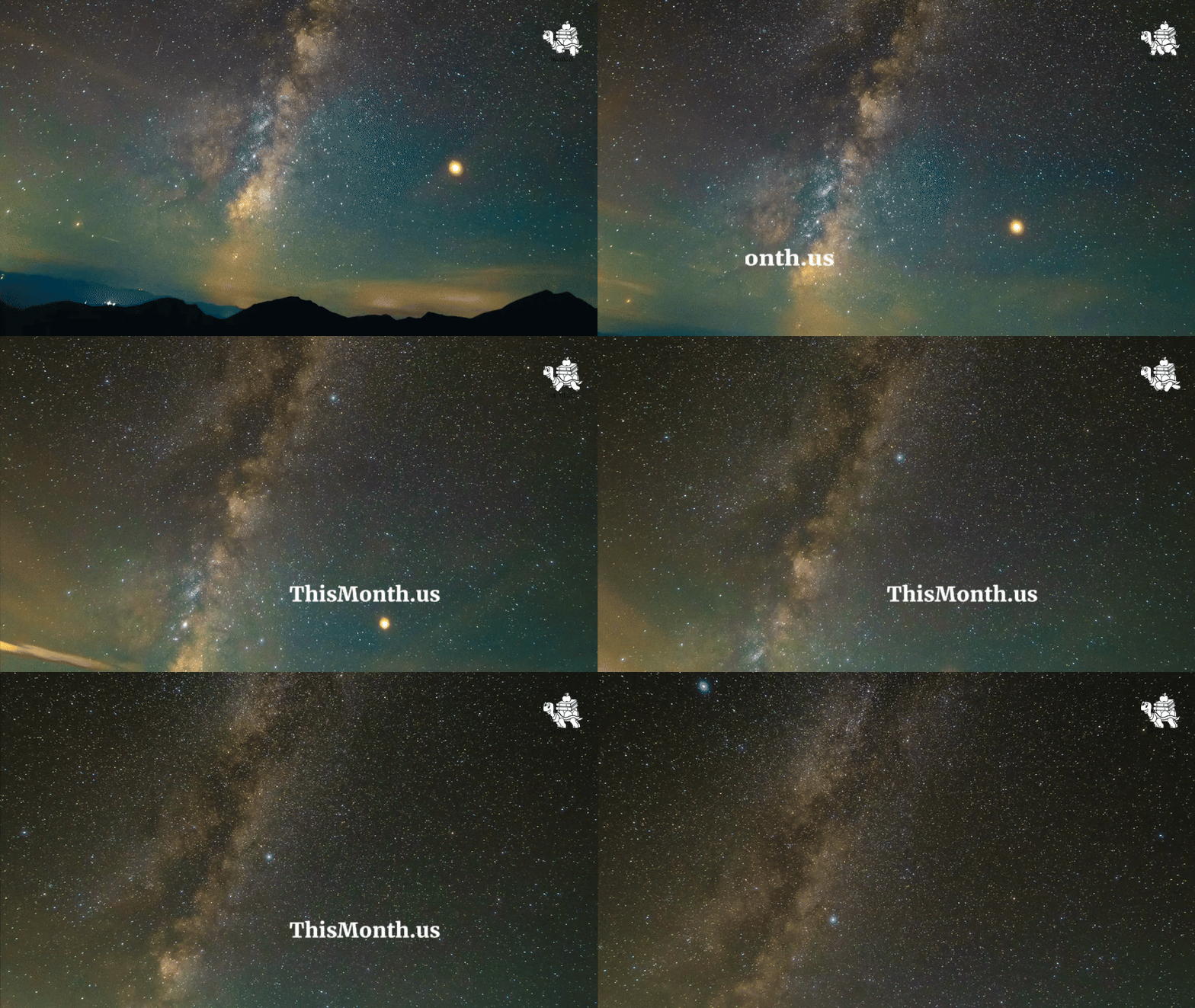
Earth is always traveling through space, and sometimes it crosses a trail of dust and tiny rocks left behind by a comet or an asteroid. Bits of that trail rush into the air above us at enormous speed. The air heats them until they glow, and Earth’s gravity pulls on them the whole way. The streaks of light are called meteors, and a night with lots of them is a meteor shower. Famous showers return every year, like the Perseids in August and the Leonids in November.
So what is gravity, and what does it have to do with a glowing streak? Pick your reading level to find out, then try the simulator.
💡 Teacher tips
Learning objectives. Students will:
- Describe gravity as a pulling force that depends on mass and distance
- Explain how sideways motion and gravity make an orbit
- Explain where a meteor’s speed comes from and why it glows
- Test and explain how air changes the way things fall
- Check out the standards learned: see the linked standards
🍎 What Is Gravity?
Gravity is a pull. Earth pulls on everything on it and near it, and that pull is the reason why:
- 🏀 A ball you throw up comes back down
- 🦘 You land on the ground when you jump
- 🍂 Leaves fall from trees, and 💧 rain falls from clouds
- 🧸 Your toys stay on the floor instead of floating away
🌟 Cool fact: Earth pulls toward its center. That is why people in every part of the world stay on the ground, even though Earth is round like a ball.
☄️ Gravity and Meteors
Tiny bits of space dust and rock, called meteoroids, zoom toward Earth all the time. When they rush through our air, they get hot and glow. A glowing streak is called a meteor, or a shooting star.
Shooting stars are not stars at all. Most are only as big as a grain of sand or a pea! Earth’s gravity pulls on them all the way down.
🤔 Wonder together: What do you think would happen if you dropped a ball on the Moon? Would it fall faster, slower, or the same?
The pull that brings things down to Earth.
A tiny rock or dust bit moving in space.
The glowing streak a meteoroid makes in our sky. People call it a shooting star.
A ball of ice and dust that travels around the Sun.
Talk About It
- Name three things that gravity pulls down.
- If you jumped on the Moon, would you go higher or lower than on Earth?
- Is a shooting star really a star? What is it?
- What do you think a meteor feels like to the air? Hot or cold?
🌍 Understanding Gravity
Gravity is a pulling force between all objects. The more mass an object has, the stronger its pull. Mass is the amount of stuff an object is made of.
- Earth’s pull is strong because Earth has a huge amount of mass, and we are standing right on it.
- The Moon’s pull is weaker because the Moon has less mass than Earth. Astronauts on the Moon can jump about six times higher than on Earth.
- The Sun’s pull is the strongest in our solar system because the Sun has far more mass than anything else here. It keeps every planet circling around it.
- You pull on things too, but your pull is far too small to notice.
🌟 Amazing fact: Planets do not fall into the Sun because they are also moving sideways. The Sun’s pull keeps bending their path into a loop called an orbit. You can see this happen in the Orbit Lab below.
☄️ Meteor Showers and Gravity
Comets, and some asteroids, circle the Sun. As they travel they leave trails of dust and small rocks behind them, like a dirt path behind a bicycle. Each year Earth’s orbit crosses the same trails on about the same dates. Famous meteor showers include the Perseids in August, the Leonids in November, and the Geminids in December. Each is named for the constellation it seems to come from.
Bits of a trail rush into Earth’s atmosphere at speeds from about 7 to 44 miles per second, depending on the shower. That is so fast that the air around them heats them until they glow, making the streaks of light we call meteors. Earth’s gravity pulls on each piece, but most of a meteor’s speed comes from its own motion through space.
🔬 Science connection: Most meteoroids in a shower are tiny, from a grain of sand to a pea. They look bright because they are moving so fast.
A pulling force between objects. Bigger mass means a stronger pull.
The amount of matter, or stuff, in an object.
The curved path an object takes around something with more mass.
A ball of ice and dust that orbits the Sun.
A small rocky or dusty object in space.
The streak of light made when a meteoroid rushes through Earth’s air.
A time when Earth crosses a comet’s trail and many meteors streak across the sky.
The layer of air that surrounds Earth.
Talk About It
- Why is Earth’s pull stronger than the Moon’s pull? Use the word mass.
- Why don’t planets fall into the Sun? Use the word orbit.
- Where does a meteor get most of its speed? What makes it glow?
- Why can you jump higher on the Moon? Use the word mass.
🌌 The Science of Gravity
Gravity is a force of attraction between all objects that have mass. Isaac Newton worked out that the strength of the pull depends on two things:
- Mass: the amount of matter in an object. More mass means a stronger pull.
- Distance: how far apart the objects are. Farther apart means a weaker pull. The pull drops with the square of the distance, so doubling the distance leaves one quarter of the pull.
Earth’s pull on us is strong because Earth’s mass is enormous, about 6,000,000,000,000,000,000,000,000 kilograms, and we are standing close to its center. The Sun has far more mass than Earth, which is why its pull holds Earth and the other planets in orbit.
🔬 Scientific principle: Gravity causes acceleration. Near Earth’s surface, and ignoring air, a falling object speeds up by about 9.8 meters per second every second (9.8 m/s²).
☄️ Meteors: A Case Study
The source
Most meteor showers come from comets, and a few from asteroids. When a comet is near the Sun, heat turns some of its ice to gas, which frees dust and rock and leaves a stream of debris along its path. Earth crosses these streams on about the same dates each year. For example, the Leonids come from Comet 55P/Tempel-Tuttle, which circles the Sun about every 33 years, last passed the Sun in 1998, and is due back around 2031.
Earth’s crossing
Each time Earth’s orbit crosses a debris stream, pieces of it, called meteoroids, reach the upper atmosphere about 100 kilometers above the ground. Three things then matter:
- Gravity: Earth’s pull bends the paths of the pieces toward Earth and adds a little to their speed, but only a small part of the total.
- Collisions with air: Even thin air heats a fast meteoroid so much that its surface vaporizes. The glow comes from the hot vapor and the air around it.
- Heat: The temperatures are far hotter than molten lava, which is why even a grain-sized piece makes a bright streak.
Where the speed comes from
A meteoroid’s speed when it hits the air depends on how it is moving compared with Earth, and it can be anywhere from about 11 to 72 kilometers per second. The Leonids meet the atmosphere at about 71 kilometers per second (about 160,000 miles per hour), among the fastest of any shower. Most of that speed is not from Earth’s pull. Leonid dust circles the Sun in the opposite direction from Earth, so the two speeds add together: Earth moves about 30 km/s and the dust about 41 km/s at Earth’s distance from the Sun, giving a head-on crossing speed near 71 km/s. Dust that catches up to Earth from behind arrives much slower, as little as about 11 km/s. The Meteor Light Show experiment in the Gravity Lab lets you test this.
⚡ Meteor storms: Most showers give a few to about a hundred meteors an hour under dark skies. Sometimes a shower becomes a meteor storm, with thousands an hour. The Leonids are famous for this: great storms were seen in 1833 and 1966, with strong outbursts around 1999 to 2002. Storms happen when Earth crosses a thick, young part of a trail, usually near a comet’s return, but not every return produces one.
The attraction between all objects with mass. It gets stronger with more mass and weaker with more distance.
The rate at which speed changes. Gravity makes falling objects speed up.
The curved path of an object moving around another under gravity.
Small rocky or metallic debris in space, often left by comets or asteroids.
The visible streak of light when a meteoroid heats up in Earth’s atmosphere.
A time when Earth crosses the debris trail of a comet or asteroid and many meteors streak across the sky.
To change from solid to gas. A meteoroid’s outer layer vaporizes in the hot air.
The spot in the sky that a shower’s meteors seem to spread out from. Showers are named for the constellation it sits in: the Leonids for Leo, the Perseids for Perseus.
Think and Discuss
- Doubling the distance between two objects leaves what fraction of the pull? Explain why a faraway Sun can still hold Earth in orbit.
- Most of a meteor’s speed does not come from Earth’s gravity. Use the numbers in the text to prove it.
- In Orbit Lab, what changes between a launch that crashes and one that circles? What does that tell you about orbits?
- Why do some showers, like the Leonids, hit the air faster than meteors that catch up to Earth from behind?
- Why do meteor showers come back on about the same dates every year?
- In The Pull of Gravity, what happens to the pull when you double the distance? Which fraction is that?
🎮 Gravity Lab
Four experiments. Pick one, change the sliders, and watch what happens!
- 1 Pick an experiment
- 2 Change a slider
- 3 Watch, then read “What’s Happening?”
🦘 How high could you jump on other worlds?
🌎 Pick a world. It jumps for you!
💡 What’s Happening?
🌍 What makes the pull of gravity stronger or weaker?
🧪 Try these experiments
💡 What’s Happening?
🛰️ Why does a satellite keep circling Earth?
The dotted gold line shows where the ball will go. Move the slider and watch it bend!
🧪 Try these launches
💡 What’s Happening?
☄️ Why does space dust glow when it hits Earth’s air?
The little picture in the corner shows Earth (blue) and the dust (pink) from above.
🧪 Try these meteors
💡 What’s Happening?
🎯 Try This at Home: The Gravity Drop Test
Does gravity pull some things down faster than others? Make a prediction, then test it.
What you need: a small ball, a sheet of paper, a safe place to drop them (over carpet or grass), and a helper to watch.
- Step 1: Hold the ball and the flat sheet of paper at the same height, about chest high.
- Step 2: Predict which will land first, and why.
- Step 3: Drop them at exactly the same time and watch.
- Step 4: Crumple the paper into a tight ball, predict again, and repeat the drop.
🤔 What you will find: The flat paper drifts down slowly because it catches a lot of air. The crumpled paper catches much less air, so it lands at about the same time as the ball. Gravity pulls on both. The air is what makes the difference. Where there is no air, everything falls together.
Safety: Drop from about chest height with an adult nearby.
🌙 See It in Action: Apollo 15 on the Moon
In 1971, Apollo 15 Commander Dave Scott dropped a hammer and a feather on the Moon, where there is almost no air. Watch what happens.
▶ Watch the clip: the Apollo 15 hammer and feather video plays just below this lesson on the page.
Video credit: Apollo 15 Commander Dave Scott demonstrates that the mass of an object does not affect the time it takes to fall, using a hammer and a feather on the Moon.
Date: August 1971. Source: NASA/NSSDC.
This file is in the public domain because it was created by NASA. NASA material is not protected by copyright unless noted.
🔭 Meteor Showers Through the Year
Earth circles the Sun once a year, so it crosses the same comet and asteroid trails on about the same dates every year. That is why meteor showers come back on the calendar. Here are some famous ones, in order through the year.
| Shower | Peaks around | Where the dust comes from | Speed hitting the air |
|---|---|---|---|
| Quadrantids | Early January (Jan 3–4) | Asteroid 2003 EH1 | 41 km/s (about 92,000 mph) |
| Lyrids | Late April (Apr 22) | Comet Thatcher | 49 km/s (about 110,000 mph) |
| Eta Aquariids | Early May (May 5–6) | Halley’s Comet | 66 km/s (about 148,000 mph) |
| Perseids | Mid August (Aug 12–13) | Comet Swift-Tuttle | 59 km/s (about 132,000 mph) |
| Orionids | Late October (Oct 21–22) | Halley’s Comet | 66 km/s (about 148,000 mph) |
| Taurids | Early to mid November (about Nov 5 and Nov 12) | Comet Encke | 27 km/s (about 60,000 mph) |
| Leonids | Mid November (Nov 17–18) | Comet Tempel-Tuttle | 71 km/s (about 159,000 mph) |
| Geminids | Mid December (Dec 13–14) | Asteroid 3200 Phaethon | 35 km/s (about 78,000 mph) |
| Ursids | Late December (Dec 22) | Comet Tuttle | 33 km/s (about 74,000 mph) |
Peak dates can shift by about a day from year to year, and each shower is active for days or weeks around its peak. Check a current source, such as NASA’s meteor shower pages or the American Meteor Society, for this year’s dates and Moon.
⚡ Fast and slow: Look at the speed column. The Leonids are among the fastest because Earth meets their dust almost head-on. The Taurids are much slower. Try both in the Meteor Light Show: slide toward Head-on for a fast shower and toward Same way as Earth for a slow one.
How to watch any meteor shower
- Pick a night near the peak. Showers are strongest on or just around their peak date.
- Go after midnight if you can. For most showers, the hours after midnight until dawn are best, because your part of Earth is then turned toward the front of its path around the Sun.
- Check the Moon. A bright Moon washes out faint meteors. The best nights have a thin Moon or one that has already set.
- Look anywhere. The meteors seem to spread out from one spot in the sky, called the radiant, but you can see them in any direction.
- Find a dark place away from lights, and go with an adult.
- Give your eyes 20 to 30 minutes to adjust, and keep phone screens away.
- Lie back and look up. You do not need a telescope.
- Dress warmly and bring a blanket.
- Be patient. Even at the peak, the number you see depends on the shower and how dark your sky is, from a handful an hour to well over a hundred.
🎓 For Educators: Standards Alignment & Teaching Notes
Georgia · Common Core / NGSS · North Carolina · New York · Michigan
Georgia ELA connections are listed below. The Georgia Standards of Excellence physical science codes for forces and motion are being added.
Kindergarten to Grade 1
Grades 2 to 3
Grades 4 to 5
Kindergarten to Grade 1
Grades 2 to 3
Grades 4 to 5
Extension for older students
North Carolina’s physical science codes for forces and motion are being added to this guide. The activities and discussion questions support the state’s grade-level forces and motion strands, and the ELA speaking, listening, and informational reading standards of the NC Standard Course of Study.
The New York State P-12 Science Learning Standards use the NGSS performance expectation codes.
The Michigan Science Standards use the NGSS performance expectation codes.
Teaching notes
- Where a meteor’s speed comes from. Earth’s gravity pulls on every meteoroid, but most of a fast meteor’s speed (a Leonid’s, for example) comes from its own motion around the Sun, which meets Earth almost head-on. Earlier versions of this lesson gave gravity too much credit, so this version separates the two ideas.
- Four experiments. Each Gravity Lab experiment has a picture of what is happening, live readout cards, one or two plain-word sliders, and a “What’s Happening?” box that rewrites itself for the grade level you choose. Jump on Other Worlds compares the pull of Earth, the Moon, Mars, and Jupiter. The Pull of Gravity shows how mass and distance change the pull. Orbit Lab shows that sideways speed decides whether a ball crashes, orbits, or flies off into space. Meteor Light Show shows how speed, direction, and size change a meteor’s glow.
- Models, not measurements. The numbers in both simulators are simple and made up, so they show the idea and not real distances or speeds.
- Drop test. The ball and crumpled paper land together because gravity pulls on both the same way and air slows the flat sheet. Use the Apollo 15 clip to show the no-air case.
- Use it all year. Pair this lesson with whichever shower is in season using the table in Meteor Showers Through the Year. Peak dates shift by about a day each year, so check a current source and the Moon phase before a watch night.