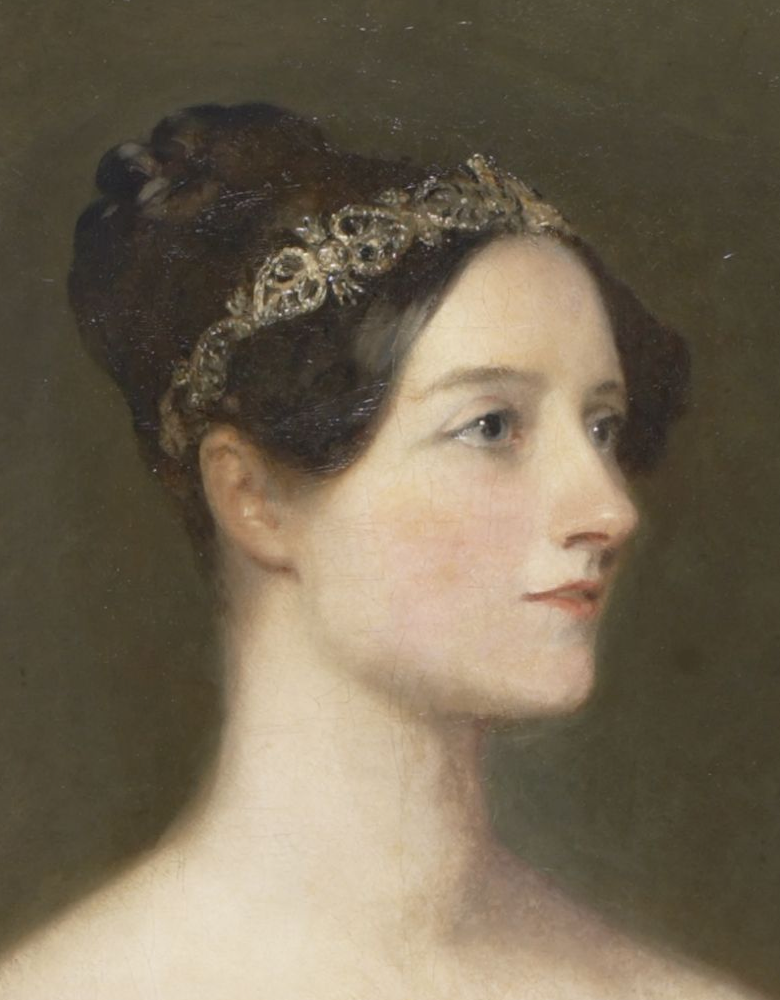
Ada Lovelace was born in London in 1815, the only child of the poet Lord Byron, and was raised on an unusual education that combined languages, music, and needlework with serious mathematics at a time when almost no girl of her rank studied it. In 1833 she met the inventor Charles Babbage and saw the working portion of his Difference Engine, beginning a correspondence that lasted the rest of her life. When Babbage designed the Analytical Engine, a machine meant to take its instructions from punched cards borrowed from the Jacquard loom, Ada translated an Italian account of it and added seven notes of her own that ran far longer than the article itself. Note G sets out, operation by operation, how the Engine could compute the Bernoulli numbers, and is widely described as the first computer program ever published; the same notes argued that a machine could operate on symbols rather than numbers alone, and that it could never originate anything on its own, an argument Alan Turing later named Lady Lovelace’s Objection. The Engine was never built, and her notes went largely unread until 1953. This Close-Up brings her story to students in four grade bands from K–1 through middle school, with a nine-stop timeline, a simplified version of her Note G operation table, discussion questions, vocabulary, and classroom activities aligned to Georgia ELA, Common Core, North Carolina, New York State, New Jersey, Michigan, and the 2026 CSTA Computer Science Standards.