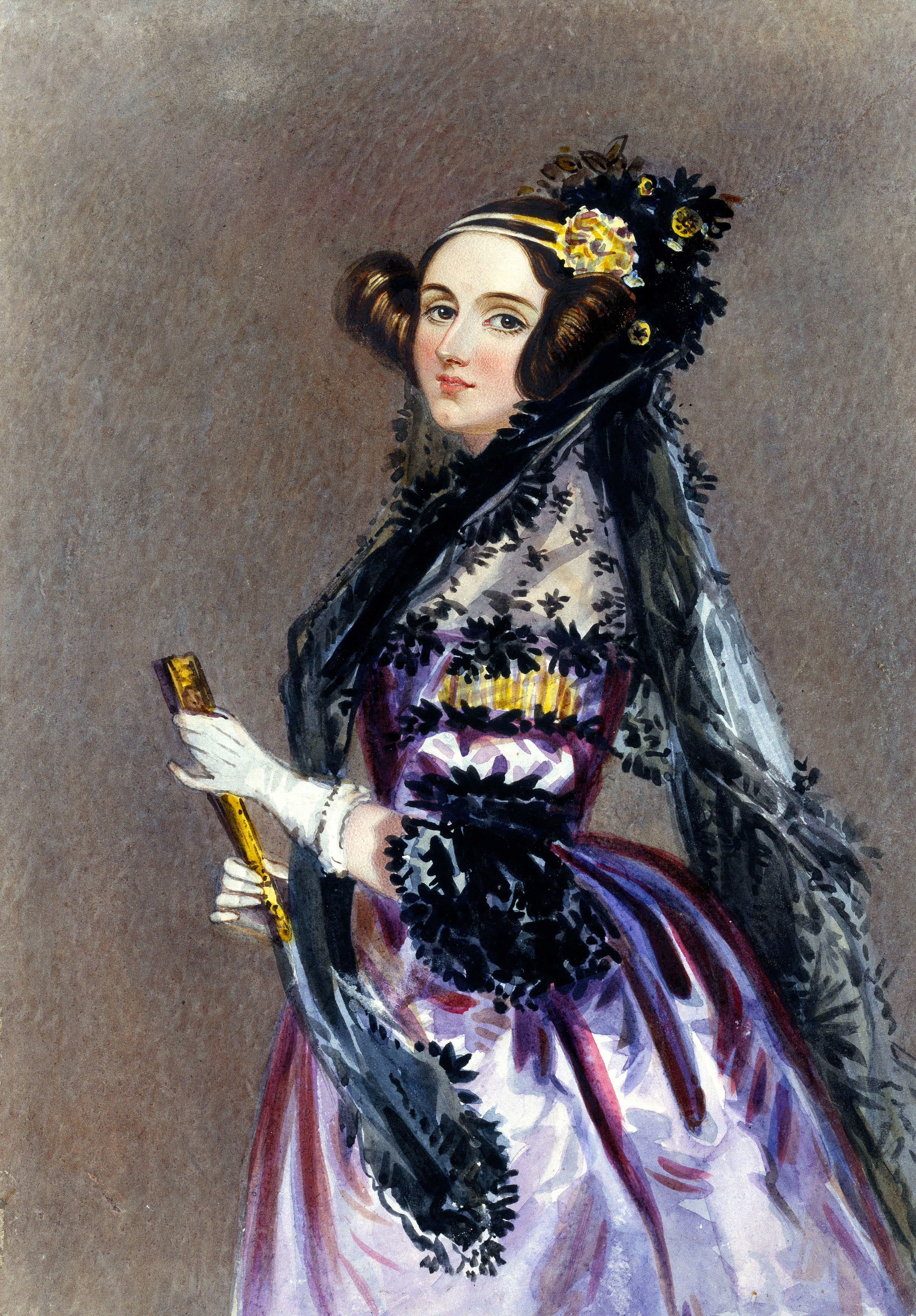
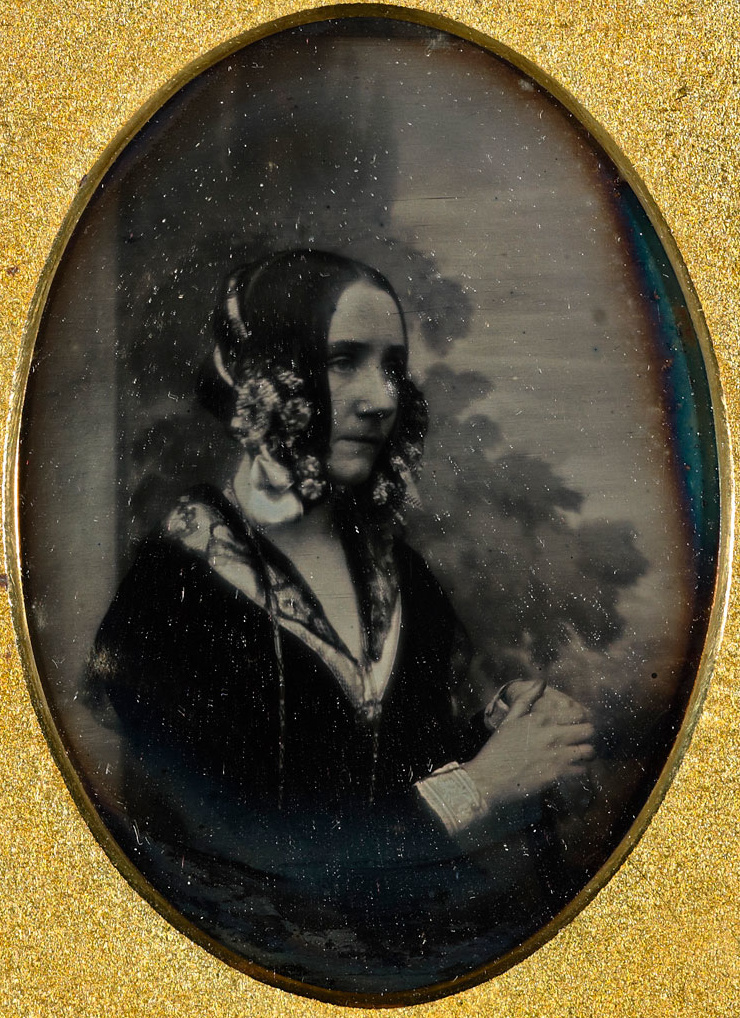
👤 Who Was Ada Lovelace?
Ada Lovelace lived in England a long, long time ago. She was born in 1815. That was before cars, before airplanes, and before anyone had ever seen a computer.
Ada loved numbers. She also loved music and sewing and asking questions. When she was twelve, she wanted to fly like a bird, so she studied how wings work and tried to build a pair of her own.
Today we remember Ada because she imagined something nobody else could see yet. She looked at a big machine made of gears and thought, "This could do so much more than add numbers."
Ada Lovelace was born in London, England, in 1815. Her full name was Augusta Ada Byron, and later, after she married, people called her the Countess of Lovelace. Her father was the famous poet Lord Byron, but he left when she was a baby, and she was raised by her mother and her grandmother.
Girls in wealthy English families at that time usually studied French, Italian, music, drawing, and needlework at home with tutors. Ada studied all of those. She also studied something girls were rarely taught: mathematics. She kept working with math tutors for the rest of her life.
Ada was often sick as a child. When she was thirteen she caught measles and spent close to a year in bed. Even then, she kept learning. She filled her time with numbers, questions, and plans for inventions.
Augusta Ada Byron was born in London on December 10, 1815, the only child of the poet Lord Byron and Anne Isabella Milbanke. Her parents separated within weeks of her birth, and her father left England for good a few months later. Ada never knew him. Her mother raised her, and her mother's firm views shaped nearly everything about her education.
That education was unusual. Aristocratic girls of the 1820s were tutored at home in languages, music, drawing, and needlework such as embroidery, and Ada was tutored in all of these. She was also tutored in mathematics, which almost no girl of her class studied seriously. As an adult she continued her mathematical training, eventually corresponding about logic with Augustus De Morgan, a professor at University College London.
Her childhood was interrupted repeatedly by illness. A bout of measles in 1829 left her unable to walk for a long stretch, and she spent close to a year confined to bed before recovering the use of her legs. She studied through it. By her late teens she was moving in London scientific circles, meeting researchers such as Michael Faraday and the mathematician and writer Mary Somerville, who became her friend and tutor.
Augusta Ada Byron was born in London on December 10, 1815, the only legitimate child of the poet Lord Byron and Anne Isabella Milbanke. Her parents separated within weeks of her birth and her father left England permanently a few months later. She never met him. Her mother, who had a serious interest in mathematics herself, directed her daughter's education with unusual deliberateness.
That education sat oddly against its time. A young woman of Ada's class in the 1820s was tutored at home in French, Italian, music, drawing, and needlework such as embroidery, and Ada was tutored in all of them. She was also taught mathematics, year after year, which almost no girl of her rank received. Most young women dropped such subjects once they married. Ada did not. In her twenties and thirties she was still at it, working through problems in logic and analysis by correspondence with Augustus De Morgan, then a professor at University College London.
Illness shaped her repeatedly. Measles in 1829 left her bedridden for close to a year and unable to walk unaided until 1831. She studied throughout. By her late teens she was circulating in London's scientific society, where she met Michael Faraday and the mathematician and science writer Mary Somerville, who became both friend and tutor and who would introduce her to the man whose machine made her famous.
⚙️ The Machine That Was Never Built
When Ada was seventeen, she met an inventor named Charles Babbage. He had built part of a machine that could do math with gears and cranks. Ada thought it was wonderful. She wanted to know everything about it.
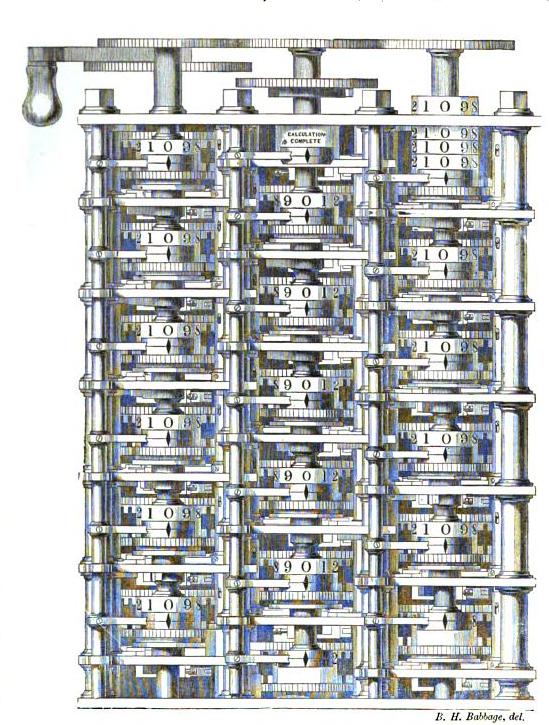
Later, Babbage dreamed up a much bigger machine. He called it the Analytical Engine. Ada wrote a long paper about it. In her paper she wrote step-by-step instructions for the machine to follow. Those instructions are a lot like the programs inside our computers today.
In 1833, when Ada was seventeen, she met Charles Babbage at a party in London. Babbage was an inventor who had built part of a calculating machine called the Difference Engine. He invited Ada and her mother to come see it work. Ada was hooked.
Babbage went on to design something much more ambitious: the Analytical Engine. It would have been huge, powered by steam, and it would have read its instructions from stiff cards with holes punched in them. Babbage never managed to build it. He ran out of money, and the parts were too hard to make.
An Italian writer published a short article in French describing Babbage's new machine. Ada translated the article into English so that more people could read it. Then she added notes of her own at the end. Her notes turned out to be far longer than the article she was translating.
Ada first met Charles Babbage in June 1833, when she was seventeen, introduced by their mutual friend Mary Somerville. Babbage showed her the working portion of his Difference Engine, a geared machine that could calculate tables of numbers and print the results. She was fascinated, and the two became lifelong correspondents.
Babbage's next design was far more ambitious. The Analytical Engine would not simply crunch one kind of calculation. It would be given its instructions on punched cards, borrowing an idea from the Jacquard loom, a weaving machine patented in 1804 that used punched cards to control the pattern in the cloth, automating work skilled weavers had long done by hand. The Analytical Engine was never built. Babbage lost his government funding, quarreled with the craftsman making his precision parts, and by the early 1840s was close to abandoning the project.
In 1842, the Italian engineer Luigi Menabrea published a French account of the Analytical Engine based on lectures Babbage had given in Turin. Ada translated it into English and attached seven notes of her own, labeled A through G. The notes ran far longer than the original article. Note G lays out, step by step, how the Engine could calculate a sequence called the Bernoulli numbers. That procedure is widely described as the first computer program ever published. The translation and notes appeared in 1843, signed A.A.L.
| Step | Operation | Acts on | Result stored in |
|---|---|---|---|
| 1 | × | V2 and V3 | V4, V5, V6 |
| 2 | − | V4 and V1 | V4 |
| 3 | + | V5 and V1 | V5 |
| 4 | ÷ | V5 and V4 | V11 |
Ada laid her procedure out as a table like this one. Each row is one instruction. The letter V stands for a variable, a labeled place in the machine where a number is kept. Her full table runs to twenty-five steps and repeats some of them in a loop. This is a simplified version of the opening rows, with her original columns reduced to four.
Ada met Charles Babbage in June 1833, when she was seventeen, through Mary Somerville. Babbage showed her the completed portion of his Difference Engine, a geared apparatus that could compute mathematical tables and print them without a human copyist introducing errors. The two corresponded for the rest of her life.
His next design abandoned the single-purpose logic of the Difference Engine entirely. The Analytical Engine would take its instructions from punched cards, an idea lifted from the Jacquard loom, patented in 1804, which used punched cards to control the pattern a loom wove, automating a process skilled weavers had carried out by hand for centuries. It would have a store for holding numbers and a mill for operating on them, an architecture that maps recognizably onto memory and processor. It was never built. Babbage lost his government funding, fell out with the engineer machining his components, and by the early 1840s the project was effectively stalled.
In 1842 the Italian engineer Luigi Menabrea published a French account of the Analytical Engine, based on lectures Babbage had delivered in Turin. Ada translated it into English and appended seven notes of her own, labeled A through G. The notes dwarf the article. Note G sets out, operation by operation, a procedure for computing the Bernoulli numbers on the Engine, complete with repeated sequences that function as loops. It is widely described as the first computer program ever published. The whole thing appeared in 1843 under the initials A.A.L.
🧵 A Mind That Connected Everything
Ada learned to sew and embroider. In embroidery, we repeat the same stitches over and over to make a pattern. Ada noticed that math problems repeat steps the same way.
Ada also sang and played the piano. Music is written with symbols on a page. Those symbols are not numbers, but they still tell us exactly what to do. Ada thought a machine might read symbols too. She guessed that one day a machine could even make music.
Ada did not keep her subjects in separate boxes. She pulled ideas from all of them when she wrote about the Analytical Engine.
From embroidery she knew about repeating patterns. Sewing and weaving were skilled work. People spent years learning to read a pattern and to make one. Math problems repeat steps too, and copying out a card for every single repeated step would have taken forever. So Ada described ways for the machine to reuse the same instructions over and over. Programmers today call these loops, and they are still one of the most important ideas in computing.
From music she knew that symbols on a page can stand for things other than amounts. A note tells a musician how high to sing and how long to hold it. Ada realized that if a machine could handle symbols, not just numbers, it might one day compose music.
She drew on embroidery, music, language, and logic in the same set of notes, and the connections she made were ones a narrowly trained mathematician might never have reached.
Needlework gave her an instinct for repetition. Embroidery and weaving were skilled technical work in their own right, with pattern systems refined and passed down over generations. Their patterns repeat; so do long calculations. Rather than requiring a separate punched card for every repeated step, she described how the Engine could run the same instructions again, including loops nested inside other loops, and could test a condition to decide what to do next. These are structures that every programming language still uses.
Music gave her something even larger. She was a trained singer and pianist, fluent in a notation where symbols represent pitch and duration rather than quantity. She had also been manipulating logical symbols in her letters to De Morgan. From there it was a short step to the central claim of her notes: that the Engine could operate on symbols generally, and that if musical relationships could be expressed in a form the machine could handle, it could compose music of real complexity.
Historians who study her notes argue against treating these lessons in music, languages, and needlework as the decorative part of her education and mathematics as the serious part. On their reading, the connections that made her work original run directly through the subjects a conventional account treats as ornamental.
Needlework trained her eye for repetition. Embroidery and weaving were technical traditions in their own right, with pattern systems, notation, and expertise built over centuries, not raw material waiting for a machine. Both are built from motifs that recur with variation, and long computations behave the same way. Rather than demanding a fresh punched card for every repeated operation, she described how the Engine could cycle back through the same instructions, nest one such cycle inside another, and branch depending on a value it had computed. Loops, nested loops, and conditional branching are not period curiosities. They are the control structures of every programming language in use now.
Music carried her further still. As a trained singer and pianist she worked fluently in a notation where a symbol encodes pitch and duration rather than quantity, and in her correspondence with De Morgan she was manipulating logical symbols according to formal rules. The conclusion in her notes follows from both: the Engine could act on symbols in general, and if the relationships within music could be expressed in a form the machine could take, it could compose pieces of real complexity. Nothing in Babbage's own writing goes there.
🤖 What a Machine Can and Cannot Do
Ada believed the machine could do amazing things. But she said it could only do what people told it to do. It could not think up something brand new all by itself.
People are still talking about Ada's idea today. Computers can do a lot now. But people are the ones who give them their instructions.
Ada was excited about what the Analytical Engine might do. She was also careful. In one of her notes she wrote that the machine could not come up with anything on its own. It could only carry out what people already knew how to tell it to do.
Much later, a scientist named Alan Turing read that note and gave her argument a nickname: Lady Lovelace's Objection. People have been arguing about it ever since, and the argument got louder once computers started writing text and making pictures.
Ada died in 1852, when she was thirty-six. Her notes were mostly forgotten for about a hundred years. Then computers were invented, engineers read what she had written, and they realized she had described their work before it existed.
The same notes that imagined a machine composing music also set a limit on what such a machine could be. Ada argued that the Analytical Engine had no ability to originate anything, that it could carry out whatever we knew how to instruct it to perform, and that its role was to help us work with what we already understood. She was not saying the machine was unimpressive. She was saying something specific about where new ideas come from.
A century later Alan Turing quoted this passage and named it Lady Lovelace's Objection, and he disagreed with it. The argument has never fully settled. It is unusually live today: when a program writes an essay or generates an image, it is working from enormous amounts of material that people made first. Whether that counts as originating something is exactly the question Ada raised.
Ada died on November 27, 1852, at the age of thirty-six, after a long illness. Her notes went largely unread until 1953. Since then her name has traveled widely. A programming language developed for the United States Department of Defense was named Ada in her honor, and its military standard number, 1815, was chosen for the year of her birth. Ada Lovelace Day, held on the second Tuesday of October, celebrates women in science, technology, engineering, and mathematics.
The same notes that imagined a machine composing music also fixed a boundary around it. Ada argued that the Analytical Engine had no pretensions to originate anything, that it could do whatever we knew how to order it to perform, and that its value lay in helping us make available what we already possessed. Read carelessly, that sounds dismissive. Read closely, it is a precise claim about the origin of novelty, made by someone who had just finished describing the most ambitious machine anyone had conceived.
In 1950 Alan Turing quoted the passage in his paper on machine intelligence, named it Lady Lovelace's Objection, and set out to answer it. He suggested she may simply have had no reason to imagine a machine that learns. The exchange has never closed, and it has become sharply current: systems that generate essays, images, and code are trained on vast quantities of work that people produced first. Whether assembling something unprecedented out of that material counts as originating it is the question Ada put on the table.
She died on November 27, 1852, at thirty-six, after an illness of many months, and was buried beside the father she never knew. Her notes drew little attention for a century. Since their rediscovery her name has spread widely: a programming language commissioned by the United States Department of Defense was called Ada, and its military standard number, 1815, was chosen to mark her birth year. Ada Lovelace Day falls on the second Tuesday of October and honors women in science, technology, engineering, and mathematics.
📖 Words to Know
Ada is born in England in December. Augusta Ada Byron is born in London on December 10. Her father, the poet Lord Byron, leaves soon after, and her mother raises her. Augusta Ada Byron is born in London on December 10, the only child of Lord Byron and Anne Isabella Milbanke. Her parents separate within weeks, and she is raised entirely by her mother. Augusta Ada Byron is born in London on December 10, the only legitimate child of Lord Byron and Anne Isabella Milbanke. Her parents separate within weeks and her father leaves England within months. She is raised solely by her mother, who directs her education deliberately and unusually.
Ada is twelve. She wants to fly, so she studies birds and makes wings. At twelve, Ada decides she wants to fly. She studies bird wings, tests different materials, and plans a book about flying. At twelve, Ada begins a methodical flight project: examining bird anatomy, testing paper, silk, wire, and feathers, and drafting a book she calls Flyology. It is an early sign of how she combined science, craft, and imagination. At twelve, Ada undertakes a systematic flight project, studying bird anatomy, testing paper, silk, wire, and feathers for a working wing, and drafting a book she titles Flyology. The method already shows the pattern of her later work: a technical problem approached through both measurement and imagination.
Ada gets very sick and has to stay in bed for a long time. She keeps learning anyway. Ada catches measles and spends nearly a year in bed. It takes a long time before she can walk again, and she keeps studying the whole time. A bout of measles in 1829 leaves Ada unable to walk and confined to bed for close to a year. By 1831 she is walking with crutches. Her mathematical studies continue throughout. Measles in 1829 leaves Ada bedridden for close to a year and unable to walk unaided until 1831. Her mathematical education continues without interruption throughout the illness.
Ada meets an inventor. He shows her a machine that does math with gears. At seventeen, Ada meets the inventor Charles Babbage and sees part of his calculating machine working. She wants to learn everything about it. Introduced by her tutor and friend Mary Somerville, seventeen-year-old Ada meets Charles Babbage in June and is shown the working portion of his Difference Engine. The meeting begins a correspondence that lasts the rest of her life. Introduced by her tutor and friend Mary Somerville, seventeen-year-old Ada meets Charles Babbage in June and is shown the completed section of his Difference Engine. The correspondence that begins here runs for the remaining nineteen years of her life.
Ada gets married and has three children. Ada marries William King and has three children. She runs a large household, and a few years later she returns to studying mathematics. Ada marries William King in 1835 and becomes Countess of Lovelace when he is made an earl in 1838. She raises three children and manages a large estate. Within months of her third child's birth in 1839, she returns to serious mathematical study under Augustus De Morgan. Ada marries William King in 1835 and becomes Countess of Lovelace when he is created an earl in 1838. She bears three children and manages a substantial estate. Within months of her third child's birth in 1839 she resumes advanced mathematical study, corresponding with Augustus De Morgan.
Ada writes a long paper about a dream machine. She writes instructions for it to follow. Ada translates a French article about the Analytical Engine into English and adds her own notes. Her notes end up much longer than the article, and they include step-by-step instructions for the machine. Ada translates Luigi Menabrea's French account of the Analytical Engine and adds seven notes, A through G, far longer than the article itself. Note G describes how the Engine could compute the Bernoulli numbers, a procedure widely called the first published computer program. The work appears in 1843, signed A.A.L. Ada translates Luigi Menabrea's French account of the Analytical Engine and appends seven notes, A through G, considerably longer than the article itself. Note G sets out a procedure for computing the Bernoulli numbers, including repeated sequences that function as loops, and is widely called the first published computer program. The work appears in 1843 signed A.A.L.
Ada becomes ill and dies. She is thirty-six years old. Ada dies on November 27 after a long illness. She is thirty-six. Most people at the time do not realize how important her notes will become. Ada dies on November 27 at the age of thirty-six, after an illness lasting many months. She is buried beside the father she never knew. Her notes, published nine years earlier, attract little attention for the next century. Ada dies on November 27 at thirty-six after a prolonged illness, and is buried beside the father she never met. Her published notes have attracted almost no attention, and will attract little for another century.
A hundred years later, people read Ada's writing again. Now there are real computers. More than a hundred years after Ada wrote them, her notes are printed again in a book about computers. Engineers read them and realize she had described their work first. The physicist B. V. Bowden reprints Ada's notes in a book on digital computing machines. Engineers now working with real computers recognize in her 1843 writing a description of what they are building. The physicist B. V. Bowden reprints Ada's notes in a volume on digital computing machines. Engineers then building working computers recognize their own architecture and methods described in a document published 110 years earlier.
Today a computer language is named Ada. There is even a day to celebrate her. A computer programming language is named Ada in her honor. Ada Lovelace Day, on the second Tuesday of October, celebrates women in science and math. A programming language developed for the United States Department of Defense is named Ada, and its standard number, 1815, marks her birth year. Ada Lovelace Day, held the second Tuesday of October, honors women in science, technology, engineering, and mathematics. Buildings, awards, and institutes carry her name worldwide. A programming language commissioned by the United States Department of Defense is named Ada, its military standard numbered 1815 for her birth year. Ada Lovelace Day, the second Tuesday of October, honors women in science, technology, engineering, and mathematics. Institutes, buildings, and awards worldwide carry her name.
💬 Discussion Questions
- 1Ada wanted to fly, so she studied birds first. What is something we would want to learn about before we tried it?
- 2Ada gave a machine a list of steps to follow. What is something we do in a certain order every day?
- 3Ada liked math and music and sewing. What are two things we like that seem very different from each other?
- 1Ada noticed that sewing patterns and math problems both repeat. What is something you have noticed that two very different things, such as a hobby and a school subject, have in common?
- 2The Analytical Engine was never built, so Ada's instructions were never run. Does that change how important her work was? Explain your thinking.
- 3Ada signed her published work with only her initials. Why might a writer choose not to put their full name on something they made?
- 1Ada argued that a machine can only carry out what people already know how to tell it to do. Based on what you have seen computers do, how would you respond to her argument?
- 2Her notes were almost ignored for a hundred years. What might cause an important idea to go unnoticed for that long?
- 3Historians disagree about whether Ada should be called the first computer programmer. What kinds of evidence would help you decide where you stand?
- 1Ada claimed the Engine could not originate anything and could only carry out what we knew how to order it to perform. Turing thought she was wrong. Construct the strongest version of each position, then say which you find more persuasive and why.
- 2Ada drew on music, languages, and needlework in work we now call computing. Some historians read that as evidence these subjects were undervalued. Others would say weaving and embroidery were always technical work and never needed computing to prove it. Which reading do you find stronger?
- 3Historians disagree about whether Ada or Babbage should be credited with the first program. What kinds of evidence would settle it, and why might a dispute like this persist even when both sides have read the same documents?
- 4Ada's 1843 notes on the Analytical Engine went essentially unread until 1953. Why might a good idea go unrecognized for that long? Compare the world Ada published into with the world her notes were rediscovered in, and consider what had changed.