A back to school math game for grades K-5
Students shop for school supplies within a set budget, adding and subtracting as they fill a cart and keep the total under their limit. Three grade bands match the math to each level: $20 for grades K-1, $50 for grades 2-3, and $80 with decimals for grades 4-5, and an end-of-summer sale adds half-off and discount problems in grades 2-5. A printable receipt at the end shows families and teachers how the shopping trip went.
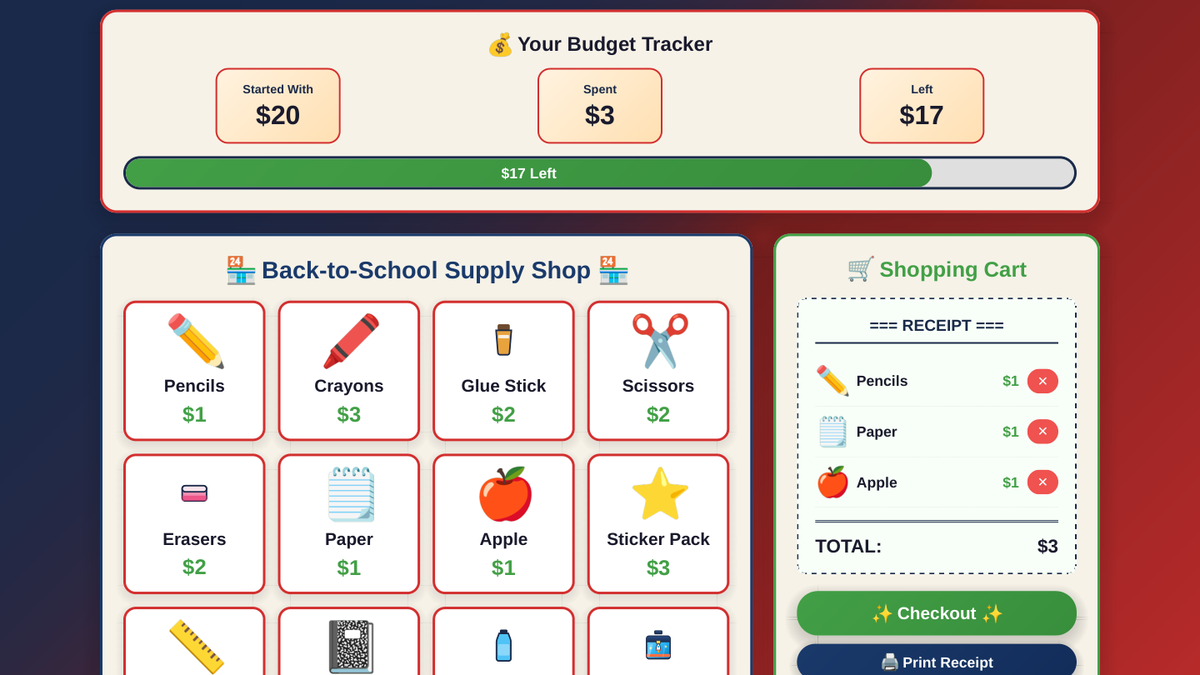 Preview
How this back to school math game works
Every grade level starts with a set budget and a shop full of school supplies. When a student adds an item, the game asks them to work out the new total or the money left, and a budget tracker shows how close they are to the limit. Because every choice changes the numbers, the math has a real purpose.
Math practice for kindergarten through grade 5
Three levels match the numbers to what students are ready for:
- Grades K-1: a $20 budget with small whole-dollar prices. Totals start within 10 and grow to within 20 as students answer correctly.
- Grades 2-3: a $50 budget with whole-dollar prices, plus half-off sale items.
- Grades 4-5: an $80 budget with prices in dollars and cents, plus discount problems.
Sale items add discount math
An end of summer sale puts beach toys on the shelf at lower prices. Students in grades 2-3 find the half-price amount before they buy, and students in grades 4-5 subtract the dollar amount off to find the sale price. In grades K-1, sale items simply cost less, which gives younger students a first look at why a sale matters.
Standards and learning goals
Teachers can match this back to school math game to their standards, which are listed inside the game. They include the Common Core State Standards for Mathematics along with standards for Georgia, North Carolina, New Jersey, New York and Michigan. The skills include adding and subtracting within 20 in the early grades, working with money amounts, and adding and subtracting decimals in the upper grades.
A printable receipt for families and teachers
At the end of the shopping trip, the game shows a receipt with the items bought, the total spent and how many answers were right on the first try. It prints for the classroom or saves as a PDF. A QR code on the receipt opens a short summary that families can read on a phone and use to play again.
Why budgeting makes math stick
Budgeting gives young learners a reason to add and subtract, because every choice changes how much money is left. Talking about prices at home or in the store builds the same skills, and the receipt gives families something concrete to talk about together.
Tips for playing at home or in class
Play together and ask the student to explain how they found each total. Younger students can say the prices out loud while an adult keeps the running total on paper, and older students can estimate the total before they check out. Set a small goal, such as finishing under budget with the most answers right on the first try. Then print the receipt and ask what they would buy differently next time.
How to play
To try the back to school math game, choose Play Full Screen to open it in its own tab. It works on Chromebooks, tablets, phones and computers, and there is nothing to install. The speaker button turns the music off.
More budget math to try
Want more practice with money? Try the Sports Gear Shopping Challenge, then read Beach Toys vs. School Supplies together for a punny story about beach toys and school supplies at the end of summer. After this back to school math game, families can keep the budgeting talk going at the store.