January Read-Aloud Guide
❄️ Snowflake Bentley ❄️
By Jacqueline Briggs Martin
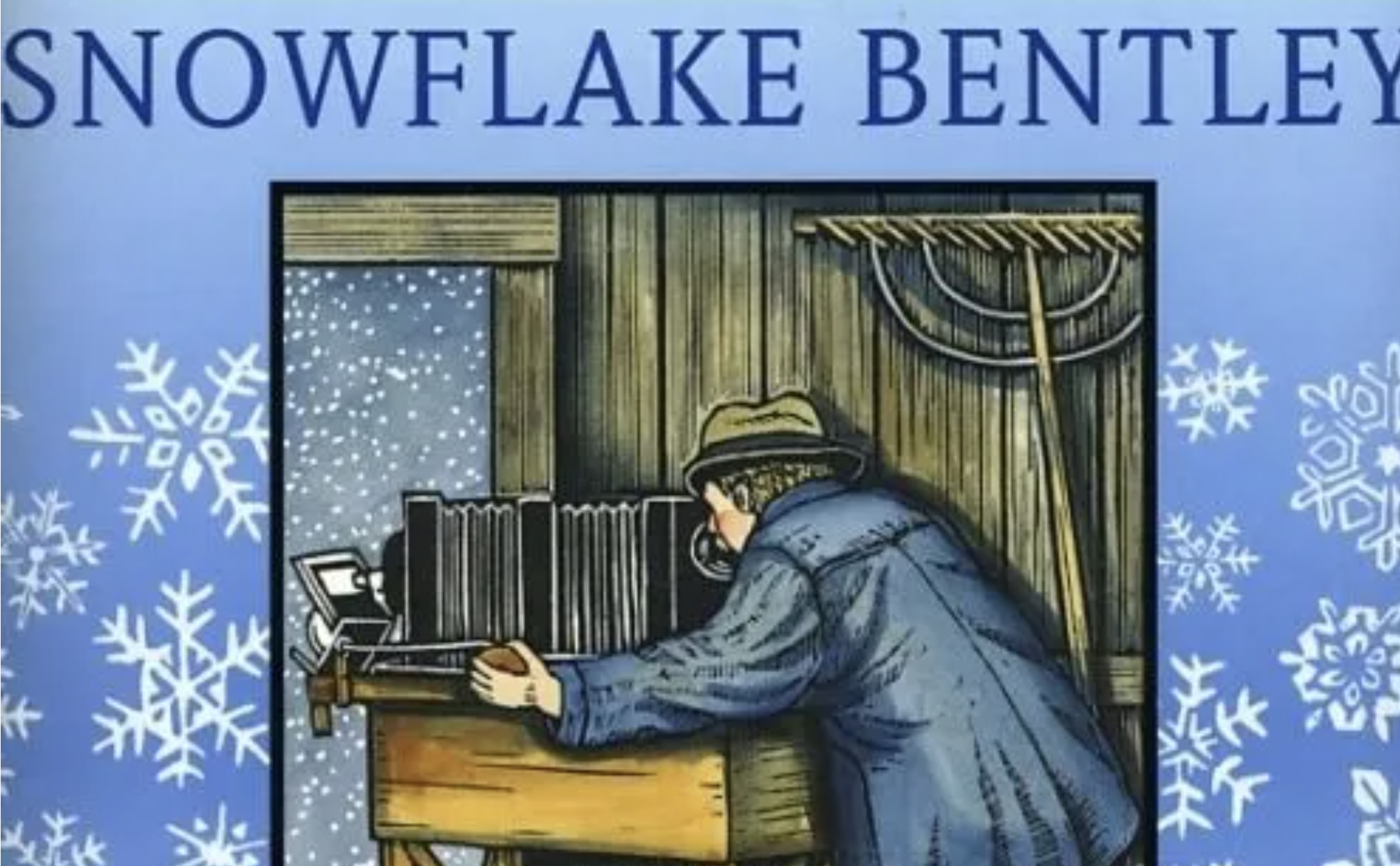
Illustrated by Mary Azarian
K-5 Classroom Resource
From the ArchivesWhy This Book Matters
This picture book biography introduces young readers to Wilson Bentley, a Vermont farmer who became the first person to successfully photograph individual snowflakes. The story shows how one person’s curiosity can lead to amazing discoveries.
Young students connect with the central challenge: how do you save something beautiful that melts away? The book demonstrates perseverance in terms kindergarteners and first graders understand. Wilson faces setbacks but keeps working toward his goal.
Mary Azarian’s woodcut illustrations use a limited color palette of deep blues and whites. The folk-art style creates a timeless quality that helps students focus on the emotional core of the story rather than getting distracted by elaborate details.
For January classrooms, this book offers a perfect entry point for discussions about setting goals and working toward them. Unlike many “try your best” stories, this one shows real difficulty and repeated attempts. Students see that important work takes time.
The educational value extends beyond the perseverance message. Students learn that ordinary things around them can be extraordinary when examined closely. They discover that everyone notices different things, and those unique perspectives matter.
Let’s Talk About It!
Why This Book Matters
This Caldecott Medal winner tells the true story of Wilson Bentley, a self-taught scientist who photographed thousands of snowflakes over his lifetime. The biography balances scientific achievement with the human story of pursuing a passion despite obstacles.
The book addresses a reality many students face: sometimes people don’t understand or support your interests. Wilson experienced mockery from his community. The narrative handles this social dimension honestly while showing how Wilson found meaning in his work regardless of others’ opinions.
Martin’s text works well for second and third graders because it presents failure as part of the process rather than as something to avoid. Wilson’s years of unsuccessful attempts become evidence of his commitment. Students see that expertise develops through practice and experimentation.
The historical setting provides context without overwhelming young readers. Students learn about life in rural Vermont during the late 1800s and early 1900s. They begin to understand how scientific knowledge gets built through individual contributions over time.
Azarian’s woodcut illustrations complement the themes effectively. The printmaking technique requires patience and precision, mirroring Wilson’s own methodical approach. The artistic style gives students a model for how craftsmanship matters across different fields.
For January curriculum, this book supports discussions about long-term dedication versus instant results. Students can examine the difference between quick goals and sustained effort. The story provides a framework for thinking about their own learning journeys.
Discussion Questions
Why This Book Matters
Jacqueline Briggs Martin’s biography examines Wilson Bentley’s lifelong dedication to snowflake photography through the lens of innovation and intrinsic motivation. The book raises important questions about what drives scientific inquiry and how society values unconventional pursuits.
The narrative provides an excellent case study in scientific methodology. Bentley faced a technical problem no one had solved: how to photograph microscopic ice crystals before they sublimated. He developed his own photomicrography techniques through trial and error. The book demonstrates how innovation often requires combining existing tools in new ways.
Martin addresses the social context surrounding Bentley’s work with nuance appropriate for upper elementary students. His rural community saw little practical value in photographing snowflakes. This tension between practical concerns and intellectual curiosity offers rich material for classroom discussion about how we define valuable work.
The book’s treatment of failure deserves particular attention. Bentley spent years perfecting his technique, facing countless setbacks. The narrative frames these failures as essential to eventual success rather than as obstacles to overcome. This perspective helps students understand that productive failure generates knowledge.
Azarian’s illustrations work on multiple levels. The woodcut medium creates visual cohesion while serving as a metaphor for craftsmanship. The folk-art aesthetic reinforces Bentley’s rural Vermont setting. Students can analyze how artistic choices support narrative themes.
For January curriculum planning, this book supports discussions about goal-setting that go beyond surface-level resolution-making. Students can explore the difference between extrinsic motivation (working for rewards or recognition) and intrinsic motivation (finding meaning in the work itself). Bentley’s story demonstrates how personal passion can contribute to broader scientific knowledge, even when that wasn’t the primary intention.