Sea Jelly Craft: Build Your Own Floating Sea Jelly
This sea jelly craft invites kids to turn what they’ve learned about one of the ocean’s most graceful animals into a hands-on art project. Using everyday materials, you’ll cut, paint, and decorate a sea jelly that looks ready to drift across the room. Along the way, you’ll practice observing, designing, and building like a real scientist and artist.
Jellyfish or Sea Jellies? What Scientists Say
Should we call them jellyfish or sea jellies? Scientists who study them have a clear answer: please don’t call them jellyfish! They aren’t fish at all. Fish have backbones, gills, and fins. Sea jellies have none of these. A more accurate name is sea jellies.
They don’t move like fish either. Instead of swimming with a tail, a sea jelly pulses its bell, the umbrella-shaped part of its body, to push water out and glide forward. Keep this in mind as you watch them drift, and as you design your own sea jelly craft.
Meet the Sea Jelly: Fast Facts
Before you start building, here are some fascinating facts to think about as you create:
- No brain, no heart, no bones. Sea jellies get along with a very simple body and a net of nerves.
- Mostly water. Their bodies are made up of mostly water, which is why they look so soft and see-through.
- Ancient animals. Sea jellies have been drifting through the oceans for hundreds of millions of years, long before the dinosaurs.
- Stinging tentacles. Their tentacles carry tiny stinging cells used to catch food and defend themselves.
- Some glow. Certain species can make their own light, a trick called bioluminescence.
Now It’s Your Turn to Create!
After observing, sketching, and moving like sea jellies, it’s time to bring everything you’ve learned to life through art. In this hands-on sea jelly craft, you’ll design and build your very own sea jelly. Think about its shape, motion, and texture, and use those details to shape your creation. Get ready to cut, paint, and decorate your own floating sea jelly!
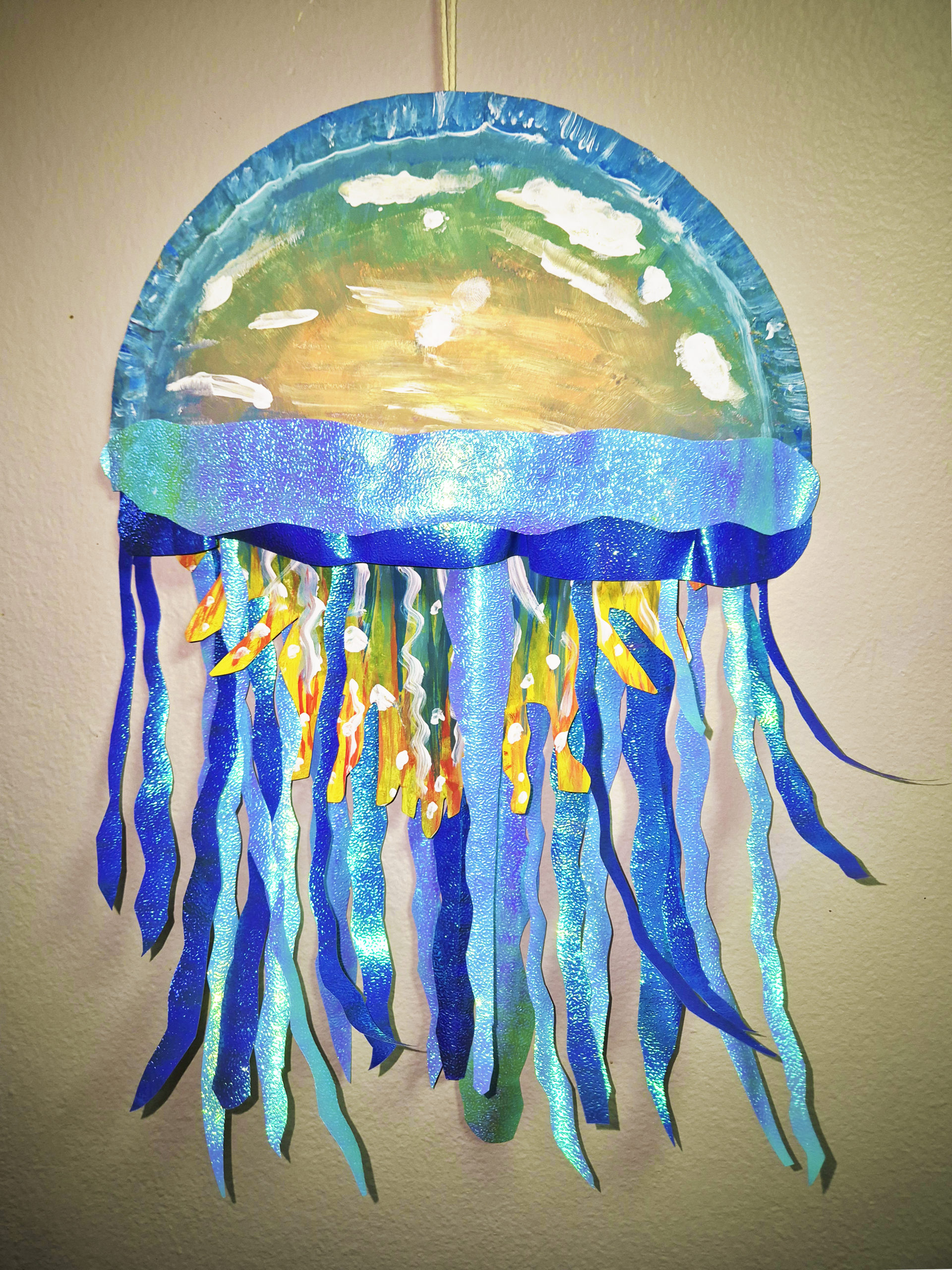
See the finished product above, then follow the written and video instructions below, created by our resident artist Nikita Lai Jing Tse, to guide you.
Video Tutorial
Written Instructions
📄 Sea Jelly Craft Instructions (PDF)
Questions to Think About While You Create
Great artists and scientists ask questions as they work. Try these while you build:
- What shape is the bell of your sea jelly? Is it round, flat, or tall?
- How will your tentacles hang? Will they be long and flowing, or short and frilly?
- Sea jellies are often see-through. How could you show that with color, paint, or texture?
- If your sea jelly could move, how would it pulse and glide?
STEAM Connections
This sea jelly craft brings all five parts of STEAM together:
- Science: Learn how sea jellies are built and how they move, and why they aren’t fish.
- Technology: Use simple tools to cut, shape, and assemble your design.
- Engineering: Plan how your sea jelly’s body and tentacles will hold together and hang.
- Art: Choose colors, patterns, and textures to make your sea jelly one of a kind.
- Math: Think about symmetry, patterns, and the lengths and sizes of your parts.
Tips for Parents and Teachers
This activity works well at home, in a classroom, or in a group setting. Watch the video together first, then let kids work at their own pace. Encourage them to look at pictures or videos of real sea jellies for inspiration, and invite them to explain the choices they made. When everyone is finished, display the sea jellies together, hang them from the ceiling, or tape them to a window so they look like a drifting bloom.
Because every child will design their sea jelly a little differently, there’s no wrong way to make one. That’s part of the fun of learning through making.
Share Your Creations!
We’d love to see your sea jelly craft! Send us snapshots of your sea jellies by tagging us on LinkedIn or Instagram!
A This Month™ STEAM Maker Lab activity · © 2026 THENCE LLC