Teacher’s Guide to Three Kings Day – Día de los Reyes
👑 ⭐ 👑

Teacher’s Guide to Three Kings Day

Día de los Reyes Magos
The Epiphany Celebration

Target Audience: K-5th Grade Educators

Cultural Context: Christian tradition celebrated widely in Latin America, Spain, and parts of Europe

Date: January 6th annually

Also Known As: Epiphany, Theophany, Twelfth Night, Little Christmas

Primary Regions: Latin America, Spain, parts of Europe, Philippines, and Christian communities worldwide

👑 What is Three Kings Day?

Three Kings Day, or Día de los Reyes Magos, is celebrated on January 6th and commemorates the biblical story of the Three Wise Men (also called the Three Kings or Magi) who traveled from the East to visit baby Jesus in Bethlehem, bringing gifts of gold, frankincense, and myrrh.

Quick Facts:

  • When: January 6th (exactly 12 days after Christmas)
  • Who Celebrates: Christian communities worldwide, especially in Latin America, Spain, and parts of Europe
  • Key Traditions: Gift-giving to children, parades, special foods, leaving shoes out for the Kings
  • Religious Significance: Celebrates the revelation (epiphany) of Jesus to the Gentiles (non-Jewish world)
  • Cultural Importance: For many Latino families, this is the primary gift-giving holiday, not Christmas Day

Important Context: In many Latin American countries and Spain, Three Kings Day is as important as—or more important than—Christmas Day for gift-giving and celebration. Children often receive their main gifts on January 6th rather than December 25th.

The Three Kings (Los Tres Reyes Magos):

The Traditional Names and Gifts:

  • Melchior (Melchor): Brought gold, representing Jesus’s kingship
  • Caspar/Gaspar: Brought frankincense, representing Jesus’s divinity
  • Balthazar (Baltasar): Brought myrrh, representing Jesus’s humanity and future suffering

Note: The Bible doesn’t actually name the Wise Men or specify that there were three—the number comes from the three gifts mentioned. The names and details developed through tradition over centuries.

📜 Biblical Story and Historical Origins

The Biblical Account

The story of the Magi appears in the Gospel of Matthew (Matthew 2:1-12). According to the biblical narrative:

The Journey of the Wise Men:

  1. Following the Star: Wise men from the East saw a bright star and understood it to announce the birth of a great king
  2. Journey to Jerusalem: They traveled to Jerusalem seeking “the one who has been born king of the Jews”
  3. King Herod’s Fear: King Herod, troubled by news of a rival king, asked them to find the child and report back
  4. The Star Leads the Way: The star led them to Bethlehem, where they found Jesus with Mary
  5. Presenting Gifts: They worshipped Jesus and presented their gifts: gold, frankincense, and myrrh
  6. Divine Warning: Warned in a dream not to return to Herod, they went home by another route

What We Know from the Bible vs. Tradition

✅ Biblical Text Says:

  • Magi (wise men/scholars) from the East
  • They followed a star
  • They brought three gifts: gold, frankincense, myrrh
  • They visited Jesus in a house (not the stable)
  • This likely happened some time after Jesus’s birth, not the same night

📚 Tradition Added:

  • There were three Magi (number from three gifts)
  • Their names: Melchior, Caspar, Balthazar
  • They were kings (the Bible says “magi”—scholars/astrologers)
  • They came from three different continents
  • Specific details about their appearance and backgrounds

Historical Development

The celebration of Epiphany (January 6th) is one of the oldest Christian celebrations:

  • Early Church: Celebrated since at least the 2nd-3rd century
  • Eastern Christianity: Originally celebrated Jesus’s baptism and the wedding at Cana
  • Western Christianity: Focused on the visit of the Magi
  • Spanish Influence: Spanish colonization spread Three Kings Day traditions throughout Latin America
  • Modern Practice: Customs vary by country, blending Christian faith with local cultural traditions

Teaching Note: This is a religious holiday with deep Christian significance. When teaching about it, focus on the cultural traditions and historical story while being respectful of both those who celebrate it as a religious observance and those who don’t celebrate it at all.

🌍 Celebrations Around the World

Three Kings Day is celebrated with unique traditions in different countries. Here are some regional variations:

🇪🇸 Spain – Cabalgata de Reyes

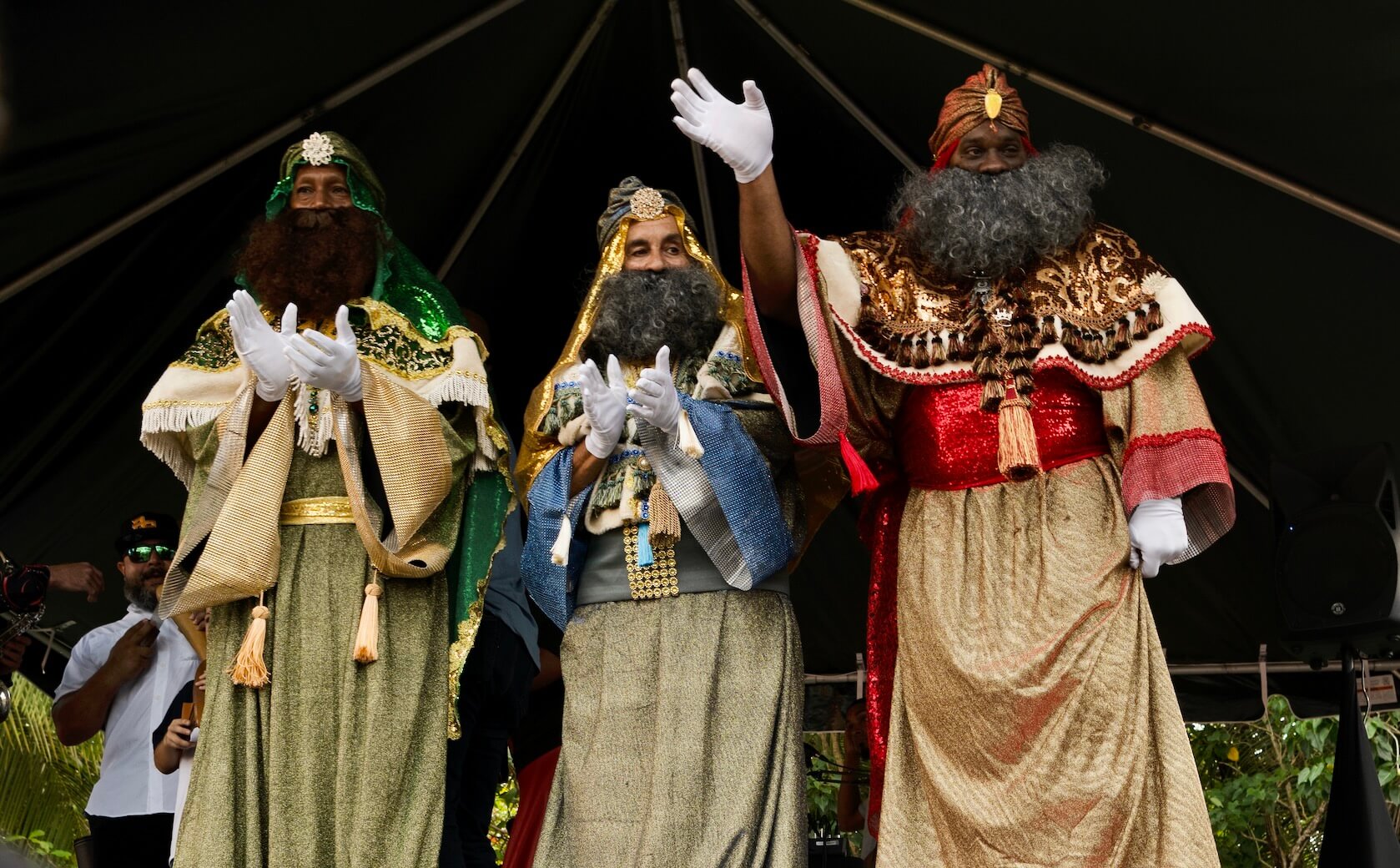
The Grand Parade: On the evening of January 5th, cities and towns throughout Spain host spectacular parades called “Cabalgata de Reyes”

  • The Three Kings arrive on elaborate floats, often accompanied by camels
  • They throw candy to children lining the streets
  • This is one of the most important events of the year for Spanish children
  • Families line up hours early to get good viewing spots

Leaving Shoes Out: Children place their shoes on balconies, windowsills, or by the door with grass, water, or carrots for the Kings’ camels

Roscón de Reyes: A ring-shaped sweet bread decorated with candied fruits, eaten on January 6th. A small figurine and a dried bean are hidden inside—whoever gets the figurine wears a crown; whoever gets the bean pays for next year’s cake!

🇲🇽 Mexico – Rosca de Reyes

The King Cake: Similar to Spain but with unique Mexican traditions

  • Families gather on January 6th to share Rosca de Reyes
  • Small plastic baby Jesus figurines are hidden inside
  • Whoever finds a baby in their slice must host a party on February 2nd (Día de la Candelaria) and provide tamales
  • The round shape represents God’s eternal love with no beginning or end

Letter Writing: Children write letters to the Three Kings (like letters to Santa) listing their wishes and good deeds

Shoe Tradition: Children leave their shoes out with notes for the Kings and food/water for their camels

🇵🇷 Puerto Rico – Extended Celebration

Puerto Rico has one of the longest Christmas seasons in the world, extending through Three Kings Day:

  • Grass for the Camels: Children gather grass and place it in boxes under their beds
  • On the morning of January 6th, the grass has been “eaten” and replaced with gifts
  • Parades and Festivals: Communities host celebrations with music and traditional foods
  • Las Octavitas: Some families continue celebrating until January 14th

🇨🇺 Cuba – Shoe in the Window

Well, it’s so the Three Wise Men know that someone is there. And when they come to give a gift to Jesus, they can also leave something for the people in the house.”
— Cuban tradition of placing a shoe in the window
  • Children place one shoe in their bedroom window
  • This signals to the Three Kings that someone lives there who would like a gift
  • Many adults continue this tradition throughout their lives

🇫🇷 France – Galette des Rois

King Cake French Style:

  • A flaky puff pastry cake filled with frangipane (almond cream)
  • A small figurine (fève) is hidden inside
  • Whoever finds it becomes “king” or “queen” for the day and wears a paper crown
  • The youngest person sits under the table and calls out who gets each slice

🇩🇪 Germany – Sternsinger (Star Singers)

Children as the Three Kings:

  • Children dress as the Three Kings and go door-to-door singing carols
  • They write “C+M+B” and the year in chalk above doorways
  • This stands for “Christus Mansionem Benedicat” (Christ bless this house)
  • Also represents the traditional Kings’ names: Caspar, Melchior, Balthazar
  • They collect money for charitable causes

Common Elements Across Cultures

Despite regional variations, several themes unite Three Kings Day celebrations:

  • Gift-Giving: Children receive presents, honoring the Kings’ gifts to Jesus
  • Special Foods: King cakes of various kinds are central to celebrations
  • Leaving Offerings: Children leave something for the Kings or their camels
  • Parades and Processions: Public celebrations honor the Kings’ journey
  • Family Gathering: Families come together to celebrate and share meals
  • The End of Christmas: Marks the conclusion of the Christmas season
🏫 Teaching About Three Kings Day: Cultural Sensitivity

✅ DO:

  • Present Three Kings Day as both a religious and cultural celebration
  • Acknowledge that this is an important holiday for many Christian families, especially Latino communities
  • Explain how different countries celebrate it in unique ways
  • Connect to geography, cultural diversity, and immigration stories
  • Invite families who celebrate to share their traditions (optionally)
  • Use it as an opportunity to learn about Latino cultures
  • Respect that some students may not celebrate Christmas or Christian holidays
  • Emphasize the values of generosity, journey, and giving gifts

❌ DON’T:

  • Assume all Latino students celebrate Three Kings Day
  • Require participation in religious aspects of the celebration
  • Present it as “just like Christmas but for Hispanic people”
  • Make students feel they must represent their entire culture
  • Ignore the religious significance—it matters to many families
  • Use this as your only discussion of Latino culture all year
  • Forget that Latino communities are diverse—traditions vary by country and family

Important Context for Educators

Understanding Religious vs. Cultural Celebration:

Three Kings Day occupies a unique space as both a Christian religious observance and a cultural celebration:

  • Religious Dimension: For practicing Christians, it commemorates an important biblical event—the revelation of Jesus to the Gentiles
  • Cultural Dimension: For many Latino families, even those who aren’t particularly religious, it’s a cherished cultural tradition connecting them to their heritage
  • Teaching Approach: You can teach about the cultural traditions and historical story while respecting both religious and non-religious perspectives
  • Inclusivity: Frame it as “learning about how different families celebrate” rather than expecting all students to participate

Connecting to Universal Themes

When teaching about Three Kings Day, emphasize universal values that resonate across cultures:

  • Generosity: The Kings brought valuable gifts
  • Journey and Discovery: The Magi traveled far seeking wisdom
  • Following Your Star: Pursuing what’s important to you
  • Family and Tradition: Celebrating together across generations
  • Hope and Light: A guiding star in darkness
📊 Age-Appropriate Teaching Approaches

Grades K-1:

  • Focus on simple story: “Three wise men followed a star to find baby Jesus and brought gifts”
  • Emphasize the fun traditions: leaving shoes out, receiving gifts, special foods
  • Count to three with the Three Kings
  • Learn about camels (what do camels eat? Where do they live?)
  • Activity: Make paper crowns for the “Kings for a Day” tradition
  • Simple geography: Point to Spain or Mexico on a map
  • Discuss: “What gift would you bring to someone special?”

Grades 2-3:

  • Tell the biblical story of the Magi following the star
  • Explain why January 6th is 12 days after Christmas
  • Compare how different countries celebrate (Spain vs. Mexico vs. Puerto Rico)
  • Discuss the symbolism of the three gifts (gold, frankincense, myrrh)
  • Activity: Create a map showing the Magi’s journey from the East to Bethlehem
  • Learn Spanish words: Reyes Magos, estrella (star), regalos (gifts)
  • Discuss: “Why do people give gifts on holidays?”

Grades 4-5:

  • Explore the historical and biblical context of the Magi story
  • Discuss what we know from the Bible vs. what comes from tradition
  • Research how Three Kings Day is celebrated in different Spanish-speaking countries
  • Compare Christmas traditions: Why do some families give gifts on Dec 25 vs Jan 6?
  • Geography study: Map the traditional route from the East to Bethlehem
  • Critical thinking: “Why might stories change over time through tradition?”
  • Cultural identity: “How do traditions help families stay connected to their heritage?”
  • Research project: “Holiday Traditions Around the World”
🎨 Cross-Curricular Activity Ideas

Language Arts

  • Story Sequencing: Put the events of the Magi’s journey in order
  • Letter Writing: Write a letter to the Three Kings (like children do in Mexico)
  • Comparative Reading: Read different versions of the Three Kings story
  • Vocabulary: Learn Spanish words related to Three Kings Day
  • Creative Writing: “If I Were a Wise Man” – what gift would you bring?
  • Research Report: How a specific country celebrates Three Kings Day

Math

  • Counting: Count to 12 (the 12 days of Christmas ending on Three Kings Day)
  • Calendar Math: Count days from December 25 to January 6
  • Measurement: Recipe math for making king cake
  • Geometry: Create symmetrical crown designs
  • Problem Solving: Word problems about sharing gifts
  • Patterns: Decorate crowns with AB, AAB, ABC patterns

Social Studies

  • Geography: Map the journey from the East to Bethlehem
  • Cultural Studies: Compare Three Kings Day celebrations across countries
  • Timeline: Place Three Kings Day in historical context
  • Immigration: How traditions travel when families move (age-appropriate)
  • Community: Research local Three Kings Day celebrations
  • Historical Sources: What do we know from the Bible vs. tradition?

Science

  • Astronomy: Study stars and how ancient people navigated by them
  • The Star of Bethlehem: Various scientific theories about what the star might have been
  • Animal Study: Learn about camels—their adaptations, habitat, behavior
  • Botany: Study frankincense and myrrh—what plants are they from?
  • Food Science: How yeast makes bread rise (when making king cake)

Art

  • Crown Making: Design and create royal crowns
  • Star Crafts: Create stars from various materials
  • King Cake Decoration: Design (but don’t necessarily bake) a king cake
  • Three Kings Figures: Create figures of the Magi
  • Cultural Art: Study traditional Latino art and decorations
  • Nativity Scenes: Create a three-dimensional scene including the Magi

Music

  • Traditional Songs: Learn “We Three Kings” and other Epiphany carols
  • Spanish Music: Listen to “Los Reyes Magos” songs from various countries
  • Parade Music: Explore music played during Three Kings parades
  • Rhythm and Dance: Traditional dances associated with the celebration
💬 Discussion Questions by Grade Level

K-2nd Grade:

  • “Why do you think the Three Kings followed the star?”
  • “What special gift would you bring to someone you care about?”
  • “How do you think it felt to travel so far on camels?”
  • “Why do families like to give gifts on special days?”
  • “What would you leave out for the Kings’ camels?”

3rd-5th Grade:

  • “Why do you think some families celebrate gift-giving on January 6th instead of December 25th?”
  • “What do the three gifts—gold, frankincense, and myrrh—symbolize?”
  • “How do you think traditions change when families move to a new country?”
  • “Why might different countries celebrate the same holiday in different ways?”
  • “What can we learn from the Wise Men’s long journey?”
  • “How do celebrations help families stay connected to their culture?”
  • “Why do you think the ‘King for a Day’ tradition (finding the figurine in the cake) is fun?”
🍰 Traditional Three Kings Day Foods

King Cakes Around the World

One of the most universal Three Kings Day traditions is sharing a special cake. Each culture has its own version:

Rosca de Reyes (Mexico, Latin America) 🇲🇽

Shape: Oval or round ring

Decorations: Candied fruits (red, green, orange) and sugar stripes representing the Kings’ jeweled robes

Inside: Small plastic baby Jesus figurines hidden in the dough

Tradition: Whoever finds the baby hosts a party on February 2nd (Candlemas) and brings tamales

Symbolism: The oval shape represents a crown or the eternal circle of God’s love

Flavor: Sweet bread dough, sometimes filled with cream or fruit

Roscón de Reyes (Spain) 🇪🇸

Shape: Large ring or crown shape

Decorations: Candied fruits, sliced almonds, pearl sugar

Inside: Often filled with whipped cream or truffle cream. Contains a small figurine and a dried fava bean

Tradition: Whoever gets the figurine wears a paper crown and is “king/queen for the day.” Whoever gets the bean pays for next year’s roscón!

Flavor: Orange blossom water flavoring is traditional

Galette des Rois (France) 🇫🇷

Shape: Flat round cake

Style: Puff pastry with almond cream (frangipane) filling

Decorations: Scored patterns on top, golden and shiny

Inside: A small charm called a “fève” (originally a fava bean, now often porcelain figurines)

Tradition: Comes with a golden paper crown. The youngest person goes under the table and calls out who should get each slice to ensure fairness

Bolo Rei (Portugal) 🇵🇹

Style: Similar to Rosca but with a distinctive Portuguese flavor

Decorations: Candied fruits and nuts

Unique Elements: Often contains port wine or crystallized fruit

Inside: Small prize and a dried fava bean

Other Traditional Foods

Puerto Rico 🇵🇷

  • Arroz con Dulce: Sweet coconut rice pudding
  • Pasteles: Similar to tamales
  • Tembleque: Coconut pudding
  • Roasted Pork: Lechón asado

Mexico 🇲🇽

  • Hot Chocolate: Mexican-style with cinnamon
  • Tamales: Especially for the Candlemas follow-up celebration
  • Buñuelos: Fried dough pastries

Classroom Considerations

If You Want to Do a Food Activity:

  • Allergy Check: Always check for allergies before any food activity
  • Consider Buying: Many bakeries make king cakes—you don’t have to bake from scratch
  • Non-Food Options: Make king cakes from playdough or craft materials instead
  • Cultural Context First: Explain the tradition before the activity
  • Safety Note: If using a real king cake with a hidden figurine, warn children to eat carefully or remove the figurine before serving to young children
Key Takeaways for Teachers
  1. Religious and Cultural: Three Kings Day is both a Christian religious observance and a cherished cultural tradition, especially in Latino communities. Both dimensions deserve respect.
  2. Global Celebration: While especially important in Latin America and Spain, Three Kings Day is celebrated by Christian communities worldwide with unique regional traditions.
  3. Primary Gift-Giving Day: For many Latino families, January 6th—not December 25th—is the main day for children to receive gifts, honoring the Kings’ gifts to Jesus.
  4. Biblical Story with Traditional Additions: The Bible mentions wise men from the East but doesn’t specify there were three or give their names. These details developed through centuries of tradition.
  5. Rich Cultural Variations: Each country celebrates uniquely—from Spain’s grand parades to Puerto Rico’s grass-gathering tradition to France’s galette des rois.
  6. Universal Themes: Generosity, journey, following your guiding star, and bringing joy to others resonate across all cultures.
  7. Connects to Identity: For Latino families in the U.S., celebrating Three Kings Day helps maintain cultural connections and pass traditions to the next generation.
  8. Teaching Opportunity: This holiday offers a window into Latino cultures, Christian traditions, geography, and the beautiful diversity of how humans celebrate.
📚 Additional Resources and Books

Picture Books (PreK-2):

  • “Hooray, It’s Three Kings Day!” by Annette M. Clayton
  • “Dreams of Green: A Three Kings’ Day Story” by Mariel Jungkunz
  • “The Last Slice: A Three Kings Day Treat” by Melissa Seron Richardson

Chapter Books (Grades 3-5):

  • “Magic Windows: Creating Papel Picado” by Carmen Lomas Garza
  • Look for culturally authentic books by Latino/Latina authors at your local library
  • Check with Latino cultural organizations for recommended reading lists

Online Resources:

  • Catholic Relief Services: Cultural celebrations
  • National Geographic Kids: World holidays
  • PBS Learning Media: Cultural traditions resources
  • Scholastic: Multicultural teaching resources

Community Connections:

  • Check if your local community hosts a Three Kings Day parade or celebration
  • Invite Latino families to share their traditions (with their permission)
  • Partner with Latino cultural centers or community organizations
  • Visit a local bakery that makes Rosca de Reyes

Music and Videos:

  • “We Three Kings of Orient Are” – Traditional carol
  • “Los Reyes Magos” – Traditional Spanish song
  • “Venid, Pastorcillos” – Traditional Spanish carol
  • Search for videos of Cabalgata de Reyes parades from Spain