Christmas Celebrations in Latin America and the Caribbean
Latin American and Caribbean Christmas celebrations are vibrant, deeply meaningful traditions that reflect the rich cultural heritage of these diverse communities. These customs are passed down from generation to generation, helping to maintain family and community ties—even when families have moved far from their countries of origin.
Important Context: “Latin America” encompasses countries from Mexico through Central and South America to the Caribbean, including both Spanish and Portuguese-speaking nations. Each country, region, and family has unique Christmas traditions. This guide explores four examples—Puerto Rico, Cuba, Mexico, and Brazil—to celebrate this diversity while acknowledging there are many more beautiful traditions across Latin America and the Caribbean.
Common Themes Across Latin American Christmas Traditions
- Family and Community: Gathering with extended family and neighbors is central to celebrations
- Faith and Spirituality: The religious significance of Christmas is emphasized through Nativity scenes, prayer, and church attendance
- Music and Joy: Traditional songs, instruments, and dancing bring celebrations to life
- Extended Celebrations: Christmas season often extends from early December through Three Kings Day (January 6)
- Food as Connection: Special traditional dishes connect families to their cultural heritage
- The Nativity Scene (Nacimiento): Displayed prominently in homes throughout the season
The Extended Christmas Season
Unlike the typical American Christmas celebration focused on December 25th, many Latino families celebrate an extended Christmas season that can last weeks:
- Early December: Setting up Nativity scenes and decorations
- December 16-24: Las Posadas (Mexican tradition)
- December 24 (Nochebuena): Christmas Eve—often the main celebration
- December 25 (Navidad): Christmas Day
- January 6 (Día de los Reyes / Three Kings Day): Often when children receive gifts
- Some traditions extend even beyond January 6
Puerto Ricans celebrate what is considered the longest Christmas season in the world, extending from early December through mid-January. Their unique traditions combine Spanish colonial influences with indigenous and African cultural elements.
Asaltos Navideños (Christmas Raids) 🎵
What it is: A tradition similar to caroling, but with a surprise element!
How it works: Friends and family gather late at night—sometimes in the early morning hours—to surprise loved ones at their homes. They arrive with traditional musical instruments and sing aguinaldos (Christmas songs) until the homeowners wake up and invite them inside.
What happens next: The surprised hosts welcome everyone in and serve traditional Puerto Rican holiday foods and drinks. The celebration continues, and the group may move on to surprise another family.
Traditional instruments: Guitar, güiro (percussion instrument), bongos, tambourines, and maracas
Traditional songs: Aguinaldo, plena, salsa, and carols like “Dame la Mano Paloma” and “El Jolgorio”
Día de los Reyes (Three Kings Day – January 6) 👑
Significance: This is when children traditionally receive their Christmas gifts, celebrating the arrival of the Three Wise Men who brought gifts to baby Jesus.
The Night Before (January 5th):
- Children gather grass and place it in boxes under their beds
- The grass is food for the Three Kings’ camels
- Children leave the grass as a welcoming gesture
Three Kings Day Morning (January 6th):
- Children wake up early to discover their gifts where the grass had been
- Families gather for special meals and celebrations
- The day is spent together, celebrating and giving thanks
Las Octavitas (The Little Eighth Days)
When: Eight days after Three Kings Day (around January 14)
Why: This celebration extends the Christmas festivities even further, making Puerto Rico’s Christmas season truly the longest!
What happens: Final gathering with family, more traditional foods, music, and celebration
Traditional Puerto Rican Christmas Foods
- Arroz con Gandules: Rice with pigeon peas
- Lechón Asado: Roasted pork
- Pasteles: Traditional tamale-like dish
- Coquito: Puerto Rican coconut eggnog
- Tembleque: Coconut pudding
For Cubans and Cuban-Americans, Christmas provides a cherished opportunity to gather with family and friends while maintaining the traditional customs inherited from Cuba. Even families who have lived in the United States for generations often preserve these beloved traditions.
Nochebuena (Christmas Eve – December 24) 🎄
The Main Celebration: For Cuban families, Christmas Eve is typically more important than Christmas Day itself.
What happens:
- Family Gathering: Extended family comes together for a large celebration
- The Feast: A massive meal featuring traditional Cuban dishes
- Gift Opening: Children open presents before midnight, not on Christmas morning
- Spanish Language: Many Cuban families celebrate primarily in Spanish, maintaining linguistic traditions
- Music and Dancing: Traditional Cuban music fills the home
Traditional Cuban Christmas Feast
The culinary experience is central to Cuban Christmas celebrations. The meal is a labor of love, often prepared over several days:
- Lechón Asado: Whole roasted pig—the centerpiece of the meal
- Moros y Cristianos: Black beans and rice cooked together
- Yuca con Mojo: Cassava with garlic sauce
- Flan Cubano: Cuban-style caramel custard
- Turrón: Spanish-style nougat candy
Cuban Three Kings Day Tradition: The Shoe in the Window 👞
The Tradition: Cuban families place a shoe in their bedroom window on the night before Three Kings Day.
The Meaning:
- The shoe signals to the Three Wise Men that someone lives there
- It’s an invitation for the Kings to leave gifts
- It connects the journey of the Magi to modern family celebrations
- Many adults continue this tradition throughout their lives
Cuban Flan: A Christmas Tradition
Preparing Cuban flan is a cherished holiday tradition, often made from family recipes passed down through generations. The process of making flan together strengthens family bonds and teaches younger generations their culinary heritage.
Mexican Christmas traditions are rich with symbolism and community participation. These celebrations are deeply rooted in Catholic faith while incorporating indigenous Mexican cultural elements. Mexican-Americans throughout the United States maintain these traditions with pride.
Las Posadas (December 16-24) 🚶♀️🚶♂️
What it means: “Posada” means “inn” or “shelter” in Spanish
What it commemorates: Mary and Joseph’s search for shelter before Jesus’s birth
When it happens: Nine consecutive nights from December 16-24 (representing the nine months of pregnancy)
How it works:
- Families and friends gather each evening at a designated home
- The group begins with prayer
- Participants process through the neighborhood, carrying candles and singing traditional carols
- They stop at designated homes, acting out Mary and Joseph seeking shelter
- The “pilgrims” sing asking for lodging; those inside sing refusing
- Finally, the pilgrims are welcomed inside
Traditional Songs:
- “Entren Santos Peregrinos” (Enter Holy Pilgrims)
- “Los Peces en el Río” (The Fish in the River)
- Other traditional Mexican Christmas carols (villancicos)
The Infant Jesus Figure (El Niño Dios)
The Tradition:
- Each family has their own figure of baby Jesus
- The figure is carried during Las Posadas
- Participants show reverence by kissing the figure
- Those who participate receive a sweet treat
- This creates a personal, intimate connection to the Christmas story
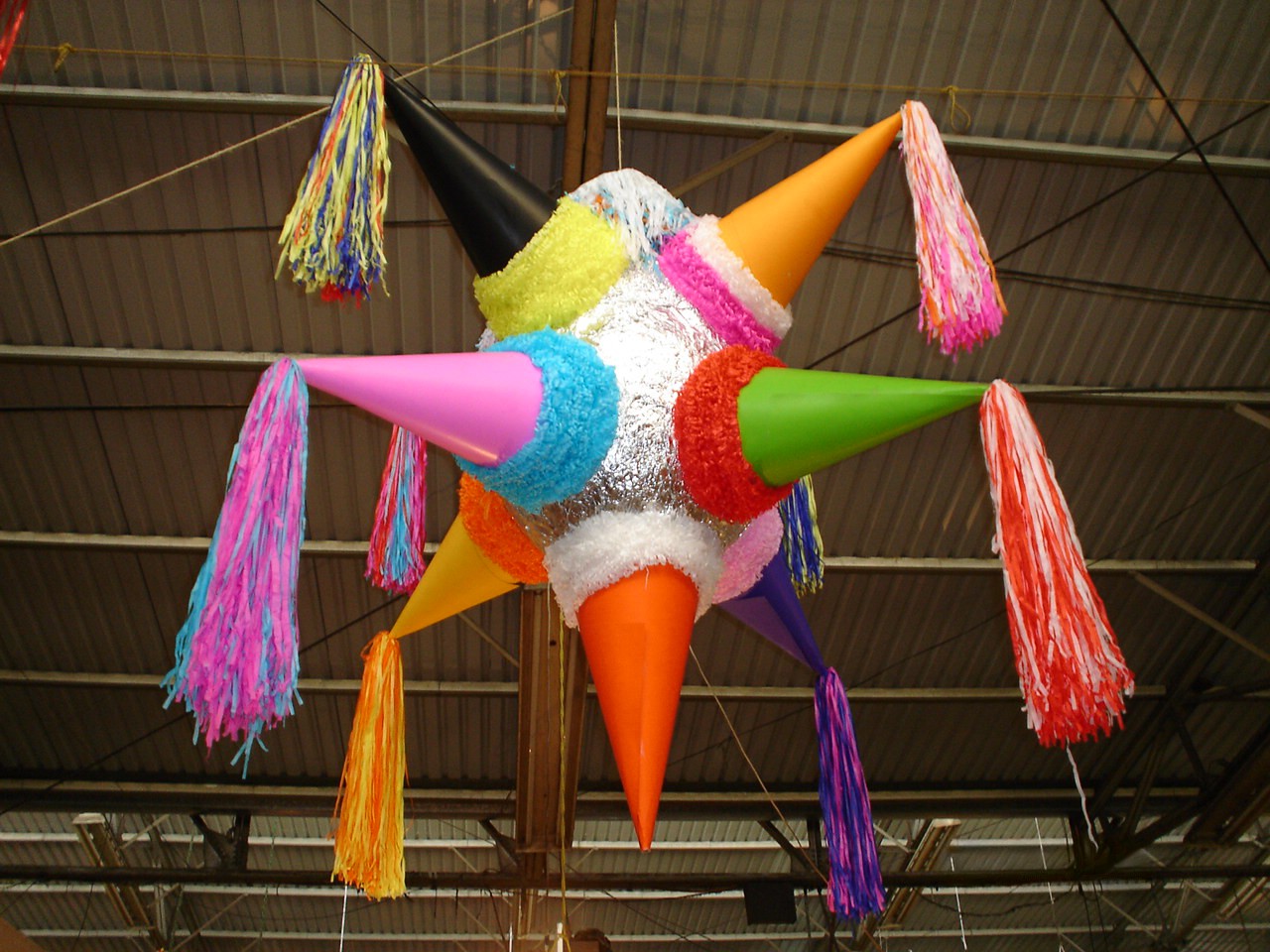
The Piñata: Symbol of the Star of Bethlehem ⭐
Traditional Shape: A seven-pointed star
Symbolism: Represents the Star of Bethlehem that guided the Three Wise Men to Jesus
How it works:
- The piñata is hung up after the posada gathering
- Children take turns trying to break it while blindfolded
- When it breaks, everyone shares the candy and treats inside
- The sharing represents generosity and community
Deeper Meaning: Beyond the fun, the piñata carries spiritual symbolism:
- The bright colors represent temptation
- Being blindfolded represents faith
- Breaking the piñata represents overcoming sin
- The treats inside represent blessings and rewards
Gift Opening and La Recalentada
December 24th (Nochebuena): Mexican families typically open gifts on Christmas Eve
December 25th – La Recalentada:
- “Recalentada” means “reheated”
- Families gather again on Christmas Day
- They enjoy leftovers from the previous night’s feast
- It’s a more casual, relaxed gathering
- Focus is on family time rather than formal celebration
Rosca de Reyes (Three Kings Bread) 👑
When: Served on Three Kings Day (January 6)
What it is: A sweet, ring-shaped bread decorated with candied fruits
The Shape: Round, symbolizing God’s eternal, never-ending love
The Hidden Surprise:
- A tiny plastic baby Jesus figure is hidden inside the bread
- The bread is sliced and served to the family
- Whoever finds the baby in their slice has special responsibilities
- Tradition: That person must host a party on February 2 (Día de la Candelaria) and bring tamales
Symbolism:
- The hidden baby represents Mary and Joseph hiding Jesus from King Herod
- Finding the baby is considered a blessing and honor
- The tradition extends celebration and keeps the community connected
Traditional Mexican Christmas Foods
- Tamales: Corn masa filled with meat or sweets, wrapped in corn husks
- Bacalao: Salted cod fish dish
- Romeritos: A vegetable dish with mole sauce
- Ponche Navideño: Hot fruit punch
- Buñuelos: Fried dough pastries with cinnamon sugar
- Rosca de Reyes: Three Kings Bread (January 6)
Brazil celebrates Christmas in the heart of summer—a unique and joyful contrast to the winter celebrations most North Americans know. As the world’s largest Catholic country, Brazil takes Christmas seriously, blending Portuguese colonial traditions with influences from Italian, German, and Spanish immigrants, as well as indigenous and Afro-Brazilian cultural elements.
Important Note: While Brazil is part of Latin America geographically, Brazilians speak Portuguese (not Spanish) and have distinct cultural traditions. However, they share many common Christmas values with Spanish-speaking neighbors: family, faith, extended celebrations, and community.
A Summer Christmas ☀️
The Setting: Imagine celebrating Christmas in 86°F (30°C) weather!
- Families wear summer clothes while celebrating
- Many people head to the beach on Christmas Day
- Outdoor celebrations are common
- Artificial snow is sprinkled on decorations to “welcome Santa from the North Pole”
- Christmas trees and decorations often include snow imagery despite the tropical heat
The Irony: Brazilian Christmas decorations feature snow, reindeers, and winter imagery—all to make Papai Noel feel “at home” when he arrives from the cold North Pole!
Papai Noel and Bom Velhinho (Santa Claus) 🎅
Names: In Brazil, Santa Claus is called Papai Noel or Bom Velhinho (Good Old Man)
History: The idea of Papai Noel was introduced to Brazil in the 1950s and gained popularity in the 1960s-70s through American commercialization.
How He’s Different:
- Papai Noel wears a silk suit in red and white (not heavy wool!)
- Some depictions show him arriving by surfboard or canoe instead of sleigh
- He still comes from the North Pole, but he’s adapted to Brazilian heat
- Children hang socks near windows (not chimneys—most Brazilian homes don’t have fireplaces)
- On Christmas morning, children find their socks exchanged for gifts
The Correios Letter Program: Each year, children from underprivileged communities write letters to Papai Noel sharing their Christmas wishes. Anyone can “adopt” a letter through the postal service (Correios) and fulfill a child’s dream—embodying the spirit of Christmas generosity.
Véspera de Natal – Christmas Eve (December 24) 🎄
The Main Celebration: Like their neighbors, Brazilians celebrate primarily on Christmas Eve, not Christmas Day.
Missa do Galo (Rooster’s Mass):
- When: Midnight mass on Christmas Eve
- Name Meaning: “Rooster’s Mass”—named after the belief that a rooster was the first to announce Jesus’s birth
- The Experience: A solemn yet joyful celebration through scripture and song
- After Mass: Families return home for the Ceia de Natal (Christmas dinner)
- Celebration: When the clock strikes midnight, everyone exchanges hugs and shouts “Feliz Natal!” before diving into the feast
Cultural Note: Brazilian author Joaquim Maria Machado de Assis wrote a famous 1899 short story called “A Missa do Galo,” now required reading for Brazilian students. It’s a story of implications and innuendo surrounding a conversation on Christmas Eve.
Presépio (Nativity Scene) ✨
Origin: The tradition comes from Portuguese colonial influence
Word Meaning: “Presepium” = “bed of straw” where Jesus first slept in Bethlehem
History: First introduced in the 17th century by Franciscan friar Gaspar de Santo Agostinho in Olinda, Pernambuco
Where You’ll See It:
- Very common in northeastern Brazil (Bahia, Sergipe, Rio Grande do Norte, Paraíba, Maranhão, Ceará, Pernambuco, Piauí, Alagoas)
- Displayed in churches, homes, and stores
- Often more prominent than the Christmas tree
- Incorporates Brazilian elements: local cacti, indigenous wildlife, regional touches
- Serves as the center of Christmas celebrations
Amigo Secreto / Amigo Oculto (Secret Santa) 🎁
What it means: “Secret Friend” or “Hidden Friend”
Why it’s popular: Brazilian celebrations often involve extended family and friends of friends—buying gifts for everyone would be impossible and expensive!
How it works:
- Participants draw names at the beginning of December
- Each person buys a gift for their assigned “secret friend”
- On Christmas, gifts are exchanged
- The giver’s identity is revealed
- Popular among families, friends, and coworkers
Traditional Brazilian Christmas Dinner 🍽️
Main Dishes:
- Chester: A specially bred large chicken (70% weight in thighs and chest)
- Peru (Turkey): Roasted turkey
- Pernil: Slow-roasted marinated pork leg
- White Rice: Sautéed with garlic and onion
- Farofa: Toasted cassava flour with butter, spices, and crispy bacon—served everywhere!
- Kale: Sautéed with garlic and onion (not cabbage)
Salads:
- Brazilian Potato Salad: A Christmas staple
- Salpicão: Chicken salad
Desserts:
- Panettone (Panetone): Italian sweet bread filled with candied fruits—a Brazilian Christmas essential
- Rabanada: Brazilian version of French toast—deep fried, covered in cinnamon sugar, served as dessert only
- Tropical Fruit Cakes: Made with local fruits
- Ice Cream: Perfect for summer Christmas!
Cultural Note: Brazilians love “double starch”—rice AND farofa served together is completely normal and delicious!
Spectacular Decorations and Celebrations 🎆
Rio de Janeiro’s Floating Christmas Tree:
- The world’s largest floating Christmas tree on Rodrigo de Freitas Lagoon
- Weighs 542 tons
- Wrapped in 3.3 million light bulbs
- Colors cycle through orange (sunrise), blue (moon), green and gold (Christmas), and multicolored
- Spectacular fireworks show when it’s lit
- Guides Papai Noel across Brazilian skies
Street Decorations:
- Major shopping streets lit up elaborately
- In São Paulo: Paulista Avenue gets completely illuminated with a Santa Claus House built above it
- Ibirapuera Park hosts the city’s largest Christmas tree
- The Saara open-air market in Rio transforms into a Christmas market
Fireworks: Christmas celebrations include spectacular fireworks displays—bright colors, crackling sounds, and shared excitement light up the Brazilian summer night sky
The Coca-Cola Truck: An iconic sign that Christmas is near! The glowing, decorated truck tours Brazilian cities, spreading holiday cheer with lights, Papai Noel imagery, and festive music
Folia de Reis (Three Kings Day – January 6) 👑
Brazilian Christmas celebrations officially end on Epiphany (January 6), honoring the Three Wise Men.
Celebrations include:
- Street parties and parades, especially in southern Brazil
- Folk plays and performances
- Traditional music and dancing
- Community gatherings
Folk Plays: Brazilians perform “Os Pastores” (The Shepherds), a Brazilian version of a Mexican folk play featuring a shepherdess and a gypsy attempting to steal the Christ Child
Music and Carol Singing 🎵
Popular Christmas Songs:
- “Noite Feliz”: Brazilian version of “Silent Night”
- “Jesus Cristo”: By Roberto Carlos—a Brazilian Christmas classic
- Pastorils: Traditional shepherds’ songs
- European carols adapted to Portuguese
Christmas Music Trend: In 1995, singer Simone released the album “25 De Dezembro” which sold over a million copies in its first month, starting Brazil’s trend for Christmas music albums
The Papai Noel Surprise Visit 🎅
A beloved Brazilian tradition: During the Christmas Eve feast, someone sneaks away to put on the Papai Noel costume—usually a beloved uncle, grandfather, or family friend.
With a booming “Ho, ho, ho!” Papai Noel makes his entrance, distributing gifts and creating unforgettable memories. This playful tradition highlights the importance of family togetherness that defines Brazilian Christmas.
Key Vocabulary – Portuguese
- Feliz Natal: Merry Christmas (feh-LEEZ nah-TAHL)
- Boas Festas: Happy Holidays (BO-ahs FES-tahs)
- Papai Noel: Santa Claus (pah-PIE no-EL)
- Presépio: Nativity scene (preh-ZEH-pee-oh)
- Véspera de Natal: Christmas Eve (VES-peh-rah deh nah-TAHL)
- Missa do Galo: Rooster’s Mass (MEE-sah doh GAH-lo)
- Amigo Secreto: Secret Santa (ah-MEE-go seh-KREH-to)
The Nativity Scene (Nacimiento or Belén)
In Hispanic homes across all traditions, the Nativity scene takes center stage—often more prominently displayed than the Christmas tree.
- When it’s set up: Early December, sometimes even late November
- When it comes down: After Three Kings Day (January 6) or later
- What makes it special: Often elaborate, with multiple figures, landscapes, and lighting
- Family tradition: Many families add to their nacimiento year after year, making it an heirloom
- The baby Jesus: Often not placed in the manger until Christmas Eve
- The Three Kings: Gradually moved closer to the manger during December, arriving on January 6
Music and Celebration
Music is integral to Latino Christmas celebrations:
- Traditional instruments: Guitar, güiro, bongos, tambourines, maracas
- Musical styles: Aguinaldos, villancicos (carols), salsa, plena
- Community aspect: Music brings neighbors and extended family together
- Passing down tradition: Children learn traditional songs from elders
Faith and Family
Two interconnected themes unite all these traditions:
Family: Christmas is fundamentally about gathering with loved ones—extended family, compadres (godparents), and close friends who are considered family.
Faith: The religious significance of Christmas—celebrating Jesus’s birth—is central. These aren’t just cultural traditions; they’re expressions of deep Catholic faith passed through generations.
✅ DO:
- Celebrate the diversity within Latin American and Caribbean communities—there is no single “Latin American Christmas”
- Emphasize universal themes: family, faith, community, generosity, joy
- Acknowledge that students from these communities may have different traditions than those described
- Invite families to share their own Christmas traditions (optional, never required)
- Use this as an opportunity to explore cultural diversity and geography
- Recognize that many traditions have both Catholic religious and cultural significance
- Pronounce Spanish and Portuguese words correctly or acknowledge when you’re learning
- Show respect for traditions that blend indigenous, African, and European influences
- Acknowledge that Brazil speaks Portuguese, not Spanish, but shares regional connections
❌ DON’T:
- Assume all Latino students celebrate Christmas the same way
- Present Latino traditions as exotic or strange
- Reduce rich traditions to just “food and fiestas”
- Ask Latino students to be experts or representatives of all Latino people
- Ignore the religious significance—these are faith traditions for many families
- Use this as your only discussion of Latino culture all year
- Forget that “Latino” encompasses 20+ countries with distinct traditions
- Treat traditions as relics of the past—these are living, evolving customs
Important Context for Educators
Understanding Latin American and Caribbean Diversity:
“Latin America” includes countries from:
- Mexico, Central America, South America, and the Caribbean
- Spanish-speaking countries AND Portuguese-speaking Brazil
- Each country has unique Christmas traditions
- Within countries, regions have different customs
- Individual families adapt traditions based on their experiences
- Not all families from these regions are Catholic or celebrate Christmas
- Many families in the U.S. blend traditions from multiple cultures
- The term “Latino/a/x” typically refers to Spanish-speakers in U.S. contexts; Brazilians may not identify with this term
Vocabulary and Language
Key Spanish Terms Students Should Learn:
- Navidad: Christmas (nah-vee-DAHD)
- Nochebuena: Christmas Eve (noh-cheh-BWEH-nah)
- Nacimiento: Nativity scene (nah-see-mee-EHN-toh)
- Posada: Inn/shelter (poh-SAH-dah)
- Día de los Reyes: Three Kings Day (DEE-ah deh lohs REH-yes)
- Aguinaldo: Traditional Christmas song (ah-gee-NAHL-doh)
- Piñata: Decorated container filled with treats (peen-YAH-tah)
Key Portuguese Terms (Brazilian):
- Feliz Natal: Merry Christmas (feh-LEEZ nah-TAHL)
- Papai Noel: Santa Claus (pah-PIE no-EL)
- Presépio: Nativity scene (preh-ZEH-pee-oh)
Grades K-1:
- Focus on simple concepts: “Some families celebrate Christmas for many days” and “Different families have special Christmas traditions”
- Emphasize fun, accessible elements: music, special foods, time with family
- Use visual aids: show pictures of Nativity scenes, piñatas, Three Kings
- Simple geography: Point to Puerto Rico, Cuba, and Mexico on a map
- Activity: Listen to aguinaldo or villancico music, make simple star decorations
- Discussion: “What special things does your family do for holidays?”
Grades 2-3:
- Tell simplified stories of Las Posadas, asaltos, and Three Kings traditions
- Explain the extended Christmas season (December through January)
- Discuss how traditions travel when families move to new places
- Compare Latino Christmas traditions with students’ own holiday customs
- Geography: Explore where Puerto Rico, Cuba, and Mexico are located
- Activity: Learn a simple aguinaldo song, make paper piñatas, draw Nativity scenes
- Discussion: “Why do you think family is so important in these celebrations?”
Grades 4-5:
- Explore the history and symbolism of specific traditions (star piñata, Rosca de Reyes, etc.)
- Discuss how traditions blend indigenous, African, and Spanish influences
- Study immigration and how families maintain cultural traditions across generations
- Research project: “Christmas Traditions Around the World” or “Latino Cultural Diversity”
- Geography: Study Caribbean islands, Central America, cultural migration patterns
- Critical thinking: “How do traditions help people maintain their cultural identity?” “Why might Christmas celebrations last weeks instead of just one day?”
- Connect to social studies: Spanish colonial history, indigenous cultures, cultural preservation
Language Arts
- Vocabulary: Learn Spanish Christmas terms and practice pronunciation
- Storytelling: Read books about Latino Christmas traditions
- Writing: “My Family’s Holiday Traditions” or “If I Celebrated Las Posadas”
- Poetry: Learn and recite traditional aguinaldo verses
- Comparative Study: Compare different families’ Christmas stories
- Research: Create presentations on different Latino countries’ Christmas customs
Social Studies
- Geography: Map Puerto Rico, Cuba, Mexico, Brazil, and other Latin American countries
- Cultural Studies: Explore how traditions blend different cultural influences
- Immigration: How families maintain traditions when they move (age-appropriate)
- History: Colonial periods, indigenous cultures, cultural exchange
- Community: Research local Latin American communities and their celebrations
- Language Families: Compare Spanish and Portuguese languages and their origins
- Climate and Culture: How does geography affect holiday traditions?
Math
- Calendar Math: Count days from December 16 to January 6
- Addition: If Las Posadas happens for 9 nights and you visit 2 houses each night…
- Fractions: Dividing Rosca de Reyes into equal slices
- Measurement: Recipe conversions for traditional foods
- Time: Calculate time differences if celebrating with family in different time zones
Music
- Listening: Aguinaldos, villancicos, plena, salsa Christmas music
- Instruments: Learn about güiro, bongos, maracas
- Singing: Learn simple traditional songs (with translations)
- Rhythm: Practice traditional Caribbean and Mexican rhythms
- Cultural Connection: How music brings communities together
Art
- Piñata Creation: Design and create paper star piñatas
- Nativity Scenes: Draw or create simple nacimientos
- Paper Crafts: Make traditional decorations
- Artistic Traditions: Study Mexican folk art, Puerto Rican vejigante masks
Science
- Geography & Climate: Why celebrate in warm climates vs. cold?
- Botany: Study tropical plants used in decorations vs. winter evergreens
- Food Science: How traditional cooking methods work
- Astronomy: The Star of Bethlehem and navigation by stars
- Seasons: Earth’s tilt and why Brazil has summer while North America has winter
- Light and Heat: How fireworks work (Brazilian tradition)
K-2nd Grade:
- “What special things does your family do during the holidays?”
- “Why do you think music is important in celebrations?”
- “How do you think it feels when family surprises you with songs?”
- “What would you put inside a piñata?”
- “Why do you think people give gifts?”
3rd-5th Grade:
- “Why do you think Latin American Christmas celebrations last so much longer than typical American celebrations?”
- “How does celebrating Las Posadas help people understand the Christmas story?”
- “What makes a tradition worth keeping when a family moves to a new country?”
- “How are Puerto Rican, Cuban, Mexican, and Brazilian Christmas traditions similar? How are they different?”
- “Why do you think so many traditions involve gathering the whole community?”
- “What can we learn from traditions that blend different cultural influences?”
- “How does food help connect people to their cultural heritage?”
- “What would it be like to celebrate Christmas in summer weather?”
- “Why do you think Brazilians decorate with snow even though it’s hot outside?”
- “How do language differences (Spanish vs. Portuguese) affect cultural connections?”
One of the most powerful ways to teach about cultural traditions is to invite families to share their own experiences. However, this must be done thoughtfully and respectfully, always keeping in mind that participation should be optional and comfortable for families.
Golden Rule: Never put students or families on the spot. Always provide multiple ways to participate (or not participate), and make it clear that sharing is completely voluntary.
Before You Invite: Important Considerations
✅ DO Consider:
- Not all families from Latin America celebrate Christmas
- Some families may practice different religious traditions
- Families may feel uncomfortable being “representatives” of entire cultures
- Immigration status concerns may make some families hesitant to participate in school events
- Work schedules, childcare, and transportation can be barriers
- Language barriers—offer materials in Spanish and Portuguese
- Economic considerations—never require families to bring expensive items or foods
❌ DON’T:
- Assume a student’s family celebrates based on their last name or appearance
- Single out students in class: “Maria, tell us about your Mexican Christmas!”
- Require participation as part of a grade or assignment
- Make families feel they must represent all people from their country
- Ask families to bring elaborate, expensive items
- Schedule events that exclude working families
Sample Letter to Families
Subject: Optional Opportunity to Share Your Family’s Holiday Traditions
Dear Families,
This month, our class is learning about how different families celebrate winter holidays around the world. We are exploring Christmas traditions from Latin America and the Caribbean, including Puerto Rico, Cuba, Mexico, and Brazil.
We would love to learn from you! If your family celebrates Christmas (or another winter holiday), we welcome you to share your traditions with our class—but only if you feel comfortable doing so. This is completely optional and voluntary.
Ways You Can Participate (Choose any that work for you!):
- Share a photo: Send a photo of your family’s Nacimiento, Christmas tree, special decorations, or celebration
- Share a recipe: Send us a recipe for a special holiday food (we’ll display it, not cook it)
- Share a story: Write or record a short story about a favorite holiday memory
- Share an object: Send a photo or drawing of a special holiday item and what it means to your family
- Virtual visit: Join us via video call to talk with students (10-15 minutes)
- In-person visit: Visit our classroom to share a song, story, or tradition
- Share music: Send links to traditional holiday songs your family enjoys
Important Notes:
- You don’t need to bring or buy anything expensive
- You can participate in your preferred language (Spanish, Portuguese, or English)
- You can share as much or as little as you’re comfortable with
- Your family’s traditions are unique to you—they don’t need to match what we’ve learned in class
If you’re interested in participating, please respond by [date] and let me know which option works best for your family. If you prefer not to participate, that’s absolutely fine—no response needed!
Thank you for helping make our classroom a place where we learn from and celebrate each other.
Warmly,
[Your Name]
Esta carta también está disponible en español. / Esta carta também está disponível em português. Please let me know if you’d like a translation.
Creating a Safe, Welcoming Environment
Before Family Visits:
- Prepare students: Teach about respectful listening, asking thoughtful questions, and thanking speakers
- Review with the family: Talk through what they’ll share and how long they’ll speak
- Provide context: Let families know what students have already learned
- Offer flexibility: Let them know they can change their mind at any time
- Have a backup plan: If a family gets nervous or needs to cancel, have other activities ready
During Family Visits:
- Introduce warmly: Thank the family for taking time to visit
- Facilitate, don’t dominate: Let the family lead the conversation
- Manage questions: Preview student questions and redirect any that might be uncomfortable
- Show appreciation: Have students prepare thank-you cards or drawings
- Document respectfully: Ask permission before taking photos or videos
After Family Visits:
- Follow up with gratitude: Send a thank-you note with student reflections
- Display contributions: Create a “Our Families’ Traditions” bulletin board
- Reflect with students: “What did we learn? What surprised you? What’s similar to your family?”
- Share with families: Send photos/videos to the participating family (with permission)
Low-Barrier Participation Ideas
Some families want to participate but face barriers. Here are easy, accessible options:
No-Preparation Options:
- Voice Message: Family records a 2-minute voice message on their phone sharing a memory
- Single Photo: One photo from their phone with a caption
- Student Interview: Student interviews their family member at home and reports back
- Written Response: Family fills out a simple form: “Our family celebrates by…”
Virtual/Remote Options:
- Pre-recorded Video: Family records at their convenience, you play in class
- Video Call: 10-minute video chat during class time
- Voice Recording: Family calls and leaves a voicemail describing their tradition
- Email with Photos: Simple email exchange with images
Anonymous/Private Options:
Some families may prefer to contribute without being identified:
- Share items or photos without names attached
- Contribute to a class book without identifying which family shared what
- Send information through the student rather than directly
Questions Families Might Be Asked to Address
Provide these sample questions so families can prepare, but let them know they can share whatever they’d like:
- “What is your favorite Christmas tradition from your family?”
- “What special foods does your family prepare?”
- “What is a happy memory you have from celebrating Christmas?”
- “What does [specific tradition] mean to your family?”
- “How is the way you celebrate now different from or similar to when you were growing up?”
- “What do you want children to know about your family’s traditions?”
Remind families: There are no “right” answers. Their family’s traditions are valuable and interesting exactly as they are—even if they’re different from what we’ve studied in class. Every family adapts traditions in their own way!
Alternative: “All Families” Approach
If you’re concerned about singling out specific cultural groups, consider inviting all families to share their winter holiday traditions:
- Create a “How Our Families Celebrate” bulletin board with contributions from everyone
- Host a “Winter Traditions Around the World” family event
- Make a class book: “Holiday Traditions in Room [X]”
- This approach normalizes diversity and ensures no one feels singled out
If No Families Volunteer
That’s okay! There are many reasons families might not participate, and it’s not a reflection on your teaching or their interest. Alternative approaches:
- Use video resources from cultural organizations
- Read books written by authors from these communities
- Partner with local cultural centers or community organizations
- Connect with other teachers who have family volunteers
- Use reputable online resources and educational videos
Remember: The goal is to honor diverse traditions and help students understand the richness of different cultures—not to put families on the spot or make anyone uncomfortable. Family participation is wonderful when it happens naturally and voluntarily, but it’s not required for meaningful cultural education.
- Diversity Within Diversity: Latin American and Caribbean communities are incredibly diverse. Puerto Rican, Cuban, Mexican, and Brazilian traditions are just four examples among many beautiful cultural expressions across the region.
- Living Traditions: These aren’t relics of the past—they’re living traditions that families actively maintain and adapt, especially in diaspora communities.
- Faith and Culture Intertwined: For many families, Christmas traditions are inseparable from Catholic faith. Respect the religious significance while teaching cultural aspects.
- Extended Celebration: Celebrations often span weeks, from early December through mid-January, emphasizing sustained connection rather than a single day.
- Community and Family Centered: At the heart of every tradition is the gathering of family and community—multiple generations, extended family, neighbors, and compadres.
- Language and Cultural Identity: Brazil’s Portuguese language distinguishes it from Spanish-speaking neighbors, yet they share many Christmas values and regional connections.
- Climate Adaptations: Brazil’s summer Christmas demonstrates how traditions adapt to local environments while maintaining cultural meaning.
- Cultural Resilience: These traditions demonstrate how communities maintain cultural identity across generations, even when far from their countries of origin.
- Universal Values: While specific practices differ, the underlying values—family, faith, generosity, joy, community—resonate across all cultures.
In addition to Christmas in Latin America & the Caribbean, learn about Three Kings Day, another religious holiday celebrated in the region.