Teacher’s Guide to Hanukkah
Hanukkah (also spelled Chanukah) is an eight-day Jewish festival that celebrates religious freedom, resilience, and the triumph of light over darkness. It is perhaps the most visible Jewish holiday in contemporary America, though it is not one of the most religiously significant holidays in the Jewish calendar.
Quick Facts:
- Duration: 8 days and nights
- When: Begins on the 25th day of Kislev (the Hebrew calendar), which falls in November or December
- Also Known As: The Festival of Lights, The Feast of Dedication
- Key Activities: Lighting the menorah (hanukkiah), playing dreidel, eating foods fried in oil, giving gifts
- Central Themes: Religious freedom, perseverance, miracles, Jewish survival and identity
Important Note: While Hanukkah is highly visible due to its timing near Christmas, it is not the “Jewish Christmas.” The two holidays have completely different origins, meanings, and levels of religious significance within their respective traditions.
The Historical Context (circa 168-164 BCE)
The story of Hanukkah begins over 2,200 years ago in ancient Judea (the land of Israel). At that time, the region was controlled by the Seleucid Empire, ruled by King Antiochus IV of Syria.
What Led to the Conflict:
- 168 BCE: King Antiochus IV outlawed Jewish religious practice
- Jews were forbidden to study Torah, observe Shabbat, or practice circumcision
- Antiochus forced Jews to adopt pagan Greek rituals and worship Greek gods
- He desecrated the Jerusalem Temple by placing pagan symbols inside and offering pigs (non-kosher animals) on the altar
- This was part of a larger effort to force Jewish assimilation into Greek (Hellenistic) culture
The Maccabee Rebellion
A group of Jews, led by a family known as the Maccabees, refused to comply with these oppressive laws. Despite being a small, poorly equipped group, they fought a guerrilla war against the powerful Syrian-Greek army.
Key Figures:
- Mattathias: A Jewish priest who sparked the rebellion by refusing to worship Greek gods
- Judah Maccabee: Mattathias’s son who led the military campaign
- The Five Brothers: Judah and his four brothers who fought for religious freedom
The Victory and Rededication
After three years of fighting (168-164 BCE), the Maccabees successfully recaptured Jerusalem. They immediately set about restoring the Temple, which had been defiled by pagan worship.
The Rededication: On the 25th day of Kislev in 164 BCE, the Temple was rededicated to Jewish worship. The word “Hanukkah” means “dedication,” commemorating this moment.
Historical Significance: The Maccabean victory was significant because a small group of Jews, committed to preserving their religious identity, defeated a much more powerful empire. This established a precedent for religious freedom and resistance to forced assimilation.
The Original Celebration
Initially, Hanukkah was celebrated as a military victory—modeled after the Greek and Roman tradition of celebrating triumphs. The original eight-day celebration was patterned after the festival of Sukkot (Tabernacles), which had been banned by Antiochus and could not be celebrated at its proper time.
How the Story Changed
After several centuries, Jewish leaders began to emphasize a different aspect of the Hanukkah story. Here’s why:
The Shift in Meaning (1st-6th centuries CE):
- 70 CE: Romans destroyed the Second Temple after a Jewish revolt
- 135 CE: A second Jewish revolt against Rome ended in devastating defeat
- Jewish leaders concluded that military action was no longer a viable path to Jewish survival
- A new ideology emerged: perfect observance of God’s law, rather than military might, would lead to redemption
The Story of the Oil
By the 6th century CE, the Talmud (a central text of Jewish law and tradition) recorded a new version of the Hanukkah story that emphasized a miracle rather than military victory:
The Miracle: When the Maccabees rededicated the Temple, they found only one small jar of ritually pure oil—enough to light the Temple’s eternal lamp (menorah) for just one day. Miraculously, that single jar burned for eight full days, giving them time to prepare more pure oil.
Why This Matters for Teaching
Understanding this evolution helps students see how:
- Historical events can be remembered and interpreted in different ways over time
- Communities adapt their stories to meet changing needs and circumstances
- Both the military victory and the miracle story emphasize Jewish survival and persistence
- The focus shifted from “we won a battle” to “God helped us survive impossible odds”
Teaching Note: You can share both aspects—the historical military victory and the spiritual miracle of the oil—as they both reflect authentic elements of how Hanukkah has been understood throughout Jewish history.
Lighting the Menorah (Hanukkiah)
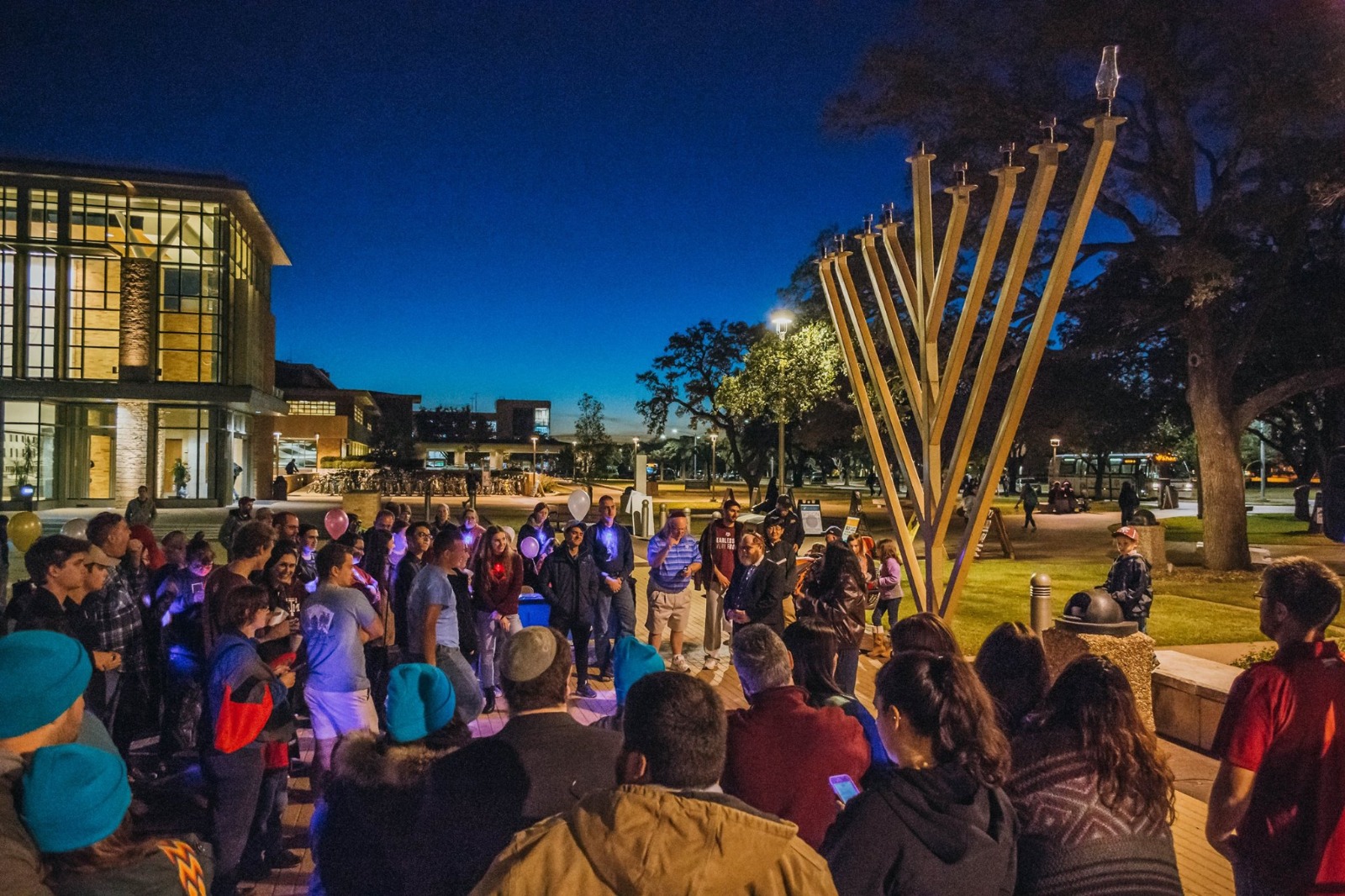
The central ritual of Hanukkah is lighting the hanukkiah—a nine-branched candelabra (often called a menorah).
How It Works:
- Eight Branches: One for each night of Hanukkah
- The Shamash: The ninth candle (helper candle) is used to light the others
- Progressive Lighting: On night one, light one candle. On night two, light two candles, and so on
- Placement: Traditionally placed in a window or doorway to publicly proclaim the miracle
- Blessings: Special prayers are recited each night before lighting
Playing Dreidel
A dreidel is a four-sided spinning top with Hebrew letters on each side: נ (Nun), ג (Gimel), ה (Hey), and ש (Shin).
The Letters Stand For:
“Nes Gadol Hayah Sham” – “A great miracle happened there” (referring to the miracle in ancient Jerusalem)
The Game:
- Players start with coins, chocolate gelt (coins), or other tokens
- Each player puts one token in the center pot
- Players take turns spinning the dreidel
- Based on which letter lands face-up, players win or lose tokens
Traditional Foods
Because of the miracle of the oil, traditional Hanukkah foods are fried in oil:
Latkes (Potato Pancakes)
- Shredded potatoes fried until crispy
- Often served with applesauce or sour cream
- Popular in Ashkenazi (Eastern European Jewish) communities
Sufganiyot (Jelly Doughnuts)
- Round doughnuts filled with jelly or custard
- Fried in oil and dusted with powdered sugar
- Popular in Israeli and Sephardic traditions
Gift Giving
While not a traditional part of ancient Hanukkah celebrations, many families today exchange gifts, particularly for children. This practice became more common in America in the 20th century, partly in response to the prominence of Christmas gift-giving.
Hanukkah Gelt:
Traditionally, children receive gelt (money or chocolate coins) during Hanukkah. This custom originated in Eastern Europe and was originally meant to give to teachers and the poor.
Songs and Music
Families sing traditional Hanukkah songs such as:
- “Ma’oz Tzur” (Rock of Ages): A traditional hymn
- “Hanukkah, Oh Hanukkah”: A joyful children’s song
- “I Have a Little Dreidel”: Popular with young children
Modern Celebrations
Today, Jewish families may also:
- Attend community Hanukkah parties
- Participate in public menorah lightings
- Share special meals with extended family
- Incorporate charitable giving (tzedakah) into their celebrations
Universal Themes
While Hanukkah has evolved over more than two millennia, certain themes remain constant and resonate across cultures:
Core Values Celebrated During Hanukkah:
- Religious Freedom: The right to practice one’s faith without persecution
- Resistance to Oppression: Standing up against those who try to suppress identity and culture
- Light Overcoming Darkness: Hope persisting even in difficult times
- Small vs. Mighty: The few defeating the many through courage and conviction
- Cultural Survival: Maintaining identity and traditions across generations
- Miracles and Hope: Faith that seemingly impossible situations can be overcome
Hanukkah in American Jewish Life
Over the past century, Hanukkah has taken on increased significance for American Jews:
Why Hanukkah Grew in Importance:
- Timing: Occurring near Christmas, it provides Jewish children with a winter celebration
- American Values: Its themes of religious freedom align with core American ideals
- Visibility: Public menorah lightings and celebrations help Jewish communities maintain visibility
- Family Engagement: Home-centered rituals help pass Jewish identity to the next generation
- Post-Holocaust Meaning: The story of Jewish survival resonates powerfully after the Holocaust
Contemporary Relevance
Today, Hanukkah reminds Jewish families and all people of:
- The importance of standing firm in one’s beliefs
- The power of a committed minority to effect change
- How communities preserve identity across time and geography
- The ongoing need to defend religious freedom for all
Teaching Point: Each generation of Jews has found new meaning in Hanukkah relevant to their own experiences—from ancient persecution, to medieval oppression, to modern challenges of assimilation and maintaining Jewish identity. This adaptability while maintaining core traditions is part of what has allowed Jewish culture to survive for thousands of years.
✅ DO:
- Present Hanukkah as a historical and cultural learning opportunity
- Emphasize universal themes: religious freedom, perseverance, courage
- Explain the historical context of the Maccabee revolt
- Acknowledge that Hanukkah occurs near Christmas but has completely different origins
- Invite Jewish families to share their traditions (with their permission)
- Use it to teach about Jewish history, culture, and contributions
- Connect to American values of religious freedom
- Respect that some Jewish students may not celebrate Hanukkah or may celebrate differently
❌ DON’T:
- Call Hanukkah “the Jewish Christmas” or treat it as equivalent to Christmas
- Assume all Jewish students celebrate Hanukkah the same way
- Require Jewish students to be “experts” or representatives of all Jewish people
- Focus only on Hanukkah when teaching about Judaism (it’s not the most religiously significant Jewish holiday)
- Create “Christmakkah” activities that blend the two holidays
- Use Hanukkah as your only discussion of Jewish culture throughout the year
- Treat Jewish holidays as exotic or unusual
Important Context for Educators
About Jewish Diversity:
This guide presents traditional narratives about Hanukkah, but it’s crucial to understand that Judaism is diverse. Jewish communities include:
- Different Denominations: Orthodox, Conservative, Reform, Reconstructionist, and secular Jews may interpret and celebrate Hanukkah differently
- Cultural Variations: Ashkenazi (Eastern European), Sephardic (Spanish/Portuguese), Mizrahi (Middle Eastern), and other Jewish communities have distinct traditions
- Varied Beliefs: Not all Jews believe in the literal truth of the miracle story; some focus on historical events, others on cultural meaning
- Personal Practice: Some Jewish families celebrate Hanukkah extensively, others minimally, and some not at all
- Theological Perspectives: Jews have diverse views on God, prayer, and the meaning of religious observance
Teaching Tip: Avoid phrases like “Jews believe…” or “Jewish people do…” Instead, say “Many Jews…” or “In some Jewish traditions…” This acknowledges diversity and prevents stereotyping.
About Religious Significance:
While Hanukkah is well-known and beloved, it is not actually one of the most religiously significant Jewish holidays. More important religious holidays include:
- Rosh Hashanah: Jewish New Year
- Yom Kippur: Day of Atonement (the holiest day)
- Passover: Commemorates the Exodus from Egypt
- Shavuot: Celebrates receiving the Torah
Hanukkah’s visibility in America is partly due to its proximity to Christmas, not solely its religious importance.
Respectful Classroom Integration
For Literature Connections:
- Use age-appropriate books that accurately represent Jewish traditions
- Look for books written by Jewish authors
- Avoid books that treat Hanukkah as “Jewish Christmas”
For Activities:
- Provide cultural and historical context before any craft activity
- Explain the symbolism of the menorah and why oil is significant
- Focus on learning about traditions rather than practicing religious rituals
For Cross-Cultural Learning:
- Compare how different cultures celebrate light during winter (Hanukkah, Diwali, Christmas, Kwanzaa, etc.)
- Discuss religious freedom as an American and universal value
- Explore how communities maintain cultural identity
Grades K-1:
- Focus on simple concept: “Jewish families celebrate by lighting candles for eight nights”
- Emphasize the fun aspects: spinning dreidels, eating special foods, being with family
- Use visual aids: show a menorah, dreidel, and traditional foods
- Simple story: “Long ago, a small group of people fought for the freedom to practice their religion”
- Activity: Count the candles (1-8), practice spinning motion with dreidels
Grades 2-3:
- Tell the simplified story of the Maccabees fighting for religious freedom
- Explain the miracle of the oil lasting eight days
- Discuss why religious freedom is important
- Compare Hanukkah to other winter light festivals
- Activity: Make paper menorahs, learn dreidel game rules, count by eights
- Discussion: “Why do you think light is important in winter?”
Grades 4-5:
- Study the historical context: Ancient Judea, Seleucid Empire, Antiochus IV
- Explore how the story evolved from military victory to spiritual miracle
- Discuss religious persecution and the importance of religious freedom
- Compare to other historical fights for freedom (age-appropriate)
- Research project: “Festivals of Light Around the World”
- Critical thinking: “Why do you think Jews emphasized the miracle of the oil rather than the military victory in later retellings?”
- Connect to American history: religious freedom as a founding principle
Language Arts
- Historical Fiction: Read age-appropriate stories about the Maccabee period
- Comparative Study: How do different sources tell the Hanukkah story?
- Vocabulary: Learn Hebrew words: Hanukkah, menorah/hanukkiah, dreidel, latke, gelt
- Personal Narrative: “A Time I Stood Up for What I Believed”
- Research Writing: Report on Jewish contributions to American culture
Math
- Counting Patterns: 1, 2, 3… 8 candles (progressive addition)
- Multiplication: If you light candles for all eight nights, how many total candles? (1+2+3+4+5+6+7+8=36)
- Probability: Analyze outcomes when spinning a four-sided dreidel
- Measurement: Calculate oil needed for burning (if one jar lasted 8 days…)
- Game Strategy: Develop winning strategies for dreidel
Social Studies
- Ancient History: Study the Seleucid Empire and Hellenistic period
- Geography: Locate ancient Judea and modern Israel on maps
- Religious Freedom: Connect to First Amendment and American values
- Cultural Diversity: Explore Jewish diaspora communities worldwide
- Timeline: Place Hanukkah in context of ancient and modern history
- Comparative Study: How different cultures maintain identity over time
Science
- Chemistry of Combustion: How do oil lamps work?
- Light and Heat: Study properties of flames and candles
- Physics of Spinning: Explore centrifugal force with dreidels
- Cooking Science: Why do latkes get crispy when fried in oil?
Art
- Menorah Design: Create artistic representations of menorahs
- Light and Shadow: Explore how candlelight creates ambiance
- Jewish Art History: Study traditional Jewish artistic motifs
- Dreidel Decoration: Design and decorate paper or wooden dreidels
K-2nd Grade:
- “Why do you think people light candles during Hanukkah?”
- “What does it feel like to stand up for something you believe in?”
- “How does light make you feel?”
- “What special things does your family do during winter?”
3rd-5th Grade:
- “Why do you think religious freedom is important?”
- “How did a small group of Maccabees defeat a powerful empire?”
- “Why might Jews have changed the emphasis from military victory to miracle over time?”
- “What can we learn from the Maccabees about standing up for what’s right?”
- “How do different cultures use light in their winter celebrations?”
- “Why might Hanukkah be more visible in America than other Jewish holidays?”
- “How do traditions help people maintain their identity?”
Picture Books (PreK-2):
- “Hanukkah Bear” by Eric A. Kimmel
- “The Hanukkah Guest” by Eric A. Kimmel
- “Sammy Spider’s First Hanukkah” by Sylvia A. Rouss
- “Hanukkah Lights” by Lee Belford
- “Latkes, Latkes, Good to Eat” by Naomi Howland
Chapter Books (Grades 3-5):
- “The Hanukkah Magic of Nate Gadol” by Arthur A. Levine
- “Light the Menorah! A Hanukkah Handbook” by Janice Cohn
- “The Maccabee Story” (various age-appropriate retellings)
Online Resources:
- PJ Library (Jewish children’s books and resources)
- MyJewishLearning.com (educator resources)
- Museum of Jewish Heritage
- National Museum of American Jewish History
Community Connections:
- Invite Jewish families to share their Hanukkah traditions (with their permission)
- Attend public menorah lightings (if available in your community)
- Partner with local synagogues or Jewish community centers for authentic resources
- Ancient and Evolving: At 2,200 years old, Hanukkah is one of Judaism’s newer holidays, yet it has continuously evolved to meet the needs of each generation.
- About Survival: Fundamentally, Hanukkah celebrates Jewish survival—the determination to maintain religious identity in the face of persecution.
- Multiple Meanings: The story has been told different ways throughout history—as military victory, divine miracle, and symbol of resilience—all valid perspectives.
- Not “Jewish Christmas”: While it occurs near Christmas, Hanukkah has completely different origins, meanings, and religious significance.
- Universal Values: Themes of religious freedom, perseverance, and light overcoming darkness resonate across all cultures.
- Contemporary Relevance: In modern times, Hanukkah helps Jewish families maintain cultural identity and teaches children about their heritage, especially in communities where Jews are a minority.