La Catrina Art Process Gallery
Honoring José Guadalupe Posada’s Legacy Through Student Sculpture
A Step-by-Step Journey: Creating Día de los Muertos Art in the Classroom
Learn more about the history of La Calavera Catrina or explore our comprehensive Teacher’s Guide to Día de los Muertos for classroom context and activities.
We are grateful to the workshop participants and the National Watercolor Museum in Mexico City for sharing these inspiring images of the cartonería process with the educational community.
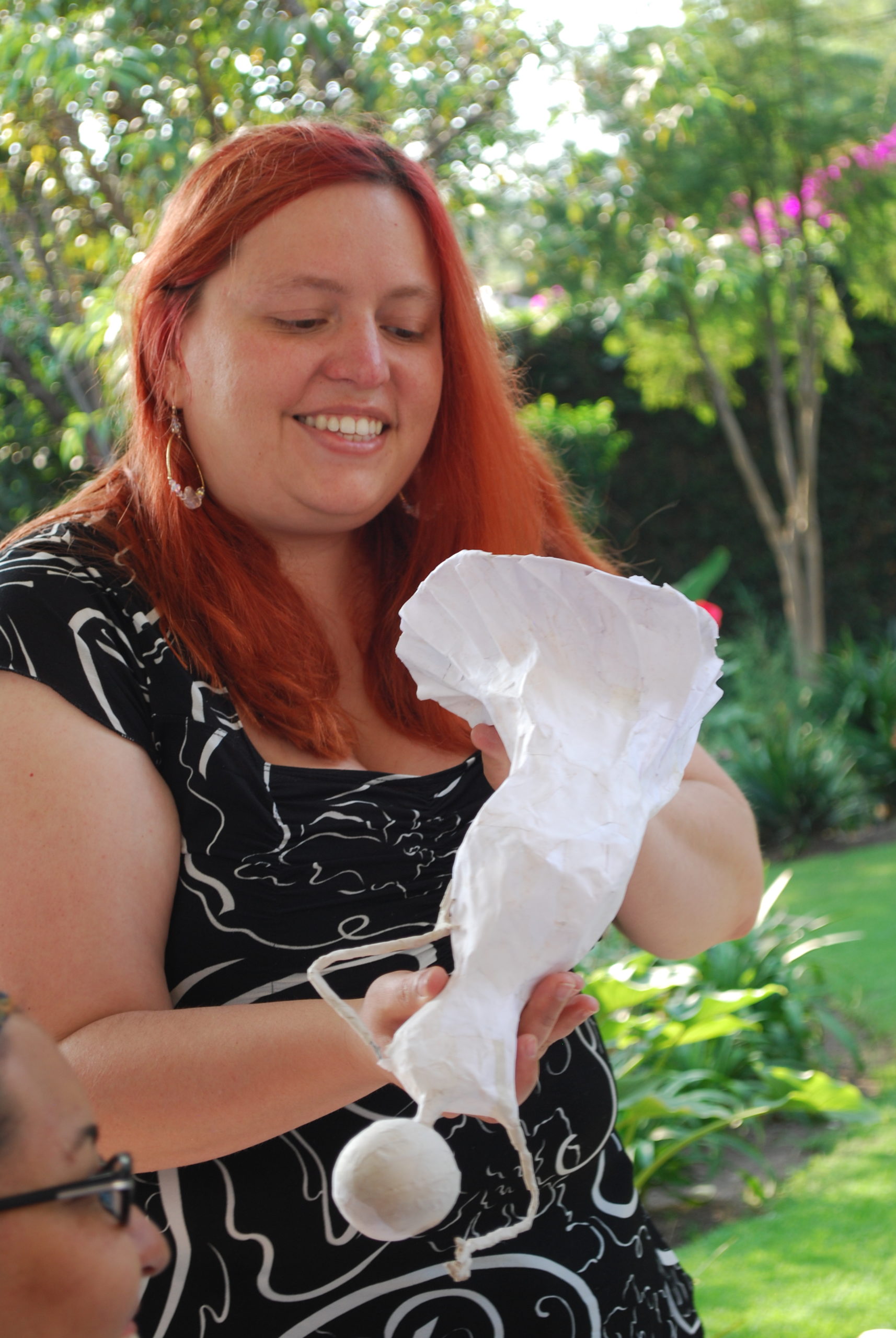
Building the Foundation: Creating the wire and foil armature
Photo by AlejandroLinaresGarcia / CC BY-SA 3.0 / Wikimedia Commons
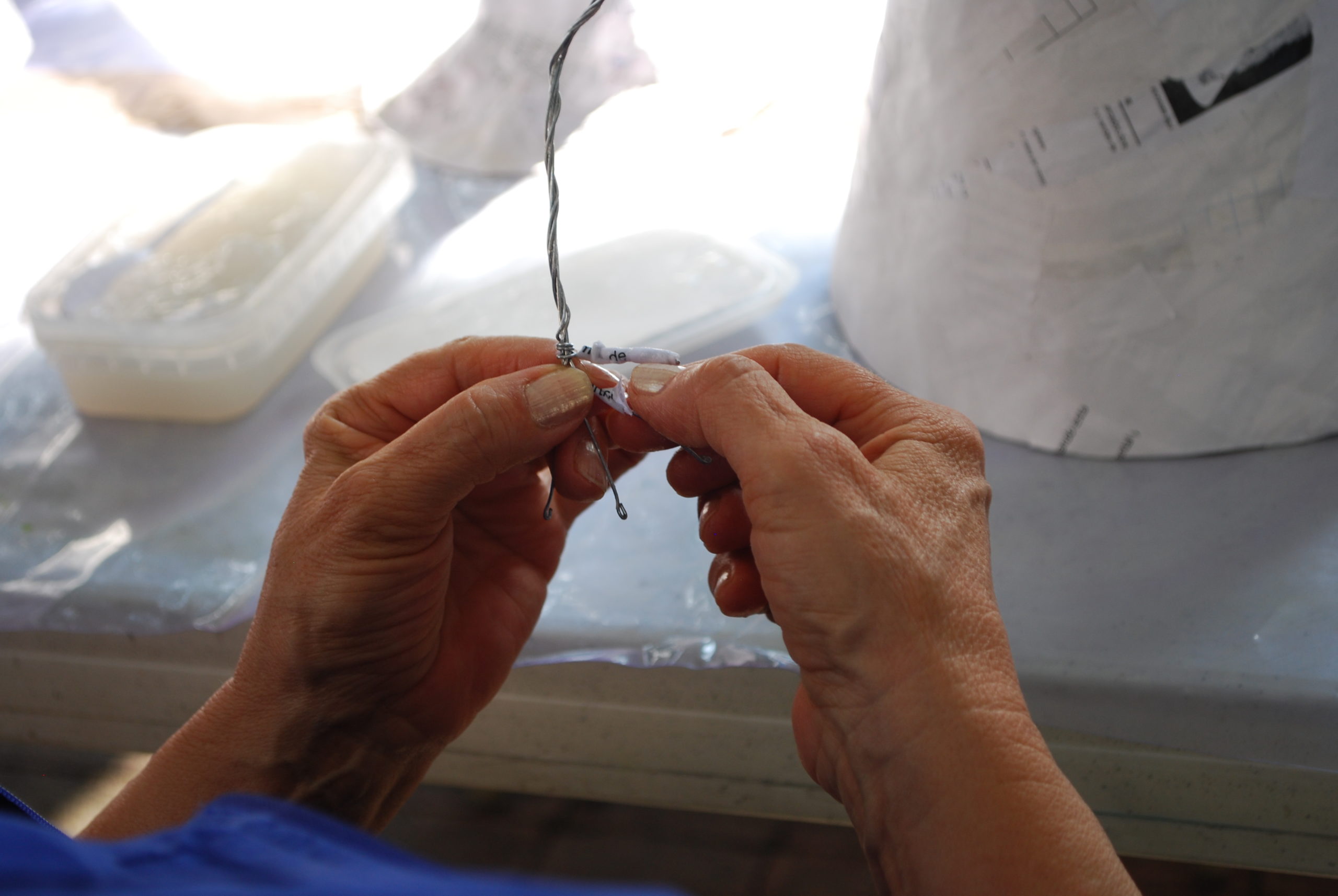
Skeleton Arms: Wire or pipe cleaners can be used for the skeleton arms
Material Options: For the armature base, use aluminum foil, crumpled newspaper, or wire mesh. Arms and limbs work well with pipe cleaners, floral wire, or coat hangers. For layering, choose papier-mâché (newspaper strips with flour paste), plaster gauze strips, or Model Magic clay. Cardboard or wood bases provide stability. Decorate with acrylic paints, tissue paper, ribbon, lace, sequins, feathers, or fabric scraps. Each material offers different textures and learning opportunities!
Photo by AlejandroLinaresGarcia / CC BY-SA 3.0 / Wikimedia Commons
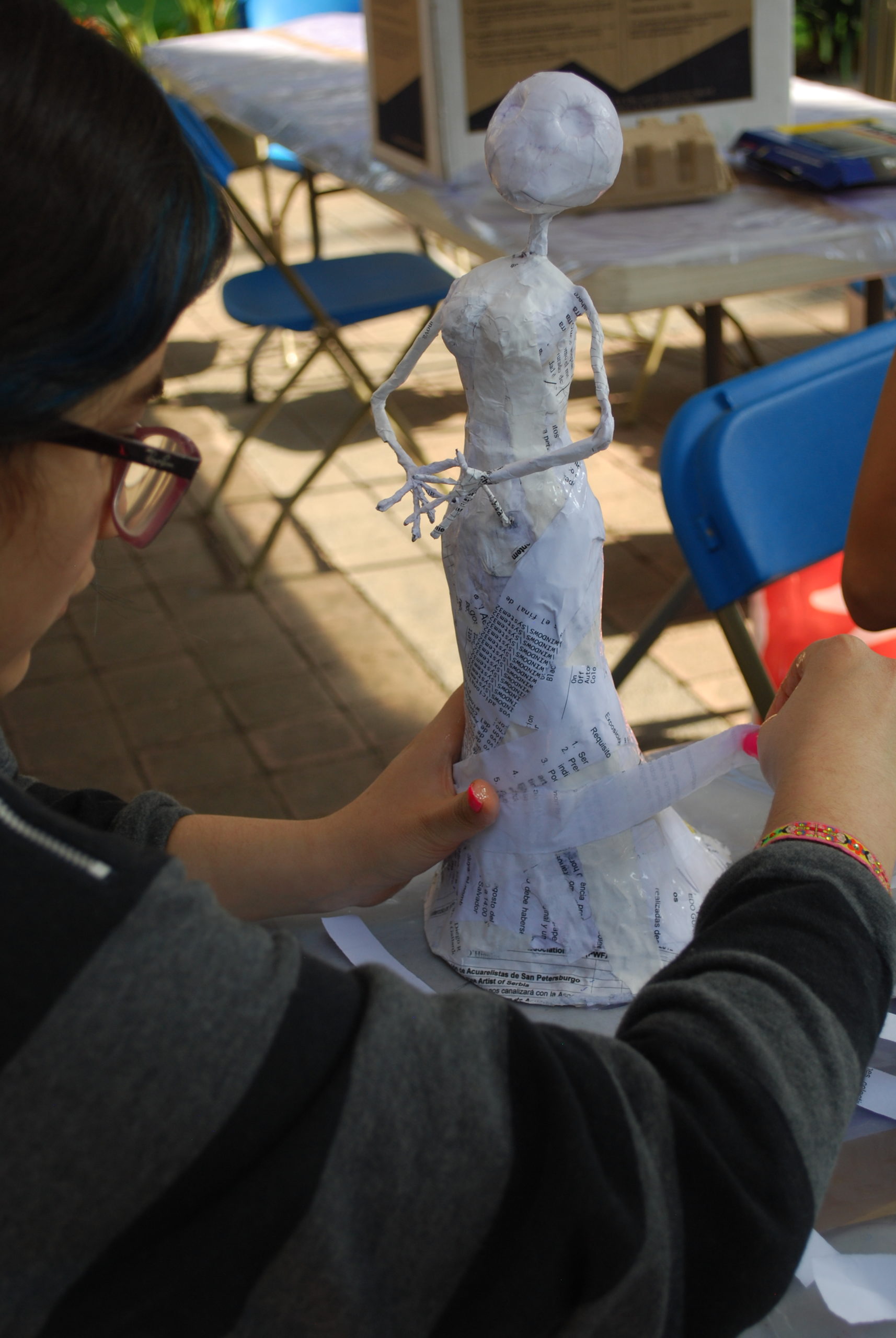
Work in Progress: Layering papier-mâché to build form
Photo by AlejandroLinaresGarcia / CC BY-SA 3.0 / Wikimedia Commons
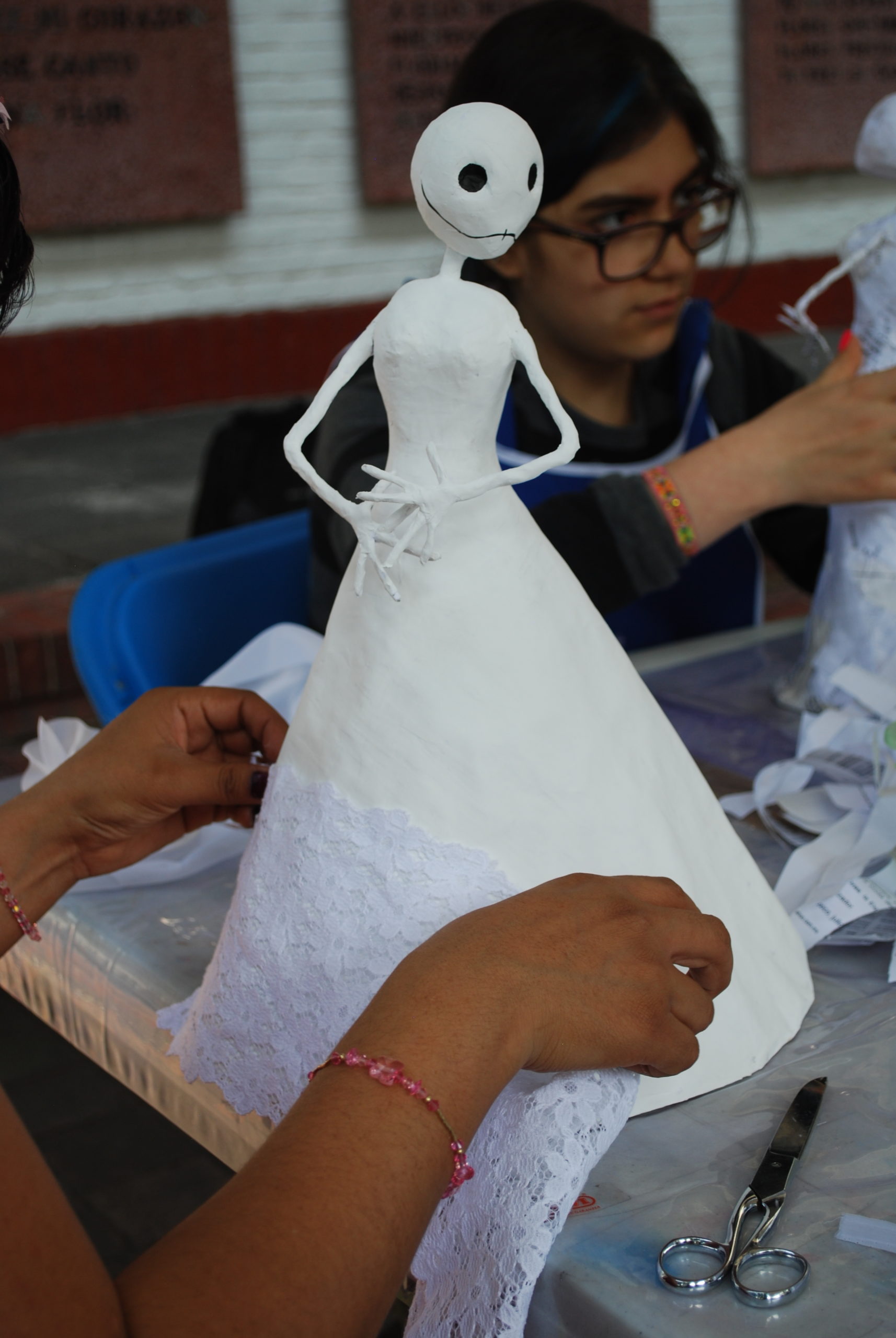
Adding Lace: Fabric and vibrant paints bring personality to our Catrina
Photo by AlejandroLinaresGarcia / CC BY-SA 3.0 / Wikimedia Commons
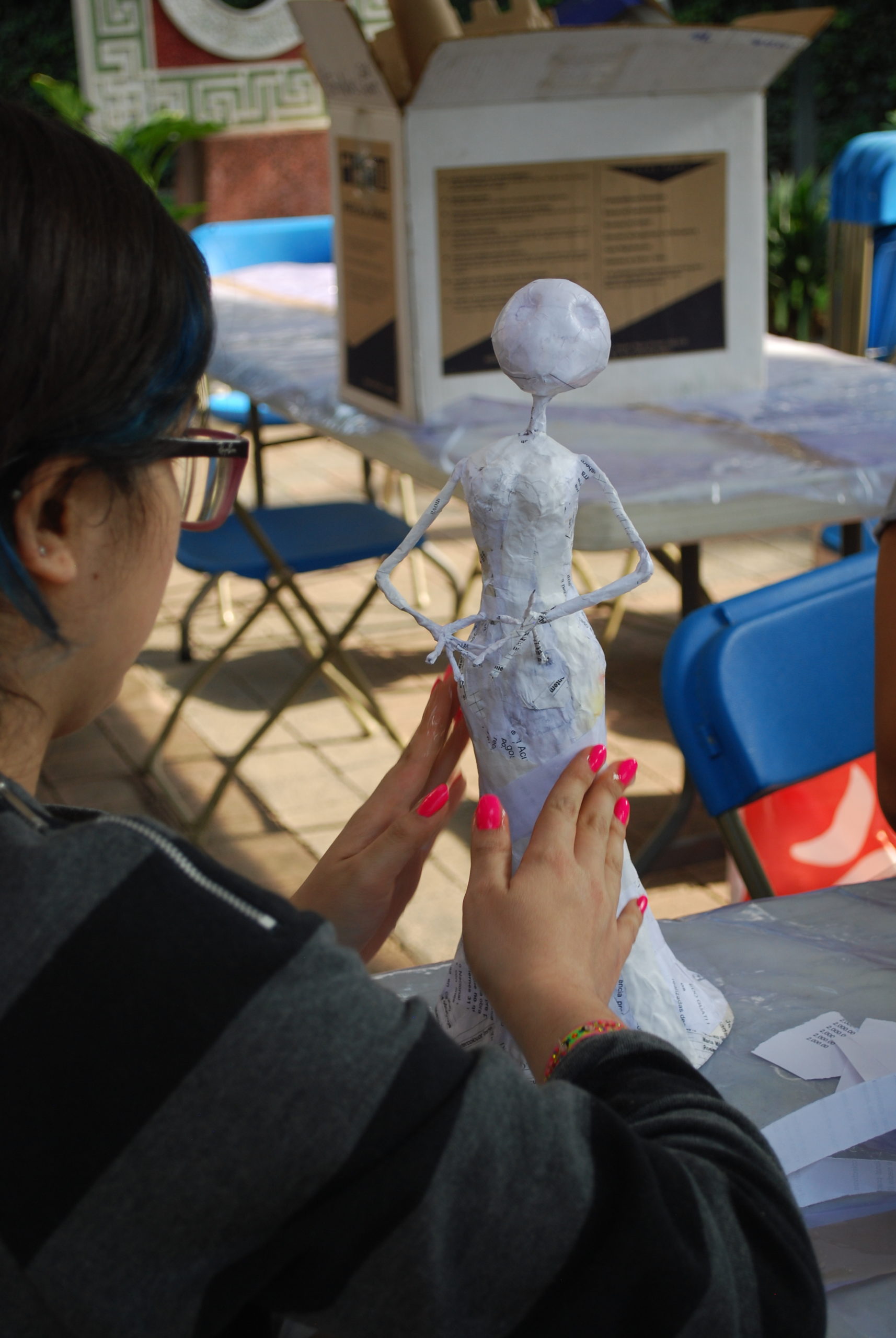
Intricate Details: Each pattern tells a story of celebration
Photo by AlejandroLinaresGarcia / CC BY-SA 3.0 / Wikimedia Commons
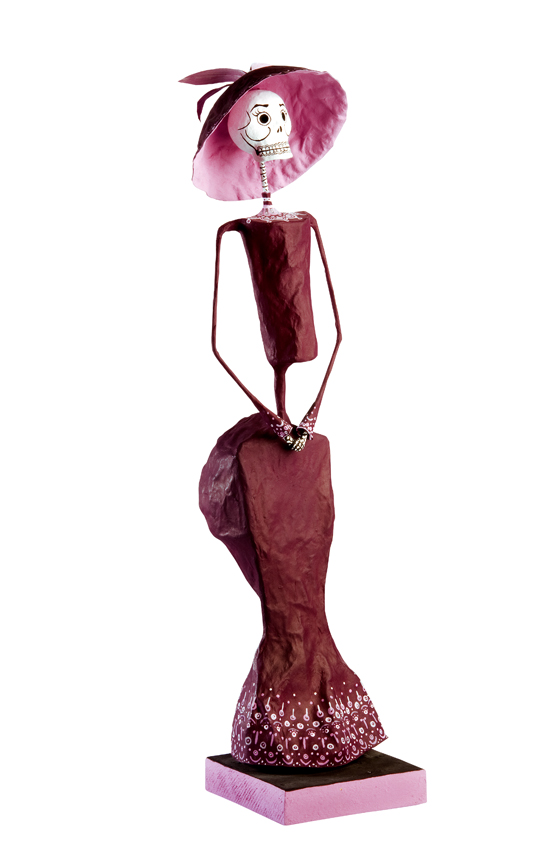
La Calavera Catrina: A finished student sculpture celebrating Día de los Muertos
Skeletal figure by Jesus Canseco Zarate of Oaxaca / Donated by Friends of Oaxacan Folk Art / Public Domain / Wikimedia Commons
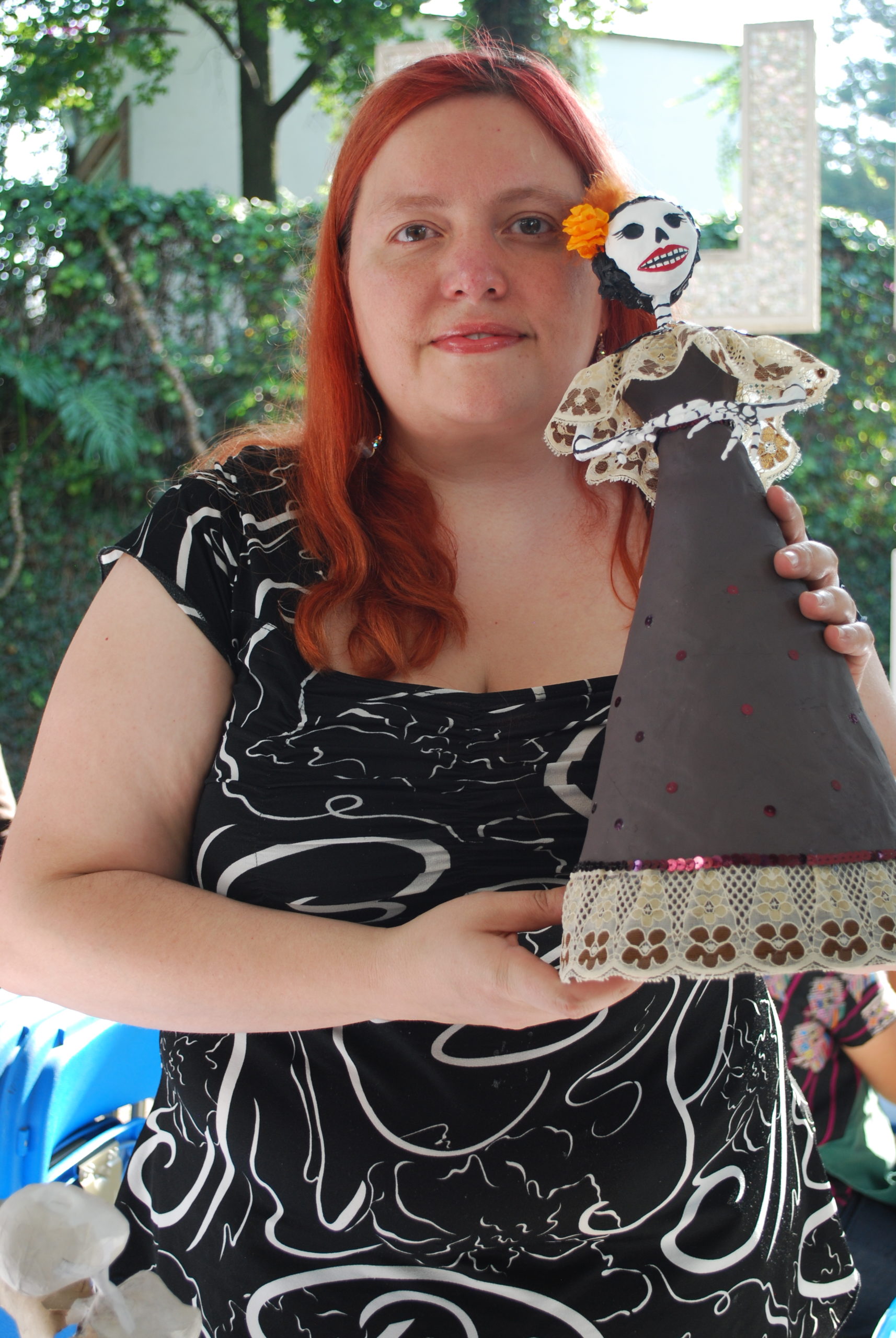
The Gallery: A celebration of creativity and culture
Photo by AlejandroLinaresGarcia / CC BY-SA 3.0 / Wikimedia Commons
La Catrina Sculpture Mini-Lesson
Celebrating Día de los Muertos Through Art
A developmentally appropriate sculpture activity for K-5th grade
📚 Learning Objectives
- Develop fine motor skills through rolling, pinching, and shaping clay
- Explore three-dimensional forms and basic sculpture concepts
- Learn about Día de los Muertos as a cultural celebration
- Practice following simple multi-step directions
🎨 Materials Needed (Per Student)
- Play dough or Model Magic (white, black, or any color available)
- Child-safe rolling pin or cylindrical block
- Plastic craft sticks or popsicle sticks
- Paper plate or wax paper work surface
- Optional: Large googly eyes (ages 5+), pipe cleaner pieces
📋 Standards Alignment
- Common Core ELA K: Participate in collaborative conversations about diverse cultures
- Visual Arts K-1: Create art that tells about life experiences and depicts stories
- Fine Motor Development: Strengthen hand muscles through manipulation of malleable materials
👩🏫 Simple Instructions
- Introduce: Show pictures of La Catrina. Explain that Día de los Muertos celebrates loved ones with colorful decorations and happy memories.
- Make the body: Roll play dough into a thick “snake” for the body (about 4 inches long).
- Make the head: Roll a ball for the head. Press gently onto the body.
- Add arms: Roll two thin snakes and attach to the sides of the body.
- Decorate simply: Use a craft stick to make simple patterns or add googly eyes (if age-appropriate).
🔄 Extensions
Language Development: Ask students to describe their sculpture using color and shape words.
Cultural Connection: Read a picture book about Día de los Muertos during or after the activity.
📚 Learning Objectives
- Create a three-dimensional sculpture using an armature technique
- Understand Día de los Muertos as a celebration honoring ancestors
- Develop planning and problem-solving skills in art-making
- Practice measuring, cutting, and assembling materials safely
- Apply decorative patterns inspired by Mexican folk art
🎨 Materials Needed (Per Student)
- Model Magic or air-dry clay (white)
- 2-3 pipe cleaners (for arms and support)
- Small cardboard base (3×3 inches)
- Washable markers or crayons for decoration
- Glue stick
- Small pieces of fabric, ribbon, or tissue paper
- Child-safe scissors
- Optional: Sequins, buttons, yarn (adult-supervised)
📋 Standards Alignment
- Common Core ELA 2-3: Recount stories from diverse cultures and determine central message or lesson
- Visual Arts 2-3: Create artwork based on observations and cultural traditions
- Math 2.MD.1: Measure lengths using appropriate tools (measuring materials)
- Social Studies: Compare cultural celebrations and traditions
👩🏫 Instructions
Day 1: Build the Sculpture
- Introduce: Share images of La Catrina. Discuss how Día de los Muertos celebrates life and remembers loved ones with joy and color.
- Create the base: Roll clay into a cone shape for the dress/body. Press firmly onto cardboard base.
- Make the head: Roll a ball (golf ball size). Attach to top of cone with gentle pressure.
- Add arms: Twist two pipe cleaners together for stability. Insert through the “shoulders” of the figure. Cover with small amounts of clay if desired.
- Dry: Set aside to dry completely (24 hours).
Day 2: Decorate
- Draw facial features: Use markers to create eyes, nose, and a smile.
- Add clothing details: Glue fabric pieces for a dress or use markers to draw patterns.
- Create decorations: Add tissue paper flowers, ribbon trim, or simple patterns inspired by Mexican folk art.
🔄 Extensions
Writing Connection: Students write 2-3 sentences about who they would honor during Día de los Muertos.
Math Integration: Measure the height of sculptures and create a class bar graph.
Cultural Study: Compare Día de los Muertos with other cultural celebrations that honor ancestors.
📚 Learning Objectives
- Create a complex three-dimensional sculpture using armature and papier-mâché techniques
- Understand the historical and cultural significance of La Catrina and José Guadalupe Posada’s art
- Apply planning, measuring, and engineering skills to create a balanced structure
- Incorporate authentic decorative elements inspired by Mexican folk art traditions
- Demonstrate craftsmanship through attention to detail and finishing techniques
🎨 Materials Needed (Per Student)
- Aluminum foil or crumpled newspaper
- 4-5 pipe cleaners or floral wire (12 inches each)
- Cardboard base (4×4 inches) or small wooden block
- Newspaper strips (1″ x 6″)
- Flour paste or diluted white glue (papier-mâché adhesive)
- Acrylic paint (white base coat, plus colors)
- Paintbrushes (various sizes)
- Decorative materials: lace, ribbon, fabric scraps, sequins, beads
- Hot glue gun (teacher use) or tacky glue
- Scissors, ruler, pencil
- Optional: Model Magic for detailed features
📋 Standards Alignment
- Common Core ELA 4-5: Determine themes of cultural works and analyze how characters, settings, or events are portrayed
- Visual Arts 4-5: Combine art forms and media to create artwork; describe how art represents cultural traditions
- Math 4.MD.3 & 5.MD.3: Apply concepts of measurement and geometry to solve real-world problems
- Social Studies: Analyze how culture shapes artistic expression and community traditions
- NGSS 3-5-ETS1-2: Generate and compare solutions based on how well they meet design criteria
👩🏫 Instructions
Day 1: Build the Armature
- Historical Context: Teach about José Guadalupe Posada’s original La Calavera Catrina etching (1910s) and how Diego Rivera popularized the figure. Discuss the satirical origins and modern cultural significance.
- Plan the design: Students sketch their Catrina design, noting height, pose, and decoration ideas.
- Create the base structure: Form aluminum foil or newspaper into a cone shape (6-8 inches tall). Secure to cardboard base with tape.
- Add the head: Crumple foil into a ball (2-3 inches diameter). Attach to body with wire or tape.
- Engineer the arms: Twist 2-3 pipe cleaners together for each arm. Insert into “shoulder” area. Bend into desired pose, ensuring balance.
- Test stability: Make sure the figure stands without toppling. Adjust weight distribution as needed.
Day 2: Apply Papier-Mâché
- Prepare paste: Mix flour and water (1:1 ratio) or dilute white glue with water.
- Layer newspaper strips: Dip strips in paste, squeeze off excess. Apply 2-3 layers over entire armature, smoothing as you go.
- Build details: Add extra layers to create texture for clothing, or use small pieces to define facial features.
- Dry completely: Allow 24-48 hours to dry thoroughly.
Day 3: Paint & Decorate
- Base coat: Apply white acrylic paint as a primer. Let dry.
- Paint details: Add vibrant colors for dress, face, and decorative patterns. Use traditional Mexican folk art motifs (flowers, geometric patterns).
- Attach embellishments: Glue lace trim for dress hem, ribbon for sash, fabric for shawl. Add sequins, beads, or other decorative elements.
- Final touches: Create a small hat from cardboard or add a paper flower crown.
🔄 Extensions & Assessment
Research Project: Students research José Guadalupe Posada’s work and write a short report on his influence on Mexican art.
Cultural Comparison: Create a Venn diagram comparing Día de los Muertos with another cultural celebration.
Artist Statement: Students write about their design choices and what their Catrina represents.
Gallery Exhibition: Host a class exhibition with student-created informational placards about the cultural significance of their work.
Engineering Challenge: Discuss what made sculptures stable vs. unstable. How did weight distribution and pose affect balance?
📊 Assessment Rubric
Technical Skills: Demonstrates proper use of materials and techniques
Cultural Understanding: Shows knowledge of Día de los Muertos traditions
Creativity: Makes unique design choices while respecting cultural authenticity
Craftsmanship: Shows attention to detail and care in finishing
Problem-Solving: Overcomes structural or design challenges