This Month™ · Close-up with…

Zitkala-Ša

Also known as Gertrude Simmons Bonnin · Her name means “Red Bird”
Writer Composer Activist Yankton Dakota
FEBRUARY 22, 1876 – JANUARY 26, 1938
Native American Heritage Month
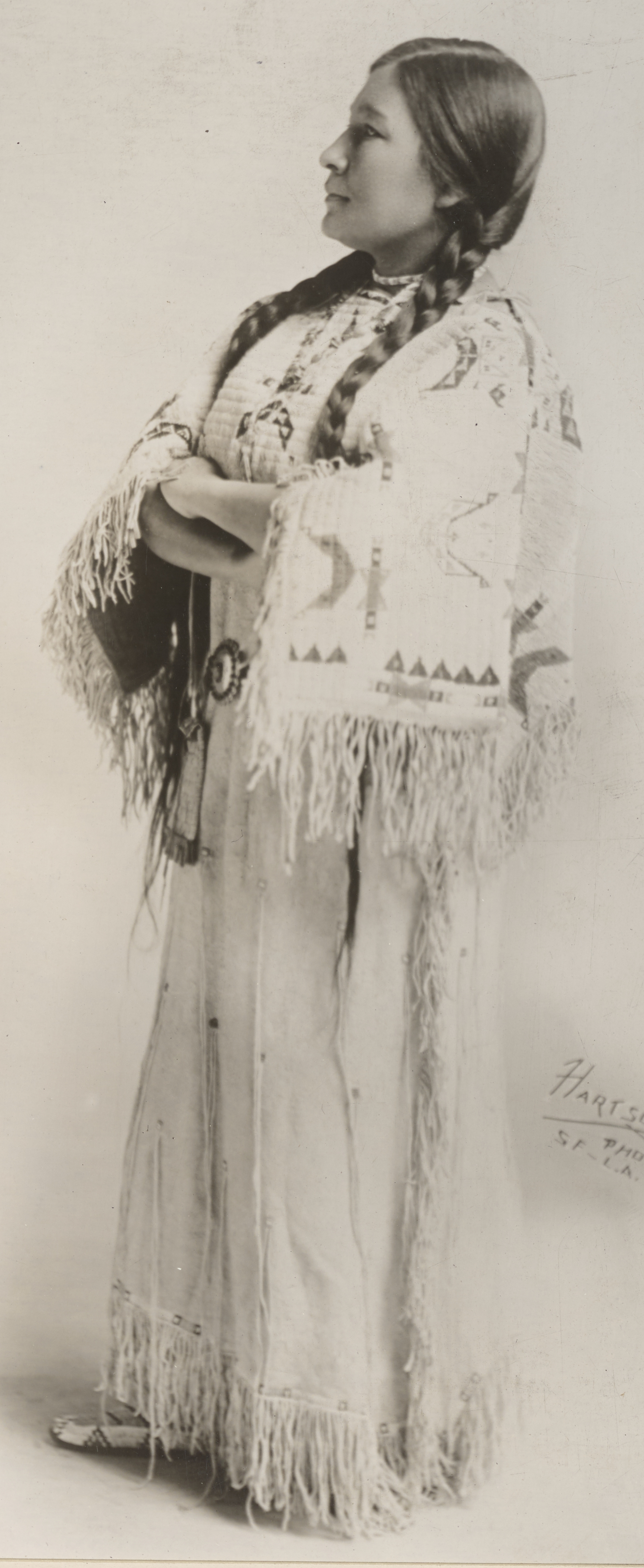
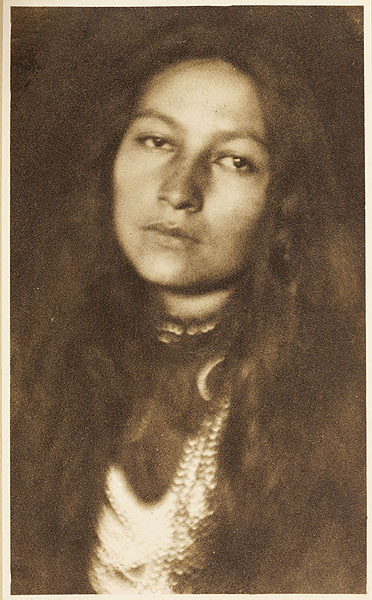
Zitkala-Ša photographed by Joseph T. Keiley, about 1898
Joseph T. Keiley, about 1898
Public domain
01
Introduction

Who Is Zitkala-Ša?

Zitkala-Ša was a writer and a musician. Her name means Red Bird. We say it like this: zit-KAH-lah shah.

She was born a long time ago on the Yankton Reservation in South Dakota. When she was little, she ran and played on the open land near her mother's home. She spoke the Dakota language every day.

🌟 Fun Fact!Zitkala-Ša is a Dakota name. At school she was given a different name in English. When she grew up, she chose to use her Dakota name on her books.

When she grew up, she wrote books. She played the violin. She helped her people. We can still read her stories today.

Zitkala-Ša was born in 1876 on the Yankton Reservation in South Dakota. Her name is a Dakota name, and it means Red Bird. It is said zit-KAH-lah shah. Some people also knew her by her English name, Gertrude Simmons Bonnin.

Choosing a nameAt the boarding school she was given an English name, Gertrude. Simmons was her mother's English surname, and Bonnin came later, from her marriage. When she was grown up she chose to be known by her Dakota name, Zitkala-Ša, and that is the name she signed on her books.

Her mother was Dakota, and her father was a White man who left the family when she was very small. For her first eight years she lived with her mother, speaking the Dakota language and learning the stories her people told.

She grew up to be a writer, a violin player, a music teacher, and a leader who worked for Native American rights. She was one of the first Native American women to publish books about her own life in her own words.

Zitkala-Ša was born on February 22, 1876, on the Yankton Reservation in what is now South Dakota. She was Yankton Dakota. Her Dakota name means Red Bird, and it is pronounced zit-KAH-lah shah. She was also known by her English name, Gertrude Simmons Bonnin.

Two names, one personYou will see her called both Zitkala-Ša and Gertrude Simmons Bonnin. She used both during her life. She chose the name Zitkala-Ša as an adult and signed her published writing with it, which was itself a public statement about who she was.

Her mother, Ellen Simmons, was Dakota. Her father was a White man who left the family when Zitkala-Ša was very young, and she was raised by her mother. For her first eight years she lived on the reservation, speaking Dakota and learning her people's stories and ways.

She became a writer, a classically trained violinist, a composer, a magazine editor, and one of the most effective Native American political organizers of her time. What makes her unusual among the people in history books is that she wrote her own story down. We do not have to guess what she thought, because she published it.

Zitkala-Ša was born on February 22, 1876, on the Yankton Reservation in Dakota Territory, in what is now South Dakota. Her Dakota name means Red Bird, pronounced zit-KAH-lah shah. She was also known by her English and married name, Gertrude Simmons Bonnin.

Why the name mattersThe boarding school gave her the English name Gertrude; Simmons came from her mother and Bonnin from her 1902 marriage. As an adult she published under her Dakota name, Zitkala-Ša, instead. In a period when federal policy was explicitly aimed at replacing Native names, languages, and identities, signing her own Dakota name to an article in the Atlantic Monthly was a political act as much as a literary one.

Her mother, Ellen Simmons, was Yankton Dakota. Her father was a White man named Felker who left the family while she was an infant, and she was raised by her mother on the reservation. She spent her first eight years immersed in the Dakota language and in her community's oral tradition, an education she later insisted had been a real one.

Over the next sixty years she became a published essayist and short story writer, a violinist trained at the New England Conservatory, the librettist of what is generally called the first Native American opera, the editor of a national magazine, and the founding president of a political organization that lobbied Congress on Native citizenship and voting rights.

What sets her apart as a historical subject is authorship. Most Native people of her generation appear in the record only as described by others, usually by government agents, missionaries, or ethnographers. Zitkala-Ša published her own account, in national magazines, while the events she described were still ongoing policy.

I was as free as the wind that blew my hair, and no less spirited than a bounding deer.
She is remembering what it felt like to run and play outside when she was little, before she left home.
Zitkala-Ša · “Impressions of an Indian Childhood,” 1900
02
Leaving Home

Two Worlds

When Zitkala-Ša was eight years old, she left home. She went to a school very far away, in a different state. Her mother stayed behind.

She missed her mother very much. The school felt strange. The people there spoke English, not Dakota.

What helped herZitkala-Ša found two things she loved at school. She loved to read, and she loved to play the violin. Music and books helped her feel better.

Later she went home again. She loved her mother and her home. She also loved books and music. She wanted both.

When Zitkala-Ša was eight, people from a boarding school came to the reservation and took children away to be educated far from home. She went with them, on a long train ride to Wabash, Indiana.

At that school, children were not allowed to speak their own languages. They had to wear different clothes. Zitkala-Ša's long hair was cut, which was very upsetting to her, because in her culture long hair was something to be proud of.

She stayed three years. Then she went home to her mother for three more years. But home did not feel quite the same anymore, and school had not felt like home either. She lived between two worlds.

Why she went backAt fifteen, Zitkala-Ša chose to return to school. She wanted to keep learning. She studied piano and violin, and she won a prize for a speech she wrote about women's rights.

In 1884, when Zitkala-Ša was eight years old, missionaries came to the Yankton Reservation to recruit children for White's Indiana Manual Labor Institute, a Quaker boarding school in Wabash, Indiana. She went, and the distance from her mother was enormous.

Schools like this one were part of a government plan. The idea behind them was that Native children should be separated from their families and taught to live like White Americans. Students were punished for speaking their own languages. Their clothing was replaced. Their hair was cut short, which for many Native nations carried a meaning close to grief or shame. They were given new names in English and expected to answer to them.

About this historyA federal investigation published in 2022 identified 408 Indian boarding schools operated or supported by the United States government between 1819 and 1969, across 37 states and territories. Zitkala-Ša published her account of her own school years while that system was still running, and for many Native families this history is within living memory.

Zitkala-Ša wrote about all of this years later, as an adult, in national magazines. She also wrote honestly about something more complicated: she loved reading, writing, and playing the violin, and she had found those things at the same school that had taken so much from her.

She stayed three years, returned home for three years, and then at fifteen decided on her own to go back and continue her education. In 1895 she graduated and gave a speech arguing that women deserved equal rights.

In 1884 missionaries arrived at the Yankton Reservation recruiting children for White's Indiana Manual Labor Institute, a Quaker boarding school in Wabash, Indiana. Zitkala-Ša was eight. She later described wanting to go, drawn by promises of red apples and a train ride, and described just as clearly what she found when she arrived.

The federal boarding school system was built on an explicit theory of assimilation: that Native children could be separated from their families, stripped of language and custom, and remade as English-speaking Christians. Students were forbidden to speak their languages. Their clothing was confiscated. Their hair was cut, an act that in many Native nations was associated with mourning. The schools were often underfunded, the labor requirements heavy, and the discipline severe.

Zitkala-Ša spent three years there, returned to Yankton for three, then chose at fifteen to go back. That choice is the hinge of her whole story, and she never resolved it neatly. She wrote that she no longer fully belonged at home, and she had never belonged at school. She had also acquired, at that school, the English prose and the musical training that she would later use to attack the system that produced them.

Reading a primary source criticallyZitkala-Ša's boarding school essays appeared in the Atlantic Monthly in 1900 and 1901, while the policy she was describing was still fully in force and her readers were mostly White Americans who supported it. Writing to persuade that audience shaped what she emphasized and what she left out. Noticing those choices is a separate matter from doubting her account, since a shaped account can still be an accurate one.

In 1895 she graduated and delivered an address on the inequality of women's rights. She went on to Earlham College in Richmond, Indiana, where she competed in oratory and began collecting and translating traditional stories. She left in 1897, weeks short of graduating, because of illness and money.

03
Her Work

Her Words and Her Music

Zitkala-Ša wrote a book of Dakota stories so that children everywhere could read them. Before that, people told these stories out loud. Now they were on paper too.

She also played the violin. She played so well that she went all the way to Paris, France, to play music.

She wrote an operaAn opera is a play where the people sing instead of talk. Zitkala-Ša helped write one. It was the first opera ever made by a Native American person.

Zitkala-Ša became a writer and a musician. In 1901 she published a book called Old Indian Legends. It was a collection of Dakota stories that had been told out loud for hundreds of years, and she wrote them down in English so that children anywhere could read them.

She also wrote about her own life. Big magazines printed her stories about leaving home and going to boarding school. Many readers had never heard a Native person tell their own story before.

Music mattered to her just as much. She was a trained violin player, and in 1900 she traveled to Paris with the Carlisle Indian Band to perform.

The Sun Dance OperaIn 1913 an opera she helped create was performed for the first time, in Utah. She wrote the words and the songs, and a composer named William Hanson wrote the music. It is often called the first Native American opera.

Between 1900 and 1902, Zitkala-Ša published a series of autobiographical essays in the Atlantic Monthly and short stories in Harper's Monthly. She wrote about her childhood on the reservation, her years at boarding school, and her time as a teacher. These were widely read magazines, and her readers were mostly White Americans who had never encountered a Native writer describing her own life.

In 1901 she published Old Indian Legends, a collection of traditional Dakota stories she had gathered and translated for young readers. She was doing something careful here: preserving oral stories in print, at a moment when government policy was actively trying to end the cultures that produced them.

She was also a serious musician. She studied violin at the New England Conservatory of Music in Boston, taught music at the Carlisle Indian Industrial School in Pennsylvania, and in 1900 performed with the Carlisle band at the Paris Exposition.

Her most ambitious project combined both talents. Starting around 1910 she worked with the composer William F. Hanson on The Sun Dance Opera, writing the libretto and the songs and drawing on Sioux and Ute musical traditions. It premiered in February 1913 in Vernal, Utah, and is generally described as the first Native American opera.

💡 Did You Know? A banned ceremony on stageThe Sun Dance is a sacred Plains ceremony. In 1883 the federal government made it an offense to hold one. The officials who wrote that rule said ceremonies like the Sun Dance stood in the way of their plan to make Native people live like White Americans. Putting a version of the ceremony on an opera stage kept it visible at a time when holding a real one openly was against federal rules.

Zitkala-Ša's literary career opened in January 1900, when the Atlantic Monthly published "Impressions of an Indian Childhood." Over the next two years the magazine ran "The School Days of an Indian Girl," "An Indian Teacher Among Indians," and "Why I Am a Pagan," while Harper's Monthly published her short fiction, including "The Soft-Hearted Sioux" and "The Trial Path."

Read them together and a strategy emerges. She wrote in polished literary English, in the most respectable magazines of the era, for an audience predisposed to approve of assimilation, and she used that platform to describe assimilation from the inside as a loss. "Why I Am a Pagan" went further still, defending her own spiritual beliefs against Christian conversion in a Christian country.

In 1901 Ginn and Company published Old Indian Legends, her collection of traditional Dakota stories translated for young readers. In 1921 she gathered her earlier essays and stories, with new political writing, as American Indian Stories.

She was simultaneously building a musical career. She trained on violin at the New England Conservatory, taught music at Carlisle, and performed with the Carlisle band at the 1900 Paris Exposition. Beginning around 1910 she collaborated with William F. Hanson, a music professor at Brigham Young University, on The Sun Dance Opera. She wrote the libretto and the songs, drawing on Sioux and Ute material; Hanson scored it. It premiered in Vernal, Utah, in February 1913, and the New York Light Opera Guild staged it on Broadway in 1938, the year she died.

💡 Did You Know? Credit and the historical recordFor decades Hanson was listed as the opera's author and Zitkala-Ša's role was minimized or omitted. Scholars working from her papers have since restored her authorship of the libretto and songs. It is a useful case study in how credit gets assigned, and to whom.
A wee child toddling in a wonder world, I prefer to their dogma my excursions into the natural gardens… Zitkala-Ša · “Why I Am a Pagan,” Atlantic Monthly, 1902
04
Her Legacy

Fighting for Citizenship

Zitkala-Ša wanted Native American people to be treated fairly. She worked hard for many years to make that happen.

VotingVoting is how grown-ups help choose their leaders. For a long time, many Native American people were not allowed to vote. Zitkala-Ša worked to change that.

She started a group to help. She was the leader of that group until she died.

Today her picture is on a quarter. A quarter is a coin we use to buy things.

Zitkala-Ša spent the second half of her life working for Native American rights. She moved to Washington, D.C., where laws are made, so she could speak directly to the people making them.

She helped lead a group called the Society of American Indians and edited its magazine. Later, in 1926, she and her husband started a new group called the National Council of American Indians. She was its president until she died.

She also helped investigate people who were stealing money and land from Native families in Oklahoma. The report she helped write made many Americans angry about what was happening, and it helped lead to new laws.

A coin in your pocketIn 2024 the United States put Zitkala-Ša on a quarter. The coin shows her holding a book, with the words Author, Activist, Composer.

In 1916 Zitkala-Ša was elected secretary of the Society of American Indians, and she and her husband moved to Washington, D.C. From 1918 to 1919 she edited the group's publication, American Indian Magazine, using it to criticize the Bureau of Indian Affairs and the rules that banned Native languages and ceremonies.

In the early 1920s she co-authored an investigation into the theft of oil money and land from Native people in Oklahoma. The report helped turn public opinion and contributed to reforms that eventually included the Indian Reorganization Act of 1934.

She also worked through the General Federation of Women's Clubs, where she created an Indian Welfare Committee in 1924, and she organized Native voter registration. The Indian Citizenship Act of 1924 made most Native people United States citizens, but many states still found ways to keep them from voting, and that fight went on long after her lifetime.

In 1926 she and her husband founded the National Council of American Indians to unite tribes around citizenship and voting rights. She served as its president until her death on January 26, 1938. She is buried at Arlington National Cemetery.

💡 Did You Know? Her face on a quarterIn 2024 the United States Mint issued a quarter honoring Zitkala-Ša as part of the American Women Quarters Program. The design shows her holding a book, with the words Author, Activist, Composer.

Zitkala-Ša's political career began in earnest with the Society of American Indians, the first national organization run by and for Native people. She became its secretary in 1916, which moved the family to Washington, and edited American Indian Magazine from 1918 to 1919. In its pages she attacked the Bureau of Indian Affairs directly, including its suppression of Native languages and religious practice in the schools.

In 1923 she co-authored, with Charles H. Fabens and Matthew K. Sniffen, a report titled Oklahoma's Poor Rich Indians. It documented how lawyers, guardians, and businessmen systematically defrauded Native people, especially Osage families, of oil royalties and land. The period it describes includes the murders now known as the Osage Reign of Terror. The report generated national attention and fed the reform current that produced the Meriam Report and, eventually, the Indian Reorganization Act of 1934.

She joined the General Federation of Women's Clubs in 1921 and founded its Indian Welfare Committee in 1924, using an existing White women's organization as leverage. She ran voter registration drives. She called for abolishing the Bureau of Indian Affairs outright.

The Indian Citizenship Act of 1924 conferred citizenship on most Native people born in the United States. Citizenship did not deliver the vote. States used residency rules, tax requirements, and guardianship laws to exclude Native voters, and some of those barriers stood into the 1960s. Zitkala-Ša and her husband founded the National Council of American Indians in 1926 specifically to press that gap, and she led it as president until her death on January 26, 1938. She is buried at Arlington National Cemetery as Gertrude Simmons Bonnin.

💡 Did You Know? Recovered, then recognizedWhen the National Congress of American Indians was organized in 1944 under different leadership, Zitkala-Ša's earlier organizing was largely written out of the account. Her reputation was rebuilt from the 1980s onward by scholars reissuing her work. In 2024 the United States Mint placed her on a quarter, inscribed Author, Activist, Composer.
Timeline
Two Worlds: Zitkala-Ša's Life Journey
Learning Level: K–1
Home Between worlds Institutions
1876
Home
Born on the Yankton Reservation

She was born in South Dakota. Her family was Dakota. Zitkala-Ša was born on February 22, 1876, on the Yankton Reservation in South Dakota. Born February 22, 1876, on the Yankton Reservation in South Dakota, and raised by her Dakota mother, Ellen Simmons. Born February 22, 1876, on the Yankton Reservation in Dakota Territory. Raised by her mother, Ellen Simmons, in a Dakota-speaking household and oral tradition.

1884
Institutions
Leaves home at eight

She rode a train to a school far away. She missed her mother. At eight years old she traveled to a boarding school in Wabash, Indiana, far from her family. Recruited at age eight by missionaries for White's Indiana Manual Labor Institute, a Quaker boarding school in Wabash, Indiana. Recruited at eight for White's Indiana Manual Labor Institute in Wabash, Indiana, part of a federal assimilation program that separated Native children from their families and suppressed their languages.

1887–1891
Between worlds
Home again, and the choice to return

She went home for a while. Then she chose to go back to school. She returned home for three years, then decided at fifteen to go back to school and keep learning. Spent three years back at Yankton, feeling she no longer fully belonged there, then chose at fifteen to return to the Indiana boarding school and continue her education. Returned to Yankton for three years and found she no longer fit there either. At fifteen she chose to go back to White's Indiana Manual Labor Institute, where she studied piano and violin and later taught music.

1895
Institutions
Graduates and speaks on women's rights

She finished school. She gave a speech. She graduated in 1895 and gave a speech about why women deserve equal rights. Received her diploma in June 1895 and delivered an address on the inequality of women's rights. Graduated in June 1895 with an address on the inequality of women's rights, then entered Earlham College in Richmond, Indiana, on scholarship, where she competed in oratory with a speech called "Side by Side."

1897–1899
Institutions
Conservatory, then teaching at Carlisle

She learned to play the violin very well. Then she taught music. She studied violin in Boston, then taught music at a school called Carlisle in Pennsylvania. Studied violin at the New England Conservatory of Music in Boston, then taught music at the Carlisle Indian Industrial School in Pennsylvania. Studied violin at the New England Conservatory in Boston and taught music at the Carlisle Indian Industrial School. She clashed with superintendent Richard Henry Pratt over his assimilation program and left Carlisle in 1901.

1900
Between worlds
Paris, and her first published essays

She played violin in Paris, a city far across the ocean. She performed in Paris with the Carlisle Indian Band, and a big magazine printed her first stories. Performed with the Carlisle Indian Band at the Paris Exposition, and the Atlantic Monthly began publishing her autobiographical essays. Performed with the Carlisle Indian Band at the Paris Exposition. The Atlantic Monthly published "Impressions of an Indian Childhood," opening a two-year run of essays and stories in the Atlantic and Harper's.

1901
Home
Old Indian Legends

She wrote a book of Dakota stories for children. She published Old Indian Legends, a book of Dakota stories written down for young readers. Published Old Indian Legends with Ginn and Company, preserving traditional Dakota stories in print for young readers. Published Old Indian Legends with Ginn and Company of Boston, translating oral Dakota tradition into print at a moment when federal policy was working to end the cultures that produced it.

1902
Home
Marriage and years in Utah

She got married. She moved to Utah. She married Raymond Bonnin, and they moved to Utah, where they lived and worked for many years. Married Raymond Talephause Bonnin and moved to the Uintah-Ouray Reservation in Utah, where the couple lived and worked for about fourteen years. Their son was named Raymond Ohiya Bonnin. Married Raymond Talephause Bonnin, of Yankton and European ancestry. The Bureau of Indian Affairs posted them to the Uintah-Ouray Reservation in Utah, where they worked with the Ute people for roughly fourteen years. Their son was Raymond Ohiya Bonnin.

1913
Between worlds
The Sun Dance Opera premieres

An opera she helped write was performed for the first time. The Sun Dance Opera was performed for the first time in Utah. She wrote the words and the songs. The Sun Dance Opera premiered in February 1913 in Vernal, Utah. She wrote the libretto and songs; William F. Hanson composed the score. It is generally called the first Native American opera. The Sun Dance Opera premiered in Vernal, Utah, in February 1913, with her libretto and songs and a score by William F. Hanson. It drew on Sioux and Ute material and staged a ceremony the federal government had banned.

1916–1924
Institutions
Washington, the magazine, and the Oklahoma report

She moved to Washington to help her people. She moved to Washington, D.C., edited a magazine, and helped investigate people stealing from Native families. Elected secretary of the Society of American Indians and moved to Washington, D.C. Edited American Indian Magazine, then co-authored a report exposing the theft of oil money and land from Native families in Oklahoma. Elected secretary of the Society of American Indians in 1916 and edited American Indian Magazine from 1918 to 1919. In 1923 she co-authored Oklahoma's Poor Rich Indians, documenting systematic fraud against Osage and other Native families during the era of the Osage murders.

1926–1938
Home
Founds the National Council of American Indians

She started a group to help Native people. She led it until she died. In 1926 she and her husband started the National Council of American Indians. She was its president until she died in 1938. Founded the National Council of American Indians with her husband in 1926 to press for citizenship and voting rights, serving as president until her death on January 26, 1938. She is buried at Arlington National Cemetery. Founded the National Council of American Indians in 1926 to close the gap between the citizenship granted in 1924 and the vote still denied by many states. She led it as president until her death on January 26, 1938, and is buried at Arlington National Cemetery as Gertrude Simmons Bonnin.

2024
Between worlds
Honored on a United States quarter

Her picture is on a quarter now. The United States put Zitkala-Ša on a quarter, holding a book. The United States Mint issued a quarter honoring her in the American Women Quarters Program, showing her with a book and the words Author, Activist, Composer. The United States Mint issued a quarter in the American Women Quarters Program showing her holding a book, inscribed Author, Activist, Composer. A park in Arlington, Virginia, was renamed for her in 2020, and a Dakota-language opera about her premiered in 2022.

05
Talk About It

Discussion Questions

  • 1At school Zitkala-Ša was given a new name in English. When she grew up, she chose to use her Dakota name, Red Bird, on her books. If you could pick a new name for yourself, what would you pick? Why that one?
  • 2Zitkala-Ša felt better when she read books and played music. What helps you feel better when you miss someone?
  • 3Zitkala-Ša wrote down stories so other children could read them. What is a story you would like to write down?
  • 1The school took Zitkala-Ša far from her mother and her language, and it was also the place where she found books and the violin she loved. Why might that have been hard for her?
  • 2At fifteen Zitkala-Ša chose to go back to school, even though school had been hard. Why might someone make that choice?
  • 3Zitkala-Ša wrote Dakota stories down so they would not be forgotten. What is the difference between hearing a story and reading one?
  • 1Zitkala-Ša published her boarding school essays in magazines read mostly by White Americans. What might she have been hoping would happen?
  • 2Zitkala-Ša used the English and the music training she got at boarding school to argue against the boarding school system. What do you make of that?
  • 3Native people became United States citizens in 1924, but many still could not vote. What is the difference between having a right and being able to use it?
  • 1Zitkala-Ša wrote for an audience that largely supported the policies she was criticizing. How might that have shaped what she chose to put on the page, and what she left off it?
  • 2Zitkala-Ša’s account of boarding school is a primary source written by someone with a stake in the argument. Does that make it more useful as evidence, less useful, or useful in a different way?
  • 3For decades William Hanson was credited as the author of The Sun Dance Opera and Zitkala-Ša’s role was minimized. What does that suggest about how historical credit gets assigned, and what would it take to catch an error like that?
  • 4Zitkala-Ša worked inside existing institutions, including a White women's club federation, to push for Native rights. What are the advantages and the costs of that strategy?
06
Keep Going

Explore More

01
💬 Speaking
Our Names
Teacher-ledWrite Zitkala-Ša on chart paper and say it together: zit-KAH-lah shah. Tell the class it means Red Bird, that it is her Dakota name, and that she chose to use it on her books when she grew up. Then go around the circle. Each child says their own name out loud and tells the class anything they know about it, such as who picked it or whether someone else in the family shares it. Write each name on the chart and give each child a crayon to draw a small picture beside their own name.
02
🎻 Listening
Loud, Soft, Fast, Slow
Teacher-ledPlay a short piece of violin music. Ask the class to move their hands high when the music is high and low when it is low. Talk about how music can sound happy or sad without any words at all.
03
💭 Reflection
Our Favorite Stories
Teacher-ledAsk each child to name a story someone in their family tells them. Write the titles on chart paper. Talk about how Zitkala-Ša wrote her family's stories down so they would be kept.
01
✏️ Writing
A Story From Home
Zitkala-Ša wrote down stories she had heard out loud. Ask someone at home to tell you a story from your family. Write it down in your own words, with a beginning, a middle, and an end.
02
🔍 Research
Find the Quarter
Look up the 2024 Zitkala-Ša quarter. Write down three things you can see on the coin besides Zitkala-Ša herself. For each one, write a sentence saying why you think the designers chose to put it there.
03
🎨 Creative
Design a Book Cover
Zitkala-Ša's stories were published as a book with a cover. Make a cover for the family story you wrote in the first activity. Give it a title, put your own name on it as the author, and draw a picture of something that happens in your story. Write one sentence explaining why you chose that moment.
01
✏️ Opinion Writing
Two Names
The boarding school gave Zitkala-Ša an English name, Gertrude, and as an adult she chose to publish under her Dakota name instead. Write an opinion paragraph about why a name might matter that much. State your opinion, give a reason supported by details from this guide, and end with a concluding sentence.
02
🔍 Research
Then and Now
Find out when Native people in your state were able to vote without extra barriers. Compare that date with 1924, the year of the Indian Citizenship Act. Write a short paragraph on what you found and list your sources.
03
💭 Reflection
Between Two Worlds
Zitkala-Ša wrote that she no longer fully belonged at home and had never belonged at school. Write a reflection about a time you felt between two groups. You do not have to share it unless you want to.
01
✏️ Argument
Audience and Argument
Read a short excerpt from "The School Days of an Indian Girl." Write an argumentative essay answering this question: how did writing for a mostly White, assimilation-friendly readership shape the argument she made? Introduce a precise claim, support it with textual evidence, acknowledge a counterclaim, and close with the significance of your position.
02
🔍 Research
Restoring the Credit
Investigate how authorship of The Sun Dance Opera was recorded over time, from the 1913 premiere through recent scholarship. Using at least three sources, build a short timeline of who got credit and when it changed. Assess the credibility of each source and provide a works cited list.
03
💭 Analysis
Rights on Paper
The Indian Citizenship Act of 1924 granted citizenship without securing the vote. Research two specific mechanisms states used to keep Native citizens from voting, and write an analysis of the gap between a right as written and a right as exercised. Cite specific evidence for each mechanism.
📚
Standards Alignment
Georgia ELA · Common Core ELA · North Carolina ELA · North Carolina Social Studies · New York State ELA · New Jersey ELA
▼
🟢 Grades K–1
K.P.EICC.3
Comprehension Strategies Engage with a range of complex texts for a variety of tasks and purposes, accessing and using strategies for comprehension before, during, and after reading as part of the meaning-making process.
K.T.T.2
Expository Techniques Identify and use expository techniques to shape understanding.
1.T.RA.1
Research & Inquiry Build knowledge about the world by asking or generating questions about topics of interest, researching the answers, using multiple sources, and communicating relevant and accurate information about the topic.
1.P.CP.1
Collaboration Collaborate with others to accomplish shared goals and projects.
🔵 Grades 2–3
2.T.T.2
Expository Techniques Identify and use expository techniques to shape understanding.
2.T.RA.2
Curating Sources & Evidence Reference parts of texts to address a specific topic or question and explore various sources of information to make connections across a broad range of topics.
3.T.T.2
Expository Techniques Explain, analyze, and use expository techniques to shape understandings.
3.T.RA.1
Research & Inquiry Conduct research to ask and answer questions that clarify, deepen, and extend understanding of a topic of interest using credible sources and communicating relevant and accurate information.
🟠 Grades 4–5
4.T.T.2
Expository Techniques Explain, analyze, and use expository techniques to shape understandings.
4.T.C.2
Authors & Speakers Make connections between authors of texts, speakers in texts, varying perspectives, and the circumstances in which texts are produced.
5.T.T.3
Opinion Techniques Explain, analyze, and use opinion techniques to shape understandings.
5.T.RA.2
Curating Sources & Evidence Integrate evidence from print and digital sources, assessing credibility and relevance and avoiding plagiarism.
🟣 MS+
6.P.ST.1
Context Develop and apply knowledge of key components of context such as background information, geographic location, cultural influences, time period, and contemporary events when interpreting and constructing texts.
7.T.C.2
Authors & Speakers Analyze how authors' and/or speakers' perspectives influence texts and how circumstances shape their creation.
7.T.T.3
Argumentative Techniques Analyze and apply argumentative techniques.
8.T.RA.2
Curating Sources & Evidence Utilize multiple print and digital texts to address a specific topic or question, assessing source credibility and relevance and integrating evidence properly to avoid plagiarism.
🟢 Grades K–1
RI.K.2
Reading: Informational
With prompting and support, identify the main topic and retell key details of a text.
RI.1.3
Reading: Informational
Describe the connection between two individuals, events, ideas, or pieces of information in a text.
W.K.2
Writing
Use a combination of drawing, dictating, and writing to compose informative/explanatory texts in which they name what they are writing about and supply some information about the topic.
SL.1.1
Speaking & Listening
Participate in collaborative conversations with diverse partners about grade 1 topics and texts with peers and adults in small and larger groups.
🔵 Grades 2–3
RI.2.3
Reading: Informational
Describe the connection between a series of historical events, scientific ideas or concepts, or steps in technical procedures in a text.
RI.3.3
Reading: Informational
Describe the relationship between a series of historical events, scientific ideas or concepts, or steps in technical procedures in a text, using language that pertains to time, sequence, and cause/effect.
W.3.2
Writing
Write informative/explanatory texts to examine a topic and convey ideas and information clearly.
W.3.3
Writing
Write narratives to develop real or imagined experiences or events using effective technique, descriptive details, and clear event sequences.
SL.3.1
Speaking & Listening
Engage effectively in a range of collaborative discussions (one-on-one, in groups, and teacher-led) with diverse partners on grade 3 topics and texts, building on others' ideas and expressing their own clearly.
🟠 Grades 4–5
RI.4.3
Reading: Informational
Explain events, procedures, ideas, or concepts in a historical, scientific, or technical text, including what happened and why, based on specific information in the text.
RI.4.6
Reading: Informational
Compare and contrast a firsthand and secondhand account of the same event or topic; describe the differences in focus and the information provided.
W.4.7
Writing
Conduct short research projects that build knowledge through investigation of different aspects of a topic.
W.4.8
Writing
Recall relevant information from experiences or gather relevant information from print and digital sources; take notes and categorize information, and provide a list of sources.
W.5.1
Writing
Write opinion pieces on topics or texts, supporting a point of view with reasons and information.
🟣 MS+
RI.7.6
Reading: Informational
Determine an author's point of view or purpose in a text and analyze how the author distinguishes his or her position from that of others.
RI.8.9
Reading: Informational
Analyze a case in which two or more texts provide conflicting information on the same topic and identify where the texts disagree on matters of fact or interpretation.
W.8.1
Writing
Write arguments to support claims with clear reasons and relevant evidence.
RI.9-10.6
Reading: Informational
Determine an author's point of view or purpose in a text and analyze how an author uses rhetoric to advance that point of view or purpose.
🟢 Grades K–1
RI.K.2
Reading: Informational
With prompting and support, identify the main topic and retell key details of a text.
RI.1.3
Reading: Informational
Describe the connection between two individuals, events, ideas, or pieces of information in a text.
W.K.2
Writing
Use a combination of drawing, dictating, and writing to compose informative/explanatory texts in which they name what they are writing about and supply some information about the topic.
SL.K.1
Speaking & Listening
Participate in collaborative conversations with diverse partners about kindergarten topics and texts with peers and adults in small and larger groups.
🔵 Grades 2–3
RI.2.1
Reading: Informational
Ask and answer such questions as who, what, where, when, why, and how to demonstrate understanding of key details in a text.
RI.2.3
Reading: Informational
Describe the connection between a series of historical events, scientific ideas or concepts, or steps in technical procedures in a text.
RI.3.1
Reading: Informational
Ask and answer questions to demonstrate understanding of a text, referring explicitly to the text as the basis for the answers.
RI.3.2
Reading: Informational
Determine the main idea of a text; recount the key details and explain how they support the main idea.
W.3.3
Writing
Write narratives to develop real or imagined experiences or events using effective technique, descriptive details, and clear event sequences.
SL.3.1
Speaking & Listening
Engage effectively in a range of collaborative discussions (one-on-one, in groups, and teacher-led) with diverse partners on grade 3 topics and texts, building on others’ ideas and expressing their own clearly.
🟠 Grades 4–5
RI.4.3
Reading: Informational
Explain events, procedures, ideas, or concepts in a historical, scientific, or technical text, including what happened and why, based on specific information in the text.
RI.5.3
Reading: Informational
Explain the relationships or interactions between two or more individuals, events, ideas, or concepts in a historical, scientific, or technical text based on specific information in the text.
W.4.5
Writing
Conduct short research projects that build knowledge through investigation of different aspects of a topic.
W.4.6
Writing
Recall relevant information from experiences or gather relevant information from print and digital sources; take notes and categorize information, and provide a list of sources.
SL.5.1
Speaking & Listening
Engage effectively in a range of collaborative discussions (one-on-one, in groups, and teacher-led) with diverse partners on grade 5 topics and texts, building on others' ideas and expressing their own clearly.
🟣 MS+
8.B.1.2
Behavioral Sciences
Explain how cultural values, practices and the interactions of various indigenous, religious, and racial groups have influenced the development of North Carolina and the nation.
8.C&G.1.5
Civics & Government
Compare access to democratic rights and freedoms of various indigenous, religious, racial, gender, ability and identity groups in North Carolina and the nation.
8.C&G.2.1
Civics & Government
Summarize the strategies and societal reforms used to address discrimination and oppression in North Carolina and the nation.
8.H.1.4
History
Explain how recovery, resistance, and resilience to inequities, injustices, discrimination, prejudice, and bias have shaped the history of North Carolina and the nation.
8.H.2.3
History
Explain how the experiences and achievements of women, minorities, indigenous, and marginalized groups have contributed to the development of North Carolina and the nation over time.
I.1.4
Inquiry
Assess the credibility of primary and secondary sources using the origin, authority, structure, credibility, reliability, and context of the sources to guide the selection.
🟢 Grades K–1
KR2
Reading
Retell stories or share key details from a text. (RI&RL)
1R2
Reading
Identify a main topic or central idea in a text and retell important details. (RI&RL)
1R3
Reading
Describe characters, settings, and major events in a story, or pieces of information in a text. (RI&RL)
KW2
Writing
Use a combination of drawing, dictating, oral expression, and/or emergent writing to name a familiar topic and supply information.
🔵 Grades 2–3
2R2
Reading
Identify a main topic or central idea and retell key details in a text; summarize portions of a text. (RI&RL)
2R3
Reading
In informational texts, describe the connections between ideas, concepts, or a series of events. (RI)
3R3
Reading
In informational texts, describe the relationship among a series of events, ideas, concepts, or steps in a text, using language that pertains to time, sequence, and cause/effect. (RI)
3W2
Writing
Write informative/explanatory texts to explore a topic and convey ideas and information relevant to the subject.
🟠 Grades 4–5
4R3
Reading
In informational texts, explain events, procedures, ideas, or concepts, including what happened and why, based on specific evidence from the text. (RI)
5R6
Reading
In informational texts, analyze multiple accounts of the same event or topic, noting important similarities and differences in the point of view they represent. (RI)
4W2
Writing
Write informative/explanatory texts to explore a topic and convey ideas and information relevant to the subject.
5W1
Writing
Write an argument to support claims with clear reasons and relevant evidence.
🟣 MS+
7R6
Reading
In informational texts, analyze how the author distinguishes his or her position from that of others. (RI)
8R8
Reading
Trace and evaluate an argument and specific claims in a text, assessing whether the reasoning is valid and the evidence is relevant and sufficient and recognizing when irrelevant evidence is introduced. (RI&RL)
7W1
Writing
Write arguments to support claims with clear reasons and relevant evidence.
8W7
Writing
Gather relevant information from multiple sources; assess the credibility and accuracy of each source; quote or paraphrase the data and conclusions of others; avoid plagiarism and follow a standard format for citation.
🟢 Grades K–1
RI.CR.K.1
Reading: Informational
With prompting and support, ask and answer questions about key details in an informational text (e.g., who, what, where, when, why, how).
RI.CI.K.2
Reading: Informational
With prompting and support, identify the main topic and key details of an informational text (e.g., who, what, where, when, why, how).
RI.IT.1.3
Reading: Informational
Describe relationships among pieces of information (e.g., sequence of events, steps in a process, cause-effect and compare-contrast relationships) within a text.
SL.PE.K.1
Speaking & Listening
Participate in collaborative conversations with diverse partners about kindergarten topics and texts with peers and adults in small and larger groups.
🔵 Grades 2–3
RI.IT.2.3
Reading: Informational
Describe the connection between a series of historical events, scientific ideas or concepts, or steps in a sequence within a text.
RI.CI.3.2
Reading: Informational
Recount in oral and written form the key details from a multi-paragraph informational text and explain how they support the main idea.
RI.IT.3.3
Reading: Informational
Describe the relationship between a series of historical events, scientific ideas or concepts, or steps in technical procedures in a text, using language that pertains to time, sequence, and cause/effect.
W.IW.3.2
Writing
Write informative/explanatory texts to examine a topic and convey ideas and information clearly.
🟠 Grades 4–5
RI.IT.4.3
Reading: Informational
Describe the impact of individuals and events throughout the course of a text, explaining events, procedures, ideas, or concepts in a historical, scientific, or technical text, including what happened and why, based on evidence in the text.
RI.PP.5.5
Reading: Informational
Analyze multiple accounts of the same event or topic, noting important similarities and differences in the point of view they represent and how that may influence the reader's interpretation.
RI.CI.5.2
Reading: Informational
Determine the central idea of an informational text and explain how it is supported by key details; summarize the text.
W.AW.5.1
Writing
Write opinion pieces on topics or texts, supporting a point of view with reasons and information.
🟣 MS+
RI.PP.7.5
Reading: Informational
Determine how an author conveys or develops perspective or purpose in a text through distinguishing their position from that of others using evidence.
RI.CT.8.8
Reading: Informational
Analyze and reflect on (e.g., practical knowledge, historical/cultural context, and background knowledge) two or more informational texts that provide conflicting information on the same topic and identify where the texts disagree on matters of fact or interpretation.
W.AW.7.1
Writing
Write arguments on discipline-specific content (e.g., social studies, science, technical subjects, English/Language Arts) to support claims with clear reasons and relevant evidence.
W.SE.8.6
Writing
Gather relevant information from multiple print and digital sources, using search terms effectively; assess the credibility and accuracy of each source; and quote or paraphrase the data and conclusions of others while avoiding plagiarism and following a standard format for citation.
📖
Read Her Own Words
Everything below is in the public domain and free to read online
▼
1

Old Indian Legends (1901). The Dakota stories she gathered and retold for young readers, which is the one book she wrote specifically for children. Works as a read-aloud in grades 2–3 and for independent reading in 4–5. Project Gutenberg · Standard Ebooks

2

“Impressions of an Indian Childhood” (Atlantic Monthly, 1900). Her early years on the Yankton Reservation with her mother. Short sections read well with grades 4–5, and it is the source of the quotation in this guide. A Celebration of Women Writers, University of Pennsylvania

3

“The School Days of an Indian Girl” (Atlantic Monthly, 1900). Her account of the boarding school years. Best suited to MS+. Preview before assigning: it includes the cutting of her hair, serious illness, and the death of a classmate.

4

“Why I Am a Pagan” (Atlantic Monthly, 1902). Her defense of Dakota belief, written for a largely Christian readership. MS+. Pairs with the quotation shown at that level.

5

American Indian Stories (1921). The volume that collects the essays above alongside her later political writing. MS+. Project Gutenberg · Standard Ebooks

🔖
References & Image Credits
Sources used in the development of this guide
▼
1

Smithsonian National Museum of the American Indian. (n.d.). A view into two worlds: Zitkala-Ša. American Indian Magazine. https://www.americanindianmagazine.org/story/zitkala-sa

2

Smithsonian American Women's History Museum. (2024, October 30). Zitkala-Ša, Native American citizenship and rights activist, honored on new quarter. Smithsonian Magazine. https://www.smithsonianmag.com/...

3

United States Mint. (2024). Zitkala-Ša quarter, American Women Quarters Program. https://www.usmint.gov/learn/coin-and-medal-programs/american-women-quarters

4

Wikipedia contributors. (n.d.). Zitkala-Ša. Wikipedia. https://en.wikipedia.org/wiki/Zitkala-%C5%A0a

5

Zitkala-Ša. (1901). Old Indian legends. Ginn and Company.

6

Zitkala-Ša. (1921). American Indian stories. Hayworth Publishing House.

7

Zitkala-Ša. (1900, January). Impressions of an Indian childhood. Atlantic Monthly, 85(507), 37–47. Reprinted in American Indian stories (1921).

8

Image credits. Portraits of Zitkala-Ša by Joseph Turner Keiley (American, 1869–1914), about 1898, glycerine-developed platinum prints. Banner image: portrait of Zitkala-Ša (Gertrude Simmons Bonnin), cropped. All are in the public domain.

9

Image credit. 2024 Zitkala-Ša quarter, American Women Quarters Program. United States Mint. Public domain as a work of the United States government.