One
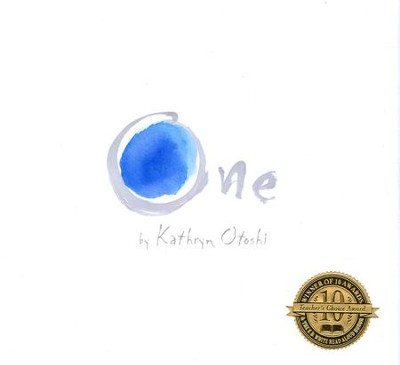
One by Kathryn Otoshi uses colors and numbers to tell the story of finding the courage to stand up for those who are bullied.
Its message to young readers: their voice counts, and sometimes it just takes one to make everyone count.
Otoshi is the author and illustrator and pulls not only from life experiences but her own neurodiversity, as she also identifies as synesthetic. “Blue is a quiet color.” She goes on to explain that Red is a hothead who picks on Blue. The other colors (Yellow, Orange, Green, and Purple) watch it happen. They don't like what Red does, but they fear speaking up. Nobody stands up for Blue until One arrives.
One shows the colors a different way. They can say “No!” Their voices matter. They can stand together.
Importantly, Red isn't villainized forever. The story shows that people who bully can change their behavior when the community sets boundaries and offers a way of redemption. Red learns “Red can be hot and Blue can be cool too.” Perhaps this is a more nuanced approach than most anti-bullying books offer. I appreciate this narrative because it doesn't tell children what they already know: that bullying is wrong. Instead, it shows them the power of bystanders and offers takeaways about courage, respect, and collective action.
The other narrative running through this book is about color and counting and how numbers relate to color for some individuals. Otoshi plays on a rare neurodiversity known as synesthesia. An estimated 1.3% of 6- and 7-year-olds have grapheme-color synesthesia, in which letters and numbers automatically come with their own colors. That is about five children in an average-sized US elementary school.1 Otoshi keeps her illustrations simple. The watercolors are rich yet minimal, and the simple colors transforming into numbers is a nod to her own synesthesia.
The title One has double meaning. It takes one person to start standing up. But the real power comes from many voices joining together. This teaches children both individual courage and communal strength.
For educators and families: This book fits perfectly into character education, life skills development, and anti-bullying curriculum. It works for Pre-K through 2nd grade, though the concepts can resonate with older students too. The book aligns with standards for conflict resolution, emotional intelligence, and friendship skills. At home, it opens conversations about bullying that children might not start on their own.
As an adult who still has the same synesthesia first noticed as a child, I really appreciated how I could talk about this concept with my three children, one of whom also inherited the trait from me. This book belongs in every classroom and home library. It gives children language and courage to address bullying by teaching empathy for both those who are bullied and those who bully. Above all, it shows young readers that their voice counts, and sometimes it just takes one to make everyone count.
One is the first of Kathryn Otoshi’s number books, followed by Zero and Two, which continue exploring themes of self-worth and acceptance.
Tips for Reading Aloud
The simple color shapes on white pages are easy to see from across the rug, so a whole group can follow along.
- Stand up and say “No!” Consider having students stand up and say “No!” when One teaches the colors to speak up. This physical engagement reinforces the lesson.
- Role-play the colors. Have students role-play the different colors.
- Talk about the colors first. Before asking students about their own lives, ask what Blue, Red, or the other colors could have done. Because the characters are colors instead of people, students can talk about bullying without feeling personally threatened or judged.
- Make a poster. Create anti-bullying posters showing how “one” person can make a difference.
- Talk about upstanders. Use the book to start conversations about being an upstander rather than a bystander.
- Decide together. Have small groups agree on what they would say to Red, then share it as one voice. Remind students they don’t have to face bullying alone.
Discussion Questions
- Have you ever felt like Blue?
- What would you say to Red?
- What would you do if you saw someone being picked on?
- Have you seen someone treated like Blue at school or the playground?
- What does it mean to be an upstander rather than a bystander?
The book provides a safe way to explore these questions.
Source
- Simner, J., Harrold, J., Creed, H., Monro, L., & Foulkes, L. (2009). Early detection of markers for synaesthesia in childhood populations. Brain, 132(1), 57–64. Summary from the British Psychological Society