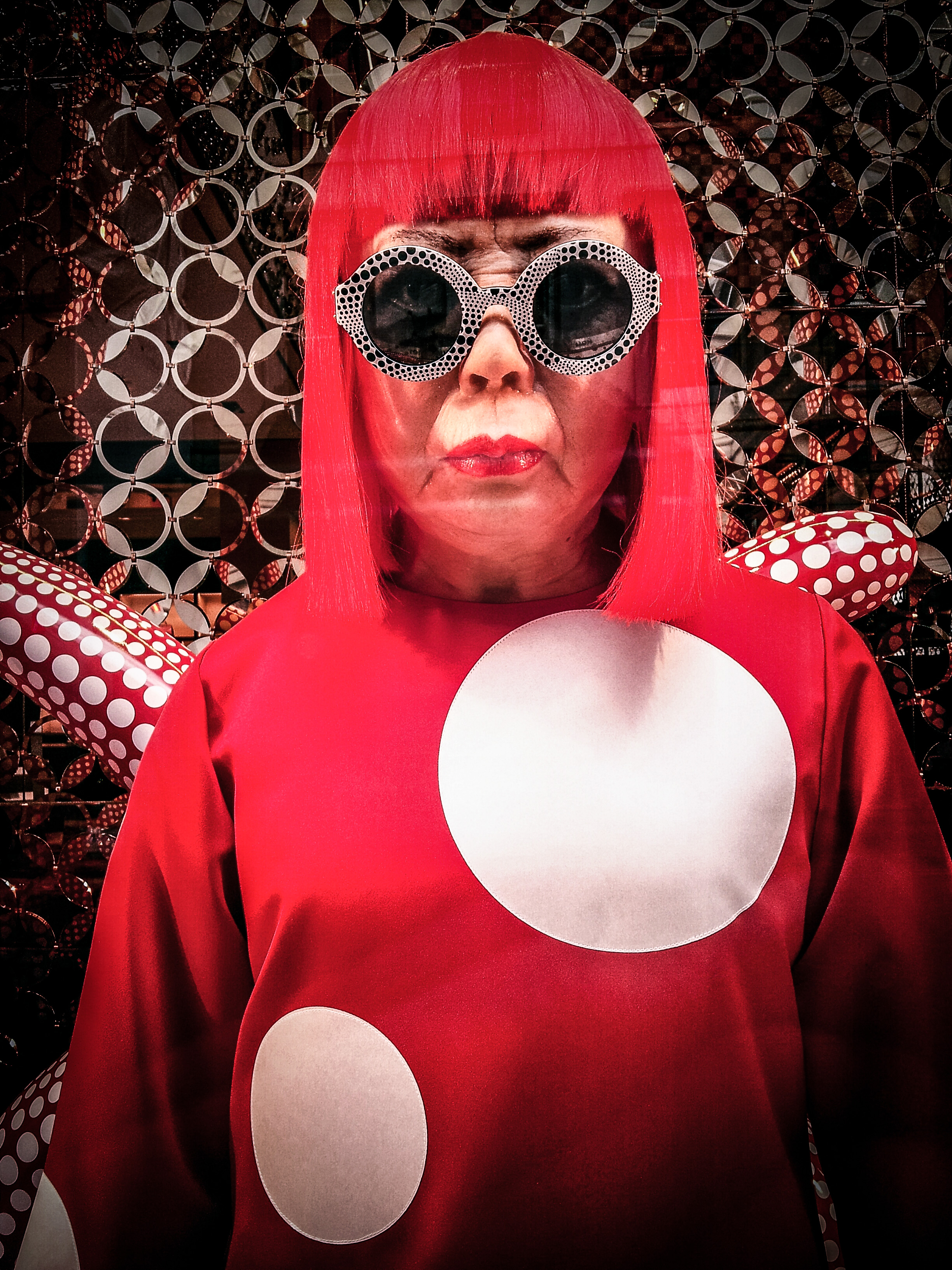
Who Is Yayoi Kusama?
Yayoi Kusama was an artist from Japan who loved polka dots! She was born a long, long time ago, in 1929, and she passed away in 2026 after a long life of making art. Her polka dot art is still loved by people everywhere today!
She painted dots on everything: on pumpkins, on rooms, on herself, even on the people around her! She said dots made her feel happy and safe.
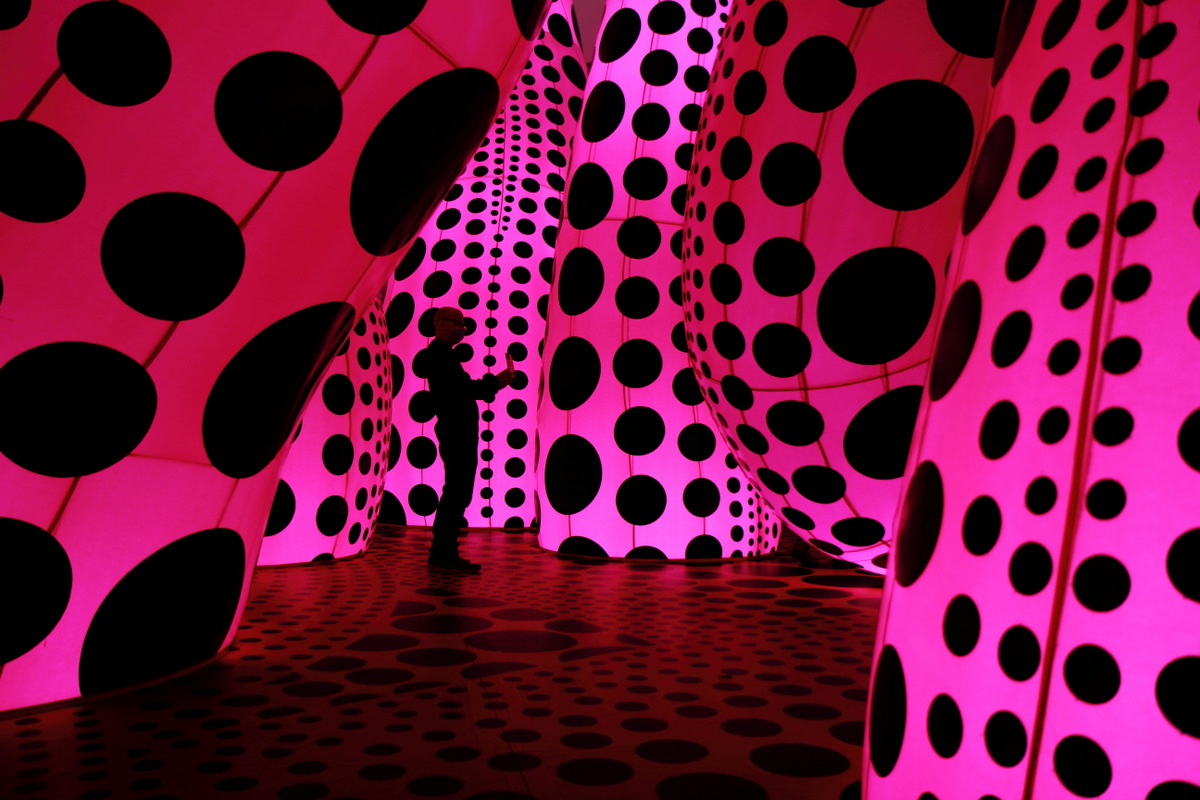
Her most famous rooms are called Infinity Rooms. They are filled with mirrors and lights so it looks like the room goes on forever and ever!
Yayoi Kusama (yah-YOY koo-SAH-mah) was a Japanese artist born on March 22, 1929, in Matsumoto, Japan. She passed away in August 2026 at age 97, after a long and remarkable career. She worked with sculpture, painting, and large installations (rooms you can actually walk inside)!
Her signature style uses repeating polka dots, bright colors, and patterns that spread across every surface. She called this "infinity nets" because her patterns seem to go on without end.
She is remembered as one of the most successful and beloved artists in the world. Her Infinity Mirror Rooms are visited by millions of people every year, and her spotted pumpkin sculptures are recognized worldwide.
Yayoi Kusama (草間 彌生) was born March 22, 1929, in Matsumoto, Japan, and passed away in Tokyo in August 2026 at age 97. She was a contemporary artist who worked across sculpture, painting, installation, performance, video art, fashion, poetry, and fiction, one of the most wide-ranging creative careers in modern art history.
Her work draws from conceptual art, pop art, minimalism, surrealism, and abstract expressionism. It is deeply personal: Kusama spoke openly about experiencing visual and auditory hallucinations from childhood, and used art as a form of therapy and self-expression, a practice she called "art medicine."
Kusama lived and worked in Tokyo, Japan, where she voluntarily resided in a psychiatric institution and walked to her nearby studio every day to create new work, a routine she maintained for decades until her death in August 2026.
Yayoi Kusama (草間彌生, 1929–2026) was a Japanese contemporary artist whose seven-decade career spanned painting, sculpture, installation, performance, film, fashion, and literature, making her one of the most prolific and genre-defying figures in postwar art. She died in Tokyo in August 2026 at age 97.
Kusama's practice sits at the intersection of Japanese avant-garde traditions, American pop art, and the psychedelic and feminist movements of the 1960s, though she consistently resisted classification within any single school. Her recurring visual vocabulary of polka dots, net patterns, and mirrored infinity grew out of the visual and auditory hallucinations she experienced from early childhood; she described the compulsive act of creating art as a form of self-therapy, a practice she called "art medicine."
Kusama spent the final decades of her life working from a studio near the Tokyo psychiatric institution where she voluntarily resided beginning in the 1970s, an arrangement she maintained by choice rather than necessity. She continued producing new work almost daily until shortly before her death.
Her Amazing Art
Yayoi makes many kinds of art. Here are some of her most famous!
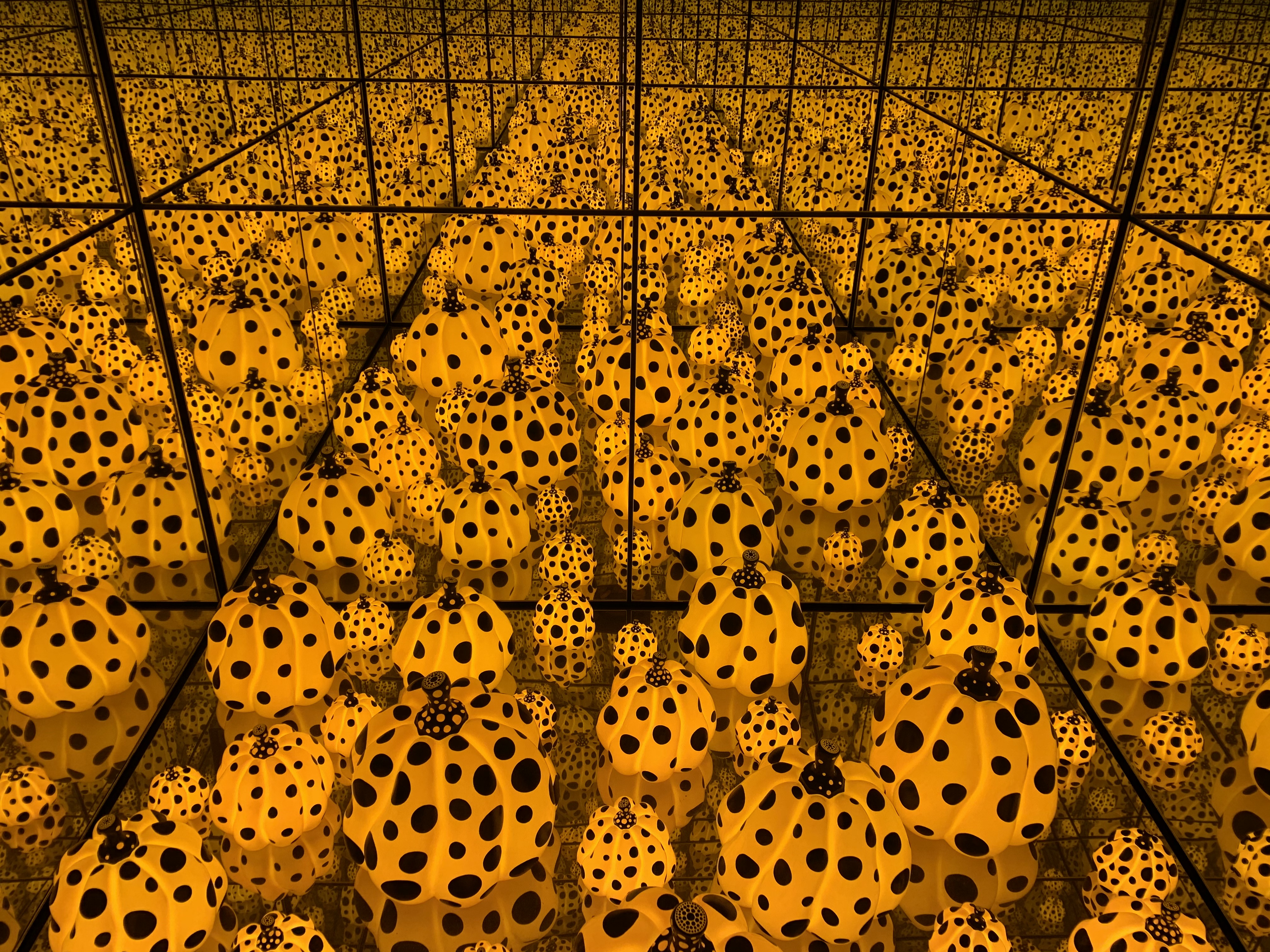
Her giant polka dot pumpkins!
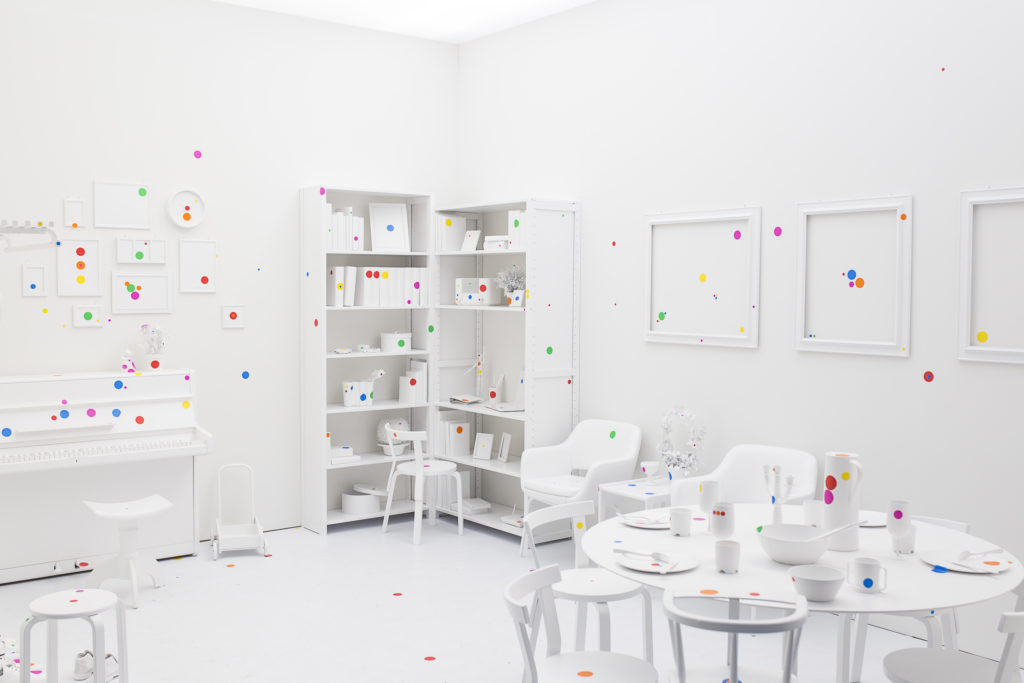
The dot sticker room — visitors add the dots!
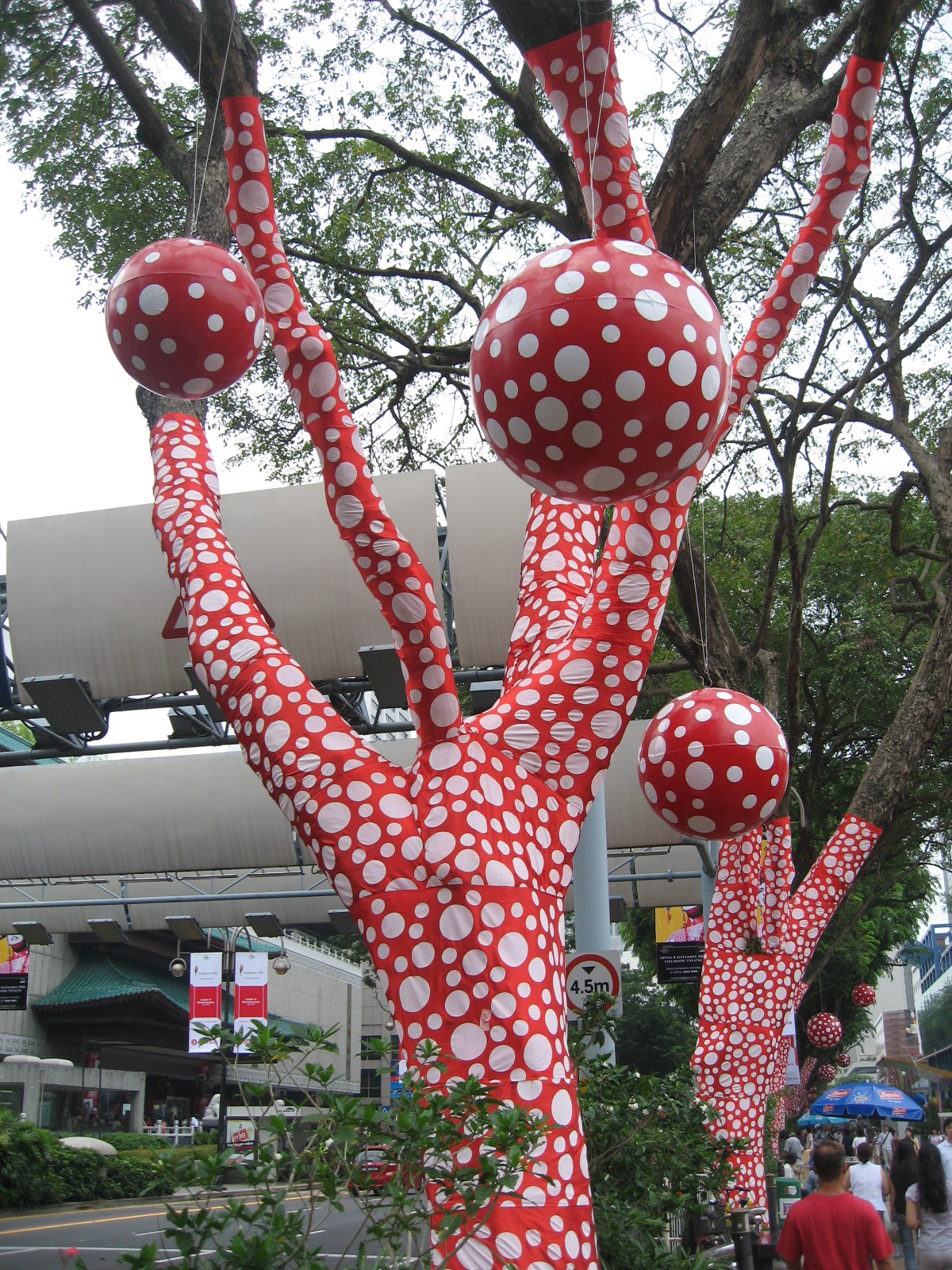
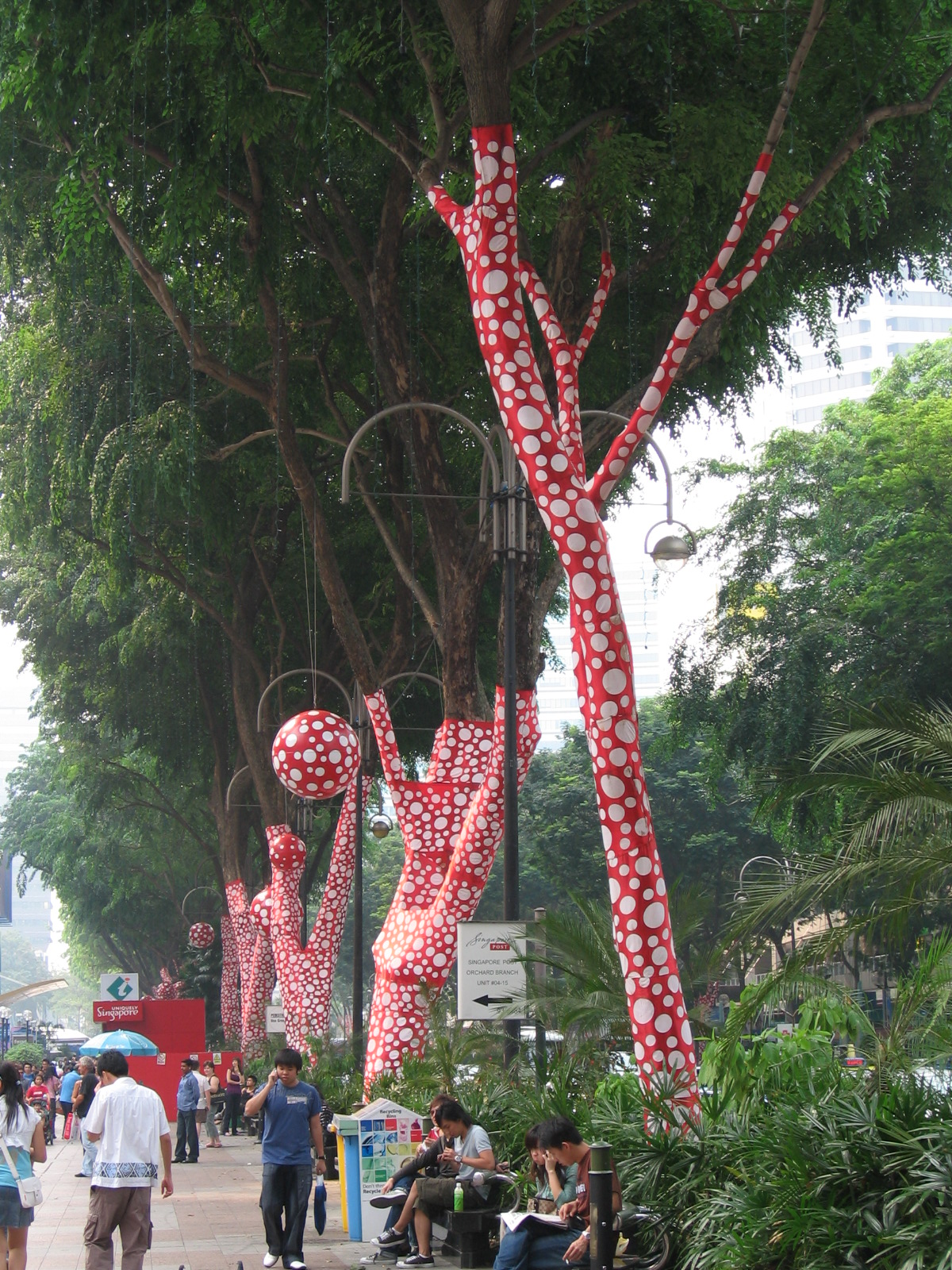
She even puts dots on trees!
Her Obliteration Room is one of the most interactive artworks ever made. A plain white room is set up with all white furniture. Then visitors are handed sheets of colorful dot stickers and invited to place them anywhere they like. Over weeks or months, the room transforms into a riot of color, created by thousands of different people working together!
Her pumpkin sculptures are inspired by the vegetable gardens near where she grew up as a child. She has said pumpkins are "comical and charming," and she has covered them with her signature polka dots in yellow and black.
The Obliteration Room — slowly covered in dots by visitors
Ascension of Polkadots on the Trees — outdoor installation, Inhotim
Kusama's body of work spans over seven decades and defies easy categorization. Several major series define her legacy:
The Obliteration Room — a white domestic space gradually obliterated by visitors' colored dot stickers
The Spirits of the Pumpkins Descended into the Heavens (2015)
Ascension of Polkadots on the Trees — outdoor installation, Inhotim, Brazil
Kusama's body of work resists tidy categorization, but four series anchor both her critical reputation and her commercial legacy.
The Obliteration Room, mid-transformation as visitors add their own dot stickers
Her Story & Challenges
Yayoi grew up in Japan a long time ago. When she was young, she drew pictures of flowers and dots that seemed to float up all around her, and drawing them made her feel better.
She wanted to be a big artist. So she moved all the way to the United States, a new country far from home, to share her art with the world!
Growing up in Japan in the 1930s and 1940s was not easy. Yayoi's family was not always supportive of her dreams of becoming an artist; her mother sometimes tore up her drawings! But Yayoi refused to stop creating.
In 1958, she moved to New York City, which was one of the most exciting art cities in the world. She worked hard and showed her art in galleries, but as a Japanese woman, she often found it difficult to get the same attention as male artists around her.
Today, she is one of the most celebrated artists alive. Museums around the world hold major collections of her work, and her exhibitions draw record-breaking crowds wherever they travel.
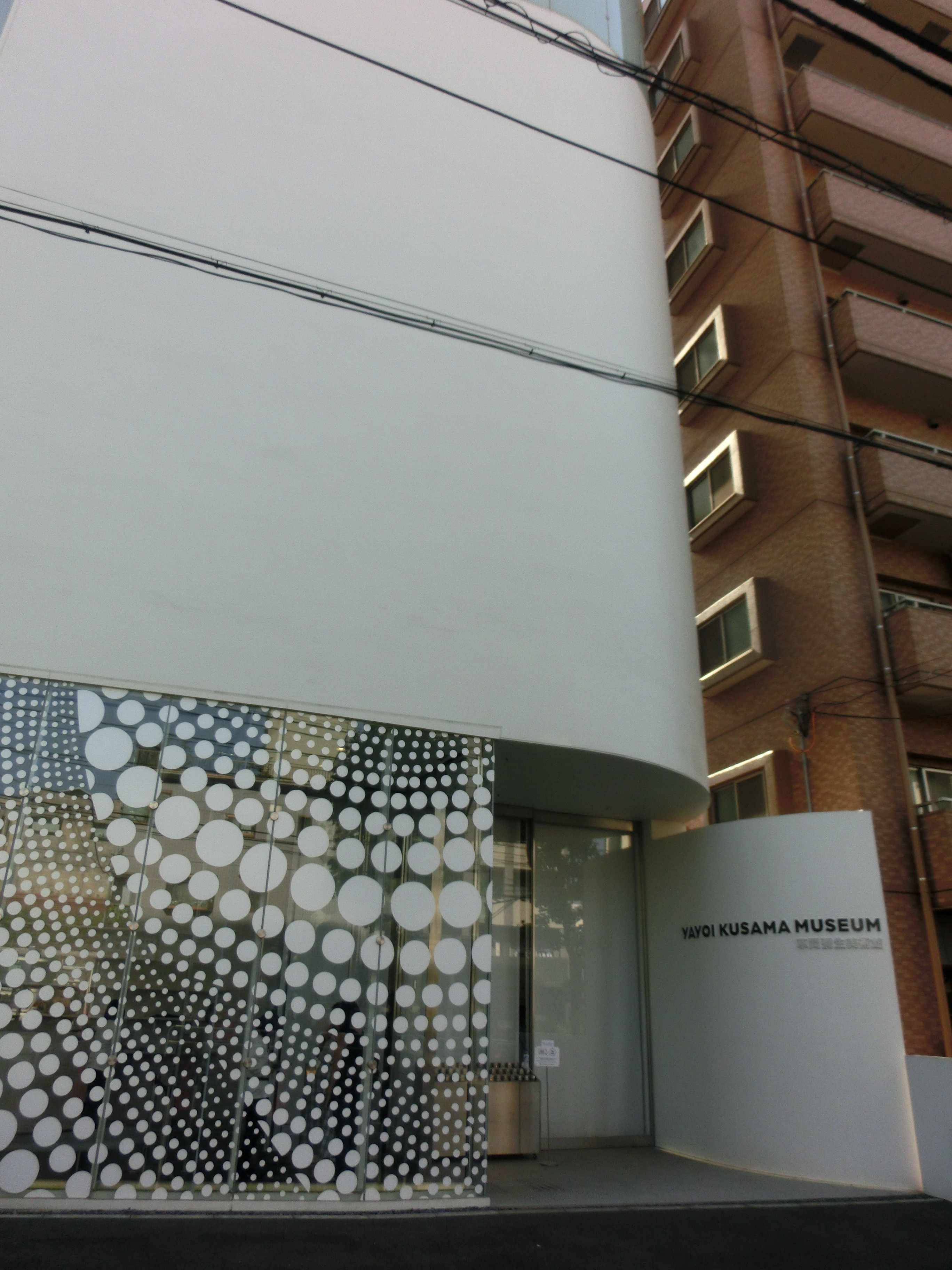
The Yayoi Kusama Museum in Tokyo, which opened in 2017
Kusama's path to recognition was long and shaped by barriers that many women and non-Western artists of her generation faced. She grew up in Matsumoto, Japan, where she began drawing obsessively as a child to process the vivid hallucinations she experienced. After studying in Kyoto, she moved to New York City in 1957 with little money and limited English, determined to make her mark on the art world.
Through the 1960s she created work that was genuinely ahead of its time, building her Infinity Mirror Rooms, organizing public performance events, and developing the ideas around repetition and pattern that would define her legacy. She worked alongside artists like Andy Warhol and Claes Oldenburg and influenced their thinking, yet she consistently received less credit and far less commercial success. By 1973 she had returned to Japan, exhausted, and chose to live in a psychiatric facility in Tokyo, where she has remained ever since, walking to her nearby studio each morning to create.
The turnaround came gradually. Representing Japan at the 1993 Venice Biennale brought renewed international attention, and over the following decades the art world caught up with what she had been doing all along. Today her retrospectives fill museums from Tate Modern to the Whitney, and at 96 she is regarded as one of the most important artists of the past hundred years.
Kusama installation at the Singapore Biennale, 2006
The Yayoi Kusama Museum, Tokyo (opened 2017)
Kusama's path to recognition was long, and it was shaped by barriers that many women and non-Western artists of her generation faced. She grew up in Matsumoto, Japan, in a wealthy but unsupportive family; her mother, who ran the family's plant nursery business, reportedly tore up Kusama's early drawings and opposed her artistic ambitions. Kusama began drawing obsessively as a child, in part to process vivid hallucinations she experienced, and by her late teens she was determined to leave Japan for an art world with room for her ideas.
She arrived in New York in 1957 with little money and limited English, and spent the 1960s producing work that was genuinely ahead of its time: room-sized Infinity Mirror installations, public performance events, and a visual language built on repetition and pattern that would come to define her career. She worked alongside artists including Andy Warhol and Claes Oldenburg and, by most accounts, influenced their thinking, yet she consistently received less credit and far less commercial success than they did during that period. By 1973 she had returned to Japan, exhausted and in declining mental health, and chose to enter a psychiatric facility in Tokyo, walking to her nearby studio each morning to keep creating for the rest of her life.
Her renewed international visibility began with Japan's invitation to represent the country at the 1993 Venice Biennale, one of the art world's most prestigious platforms. Over the following three decades, retrospectives of her work filled major museums worldwide, and by the time of her death in 2026 she was regarded as one of the most important and commercially successful artists of the past century.
Art is a way of expressing my life, and through it I overcome the darkness and limitations. Art gives me hope to keep going.
— Yayoi Kusama
⏱ Her Life in Time
Click any dot to explore a moment in Yayoi Kusama's journey
Select any dot to read about that moment in her life
Vocabulary to Know
Watch & Explore
Look inside one of Yayoi's magical mirror rooms! 🪞
Step inside one of Kusama's Infinity Mirror Rooms and see how her art makes space feel endless.
An introduction to Kusama's work. 1:37
Courtesy of the Whitney Museum of American Art. Excerpts from Kusama: Princess of Polka Dots (dir. Heather Lenz) — Kusama, gallerist Richard Castellone, and Tate Curator Frances Morris discuss her childhood, her move to New York, and the themes of infinity in her work. 15 min.
Courtesy of PBS NewsHour. Visitors line up at the Hirshhorn Museum to step inside Kusama's Infinity Mirror Rooms exhibit.
Courtesy of the Whitney Museum of American Art. Excerpts from Kusama: Princess of Polka Dots (dir. Heather Lenz), in which Kusama, gallerist Richard Castellone, and Tate Curator Frances Morris discuss her childhood, her move to New York, and the themes of infinity in her work. 15 min.
Courtesy of PBS NewsHour. As you watch, consider: what does this segment suggest about why immersive, photogenic installations have become so popular with museum audiences, and whether that popularity changes how the work should be evaluated as art.
Let's Do It!
🎙️ Record your reflection here →
🎙️ Record your oral history here →
🎙️ Record your oral history here →
Talk About It
- What is your favorite color of dot? If you made a Kusama-style painting, what colors would you use?
- If you could walk inside an Infinity Mirror Room, how do you think you would feel? Happy? Surprised? Something else?
- Kusama draws things from her imagination. What does YOUR imagination look like?
- Why do you think Kusama uses dots and repeating patterns in almost all her artwork? What might that say about her ideas?
- The Obliteration Room is made by everyone together. What does that tell us about how art can be a community activity?
- Kusama moved to a country far from home to follow her dream. What would that feel like? Would you do it?
- What makes Kusama's work feel different from other art you've seen?
- Kusama's Wikipedia biography says her work influenced Andy Warhol, yet Warhol is often more famous. What does this tell us about how history records credit for creative ideas?
- How does knowing that Kusama uses art as "therapy" change how you understand her work? Does personal experience belong in art?
- The theme of "infinity" appears throughout her career. What might infinity represent for someone who grew up experiencing intense visual patterns? What might it represent for viewers?
- Kusama's late-career success came decades after her most innovative early work. What factors, beyond talent, determine when and whether an artist gets recognized?
- Kusama described making art as a form of self-therapy for hallucinations she experienced her whole life. Does knowing that change how you interpret her work, and should an artist's personal experience matter when we evaluate art?
- Her Infinity Mirror Rooms have become some of the most-photographed artworks in the world. What responsibility, if any, do museums and artists have when a piece becomes popular mainly because it photographs well for social media?
- Historians disagree about how much credit Kusama deserves for ideas later associated with Andy Warhol and other pop artists. What kind of evidence would you need to settle a debate like that, and is it possible to settle it completely?
- Kusama voluntarily lived in a psychiatric institution for most of her adult life while continuing an internationally successful career. What does her story suggest about the relationship between mental health and creative work, and where do the limits of that comparison lie?
- Now that Kusama has died, her artworks and her legacy will keep being reinterpreted by critics, museums, and the public. Who should have the most say in how an artist's work is remembered after they're gone?
Educator Resources
Standards alignment and classroom support across grade bands.
Georgia GSE Visual Arts — Kindergarten & Grade 1. Standards support Kusama-inspired dot printmaking, color exploration, and connecting an artist's biography to her cultural context.
Georgia GSE Visual Arts — Grades 2 & 3. Standards support printmaking, mixed-media making, color theory, and reading art in its cultural and historical context.
Georgia GSE Visual Arts — Grades 4 & 5. Standards support original art-making with conceptual intent, sculpture and assemblage, critical interpretation, and connecting art to social and political history.
Georgia GSE Visual Arts, Grades 6–8. Standards support original art-making with critical intent, portfolio development and revision through critique, and examining an artist's work within its social, historical, and biographical context.
2–3: RI.2.6 – Identify the main purpose of a text; W.3.1 – Write opinion pieces with reasons and evidence.
4–5: RI.4.3 – Explain events/concepts in a text; RI.5.6 – Analyze multiple accounts of the same topic; W.5.1 – Write opinion/argument essays.
MS+: RI.6.6 – Determine an author's point of view or purpose in a text; RI.7.9 – Analyze how two or more authors writing about the same topic shape their presentations of key information; W.8.1 – Write arguments to support claims with clear reasons and relevant evidence.
Creating (Cr): Students explore and develop artistic ideas, seen in the polka dot painting, pattern-printing, assemblage, and (MS+) original installation-design activities.
Responding (Re): Students analyze and interpret art, as in the discussion questions, the art analysis essay activity, and (MS+) the comparative critique and historiography investigation.
Connecting (Cn): Students relate artistic ideas to personal meaning and external context, connecting Kusama's biography, cultural identity, and mental health to her art choices; MS+ students additionally weigh competing historical evidence about credit and influence.
Presenting (Pr): Students develop identity as artists through sharing and exhibiting their own dot and pattern works; MS+ students curate and present a portfolio piece with a written rationale.
2–3: Written reflection (3–5 sentences) on one of the discussion questions, plus voice recording activity.
4–5: Art analysis paragraph or essay + participation in class discussion on recognition and fairness.
MS+: Comparative critique essay or historiography position paper + installation design proposal with written rationale, assessed against the National Core Arts Responding and Presenting anchor standards.