👤 Who Was Dolly Parton?
Dolly Parton was born in a tiny one room cabin in the mountains of Tennessee on January 19th, 1946. She was the fourth of twelve children. The family did not have much money, but the house was full of singing.
Dolly grew up to write thousands of songs and to sing them all over the world. She also started something that sends free books to children every single month. First we will learn about her songs. Then we will learn about the books.
Dolly Rebecca Parton was born on January 19th, 1946, in a one room cabin in the Great Smoky Mountains of East Tennessee. She was the fourth of twelve children. Her father farmed and took construction work to keep the family fed. Her mother raised the children and filled the house with old ballads, songs that families had carried down through many generations.
Dolly started singing in church when she was six. At seven she played a guitar she made herself, and at eight an uncle gave her a real one. By the time she was ten she was singing on radio and television in Knoxville. One day after she finished high school in 1964, she moved to Nashville to write songs for a living.
Dolly Rebecca Parton was born on January 19th, 1946, in a one room cabin in the Great Smoky Mountains of East Tennessee, the fourth of twelve children. Her father, Robert Lee Parton, worked as a sharecropper and later farmed his own small piece of land, adding construction jobs when the farm did not bring in enough. Her mother, Avie Lee, ran the household and sang the old ballads that families in southern Appalachia had carried with them from the British Isles generations earlier.
Parton described the family as poor. She also wrote, later, about a household that was rich in other ways. Two of her best known songs, "Coat of Many Colors" and "In the Good Old Days (When Times Were Bad)," take that childhood as their subject. She began performing publicly in her grandfather's church at six, appeared on Knoxville radio and television by ten, and recorded her first single at thirteen. In 1964, one day after graduating from Sevier County High School, she moved to Nashville.
Her first success there came as a writer rather than a performer. Other artists recorded her songs and put them on the charts before her own records sold. Over roughly sixty years she wrote more than three thousand songs and sold more than one hundred million records.
Dolly Rebecca Parton was born on January 19th, 1946, in a one room cabin in the Great Smoky Mountains of East Tennessee, the fourth of twelve children. Her father sharecropped, then farmed a small plot, and took construction work when farming did not cover the year. Her mother ran the household and sang the old ballads that families in southern Appalachia had carried over from the British Isles generations earlier. Parton described the family as poor and later built a body of work out of that material rather than away from it.
She moved to Nashville in 1964, one day after graduating from Sevier County High School. Her first success came as a writer for other people. When Monument Records signed her at nineteen, the label marketed her as a pop singer and resisted letting her record country, on the theory that her unusually high soprano did not suit the genre. Only after another artist took one of her compositions to number six on the country chart did the label change position.
That episode is worth holding onto, because it establishes a pattern. Parton spent much of her career being underestimated by people with authority over her work, and much of it quietly arranging matters so that their judgment mattered less.
🎶 The Music She Made
Dolly wrote songs that tell stories. A song might be about a coat, or a butterfly, or a mountain where somebody grew up. When we listen, we can almost see what is happening.
One of her most famous songs is called "Coat of Many Colors." It is about a coat her mother sewed for her out of little scraps of cloth, because there was no money for a new one. Dolly loved that coat.
Dolly Parton became one of the most successful country singers who ever lived. Her songs reached far past country music, though. "I Will Always Love You" and "9 to 5" and "Jolene" are sung by people who have never listened to a country station.
She wrote "9 to 5" for a movie she starred in, and she worked out the rhythm for it by clicking her long fingernails together while she waited on the film set. The song went to number one.
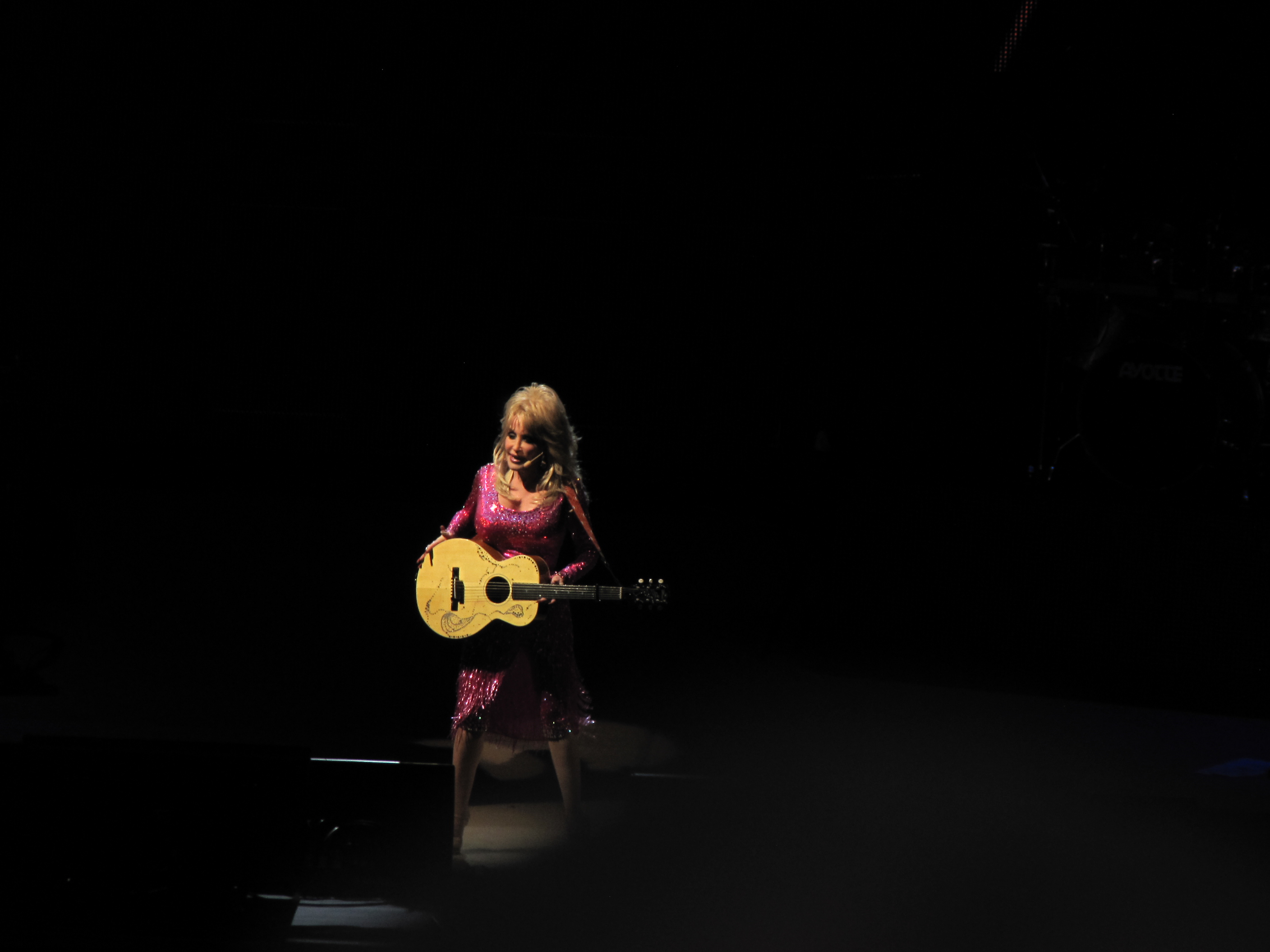
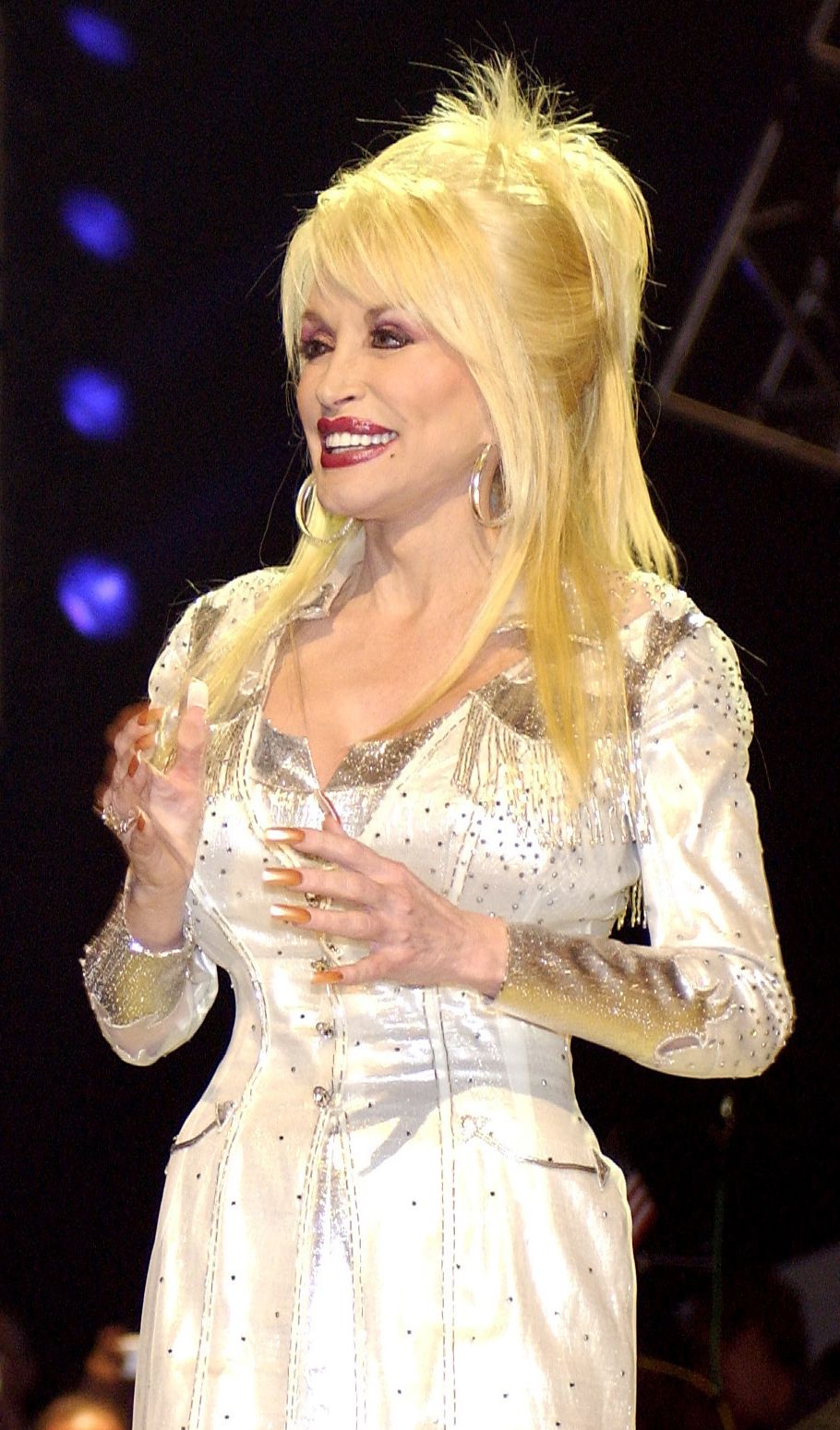
In 1967 the country singer Porter Wagoner introduced a new performer on his weekly television show. The camera found a young woman in a magenta dress with a tall blonde hairstyle, and a career began. Over the following decades Parton became known as the Queen of Country, though the label undersells what she actually drew on.
Lydia Hamessley, a professor of music at Hamilton College who wrote a book about Parton's songwriting and interviewed her for it, found the roots of that music in several places at once: old time Appalachian mountain music, bluegrass, and the gospel hymns of the Pentecostal church Parton grew up in. Hamessley describes Parton's real gift as storytelling, and calls her an artisan as well as an artist, meaning someone who does not stop at the first good idea but keeps working the material.
Parton's own account of her process matches that. She described songwriting as a workshop. A phrase or a scrap of melody would arrive, and then the real labor started.
Lydia Hamessley, a professor of music at Hamilton College who wrote a book on Parton's songwriting and interviewed her for it, locates the music in three overlapping traditions: old time Appalachian mountain music, bluegrass, and the gospel hymns of the Pentecostal church where Parton first sang in public. Hamessley identifies storytelling as the central skill and describes Parton as an artisan as well as an artist, meaning a maker who keeps reworking material rather than settling for the first usable version.
Parton could not read sheet music. She learned by ear, played a range of instruments by ear, and described songwriting as a workshop: a phrase or fragment of melody arrives, and the labor begins after that.
Her commercial history complicates any simple story about authenticity. Beginning around 1976 she pursued pop crossover deliberately. She self-produced New Harvest...First Gathering in 1977 aiming at a pop audience, and when it did not cross over she hired a pop producer for the next record, which became her first million seller. Country audiences at the time debated whether this was a betrayal of the tradition or simply a working musician expanding her reach.
1995
📚 The Imagination Library
Dolly's father never learned to read. Dolly thought about that a lot. She wanted children to have books of their own, right at home, before they even started school.
So in 1995 she started the Imagination Library. Here is how it works. A family signs up a baby. Every month, a free book comes in the mail with that child's name on it. The books keep coming until the child turns five.
Millions and millions of books have been mailed out since then, to children in five different countries.
Dolly Parton's father could not read or write. She founded the Imagination Library in 1995 in his honor. The program mails one free book every month to every child who is signed up, from the time they are born until they turn five. That adds up to about sixty books before a child starts kindergarten.
It began in Sevier County, Tennessee, the county where Dolly grew up. It spread from there. Today the Imagination Library operates in the United States, Canada, the United Kingdom, Australia, and Ireland. In 2025 the program marked its thirtieth year and passed three hundred million books mailed.
Parton founded the Imagination Library in 1995 through the Dollywood Foundation, in honor of her father. The design is simple and has barely changed. A family enrolls a child at birth. Once a month, a free book chosen for that age arrives in the mail, addressed to the child, until the child's fifth birthday. Roughly sixty books, delivered before a child ever sits in a kindergarten classroom.
It started in one Tennessee county and now runs in five countries. By 2025 the program had passed three hundred million books and marked thirty years. It relies on local partners, which can be a school district, a business, a nonprofit, or a single person, to fund and run the program in a given area.
Researchers have studied whether it works. Claire Galea, who leads research at United Way Australia, analyzed data from more than eighty six thousand caregivers across all five countries, which she describes as the largest dataset in the world on shared book reading at home. In Australia, children enrolled in the program were found to be nine times more likely to show interest in books, seventeen times more likely to join in while an adult read aloud, and six times more likely to show early literacy skills, compared with children who were not enrolled.
Parton founded the Imagination Library in 1995 through the Dollywood Foundation, in honor of her father, who could not read or write. The mechanism has not changed since: a child is enrolled at birth, and one age appropriate book arrives in the mail each month, addressed to the child, until the fifth birthday. Roughly sixty books, all before kindergarten.
It scaled from one Tennessee county to five countries. By 2025 the program had passed three hundred million books across thirty years, mailing around 3.4 million per month. The structure is federated rather than centralized: a local partner, which may be a library, a school district, a business, or an individual, funds and operates the program in a given area while the Dollywood Foundation handles selection and logistics.
Claire Galea, Head of Research at United Way Australia, analyzed responses from more than eighty six thousand caregivers across all five countries, which she describes as the largest dataset in the world on shared reading in the home. In Australia, enrolled children were found to be nine times more likely to show interest in books, seventeen times more likely to participate while an adult read aloud, and six times more likely to demonstrate early literacy skills than children who were not enrolled.
Jessie Ricketts, a reading and language researcher at Royal Holloway, is looking further down the road. Children acquire spoken language from being spoken to. Reading is not acquired that way. It has to be taught, and a substantial share of children continue to need that teaching well past age five, including into the teenage years. On her account free books are a genuine beginning that cannot substitute for sustained instruction.
🦋 What She Left Behind
Dolly Parton lived a long life. She was born in 1946 and she died in 2026, when she was eighty years old.
When somebody builds something good, it can keep helping people for a very long time. That is what happened here.
Dolly Parton died on August 25th, 2026, in Nashville, Tennessee. She was eighty years old. People all over the world shared what her music and her books had meant to them.
The Imagination Library kept going. Books still go out in the mail every month. In September of 2026, the Dollywood Foundation announced a day called Give Like Dolly Day on September 25th, asking people everywhere to do something for a child.
Dolly Parton died on August 25th, 2026, in Nashville, at the age of eighty. Tributes came from musicians, librarians, and public figures around the world. The scientific journal Nature published an obituary noting her contributions to public health and literacy, which is an unusual place for a country singer to be remembered.
The Imagination Library continued operating without interruption. In September 2026 the Dollywood Foundation announced Give Like Dolly Day, set for September 25th, encouraging people to support local Imagination Library programs.
This raises a question worth sitting with. A performer's work ends when the performer does, at least in the sense that no new songs get written. An institution is different. The Imagination Library was built so that it does not depend on Parton being alive: local partners fund and run it community by community, and the Dollywood Foundation administers it. Whether that design holds over decades is not yet known.
Parton died on August 25th, 2026, in Nashville, at eighty. The journal Nature published an obituary recognizing her contributions to literacy and public health, an unusual venue for a country musician. The Imagination Library continued mailing books without interruption, and in September the Dollywood Foundation announced Give Like Dolly Day for September 25th.
The continuity was designed rather than lucky. Because funding and operation sit with thousands of local partners, no single death halts the system. That is a deliberate piece of institutional architecture, and it is the main reason the program did not depend on her being alive.
It also raises a question that reasonable people answer differently. Early childhood literacy is something governments could fund directly through schools and libraries. Instead, in much of the English speaking world, a significant share of it runs through a program founded and underwritten by a private individual and sustained by local donors. Supporters argue that private initiative moved faster than any legislature would have, reaches families that public systems miss, and costs taxpayers nothing. Critics argue that a service this basic should not depend on the generosity of a celebrity or the fundraising capacity of a particular county, because that makes access uneven and reversible.
Dolly was born in a one room cabin in Tennessee. She was the fourth of twelve children. Dolly Rebecca Parton was born on January 19th, 1946, in a one room cabin in the Great Smoky Mountains of East Tennessee, the fourth of twelve children in a family with very little money. Born January 19th, 1946, in a one room cabin in the Great Smoky Mountains of East Tennessee. Fourth of twelve children of Avie Lee and Robert Lee Parton. Her father farmed and worked construction; her mother sang the old Appalachian ballads that shaped Dolly's ear. Born January 19th, 1946, in a one room cabin in the Great Smoky Mountains, fourth of twelve children of Avie Lee and Robert Lee Parton. The household combined material poverty with an unusually rich oral and musical inheritance, a combination that supplied her subject matter for six decades.
Dolly made up her first song when she was six. It was about a doll made from a corn cob. At about six years old, Dolly wrote her first song. It was about a doll her mother had made for her from a corn cob, with corn silk for hair. She also began singing in her grandfather's church around this age. Parton wrote her first song at around six, titled "Little Tiny Tasseltop," about a corn cob doll her mother made. Her earliest public performances were in her grandfather's Pentecostal church. She played a homemade guitar at seven and received a real one from an uncle at eight. Wrote her first song at roughly six, "Little Tiny Tasseltop," about a corn cob doll her mother made. Began performing in her grandfather's Pentecostal church at the same age. The gospel idiom she absorbed there remained audible in her phrasing long after she left it.
By the time she was ten, Dolly was singing on the radio and on television. By age ten, Dolly was appearing regularly on a radio and television program in Knoxville, Tennessee. At thirteen she recorded her first single and sang at the Grand Ole Opry. By ten, Parton was a regular on The Cas Walker Show, broadcast on both radio and television in Knoxville. At thirteen she recorded the single "Puppy Love" and appeared at the Grand Ole Opry, where Johnny Cash introduced her and encouraged her to trust her own instincts. A regular on The Cas Walker Show in Knoxville by ten, on radio and television. Recorded "Puppy Love" at thirteen and appeared at the Grand Ole Opry, where Johnny Cash told her to trust her own instincts. She was a working professional before she was a teenager.
The day after she finished high school, Dolly moved to Nashville to write songs. One day after graduating from high school, Dolly moved to Nashville. Her first successes there came from writing songs that other singers recorded. Parton moved to Nashville one day after graduating from Sevier County High School. She signed with a publishing company and, working often with her uncle Bill Owens, wrote charting singles for other artists before her own records found an audience. Moved to Nashville one day after graduating high school. Signed with a publisher and wrote charting singles for other artists, often with her uncle Bill Owens, before her own records sold. Songwriting credit, not performance, was her first form of leverage in the industry.
Dolly started singing on a television show every week. Lots of people saw her. Dolly joined a weekly television program hosted by singer Porter Wagoner, which brought her to a national audience. The same year she released her first full album, Hello, I'm Dolly. Porter Wagoner invited Parton onto his syndicated weekly television show, replacing a popular previous performer. Her debut album Hello, I'm Dolly came out the same year. Wagoner persuaded RCA Victor to sign her, and their duets charted before her solo work did. Joined Porter Wagoner's syndicated television show and released Hello, I'm Dolly. Wagoner got her signed to RCA Victor but also acquired a substantial financial stake, co-producing her records and owning nearly half of the publishing company she had founded. Visibility came bundled with dependency.
Dolly wrote a song about a coat her mother sewed from little scraps of cloth. Dolly released "Coat of Many Colors," a song about a coat her mother sewed for her out of fabric scraps because the family could not afford a new one. It became one of her most loved songs. "Coat of Many Colors" reached number four on the country chart and became her signature song. Like "In the Good Old Days (When Times Were Bad)," it drew directly on her family's poverty, treating it as material for storytelling rather than something to hide. "Coat of Many Colors" reached number four and became her signature song. Together with "In the Good Old Days (When Times Were Bad)," it treats her family's poverty as material for public storytelling rather than something to conceal, a choice that defined her relationship with her audience.
Dolly was in a movie and wrote its song. She made the beat by clicking her fingernails. Dolly starred in her first movie, 9 to 5, and wrote its theme song. She created the song's rhythm by clicking her fingernails together on the film set. It reached number one. Parton's first film role came in 9 to 5, alongside Jane Fonda and Lily Tomlin. She wrote the title song, deriving its beat from clacking her acrylic fingernails backstage. In early 1981 it topped the country, pop, and adult contemporary charts at once, and it was nominated for an Academy Award. Her film debut in 9 to 5, for which she wrote the title song, building its rhythm from the sound of her acrylic fingernails. In early 1981 it topped the country, pop, and adult contemporary charts simultaneously and drew an Academy Award nomination. The film itself addressed workplace discrimination against women.
Dolly built a big park in her home state. It gave lots of people jobs. Dolly opened Dollywood, a theme park in Tennessee, in 1986. It brought jobs to the area where she grew up. Two years later she started the Dollywood Foundation to work on education. Dollywood opened in Pigeon Forge in 1986, bringing employment and tax revenue to a region that had struggled economically. In 1988 Parton founded the Dollywood Foundation, initially aimed at improving educational outcomes in her home county of Sevier County. Dollywood opened in Pigeon Forge in 1986, bringing employment and tax revenue to an economically depressed region. The Dollywood Foundation followed in 1988, focused first on keeping Sevier County students in school. Both preceded the Imagination Library and established the infrastructure it would later run on.
Dolly started mailing free books to children, one every month. Dolly founded the Imagination Library in honor of her father, who never learned to read. It mails one free book a month to each enrolled child from birth until age five. It began in her home county in Tennessee. Parton founded the Imagination Library through the Dollywood Foundation, in honor of her father, who could not read or write. The model has stayed constant since: one age appropriate book mailed monthly to each enrolled child from birth to age five, funded and administered locally, beginning in Sevier County, Tennessee. Founded the Imagination Library through the Dollywood Foundation, in honor of her father, who could not read or write. The federated design, in which local partners fund and operate while the Foundation handles selection and logistics, is what later allowed the program to scale internationally and to survive its founder.
The program mailed its one hundred millionth book. That is a very big number. The Imagination Library gave away its one hundred millionth book. Dolly donated it to the Library of Congress in Washington, D.C. The book was her own picture book version of Coat of Many Colors. Parton donated the program's hundred millionth book, a copy of her picture book Coat of Many Colors, to the Library of Congress. By this point the program had expanded well beyond Tennessee into Canada, the United Kingdom, Australia, and Ireland. Donated the hundred millionth book, her own picture book Coat of Many Colors, to the Library of Congress. By this point the program ran in five countries. Milestone donations of this kind also function as fundraising instruments, generating the publicity that recruits new local partners.
The book program turned thirty years old. The Imagination Library turned thirty years old and passed three hundred million books mailed to children. The program marked its thirtieth anniversary and passed the milestone of three hundred million books distributed. Around 3.4 million books were going out monthly across the five countries where it operates. Thirtieth anniversary and more than three hundred million books distributed, at roughly 3.4 million per month. The same year, research drawing on more than eighty six thousand caregivers across five countries produced the largest dataset in the world on shared reading in the home.
Dolly died in 2026 when she was eighty. The books kept coming in the mail. Dolly Parton died on August 25th, 2026, at age eighty. The Imagination Library kept running, and the Dollywood Foundation announced Give Like Dolly Day on September 25th to honor her. Parton died on August 25th, 2026, in Nashville, at eighty. Tributes came from around the world, including an obituary in the journal Nature recognizing her contributions to literacy and public health. The Imagination Library continued without interruption, and the Dollywood Foundation announced Give Like Dolly Day for September 25th, 2026. Parton died on August 25th, 2026, in Nashville, at eighty. Nature published an obituary citing her contributions to literacy and public health. The Imagination Library continued uninterrupted and the Dollywood Foundation announced Give Like Dolly Day for September 25th, 2026, testing in real time whether the institution could stand without her.
💬 Discussion Questions
- 1Dolly wrote a song about a doll made from a corn cob. What is one small thing in our classroom that we could write a song about, and what would the song say?
- 2Dolly sent books to children she never met and never would meet. Why might a person give a gift to someone they will never meet?
- 3The books come to a child's house in the mail. They do not come to school. Why might Dolly have wanted the books to come to a child's home?
- 1Dolly's family had very little money, and her mother filled the house with old songs. Which of those two things do you think shaped her work more? What in her story makes you think so?
- 2The Imagination Library sends books to every child who signs up, not only to children whose families cannot afford books. What reasons might there be for building it that way?
- 3Dolly built a theme park in 1986 to bring jobs, and a book program in 1995 to bring reading. If a community could only have one, which do you think would help more? What would your answer depend on?
- 1Researchers found that Australian children enrolled in the Imagination Library were far more interested in books than children who were not enrolled. Besides the books themselves, what else might explain that gap?
- 2Jessie Ricketts argues that free books cannot make a strong reader on their own, and that instruction has to continue for years afterward. Does that argument weaken the case for the Imagination Library, strengthen it, or neither?
- 3Parton died in August 2026 and books kept arriving the next month. Using what the guide says about how the Imagination Library is run, explain how that was possible. Then name one thing that could still put the program at risk.
- 1Enrolled Australian children were reported to be nine times more likely to be interested in books than children not enrolled. What would a researcher need to do to establish that the books caused that gap rather than merely accompanying it? What kind of study would settle it?
- 2Indiana withdrew its matching funds in 2025 and the program there had to find another way forward. Does that episode argue for putting early literacy fully under government, fully under private philanthropy, or is the blended model defensible despite the instability? Make the strongest case you can for a position you do not hold.
- 3Parton was offered the Presidential Medal of Freedom three times and turned it down each time. She gave practical reasons for the first two, and later said she worried that accepting would make her look political. What does a public figure gain by staying unaligned, and what does that choice cost or leave undone?