Each of these photographs was taken by a real nature photographer. Look closely — every image tells a scientific story.
Happy Nature Photography Day! Today we are going to look at four real photographs taken by nature photographers. Each picture shows something amazing happening in the natural world. Watch for words that are underlined like this — hover over any underlined word to see what it means.
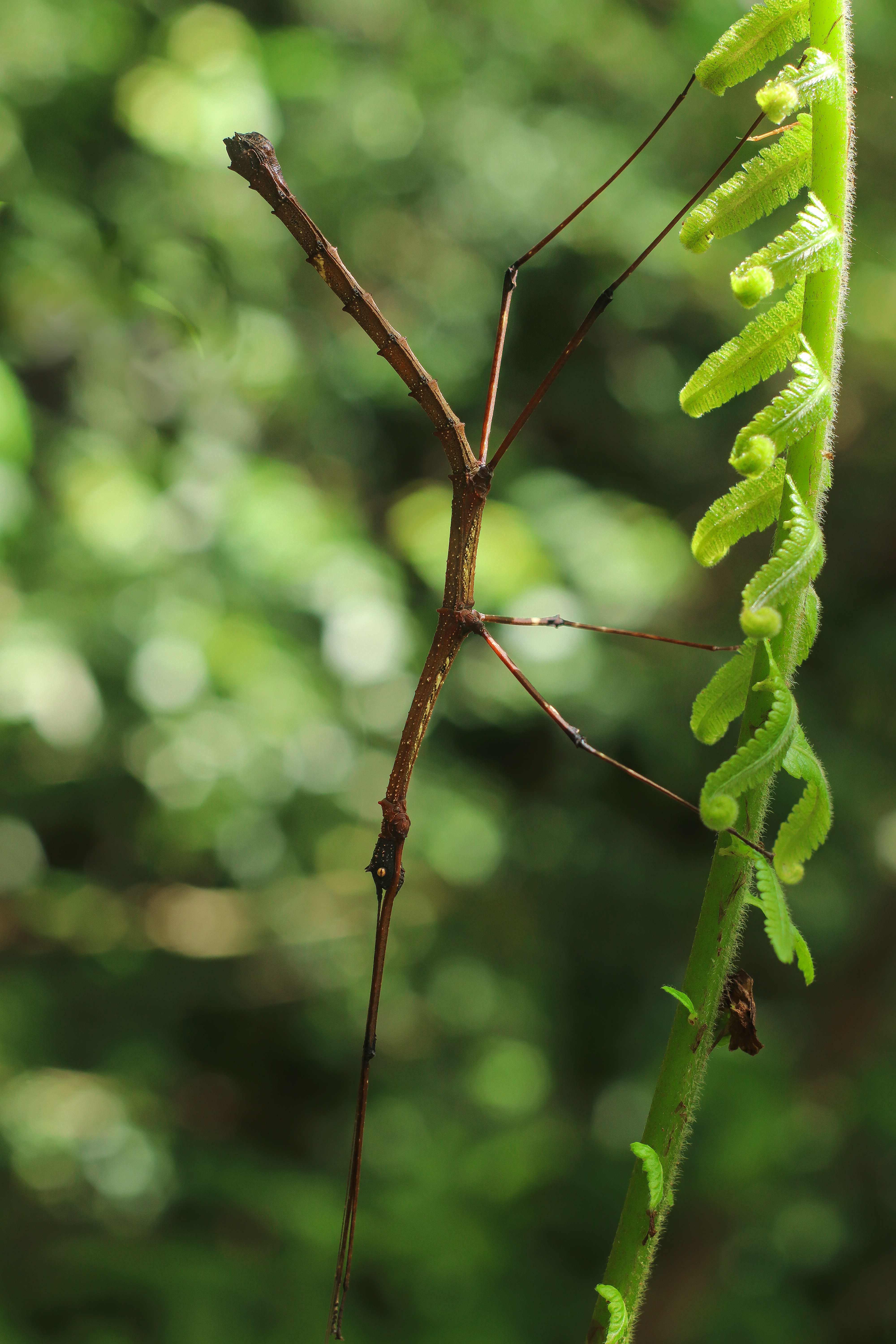
In Photo 1, we see a walking stick insectAn insect whose body looks like a twig or branch hiding on a plant. Its body looks just like a stick! This is called camouflageWhen an animal blends in with its surroundings to hide — the insect's body color and shape help it hide from animals that want to eat it.
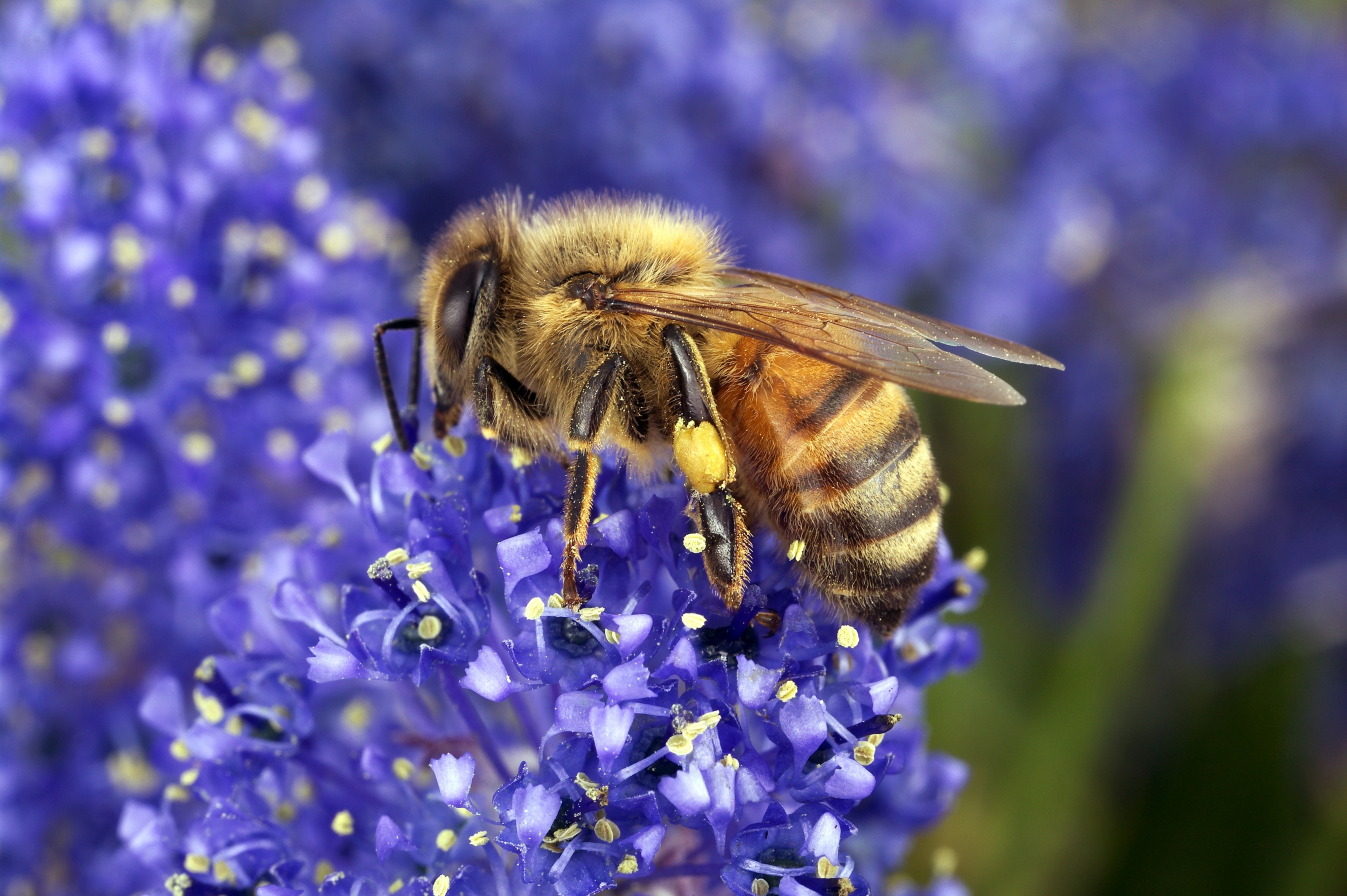
In Photo 2, a honeybeeA bee that makes honey and collects pollen from flowers is visiting a flower. Look closely at its back legs — they are covered in yellow pollenTiny yellow dust made by flowers. The bee drinks from the flower, and the pollen sticks to its body. This helps both the bee and the flower.
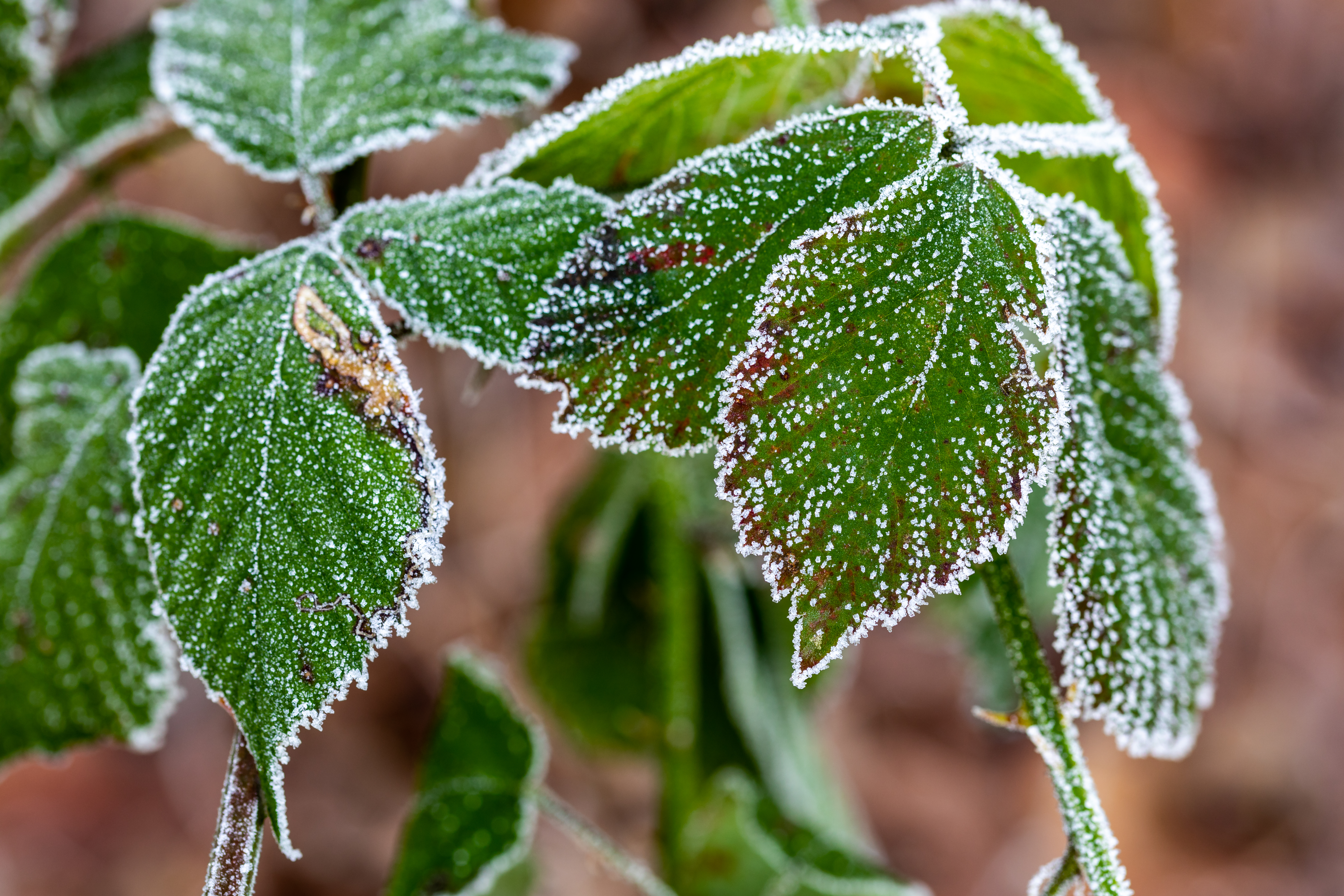
Photo 3 shows something amazing — tiny ice crystalsVery small pieces of ice that form in a pattern covering the edges of leaves. This happens when the air gets very cold at night. Some leaves are still green, and some have turned brown — both are signs of seasonal changeThe way plants and animals change with the seasons.
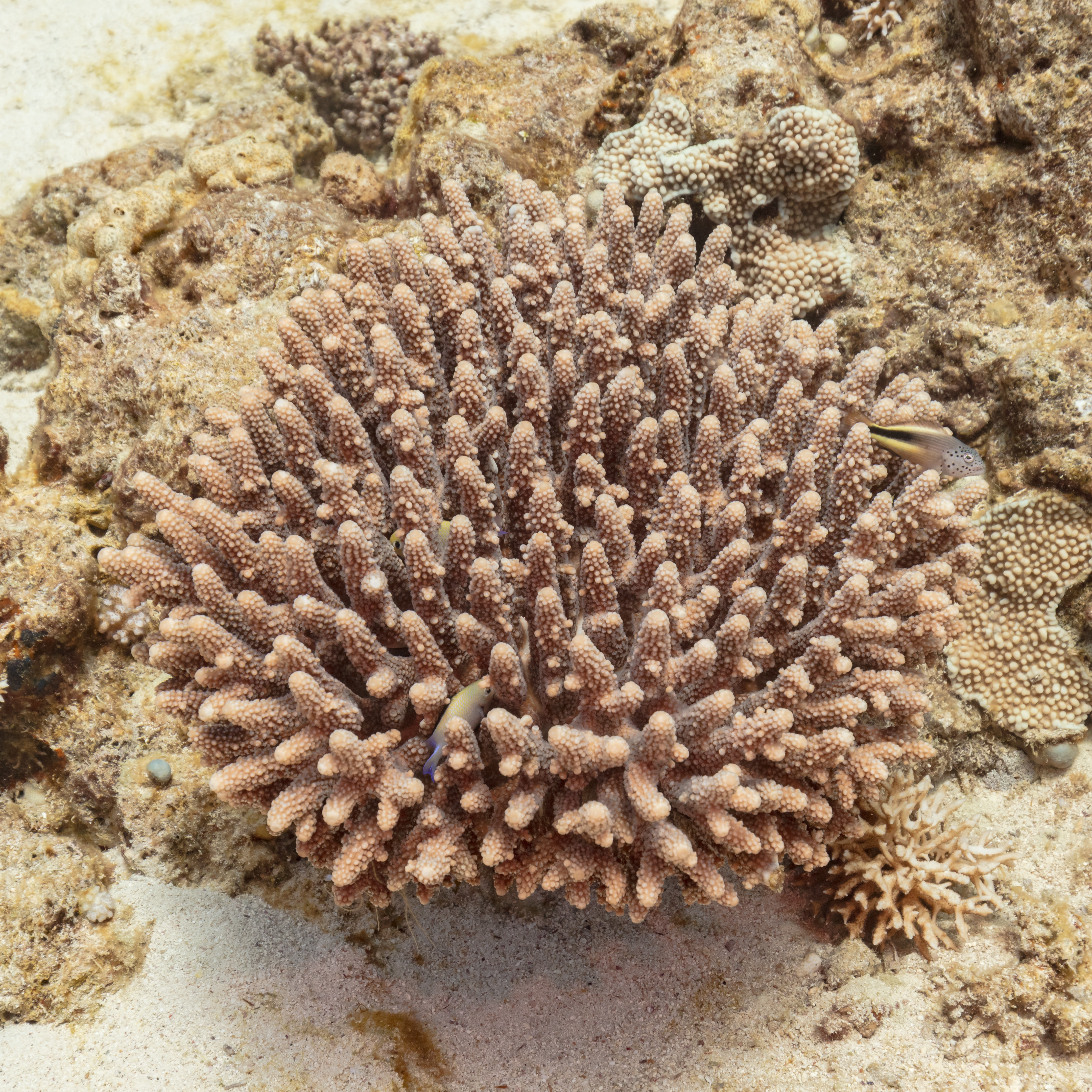
In Photo 4, we see a coral reefA rocky structure underwater made by tiny animals called coral in the ocean. Look very carefully — there are fish hiding in and around the coral! The coral is a habitatThe place where an animal lives and finds what it needs — a home for many ocean animals.
What comes next? After you read this, you'll practice all these vocabulary words with flip cards. Then look at the discussion questions below and talk with your class about what you noticed in the photographs!
Happy Nature Photography Day! The four photographs in this lesson were each chosen because they capture a different scientific idea. A good nature photographer doesn't just take a pretty picture — they wait patiently for the right moment to show something true about the natural world. Today you'll practice reading photographs the same way a scientist would.
Throughout this passage, you'll see words that are underlined. Hover over any underlined word to see its definition pop up. After reading, you'll practice these words with flip cards, then explore the discussion questions with your class.
Photo 1 shows a walking stick insectAn insect of the order Phasmatodea whose body mimics a twig or stem from the Philippines. Its adaptationA body feature or behavior that helps an organism survive in its environment is remarkable — every part of its body has evolved to look like a plant stem. This type of adaptation is called camouflageA color, pattern, or shape that helps an organism blend into its surroundings, and it works as predator defenseAny feature or behavior that helps an animal avoid being eaten.
Photo 2 captures a mutualistic relationshipA relationship between two organisms where both benefit in action. The honeybee gets nectarA sweet liquid made by flowers that bees use to make honey from the flower for food. In return, the bee carries pollenPowdery grains made by flowers that are needed for plants to reproduce from flower to flower. This process, called pollinationThe transfer of pollen between flowers, allowing plants to make seeds, is how the plant reproduces.
Photo 3 is a record of two types of natural processesChanges in nature caused by physical or biological forces, not people happening at the same time. Ice crystals are forming as water vapor freezesChanges from liquid or gas to solid when temperature drops below 32°F (0°C) directly onto cold surfaces. At the same time, the leaves are showing seasonal changeThe predictable changes that happen in living things as seasons shift — some still green, others turning reddish-brown as they prepare for winter.
Photo 4 shows an Acropora coralA branching coral species found in shallow tropical seas that serves as a habitatThe natural environment where an organism lives and finds food, shelter, and water for multiple species. Hidden in the frame are a blackside hawkfish and two yellow chromis fish. This coral is listed as vulnerableAt risk of becoming endangered if conditions continue to worsen on the IUCN Red List, meaning its population is declining.
Ready to explore? Practice the vocabulary words with flip cards, then use the discussion questions to dig deeper into what these photographs reveal about the living world.
Happy Nature Photography Day. The four photographs in this lesson are not decorative — each one documents a specific biological or ecological concept. Nature photography at its best is a form of scientific observation: it freezes a moment that reveals something true about how organisms survive, interact, and change. Your job today is to read these photographs as evidence.
Throughout this passage, underlined terms are hoverable — move your cursor over any underlined word to reveal its definition. After reading, reinforce these terms with flip card practice, then engage with the discussion questions using the photographs as your primary source.
Photo 1 documents crypsisThe ability of an organism to avoid detection through camouflage, mimicry, or behavior in Mithrenes panayensis, a walking stick insect found only in specific Philippine forests. Its body shape, color, and surface texture are the result of natural selectionThe process by which organisms with traits better suited to their environment survive and reproduce — over many generations, individuals that looked most like plant stems survived longer because predatorsOrganisms that hunt and eat other organisms failed to detect them. This is a precise example of morphological adaptationA structural or physical feature of an organism shaped by evolution for survival.
Photo 2 captures a moment of mutualismA symbiotic relationship in which both organisms benefit. The honeybee collects nectarA sugar-rich liquid produced by flowers to attract pollinators as food, while pollenMale gametophytes produced by flowering plants, needed for fertilization adheres to its body and is transported to the next flower it visits. The yellow structures visible on the bee's hind legs are called corbiculaeSpecialized pollen-carrying structures (pollen baskets) on the hind legs of bees, or pollen baskets — an anatomical adaptation for pollen collection. This single interaction, multiplied across billions of visits annually, drives the pollinationThe transfer of pollen to a flower's stigma, enabling fertilization and seed production of most flowering plant species on Earth.
Photo 3 captures two simultaneous natural processes. Frost formationThe direct deposition of ice crystals from water vapor onto a surface below freezing (technically called deposition) occurs when air temperature drops rapidly. Simultaneously, the blackberry leaves display senescenceThe biological aging and breakdown process in plant leaves as they prepare to drop — the green chlorophyll breaks down as the plant withdraws nutrients before winter, revealing underlying pigments. Both processes are responses to the same environmental trigger: temperature drop.
Photo 4 documents an Acropora hemprichiiA branching coral species found in shallow Indo-Pacific reefs, listed as Vulnerable on the IUCN Red List colony in the Red Sea. Three species share this single frame — the coral, a blackside hawkfish, and two yellow chromis — illustrating the concept of a microhabitatA small, specialized environment within a larger habitat that meets specific needs of certain organisms. The coral's IUCN Vulnerable status reflects the threat of coral bleachingA stress response in which coral expels its symbiotic algae, turning white and risking death driven by ocean warming — meaning every organism dependent on this colony is also at risk.
Your investigation begins now. Master the vocabulary, then use the discussion questions to analyze each photograph as scientific evidence. Consider what each image reveals about adaptation, interdependence, change, and habitat — and what each implies about conservation.
About the Vocabulary Progression: K–1 terms are concrete and observable (camouflage, pollen, habitat, ice crystals). Grades 2–3 add process and relationship language (adaptation, mutualism, pollination, seasonal change). Grades 4–5 introduce precise scientific terminology (crypsis, morphological adaptation, corbiculae, senescence, microhabitat, coral bleaching).
Click any card to flip it and see the definition.
12 terms • Focus: observable features, animal needs, and basic natural processes
When an animal blends in with its surroundings to hide from other animals.
A small animal with six legs and three body parts. Bees and walking sticks are insects.
Tiny yellow dust made by flowers. Bees carry it from flower to flower.
A sweet liquid inside flowers that bees drink for food.
The place where an animal lives and finds what it needs to survive.
A rocky underwater structure made by tiny animals. Many fish live there.
Very tiny pieces of ice that form beautiful patterns in cold weather.
One of the four times of year: spring, summer, fall, and winter. Each season brings different weather.
An animal that hunts and eats other animals.
To look at something carefully and notice details.
Any living thing, such as a plant, animal, or insect.
A person who takes photographs of plants, animals, and wild places.
12 terms • Focus: adaptation, ecological relationships, and natural processes
A body feature or behavior that helps an organism survive in its environment.
A color, pattern, or shape that helps an organism blend into its surroundings and avoid detection.
The transfer of pollen between flowers, allowing plants to make seeds and reproduce.
A relationship between two organisms where both benefit. The bee gets food; the flower gets pollinated.
Any feature or behavior that helps an animal avoid being eaten by a predator.
The predictable changes that happen in living things as seasons shift, such as leaves changing color in fall.
The natural environment where an organism lives and finds food, shelter, and water.
A group of organisms that share the same characteristics and can reproduce together.
A conservation status meaning a species is at risk of becoming endangered if conditions continue to worsen.
A change in nature caused by physical or biological forces, not people — such as freezing, growth, or decomposition.
All the living things in an area and the non-living things (water, soil, sunlight) they depend on.
Information gathered using the senses or tools, used as evidence in scientific thinking.
12 terms • Focus: precise biological and ecological terminology
The ability of an organism to avoid detection through camouflage, mimicry, or behavior — a survival strategy shaped by natural selection.
The process by which organisms with traits better suited to their environment survive and reproduce more successfully over generations.
A structural or physical feature of an organism that has been shaped by evolution to improve survival or reproduction.
A symbiotic relationship in which both organisms benefit. The bee-flower relationship is a classic example.
Specialized pollen-carrying structures on the hind legs of honeybees, also called pollen baskets — an anatomical adaptation for collection.
The biological aging and breakdown process in plant leaves as they prepare to drop, caused by chlorophyll breakdown as nutrients are withdrawn.
The direct deposition of ice crystals from water vapor onto a surface below freezing — a physical process, not liquid water freezing.
A small, specialized environment within a larger habitat that meets specific needs of certain organisms — such as a coral colony within a reef.
A stress response in which coral expels its symbiotic algae due to warming water, turning white and risking death.
The world's most comprehensive inventory of the conservation status of species, used by scientists and policymakers globally.
The variety of living species in an area. High biodiversity generally means a healthier, more resilient ecosystem.
Observations or data used to support or refute a scientific claim. In this lesson, each photograph is a piece of evidence.
Tap any card to reveal key concepts and a teacher's note.
The insect blends in with the plant stems. Its body is long, thin, and brown — just like a stick or twig.
Give students time to look before pointing it out. The discovery moment is valuable. Ask: "How long did it take you to find it?"
The insect is long, thin, and brown like a twig. If a bird or lizard can't see it, it won't eat it.
Introduce the word "camouflage" here. Ask if students have ever worn green or brown clothes to blend in.
Many animals use camouflage: frogs on leaves, lizards on bark, deer in tall grass, moths on tree trunks.
Accept all answers. This builds the idea that camouflage is widespread — not just in insects.
A bee and a flower (plant). Both are living things with different needs.
Confirm that students recognize both as living things before moving forward to the relationship.
Yellow powder (pollen) is stuck to the bee's legs. The bee collects this as it visits flowers.
Point to the legs on the projected image. This is the scientific heart of the photo — the most important thing for students to notice.
The bee came for nectar — a sweet liquid bees use to make honey. It also collects pollen as food for young bees.
Students often say "honey." Redirect: nectar is what the bee collects; honey is what bees make from it back at the hive.
Tiny ice crystals cover the edges and surfaces of the leaves. This is called frost.
Students may say "snow." Both are close — introduce the word frost and connect it to frosty mornings they may have experienced.
Winter — the ice, the brownish-red leaf colors, and the cold appearance of the light are all clues.
Encourage students to name specific things they see as evidence, not just "it looks cold." Early practice in evidence-based reasoning.
Ice forms when water gets cold enough to freeze. It can appear on puddles, windshields, leaves, and grass.
If your school is in a warmer climate, ask what students think frost would feel like to touch.
A fish (hawkfish) sits in the top right corner. Two small yellow fish (chromis) are hiding inside the coral branches.
Point directly to each location on the projected image. This discovery mirrors the walking stick insect — use that connection.
The coral provides hiding places from bigger fish. It is their home and shelter — their habitat.
Connect to habitat — the coral provides what the fish needs (shelter, safety). Ask: what else might animals need from their habitat?
The fish would lose their home and hiding place. They would have to find somewhere else to live, or they might not survive.
This introduces habitat loss without the term. Validate answers that show cause-and-effect understanding.
Its twig-like shape makes it nearly invisible to predators among plant stems. This camouflage is a survival adaptation.
Push students to name the adaptation (camouflage) and the mechanism (predator avoidance), not just describe how it looks.
A bright red insect would stand out against green and brown plants, making it easy for predators to spot and eat.
This counterfactual builds understanding of why the adaptation matters — color change leads to detection, detection leads to predation.
Six legs, a head, antennae, and body segments. Insects have three body parts: head, thorax, and abdomen.
Reinforces insect anatomy and the value of close observation. Good scientists look past first impressions.
The bee gets nectar (food). The flower gets its pollen carried to another flower, helping it reproduce. Both benefit — this is mutualism.
Students often name only one direction. Press them to name both. Introduce "mutualism" here if not yet used.
Many flowering plants would struggle to reproduce. Fewer plants would mean less food for many other animals too.
Extend by asking: what foods do we eat that depend on bee pollination? (apples, almonds, blueberries, cucumbers)
As the bee crawls into the flower to reach nectar, pollen sticks to its fuzzy body and legs. Bees also actively pack pollen into their pollen baskets on their hind legs.
Have students point to the pollen baskets on the projected image before explaining the mechanism.
The temperature had to drop below freezing (32°F / 0°C). Water vapor in the air turned directly into ice crystals on the cold leaf surfaces.
Students may think the leaves were wet first. Clarify: frost forms when water vapor (gas) freezes directly — it doesn't start as liquid water.
The reddish-brown leaves are aging and preparing to drop. Green leaves still have chlorophyll. This is late fall or early winter — two changes happening at once.
Students who notice both the frost and the leaf aging deserve recognition — they spotted the dual-change story in the photo.
The ice crystals will melt as temperature rises. The leaves will look wet, then dry. The crystal pattern will be gone.
Builds understanding of reversible physical change. The frost melts; the leaf color change is not reversible — a good contrast if time allows.
Three: the Acropora coral, a blackside hawkfish (top right), and two yellow chromis fish (inside the branches).
Point to each species on the projected image. Clarify species vs. individual — the two chromis are one species.
Shelter, hiding places from predators, and a place to live. The coral is a habitat that provides what these fish need.
Ask which of the fish's needs the coral directly provides, and which might come from elsewhere in the reef ecosystem.
Coral grows very slowly — a few centimeters per year. A colony this large likely took many decades to reach this size.
This sets up conservation significance: if this coral dies, it cannot be quickly replaced. The loss is long-term.
Visual predators rely on sight to detect prey. Crypsis — the insect's twig mimicry in shape, color, and texture — defeats that detection system. Predators that cannot distinguish the insect from a stem will not attempt to eat it.
Strong answers name the predator type (visual), the detection mechanism (sight), and how the adaptation defeats it. Push beyond "it hides."
The insect evolved alongside the specific plant species in those forests. Its camouflage is tuned to that exact environment — it would be far less effective elsewhere.
Connects adaptation to geographic isolation. A highly specialized organism is also highly vulnerable if its specific habitat is lost.
Deforestation removing host plants; introduction of predators that hunt by smell or sound rather than sight; a shift in the plant community that changes dominant colors or textures.
The adaptation is only as good as the environment it evolved in. Accept multiple well-reasoned answers.
The bee gains nectar (energy) and pollen (protein for larvae). The flower gains a pollen vector — the bee carries its pollen to the next flower, enabling fertilization and seed production. Both benefit; neither is harmed.
Students should use "mutualism" and distinguish it from parasitism (one benefits, one is harmed) and commensalism (one benefits, one unaffected).
Corbiculae are specialized anatomical structures for carrying pollen back to the hive — not incidental collection. The bee is an active, evolved participant. Pollen is also protein food for larvae, so the bee's role extends to supporting the next generation.
Elevates the discussion from "bees help flowers" to the bee as an organism with evolved anatomy shaped by this relationship over millions of years.
Roughly 75% of flowering plant species depend on animal pollinators. A major decline would reduce seed production, shrink plant populations, reduce food for animals that eat those plants, and cascade through food webs. Agricultural crops would also be severely affected.
Colony collapse disorder is real and ongoing. Encourage students to identify cascade effects — not just "fewer plants" — as evidence of systems thinking.
The surface temperature was at or below 32°F (0°C) and the dew point was also at or below freezing. Water vapor deposited directly as ice (deposition) rather than condensing as liquid first. This happens on clear, calm nights when surfaces cool rapidly.
Help students distinguish deposition (gas to solid) from freezing (liquid to solid) — two different physical processes producing similar-looking results.
(1) Frost formation — caused by air temperature dropping below freezing. (2) Senescence — caused by shortening day length triggering chlorophyll breakdown and nutrient withdrawal before winter dormancy. Both respond to the same seasonal shift but are different in nature: one physical, one biological.
Full marks for students who name both, identify their causes, and note they are different types of processes (physical vs. biological).
Insects on or in the leaves may die or go dormant. Frost can damage leaf cell walls, accelerating decomposition and nutrient release into the soil. Animals that feed on these plants or insects temporarily lose a food source.
Encourage students to think about what is happening beyond the frame — in the soil, in the air, in nearby animal behavior. Good scientific thinking moves past the visible.
The yellow chromis likely use the coral as shelter (commensalism or mutualism). The hawkfish is a predator that perches on coral to ambush prey — it may prey on the chromis (predation). The coral provides the microhabitat that enables all other relationships.
Accept reasoned speculation. What matters is applying correct terminology (mutualism, commensalism, predation) with reasoning, not just labels.
Threats: ocean warming causing bleaching; acidification weakening skeletons; sedimentation from coastal development; destructive fishing. Cascades: loss of microhabitat displaces dependent species; reduced reef complexity reduces biodiversity; loss of reef structure removes coastal storm protection.
Full credit for students who name at least two threats with mechanisms and at least two cascade effects beyond the coral itself.
A limited range means no other populations serve as refuges if local conditions deteriorate. The species cannot migrate or be replenished from elsewhere. A single catastrophic event could eliminate a large proportion of the global population.
Connect to the walking stick insect question — both species are highly specialized to a specific region and face elevated extinction risk as a result.
New York adopted the Next Generation Science Standards. The standards below use the same codes as the NGSS tab.
New Jersey adopted NGSS as the New Jersey Student Learning Standards for Science. The standards below use the same codes as the NGSS tab.