
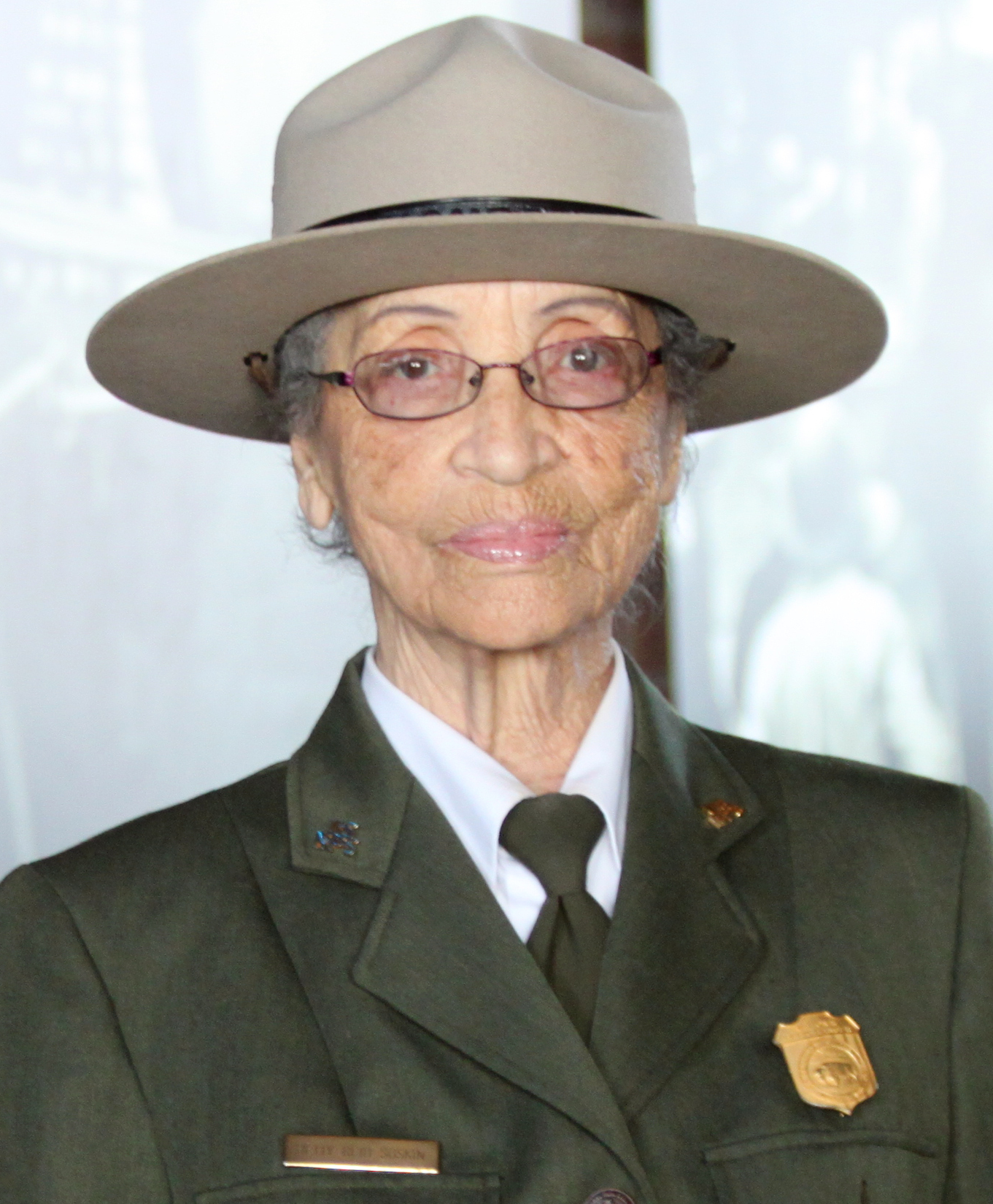
👤 Who Is Betty Reid Soskin?
Betty Reid Soskin was a songwriter, a music store owner, and a park ranger — all in one extraordinary life! She and her husband opened a music store called Reid's Records in Berkeley, California, that sold gospel music for over seventy years. She also wrote her own songs, though she kept them tucked in a box for a long time before anyone heard them.
Betty was born in 1921 and lived to be 104 years old. She saw so many changes in the world during her long life. She believed that everyone's story matters — and she spent her life making sure people heard stories that might otherwise be forgotten.
Betty Reid Soskin was a songwriter, music store co-founder, civil rights advocate, and National Park Service ranger whose life spanned more than a century. She was born on September 22, 1921, in Detroit, Michigan, into a Cajun-Creole family with deep roots in Louisiana, and passed away on December 21, 2025, at the age of 104. In 1945, she and her husband Mel co-founded Reid's Records in Berkeley, California — one of the first Black-owned music stores in the state, specializing in gospel music. She also wrote songs throughout her life, keeping them in a box for forty years before a filmmaker discovered them.
Betty grew up in Oakland, California, after her family was forced to leave New Orleans in 1927 when flooding devastated their neighborhood. Her family was part of the Great Migration — the movement of Black families from the South who traveled north and west to build new lives. She went on to live through some of the most significant moments in American history — as a witness, a participant, and eventually a storyteller.
Betty Reid Soskin was a songwriter, music entrepreneur, National Park Service ranger, civil rights advocate, and historian whose life spanned more than a century of American history. Born Betty Charbonnet on September 22, 1921, in Detroit, Michigan, she came from a Cajun-Creole family with roots in Louisiana. Her great-grandmother had been born into slavery in 1846. When the city of New Orleans deliberately bombed the levees of working-class and Black neighborhoods in 1927 to protect wealthier areas, Betty's family lost their home and relocated to Oakland, California. She passed away on December 21, 2025, at the age of 104.
Music ran through her entire life. In 1945, she and her husband Mel Reid co-founded Reid's Records in Berkeley — one of California's first Black-owned music stores — which operated for 74 years. She also wrote songs during the civil rights movement of the 1960s, and composed others about her own experiences that she stored away for forty years. Those hidden songs were rediscovered by a filmmaker and became the basis of the documentary and stage musical both titled Sign My Name to Freedom. Her path to becoming a park ranger at 85 wound through that music store, a segregated WWII union hall, community activism, and two decades as a legislative field representative.
🎵 Reid's Records & The Songs She Kept
Betty had a secret she kept for a long time — she was a songwriter! She wrote songs about her life, but she tucked them away in a box for forty years. When a filmmaker discovered them, Betty's songs became part of a movie about her life.
Betty also co-founded a music store called Reid's Records in Berkeley, California, when she was just 24 years old. It was one of the first Black-owned record stores in California, and it sold gospel music for many years. Betty's life was always full of music.
Before she was a park ranger, Betty and her then-husband Mel Reid opened Reid's Records in Berkeley, California, in 1945 — one of the first Black-owned music stores in the state. The store specialized in gospel music and stayed open for over seventy years, finally closing in 2019. Betty also wrote songs throughout her life, though she kept them tucked away in a box for decades. A filmmaker discovered them while making a documentary about her life, and they became the soundtrack for the film.
In 2018, Betty published her memoir, Sign My Name to Freedom, based on her personal blog. The book tells the story of her remarkable life — from New Orleans to Oakland, from a WWII union hall to a national park ranger uniform. A stage musical based on her life, also called Sign My Name to Freedom, premiered in San Francisco in 2024. Betty died on December 21, 2025, at the age of 104, having outlived almost everyone who had shared her world.
Betty's creative life ran parallel to her public life for decades. In 1945, she and her husband Mel Reid founded Reid's Records in Berkeley, one of the first Black-owned music stores in California and a community institution specializing in gospel music. The store operated for over seventy years before closing in 2019. Less publicly known is that Betty was a songwriter — she wrote songs about her experiences and emotions, then stored them in a box for forty years. They were rediscovered by a filmmaker making a documentary about her, and became the basis of Sign My Name to Freedom, a film about the songs and the life behind them.
In 2018, Betty published a memoir of the same title, drawn from her blog, documenting her century of lived experience. She had also converted to Unitarianism and became active in the civil rights movement in the 1960s, writing songs that circulated in that context. In her later life, she described going through a period of personal and emotional breakdown in her forties, during which singing was her way back to herself. "I could sing things that I couldn't say," she reflected. "But when I sang them, they were acceptable."
Betty died at her home in Richmond, California, on December 21, 2025, at the age of 104. She had received honorary doctorates, the National WWII Museum's Silver Service Medallion, two entries in the Congressional Record, and a commemorative presidential coin. A middle school in Richmond was renamed in her honor on her 100th birthday. A stage musical based on her life premiered in San Francisco in March 2024. Her impact as a historian, advocate, and interpreter of American history continues through the park she helped build and the stories she insisted be told.
🏞️ Keeper of Stories: Her Life at the Park
National parks are special outdoor places that belong to everyone in America. Some parks protect beautiful nature, like mountains and rivers. But some parks protect important history — stories about things that really happened and the people who were there.
Betty worked at a park that told the story of World War II and the people who helped on the home front. She would stand up in front of visitors and share what it was really like. She didn't just read from a book — she remembered it, because she had lived it herself!
Betty worked at the Rosie the Riveter WWII Home Front National Historical Park in Richmond, California. The park honors the millions of workers — especially women — who built ships, planes, and supplies for World War II while soldiers fought overseas. But when Betty joined the planning process for the park, she realized something important was missing: the story of Black workers, who had also contributed to the war effort but under very different conditions.
During World War II, Betty herself had worked as a file clerk in a segregated union hall — a place where Black workers were kept separate from white workers by unjust rules. She helped plan the park to make sure that story was told honestly, including the parts that were unfair and painful. As a ranger, she gave talks at the park's visitor center several times a week, drawing on her own memories to bring history to life for thousands of visitors.
Betty joined the planning process for what would become the Rosie the Riveter WWII Home Front National Historical Park in the early 2000s, initially as a field representative for a California State Assembly member. At planning meetings, she noticed that the proposed historic sites were nearly all connected to the white experience of the wartime home front. She was frequently the only person of color in the room — and the only one who immediately recognized that many of those sites had histories of racial segregation that the planning documents did not acknowledge.
She helped reshape what the park would tell. In 2003, she became a consultant at the park; in 2007, she became a permanent National Park Service employee at age 85. Her role as a ranger centered on public interpretation — giving talks in the park's theater three to five times a week, using her own recollections to contextualize the park's films and exhibits. She brought visitors face to face with the complexity of the WWII home front: the patriotism and the discrimination, the extraordinary mobilization and the deeply flawed social system it operated within.
During World War II, Betty had worked as a file clerk in Boilermakers Auxiliary A-36, a segregated all-Black union hall in Richmond. The labor unions of the era maintained separate auxiliaries for Black workers, who paid the same dues but received fewer protections and were denied access to the shipyards. Betty's own workplace experience — unremarkable at the time, historically significant in retrospect — became one of the central threads she wove into her ranger talks for decades.
✊🏾 Making Sure the Whole Story Gets Told
A long time ago in America, there were rules that treated some people unfairly because of their skin color. Black people were often kept separate from white people — at work, at school, and in many other places. This was called segregation, and it was wrong.
Betty wanted children and grown-ups to know the whole truth about history — not just the happy parts, but also the parts that were hard and unfair. She believed that when we know the real story, we can work together to make things better.
During World War II, millions of Americans worked together to support the war effort. But not everyone was treated equally. Black workers were often forced into separate workplaces and denied the same rights as white workers — even when they were doing the same jobs. Betty experienced this firsthand when she worked in a segregated union hall in Richmond, California.
When Betty helped plan the Rosie the Riveter park, she made sure those stories of inequality were included — not hidden or softened. She believed that a park honoring the home front had to tell the truth about what home front life was actually like for Black Americans. That took courage. But Betty felt strongly that an honest history was the only kind worth telling.
Betty Reid Soskin came of age in a country that legally enforced racial segregation. As a young woman in Oakland and Richmond during the 1940s, she was not eligible to train as a welder at the Kaiser shipyards alongside her white counterparts. She worked instead in Boilermakers Auxiliary A-36 — one of the all-Black auxiliaries created by the unions to nominally comply with wartime labor demands while maintaining segregation in practice. Black workers in these auxiliaries paid full dues but were given fewer protections and had no path into the main union.
Decades later, as a planner and then ranger at the Rosie the Riveter park, Betty insisted that this history not be erased from the official record. The popular narrative of the WWII home front — one of unity, sacrifice, and shared purpose — was true in part, but it had been told primarily from a white perspective. Betty brought a different truth: that the very same years produced extraordinary examples of both patriotism and discrimination, sometimes in the same building. She saw no contradiction in honoring both realities at once.
She also spoke about the Port Chicago explosion of July 1944, in which 320 people were killed — 202 of them Black dock workers — and 50 Black sailors were subsequently court-martialed for mutiny when they refused to return to loading ammunition without an explanation of what had caused the disaster. These men were convicted and sentenced to eight to fifteen years in prison. Betty included this story in her ranger talks as an example of the history the park was obligated to hold.