Discovering African & Afro-Caribbean Instruments
Black Music Month & Caribbean American Heritage Month • Grades K–5
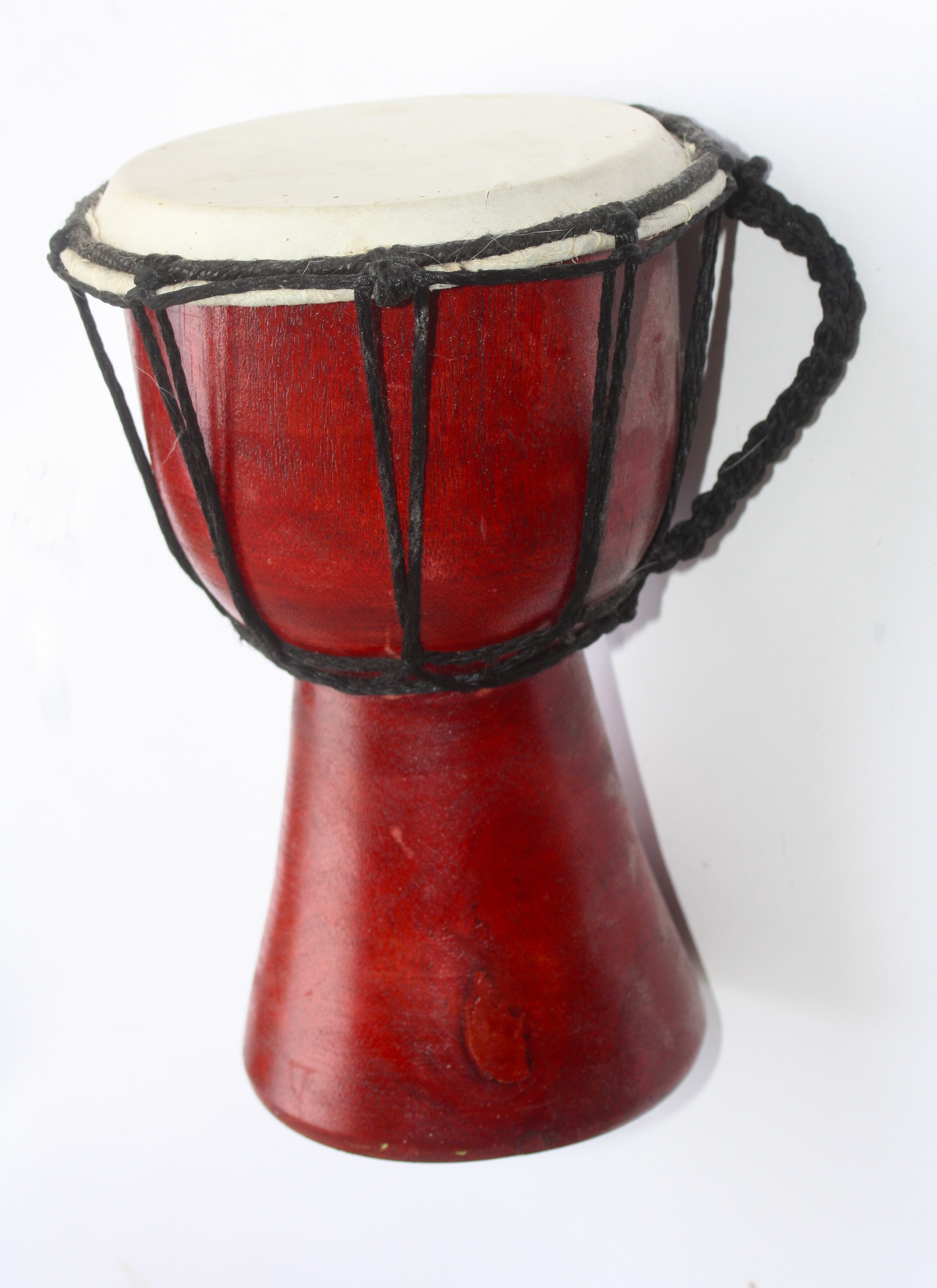
The djembe is a special drum from West Africa that's shaped like a big goblet. People play it with their hands — no sticks needed! It has a rope that helps tune it and a skin top that makes lots of cool sounds, like deep booms and loud slaps. The name "djembe" comes from a saying that means "everyone gathers together to make music and have fun!"
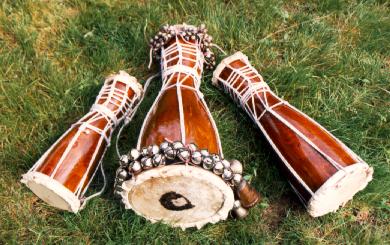
The batá drum looks like an hourglass with one big end and one small end — kind of like it's wearing a wobbly hat! It has two drumheads and comes from the Yoruba people in Nigeria. The batá isn't just for music — it's sacred and used in special ceremonies, especially in the Santería religion in Cuba. People play it with their hands and sometimes with sticks, and its rhythms are so detailed they almost sound like it's talking!
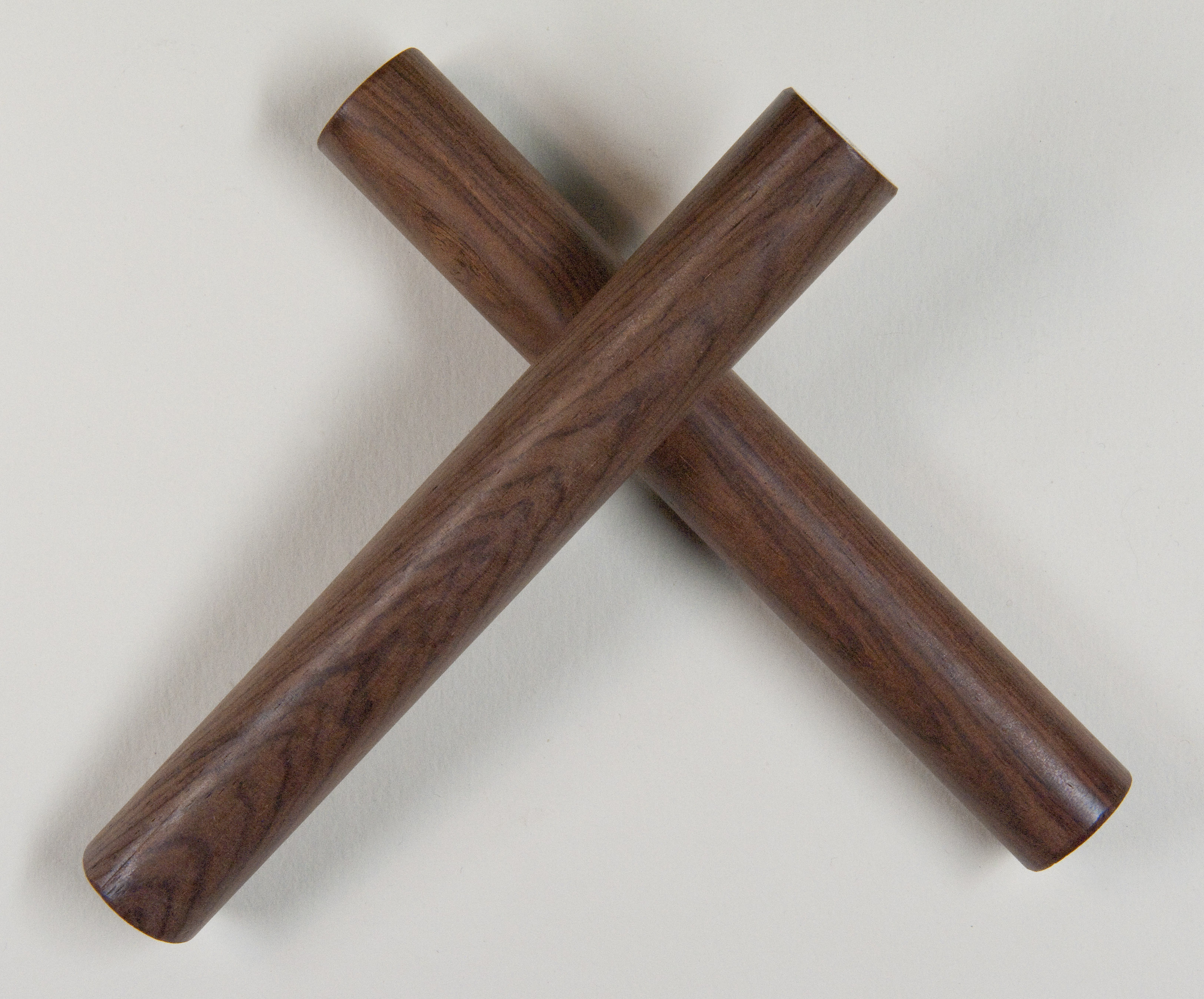
Claves are two small wooden sticks that make a sharp sound when you tap them together. Even though they aren't drums, they're super important in Latin and Afro-Caribbean music like salsa and rumba. Claves help keep the beat and give the music its special rhythm. They come from Cuba and are often called the "heartbeat" of the music!
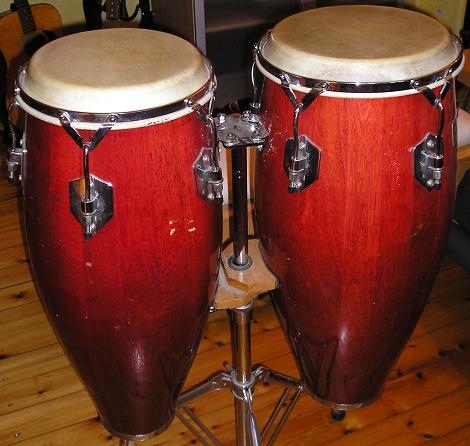
Congas are tall, barrel-shaped drums that make deep, rich sounds. You usually see them in groups of two or three because they love company! Congas came from Cuba, where enslaved Africans created them to keep their music and culture alive. Today, people play them with their hands in salsa, mambo, and Latin jazz music. Their rhythms make it almost impossible not to dance!
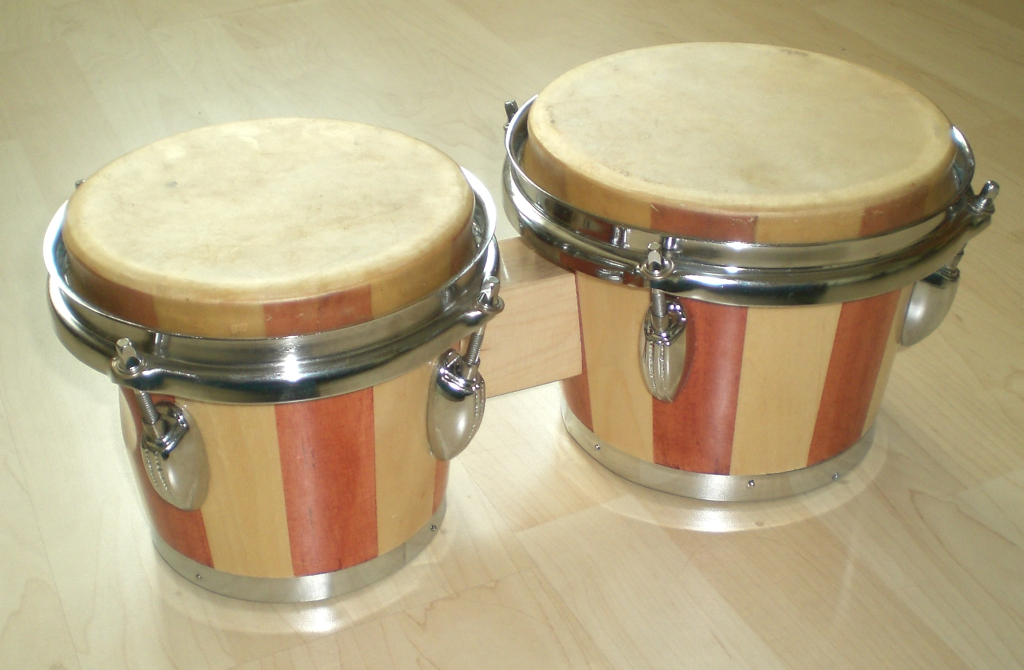
Bongos are a pair of small drums that are always together — one makes a high sound, and the other makes a lower one. People play them by holding them between their knees and tapping with their fingers and hands. Bongos started in Cuba and are super important in music like son cubano and salsa. Their fun, sharp beats help drive the rhythm and make the music come alive!
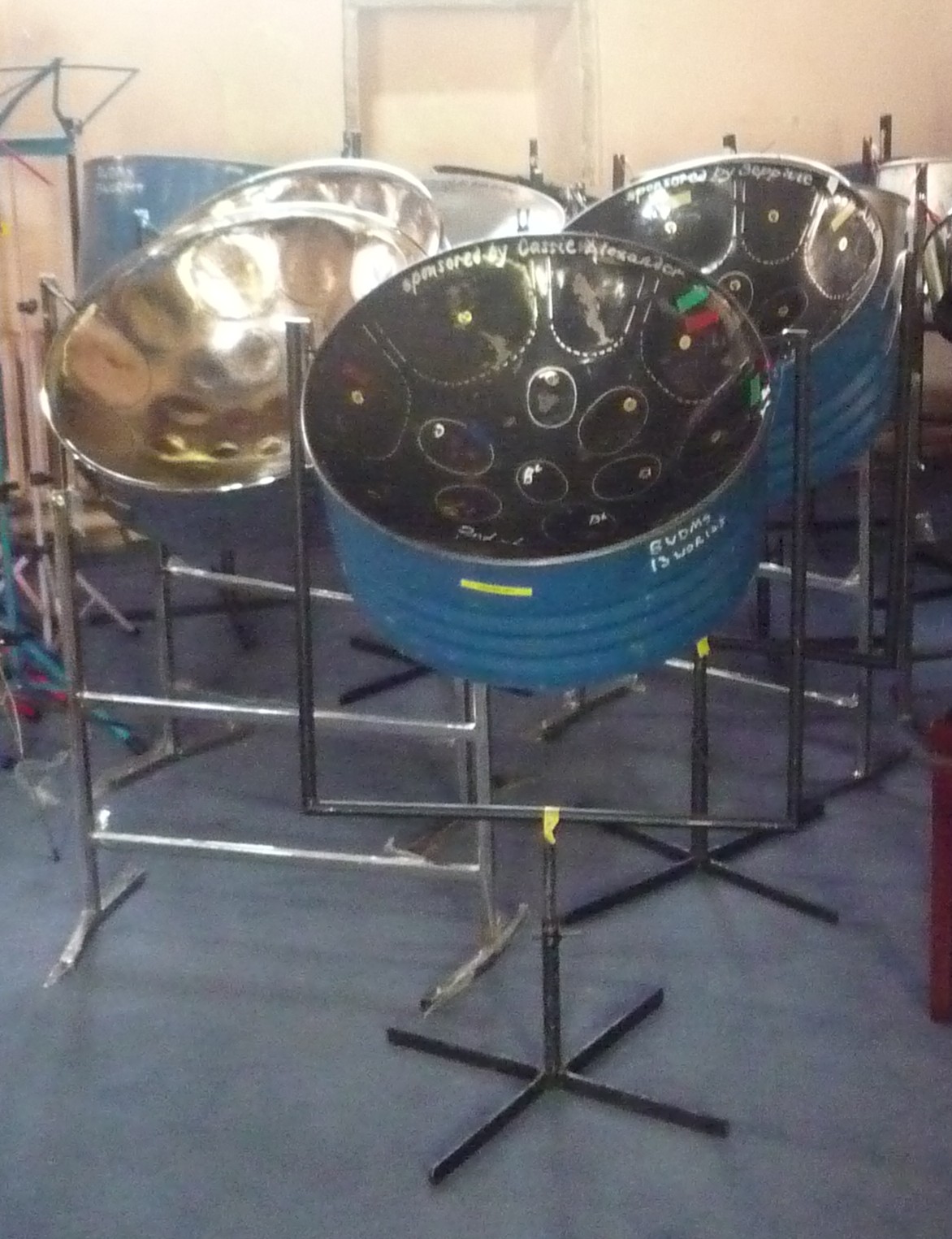
The steelpan/steel pan/steel drum used to be just an ordinary oil drum, but in the 1930s, people in Trinidad and Tobago turned it into a musical instrument! It's played with soft rubber sticks called mallets, and its surface is hammered to make different sounds and notes. The steelpan can play all kinds of music, from fun calypso songs to fancy classical tunes. It's the national instrument of Trinidad and Tobago and makes music that everyone loves to dance to!