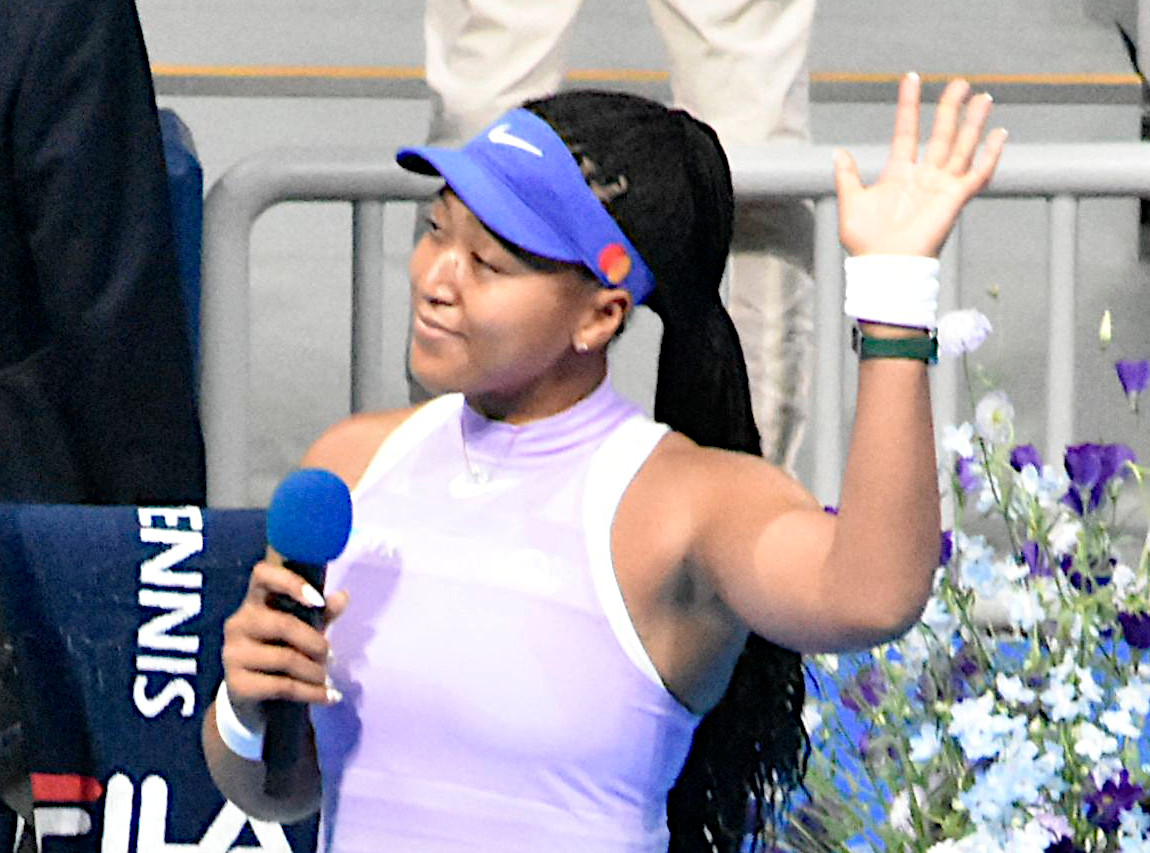
👤 Who Is Naomi Osaka?
Naomi Osaka is one of the best tennis players in the whole world. She was born in Japan and her family is from Japan and Haiti. When she was three years old, her family moved to the United States, where she learned to play tennis.
Naomi has won four of the biggest tennis tournaments in the world. She also uses her voice to speak up for people and to talk about things that matter — like being kind to yourself.
Naomi Osaka is a professional tennis player who has won four Grand Slam titles — the most important tournaments in tennis. She was born in Osaka, Japan, to a Japanese mother and a Haitian-American father, and moved to the United States when she was just three years old. Growing up, she trained on public courts in Pembroke Pines, Florida, coached by her father.
Naomi is Japanese and Haitian, and she has always been proud of both parts of her identity. When she had to choose one country to represent in tennis, she chose Japan — the country where she was born. In 2019, she became the first Asian player ever to hold the world No. 1 ranking in tennis.
Naomi Osaka is a Japanese professional tennis player of Haitian-American and Japanese heritage, widely regarded as one of the most accomplished and influential athletes of her generation. She was born on October 16, 1997, in Osaka, Japan, to a Japanese mother and a father who is Haitian-American. The family relocated to the United States when Naomi was three, settling eventually in Pembroke Pines, Florida, where she trained on public courts under her father's coaching.
Her career achievements are historic. She holds four Grand Slam singles titles — two at the Australian Open and two at the US Open — and in January 2019 became the first Asian player to be ranked world No. 1 in singles. She is also the first Japanese player to win a Grand Slam singles title. Beyond tennis, she has become a prominent voice on racial justice, mental health, and the value of mixed and multicultural identity.
🎾 Her Tennis Career
Naomi has been playing tennis since she was little. Her dad practiced with her and her sister every day. She worked very hard, and by the time she was 16, she was already beating professional players who had been playing for years!
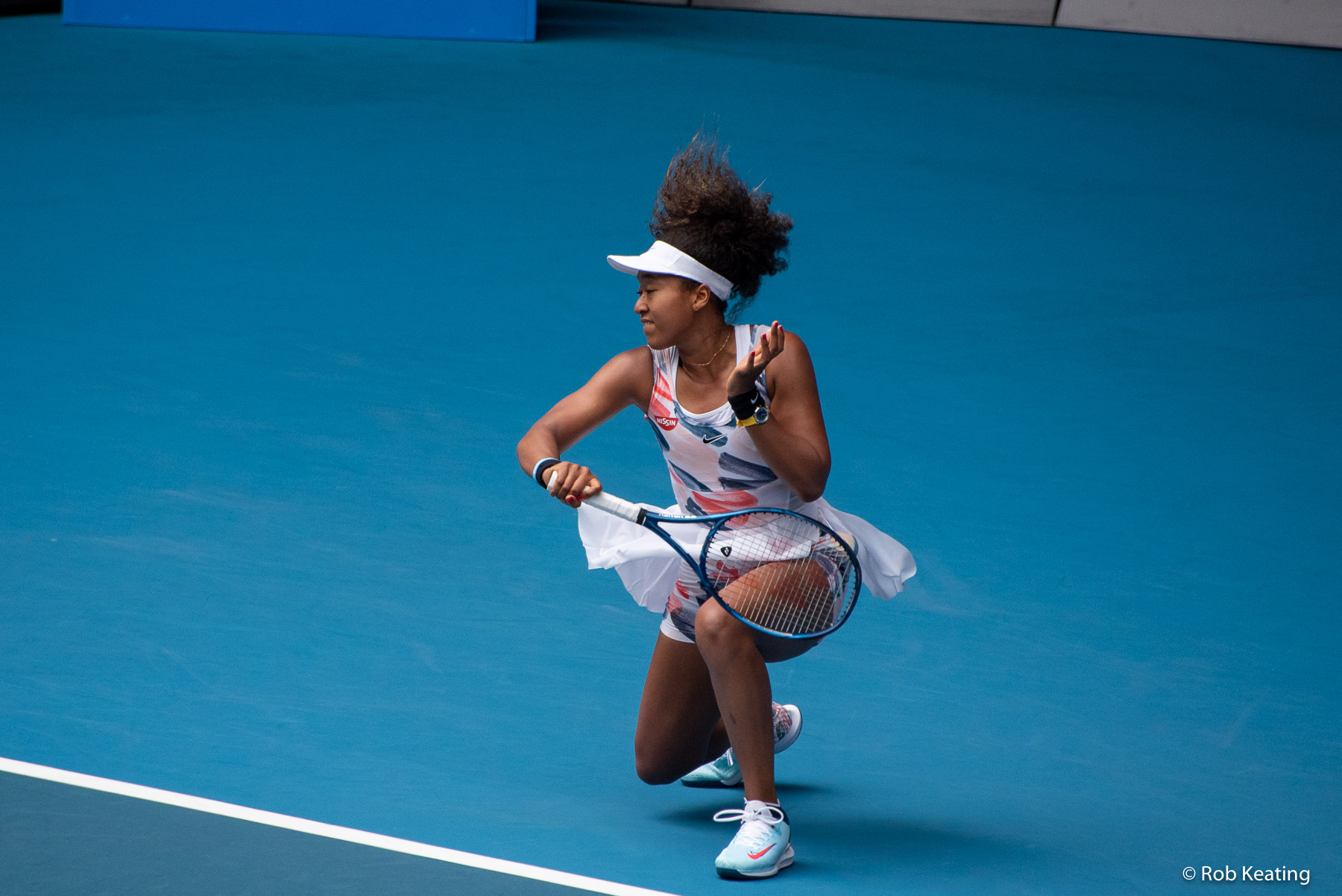
Naomi Osaka at the Australian Open, 2020
She has won four very big tennis tournaments called Grand Slams. That means she is one of the best players in the world!
Naomi's tennis journey began on public courts in Florida, where her father coached her and her sister Mari every day. She never competed in junior tennis tournaments the way most players do — she went straight to the professional circuit as a teenager. At age 16, she made her professional debut and defeated a former US Open champion, which shocked the tennis world.
Her biggest breakthrough came in 2018, when she won the Indian Wells Open — her first professional title — and then the US Open, becoming the first Japanese player ever to win a Grand Slam. The following year, she won the Australian Open and reached world No. 1. She went on to win two more Grand Slams, for a total of four major titles.
🏆 Australian Open — 2019
🏆 US Open — 2020
🏆 Australian Open — 2021
Naomi Osaka's path to professional tennis was unconventional. She bypassed the standard junior circuit entirely, moving directly to the professional ITF Women's Circuit as a teenager, coached by her father. At 16, she made her WTA Tour debut at the 2014 Stanford Classic, defeating former US Open champion Samantha Stosur — a result that signaled she was not a typical newcomer.
Her breakthrough season came in 2018. She won the Indian Wells Open — her first Premier Mandatory title — defeating two top-five players along the way. She then won the US Open in a final against Serena Williams that was overshadowed by controversy when Williams received a game penalty for her conduct toward the umpire. Naomi later described the win as bittersweet. The following January, she won the Australian Open and became both the world No. 1 and the first Asian player ever to hold that ranking.
Between 2018 and 2021, she won four Grand Slam titles. She is one of only three players in the Open Era — alongside Roger Federer and Monica Seles — to win each of her first four Grand Slam finals. Her playing style is aggressive and powerful, built around a serve that can reach over 200 kilometers per hour.
✊🏾 Speaking Up: Naomi as an Activist
Naomi doesn't just play tennis. She also uses her voice to help people. At a big tennis tournament in 2020, she wore special masks on the court. Each mask had a name on it — the name of a person she wanted the world to remember and care about.
Naomi also told the world that it's okay to take a break when something feels too hard. She said taking care of your feelings matters, just like taking care of your body.
During the 2020 US Open, Naomi wore a different mask before each of her seven matches. Each mask displayed the name of a Black American whose death had drawn attention to questions of justice and police violence — including Breonna Taylor, George Floyd, Trayvon Martin, and others. She won the tournament. It was one of the most powerful athlete protests in recent memory.
Earlier in that same tournament week, she had announced she would not play her match to raise awareness about the shooting of Jacob Blake. The entire tournament paused for a day in response. Naomi later wrote in a magazine article about why she felt compelled to speak up, and what the Black Lives Matter movement meant to her personally as a Black woman.
Naomi Osaka's activism is deliberate, documented, and multi-directional. During the 2020 US Open, she entered each of her seven matches wearing a mask bearing the name of a Black American killed in recent years — Breonna Taylor, Elijah McClain, Ahmaud Arbery, Trayvon Martin, George Floyd, Philando Castile, and Tamir Rice. She won the championship while doing it. She was named a 2020 Sports Illustrated Sportsperson of the Year alongside LeBron James specifically for this activism.
Earlier that same week, she withdrew from the Cincinnati Open ahead of her semifinal match to protest the police shooting of Jacob Blake in Kenosha, Wisconsin. The ATP and WTA jointly postponed all matches for a day. Naomi later wrote an op-ed in Esquire magazine articulating her reasons for speaking out — noting her personal connection to the Black Lives Matter movement as a Black woman of Haitian descent.
Her activism is not limited to racial justice. In 2021, she became a central figure in the conversation about athlete mental health when she withdrew from the French Open, citing depression and anxiety that had been affecting her since 2018. What followed was a global debate about whether athletes owe the public access to their mental state, and whether sports organizations should better support player wellbeing. She was included on TIME magazine's list of the 100 most influential people in the world in 2019, 2020, and 2021.
💪🏾 Challenges & Resilience
Even great athletes have hard days. Naomi has talked about times when she felt very sad or worried. She learned that it's okay to ask for help and take a break when you need one.
In 2021, she decided not to play in a big tournament because she needed to take care of her feelings. A lot of people were proud of her for being brave enough to say so.
Success in tennis has not always made Naomi happy. She has talked openly about experiencing depression and anxiety, especially the pressure of press conferences and the spotlight that comes with being famous. In 2021, she decided not to do media interviews at the French Open in order to protect her mental health. When tournament officials threatened her with fines and disqualification, she withdrew from the tournament entirely.
Her decision started a worldwide conversation. Many fellow athletes and mental health advocates supported her. Others argued she had broken the rules. What most people agreed on was that athletes — like everyone else — have inner lives that matter.
Naomi returned to competition, took maternity leave in 2023 when she welcomed her daughter, and came back to professional tennis in 2024. She has continued to speak about mental health as something to work on, not hide.
Naomi Osaka's public reckoning with mental health began in 2021, though she has since said she has lived with depression since winning the US Open in 2018. At the French Open that year, she announced she would not participate in post-match press conferences, describing the experience of being questioned after a loss as something that triggered anxiety and felt, at times, like being bullied. When officials fined her and threatened further penalties, she withdrew from the tournament — and then from Wimbledon — to take time for herself.
The response illustrated how mental health in sport is still treated differently from physical injury. Players routinely withdraw from media obligations due to physical illness without penalty or widespread criticism. Naomi's case showed that an equivalent decision based on mental health could generate global controversy. Researchers and sports psychologists pointed out that between a quarter and a third of elite athletes experience significant mental health issues across their careers — yet there remains little formal support within sporting institutions.
Naomi herself has described going to therapy and continuing to work on managing anxiety. After taking maternity leave in 2023 — during which she welcomed a daughter — she returned to professional tennis in 2024 and has spoken with characteristic directness about the ongoing nature of mental wellness. Her courage in naming her experience publicly is credited with shifting how athletes and sports organizations discuss the topic.
🌏 Who Gets to Belong? Identity and Heritage
Naomi comes from two cultures — Japanese and Haitian. Some people have asked: "Is she really Japanese?" But Naomi knows who she is. She has always felt Japanese, and she has always been proud of her Haitian roots too.
Because Naomi is Black and Japanese, some people have questioned whether she is "really" Japanese. This is something she has spoken about thoughtfully. She chose to represent Japan in tennis because she was born there and has always felt connected to Japanese culture — even though she grew up in the United States and speaks Japanese with what she calls an imperfect accent.
Her Haitian heritage also matters deeply to her. Her father is from Jacmel, Haiti, and her family established a school there for Haitian children. Naomi has described herself as someone who belongs to more than one culture — and she has pushed back against the idea that mixed-race or multicultural people have to choose just one identity.
Naomi Osaka occupies a genuinely unique position in the world: a Black woman of Haitian and Japanese heritage, raised in the United States, representing Japan on the world stage. Each of those facts has at various times made her the subject of public debate about who she "really" is — debates she has engaged with directly and thoughtfully.
In a Netflix documentary series about her life, she reflected on her 2019 decision to renounce her American citizenship in order to represent Japan at the Tokyo Olympics. She noted that people often fail to distinguish between nationality (legal citizenship) and race (ancestry, appearance, cultural heritage). She is Japanese by nationality and Black by heritage — and she has been explicit that her decision was never about abandoning her Black identity. In her words: "African American isn't the only Black."
Her Haitian roots connect her to a country with a profound and often painful history. Haiti declared independence in 1804 after a successful slave rebellion — the only such revolution in history to result in an independent nation. France then demanded enormous financial compensation from Haiti in exchange for recognizing its independence, a debt that took decades to repay and that historians argue had lasting economic consequences. Naomi has spoken publicly about this history, adding her voice to calls for France to reckon with what was taken from Haiti. Her willingness to connect her personal heritage to global history illustrates the breadth of her activism.
Naomi was born in Japan. Her mom is Japanese and her dad is from Haiti. Naomi was born in Chūō-ku, Osaka, Japan to a Japanese mother and a Haitian-American father. Her family moved to the US when she was three years old. Naomi Osaka was born on October 16, 1997, in Chūō-ku, Osaka, Japan. Her mother, Tamaki, is Japanese; her father, Leonard François, is from Jacmel, Haiti. The family relocated to Elmont, New York when Naomi was three, then to Pembroke Pines, Florida in 2006 for better training access.
Naomi's family moved to Florida so she and her sister could practice tennis on better courts. Their dad coached them. The family moved to Pembroke Pines, Florida, where Naomi and her sister Mari practiced daily on public courts. Their father, inspired by watching the Williams sisters, taught himself to coach tennis. The family moved to Florida specifically to improve training conditions. Leonard François, inspired by Richard Williams's approach with Serena and Venus, developed his own coaching method largely from scratch. Naomi practiced on public courts in Pembroke Pines and was homeschooled to allow more training time.
At 16 years old, Naomi played in her first big professional tennis match — and she won! She beat a player who had won a Grand Slam before! At just 16, ranked No. 406 in the world, Naomi defeated former US Open champion Samantha Stosur in her first WTA Tour main-draw match at the Stanford Classic. The tennis world took notice. At 16, ranked No. 406, Naomi defeated former US Open champion Samantha Stosur in her WTA Tour debut at the 2014 Stanford Classic — saving a match point in the second set and coming back from 3–5 in the third. It was one of the most remarkable debuts in recent memory and signaled her trajectory.
Naomi won the US Open — one of the most important tennis tournaments in the world. She was the first Japanese player ever to win it! Naomi won the US Open, becoming the first Japanese player to win a Grand Slam singles title. It was a historic moment for tennis and for Japan. Naomi won the US Open, defeating Serena Williams in a final marked by controversy when Williams received a game penalty. Naomi later said the win was bittersweet given the circumstances — but historically, she became the first Japanese Grand Slam singles champion.
Naomi won another big tournament — the Australian Open — and became the best tennis player in the whole world! She was No. 1! After winning the Australian Open, Naomi reached the world No. 1 ranking — the first Asian player, man or woman, ever to hold that position in singles tennis. Naomi's Australian Open victory in January 2019 made her world No. 1 — the first Asian player to hold that ranking in singles. She also renounced her American citizenship that year to represent Japan at the upcoming Olympics, a decision she described as always having been clear to her.
Naomi wore special masks on the tennis court. Each one had a name on it — someone she wanted people to remember. Then she won the whole tournament. At the 2020 US Open, Naomi wore a different mask for each of her seven matches, each bearing the name of a Black American who had been killed. She won the championship, and her protest was seen around the world. At the 2020 US Open, Naomi wore masks bearing the names of Breonna Taylor, Elijah McClain, Ahmaud Arbery, Trayvon Martin, George Floyd, Philando Castile, and Tamir Rice — one per match. She won the tournament and was named a 2020 Sports Illustrated Sportsperson of the Year for her activism that year.
Naomi got to light the big flame at the Tokyo Olympics opening ceremony. She was the very first tennis player ever to do that! At the opening ceremony of the Tokyo Olympics, Naomi lit the Olympic cauldron — the final torchbearer. She was the first tennis player in history to hold that honor. Naomi was chosen as the final torchbearer at the Tokyo 2020 Olympics opening ceremony, lighting the Olympic cauldron. It was a recognition of her global significance not just as an athlete but as a cultural figure — representing a Japan that is more diverse than its traditional image.
Naomi decided not to play in a big tournament because she needed to take care of her feelings. She told the world it's okay to take a break. Naomi withdrew from the French Open after saying that doing media interviews made her feel very anxious and sad. She talked openly about mental health, which helped many people feel less alone about their own feelings. Naomi withdrew from the French Open — and then Wimbledon — citing depression and anxiety she had been managing since 2018. The decision sparked a worldwide conversation about mental health in sport, with many athletes and mental health advocates expressing support, and sports institutions being pressed to examine their obligations to player wellbeing.
Naomi took a break from tennis and had a baby girl! She took good care of herself and her family. Naomi took maternity leave from tennis and welcomed her daughter in July 2023. She had announced the pregnancy while withdrawing from the Australian Open, promising fans she would return. In January 2023, Naomi announced she was expecting her first child and withdrew from the Australian Open. Her daughter was born in July 2023. She returned to professional tennis at the 2024 Brisbane International — her first match in over a year.
Naomi is back playing tennis and still speaking up for things she cares about. Her story is still being written! Naomi returned to professional tennis, reached new finals, and continued to speak publicly about mental health, her Haitian heritage, and what it means to use your platform for good. By 2025, Naomi had won her first tournament since becoming a mother — a clay-court title in France — and reached the US Open semifinals. She continued to speak out on issues including Haitian history and mental health, demonstrating that athletic competition and civic voice can coexist throughout a career.
💬 Discussion Questions
- 1Naomi is from two countries — Japan and Haiti — but grew up in America. What makes someone belong to a place?
- 2Naomi wore masks with names on them to help people remember. How else can someone speak up without using words?
- 3Naomi said it's okay to take a break when something feels too hard. Have you ever needed a break? What helped you?
- 1Naomi chose to represent Japan even though she grew up in the United States. What do you think makes someone feel connected to a country or culture?
- 2When Naomi wore masks with names on them at the US Open, she was using the moment when the most people were watching to send a message. Do you think athletes have a responsibility to speak up about things that matter? Why or why not?
- 3Naomi has talked about feeling anxious and sad, even while being very successful. Why do you think people sometimes feel that way, and what does it mean to take care of your mental health?
- 1Naomi has said that people confuse nationality with race — and that she is both Black and Japanese, not one instead of the other. Why do you think people struggle with the idea of someone belonging to more than one identity at once? What would it mean to fully accept that complexity?
- 2When Naomi withdrew from the French Open for mental health reasons, she faced both support and criticism. Sports organizations fine players for skipping press conferences, but not for skipping them due to physical injury. Do you think that is fair? What changes, if any, should sports organizations make?
- 3Naomi used her public platform to draw attention to Haitian history — specifically, a financial debt imposed on Haiti by France nearly 200 years ago that historians say shaped the country's future. Why do you think she chose to speak about history rather than only current events? What does it mean to understand where a problem came from?