This Month™
Close-up with…

David Attenborough

Centenarian 🎂 Naturalist Broadcaster Conservationist
1926 – Present
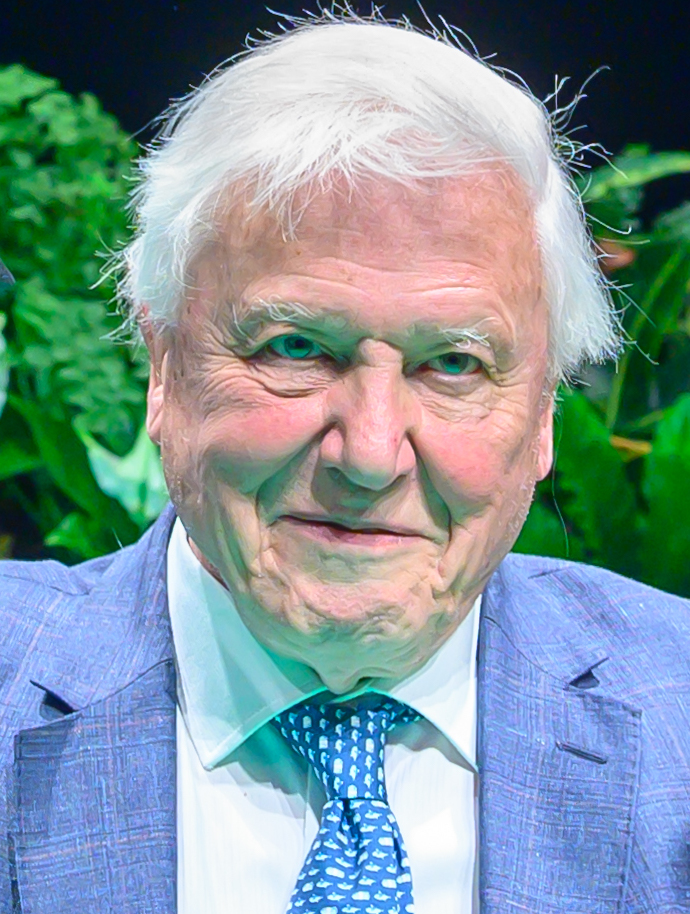
David Attenborough, 2019
Naturalist & Broadcaster
01
Chapter
Who Is David Attenborough?
👤
🦋

David Attenborough is a nature storyteller from England. For more than 70 years, he has made television programs that take people on journeys to see animals all over the world — from the bottom of the ocean to the tops of the highest mountains.

He turned 100 years old in May 2026 and is still one of the most trusted and beloved people on television anywhere on Earth.

🌟 Amazing Fact!More than 20 animals and plants have been named after David Attenborough — including a spider, a frog, a dragonfly, a bat, and even a 430-million-year-old fossil creature! Scientists name new species after people they really admire.

David Attenborough grew up in Leicester, England, collecting fossils and exploring the grounds of the university campus where his father worked. That childhood love of the natural world never left him. He studied geology and zoology at Cambridge University, then joined the BBC in 1952 — the organization he would spend most of his life working with.

Over seven decades, his calm and knowledgeable voice has guided viewers through jungles, coral reefs, polar ice caps, and deserts. His programs have been watched by hundreds of millions of people in countries all around the world. A 2006 survey named him the most trusted celebrity in the United Kingdom — ahead of scientists, politicians, and every other public figure.

🌟 Did You Know?When he first applied to work at the BBC in 1950, they turned him down. He tried again and joined as a trainee producer in 1952. Early on, a manager told him his teeth were too big for television — today he is the longest-serving natural history presenter in TV history!

David Frederick Attenborough was born on 8 May 1926 in Isleworth, Middlesex, England. He grew up on a university campus, spending his childhood roaming the grounds and collecting fossils, stones, and natural specimens. As a teenager, he attended a lecture that planted a lifelong idea in his mind: that human activity could damage the natural world in ways that might never be undone.

After studying natural sciences at Cambridge and serving two years in the Royal Navy, Attenborough joined the BBC as a trainee producer in 1952. His first nature series, Zoo Quest, began in 1954, and his career never stopped from there. He rose to become Controller of BBC Two — commissioning landmark programs including Monty Python's Flying Circus and the arts series Civilisation — before stepping down from management in 1973 to return to full-time program-making.

His landmark series Life on Earth (1979) transformed wildlife television, bringing the story of evolution to a mass audience with scientific accuracy and cinematic storytelling. Over the following decades he went on to document every major group of animals and plants on Earth. He is the only person to have won BAFTA Awards in black-and-white, color, high-definition, 3D, and 4K television.

02
Chapter
A Life of Storytelling
🎬
🦍

David Attenborough's job is to show people the wonders of the natural world. He travels — or sends camera crews — to far-off places to film animals doing extraordinary things. Then he explains what is happening in a quiet, warm voice that makes you feel like he is telling you a secret.

Some of his most famous programs include Blue Planet II, which showed viewers the deep ocean, and Life on Earth, which told the story of how all living things evolved over billions of years.

🌊 His Latest FilmHis 2025 film Ocean showed the damage that giant fishing nets can do to the seabed — and helped lead to new international agreements to protect the world's oceans.

One of the things that makes Attenborough an exceptional storyteller is that he genuinely loves his subject. Colleagues who have worked alongside him describe spotting him in a folding chair between takes, reading scientific papers in the field. He is not a performer reading from a script — he is an enthusiast sharing real wonder with his audience.

His great gift is making every creature seem fascinating, not just the famous ones. Telling the story of a dormouse or a soil snail with the same care and attention he gives a mountain gorilla is a rare talent. Just as popular television dramas find the extraordinary in ordinary lives, Attenborough finds the drama in every living thing.

For much of his career, Attenborough focused on the abundance and beauty of the natural world — giving audiences a sense of wonder before all else. Over time, as scientists gathered more evidence about habitat loss and climate change, he began including those harder truths in his programs too. Blue Planet II (2017) drew 14.1 million viewers — the largest UK TV audience that year — and confronted audiences directly with the damage plastic pollution was doing to ocean life.

📺 Did You Notice?His early programs showed nature at its most spectacular. His more recent work — like A Life on Our Planet (2020) and Ocean (2025) — speaks directly about what humans are doing to harm the natural world, and what we can do to fix it. His message shifted as the science did.

Attenborough's career charts the entire arc of modern television, from grainy black-and-white footage to 4K productions with Hans Zimmer soundtracks. But technology alone does not explain his enduring influence. What sets him apart is the combination of scientific rigor and narrative skill. His programs are developed in close partnership with researchers and field scientists, ensuring the information is accurate — and then that accuracy is woven into stories that make viewers genuinely care.

His work has shifted over time in an important way. Early programs celebrated the abundance and wonder of the natural world, with environmental damage noted, if at all, in brief closing segments. Attenborough later acknowledged he stayed with that wonder-first approach for a long time — partly because he believed that bombarding viewers with difficult truths could drive them away. But as scientific evidence of biodiversity loss and climate change mounted, his approach shifted accordingly. Blue Planet II confronted audiences with ocean plastic; A Life on Our Planet (2020) was his personal witness statement about the losses he had observed; Climate Change: The Facts (2019) explained the science of the climate crisis in plain language; and Ocean (2025) showed, in graphic detail, the destruction caused by industrial bottom trawling — nets the size of cathedrals scraping away ancient seabed ecosystems. The film's premiere just before the UN Ocean Summit in Nice helped accelerate agreement on a global ocean protection treaty.

Research by Climate Outreach in 2020 found Attenborough is trusted by people across the full political spectrum — more than 95% of those surveyed could identify him. His Instagram account, created in 2020, broke the Guinness World Record for the fastest time to reach one million followers. That breadth of trust gives his environmental message a reach that few other voices can match.

03
Chapter
What Makes Him Special
🐦

David Attenborough does not shout or show off on camera. His voice is quiet and steady, like someone sharing a wonderful secret. When he speaks, you want to lean in and listen.

He has always shown us that nature is full of amazing stories — not just about lions and elephants, but about tiny beetles, patient snails, and every other living thing on our planet.

🎙️ His VoiceOne television reviewer described Attenborough as someone who "talks like he's revealing secrets and draws you in using such simple language that he's instantly understood, making his sense of wonder infectious."

People who have met Attenborough in person are often struck by how genuinely curious he remains. Scientists who have worked alongside him describe his excitement when something unexpected happens in the field — a childlike delight at seeing something new, maintained across a century of life.

His appeal crosses political and generational lines in a way that very few public figures manage. Young people, according to researchers who study how teenagers engage with environmental issues, still take him seriously in an age of social media influencers and short-form video. His willingness to meet audiences on modern platforms — joining Netflix, creating an Instagram account in his nineties — has kept his message reaching new audiences without him ever changing who he is.

It seems to me that the natural world is the greatest source of excitement; the greatest source of visual beauty; the greatest source of intellectual interest. It is the greatest source of so much in life that makes life worth living.

— David Attenborough

At the heart of Attenborough's success as a communicator is a principle that researchers in climate and environmental communication have since validated: people need to feel connected to nature before they will act to protect it. His early programs focused on wonder and curiosity — building exactly that connection in millions of viewers. His later work, increasingly explicit about environmental threats, built on that foundation rather than starting from scratch with alarm.

Researchers who study science communication point to his career as a model. His programs archive decades of success in making complex ideas — evolution, ecology, biodiversity, ocean chemistry — accessible to people who never studied science. The fact that he reads scientific papers between takes, rather than relying on researchers to simplify material for him, is part of why scientists trust him and choose to collaborate with him.

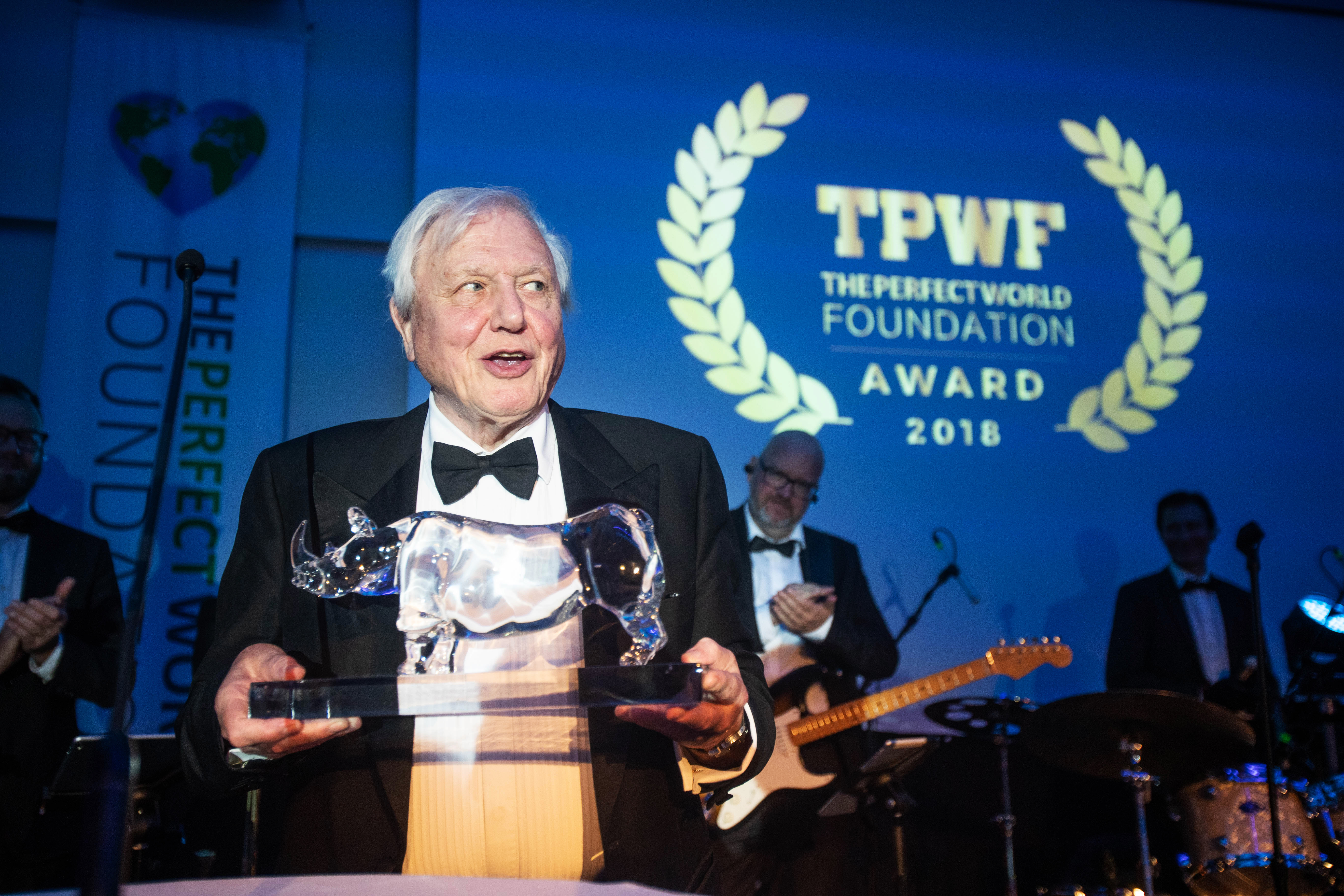
The United Nations Environment Program recognized him in 2022 as a Champion of the Earth. At COP26 in 2021, he spoke to world leaders as the "People's Advocate" — a role that acknowledged something remarkable: in a deeply divided world, this quiet Englishman who spent his life making television programs about animals had become one of the most credible voices on the defining challenge of our era.

It seems to me that the natural world is the greatest source of excitement; the greatest source of visual beauty; the greatest source of intellectual interest. It is the greatest source of so much in life that makes life worth living.

— David Attenborough
04
Chapter
Life Journey
🐋
Born in England
David was born on 8 May 1926. He grew up on a college campus and loved collecting fossils and exploring nature as a child.
Born in Isleworth, Middlesex, he grew up on a university campus in Leicester, spending his childhood collecting fossils, stones, and natural specimens.
Born on 8 May 1926 in Isleworth, Middlesex. He grew up on the grounds of University College Leicester, where his father was principal, developing an early fascination with fossils and natural history.
1926 🐚
1945
Cambridge University
David won a scholarship to Cambridge University, where he studied rocks and animals.
He won a scholarship to Clare College, Cambridge, to study geology and zoology. He graduated in 1947.
Won a scholarship to Clare College, Cambridge, to study natural sciences. He graduated in 1947 before completing two years of national service in the Royal Navy.
Joins the BBC
David got a job at the BBC — the biggest television company in Britain. He had tried once before and been turned down!
After being turned down the first time, he joined the BBC as a trainee producer in 1952 and quickly began working on natural history programs.
Joined the BBC as a trainee producer in 1952, initially discouraged from appearing on camera. He began producing factual programs and quickly found his path into natural history television.
1952
1954 🐊
Zoo Quest begins
David hosted his first nature TV show, Zoo Quest, which took viewers on trips to find animals in faraway places.
Zoo Quest sent Attenborough to remote locations to film animals in the wild. It was one of the first wildlife series to follow a presenter as the central character.
Zoo Quest launched in 1954. Attenborough became the on-screen presenter at short notice when his colleague fell ill, pioneering a format that placed the presenter at the center of the wildlife narrative.
BBC Controller
David became one of the bosses at the BBC and helped decide which shows to make — including saying yes to Monty Python!
He became Controller of BBC Two, commissioning landmark programs including Monty Python's Flying Circus and several major arts documentaries.
Became Controller of BBC Two in 1965, later Director of Programs for both BBC channels. He commissioned Monty Python, the arts series Civilisation, and introduced snooker to television to showcase color broadcasting. He left management in 1973 to return to program-making.
1965
1979 🦎
Life on Earth
Life on Earth told the story of how all living things on our planet came to exist, and people all over the world loved it.
His landmark 13-part series told the story of evolution from the first simple organisms to complex life today. It changed how science was communicated on television.
Life on Earth (1979) became a benchmark for natural history television — the first program to treat evolution as a grand narrative accessible to a mass audience, embedding complex scientific concepts in compelling stories.
The Blue Planet
The Blue Planet explored the deep ocean for the first time on television and showed creatures most people had never seen before!
Attenborough narrated the BBC's first major ocean series. New underwater camera technology revealed deep-sea creatures never seen on television before.
Narrated The Blue Planet (2001), the Natural History Unit's first comprehensive survey of marine life, using deep-sea camera technology to film habitats previously invisible to viewers.
2001 🐋
2017 🌊
Blue Planet II
Blue Planet II showed people how much plastic pollution was hurting ocean animals. Many viewers decided to use less plastic in their own lives.
Blue Planet II became the most-watched UK program that year, with 14.1 million viewers. Footage of wildlife suffering from plastic pollution sparked widespread public debate and policy action.
Blue Planet II (2017) drew 14.1 million viewers and is credited with triggering a lasting shift in public and political attention toward plastic pollution — a demonstration of how nature storytelling can influence behavior at scale.
A Life on Our Planet
David made a special film about all the changes he had seen in nature during his very long life — and what we can all do to help protect it.
His documentary A Life on Our Planet was his personal account of the changes he had witnessed in the natural world — and a vision for how things could be put right.
A Life on Our Planet (2020) was Attenborough's autobiographical documentary and his most explicit statement on environmental decline. It catalogued biodiversity losses across his career and offered an evidence-based vision for planetary recovery.
2020 🌍
2026
100th Birthday 🎂
David turned 100 years old on 8 May 2026! There was a big concert at the Royal Albert Hall in London, where the whole audience sang Happy Birthday to him.
On 8 May 2026, Attenborough celebrated his 100th birthday. A gala concert at the Royal Albert Hall was attended by the Prince of Wales and broadcast on BBC One. Scientists named a new parasitic wasp — Attenboroughnculus tau — in his honor.
Attenborough turned 100 on 8 May 2026. The milestone was marked by a Royal Albert Hall gala concert broadcast as a 90-minute BBC One program. The UN, King Charles III, and scientific organizations worldwide acknowledged his century of life and seven decades of contribution to public understanding of science and nature.
05
Chapter
Words to Know
📖
🐠
🔭 Naturalist
A person who studies animals, plants, and the natural world — and loves learning about all living things.
A person who studies and observes plants, animals, and other living things in their natural environments, rather than only in laboratories.
A scientist or scholar who studies organisms in their natural habitats through careful observation and field research, often contributing to ecology, zoology, or botany.
🎬 Documentary
A film or TV program that tells true stories using real footage — not actors making things up.
A non-fiction film or television program that presents real events, real people, or real subjects using actual footage and factual information.
A non-fiction audiovisual work combining scientific research, cinematography, narration, and storytelling craft to communicate factual content to a general audience.
🦋 Biodiversity
All the different types of animals, plants, and other living things on Earth. The more variety, the better!
The variety of all living things on Earth — including every species of animal, plant, fungus, and microorganism. Healthy ecosystems depend on high biodiversity.
The variety of life at every level — from genetic diversity within species, to species diversity within ecosystems, to ecosystem diversity across the planet. Scientists consider biodiversity an indicator of ecological health.
🌿 Conservation
Protecting animals, plants, and wild places so they can keep living safely on our planet.
The protection and careful management of natural environments and wildlife to prevent habitat destruction and species extinction.
The planned management and protection of natural resources, ecosystems, and species to prevent degradation or extinction, often involving scientific research, policy advocacy, and community engagement.
🧬 Evolution
The idea that all living things change and develop very slowly over millions and millions of years.
The process by which living species change over very long periods of time through natural selection — small differences help some survive better than others, and those differences are passed on to offspring.
The process of change in inherited characteristics of biological populations over successive generations, primarily through natural selection. Attenborough made popularizing evolutionary biology a central goal of his career.
🌊 Ecosystem
A community of plants and animals that all live together and depend on each other in the same place — like a forest or a coral reef.
A community of living organisms — plants, animals, fungi, and microorganisms — interacting with each other and with their physical environment, such as a coral reef, a rainforest, or a wetland.
A complex, interdependent community of organisms and their physical environment functioning as a system. Ecosystems provide services — clean water, air purification, food production, carbon storage — that human societies depend on.
06
Chapter
Talk About It
💬
🦎
  • What is your favorite animal? If you made a nature program, what would you want to show people about it?
  • David Attenborough has been looking at nature since he was a little boy. What is something in nature that makes you curious or excited?
  • David's quiet voice makes people want to listen carefully. Can you think of someone you like to listen to — and what makes their voice special?
  • David Attenborough says that people need to love nature before they will want to protect it. Do you think that is true? Can you think of an example?
  • For most of his career, Attenborough's programs focused on the beauty and wonder of the natural world. As scientists gathered more evidence about climate change and habitat loss, his message began to include those harder truths too — for example in Blue Planet II and A Life on Our Planet. Why do you think a communicator might wait before changing their message, even when the evidence is already there?
  • His programs reached hundreds of millions of people. What other ways might someone reach large numbers of people today that did not exist when he started in the 1950s?
  • Scientists name new species after people they admire. If a new animal were named after you, what qualities would you want to have shown to deserve that honor?
  • For most of his career, Attenborough kept the focus of his programs on the wonder and beauty of nature, touching on environmental damage only briefly. He later acknowledged this was partly a deliberate choice — he felt that leading with difficult truths might drive audiences away before they had a chance to form a connection with the natural world. Some critics disagreed and felt he should have spoken up about human harm to nature sooner. Considering both sides: how do you weigh the trade-offs between inspiring wonder and communicating hard truths — especially when the stakes are as high as climate change?
  • Research shows that emotional connection to nature tends to come before people take action to protect it. How does this change the way you think about the role of storytelling in tackling environmental challenges?
  • Attenborough is trusted across the political spectrum in a deeply divided era. What qualities — in his approach, his track record, or his character — do you think account for that unusual kind of trust?
  • His 2025 film Ocean premiered just before a major UN summit and contributed to an international ocean protection agreement. What does this tell us about the relationship between public communication and policy change?
📚
Standards Alignment
Georgia ELA & Science · North Carolina ELA & Science · New Jersey · Michigan ELA & Science · New York ELA & Science · Common Core ELA
English Language Arts — Georgia Standards of Excellence (2024)
🔵 Grades 2–3
2.T.C.2
Authors & Speakers: Investigate the relationships between authors and speakers in texts.
3.T.C.2
Authors & Speakers: Make connections between authors of texts, speakers in texts, varying perspectives, and the circumstances in which texts are produced.
2.T.RA.2
Research & Analysis: Reference parts of texts to address a specific topic or question and explore various sources of information to make connections across a broad range of topics.
🟠 Grades 4–5
4.T.C.1 / 5.T.C.1
Purpose & Audience: Use knowledge of purposes and audiences, as well as the language that develops those relationships, to make meaning of texts in multiple modes.
Science — Georgia Standards of Excellence
🔵 Grades 2–3
S2E3
Obtain, evaluate, and communicate information about how weather, plants, animals, and humans cause changes to the environment.
S3L1
Obtain, evaluate, and communicate information about the similarities and differences between plants, animals, and habitats found within geographic regions of Georgia.
S3L2
Obtain, evaluate, and communicate information about the effects of pollution (air, land, and water) and humans on the environment.
🟠 Grades 4–5
S4L1
Obtain, evaluate, and communicate information about the roles of organisms and the flow of energy within an ecosystem.
English Language Arts — NC Standard Course of Study (2025)
🟢 Kindergarten – Grade 1
RI.K.1
With prompting and support, ask and answer questions about key details in a text.
RI.1.1
Ask and answer questions about key details in a text.
RI.K.2
With prompting and support, identify the main topic and retell key details of a text.
RI.1.2
Identify the main topic and retell key details of a text.
SL.K.1
Participate in collaborative conversations with diverse partners about kindergarten topics and texts with peers and adults in small and larger groups.
SL.1.1
Participate in collaborative conversations with diverse partners about grade 1 topics and texts with peers and adults in small and larger groups.
SL.K.2
Confirm understanding of a text read aloud or information presented orally or through other media by asking and answering questions about key details and requesting clarification if something is not understood.
SL.1.2
Ask and answer questions about key details in a text read aloud or information presented orally or through other media.
🔵 Grades 2–3
RI.2.1
Ask and answer such questions as who, what, where, when, why, and how to demonstrate understanding of key details in a text.
RI.3.1
Ask and answer questions to demonstrate understanding of a text, referring explicitly to the text as the basis for the answers.
RI.2.6
Identify the author's main purpose of a text, including what the author wants to answer, explain, or describe.
RI.3.6
Distinguish their own point of view from that of the author of a text.
SL.2.1
Participate in collaborative conversations with diverse partners about grade 2 topics and texts with peers and adults in small and larger groups.
SL.3.1
Engage effectively in a range of collaborative discussions (one-on-one, in groups, and teacher-led) with diverse partners on grade 3 topics and texts, building on others' ideas and expressing their own clearly.
SL.3.2
Determine the main ideas and supporting details of a text read aloud or information presented in diverse media and formats, including visually, quantitatively, and orally.
🟠 Grades 4–5
RI.4.8
Explain how an author uses reasons and evidence to support particular points in a text.
RI.5.8
Explain how an author uses reasons and evidence to support particular points in a text, identifying which reasons and evidence support which point(s).
RI.4.6
Compare and contrast a firsthand and secondhand account of the same event or topic; describe the differences in focus and the information provided.
RI.5.6
Analyze multiple accounts of the same event or topic, noting important similarities and differences in the point of view they represent.
SL.4.1
Engage effectively in a range of collaborative discussions (one-on-one, in groups, and teacher-led) with diverse partners on grade 4 topics and texts, building on others' ideas and expressing their own clearly.
SL.5.1
Engage effectively in a range of collaborative discussions (one-on-one, in groups, and teacher-led) with diverse partners on grade 5 topics and texts, building on others' ideas and expressing their own clearly.
Science — NC Standard Course of Study (2025)
🟠 Grades 4–5
LS.4.1
Understand the effects of environmental changes, adaptations, and behaviors that enable organisms to survive in changing habitats.
ESS.4.3
Understand changes caused by human impact on the environment.
LS.5.2
Understand the interdependence of plants and animals within their ecosystem.
English Language Arts — New Jersey Student Learning Standards (NJSLS-ELA)
🟢 Kindergarten – Grade 1
RI.K.1 / RI.1.1
With prompting and support, ask and answer questions about key details in a text. (Grade 1: without prompting.)
RI.K.3 / RI.1.3
With prompting and support, describe the connection between two individuals, events, ideas, or pieces of information in a text.
SL.K.1 / SL.1.1
Participate in collaborative conversations about kindergarten/grade 1 topics and texts with peers and adults in small and larger groups.
🔵 Grades 2–3
RI.2.3 / RI.3.3
Describe the connection between a series of historical events, scientific ideas or concepts, or steps in technical procedures in a text.
RI.2.8 / RI.3.8
Identify the reasons an author gives to support ideas / describe how the author connects ideas between sentences and paragraphs to support specific points.
SL.2.2 / SL.3.2
Recount or describe key ideas or details from a text read aloud or information presented orally or through other media.
🟠 Grades 4–5
RI.4.3 / RI.5.3
Explain events, procedures, ideas, or concepts in a historical, scientific, or technical text, including what happened and why.
RI.4.9 / RI.5.9
Integrate information from two / several texts on the same topic in order to write or speak about the subject knowledgeably.
SL.4.1 / SL.5.1
Engage effectively in a range of collaborative discussions with diverse partners, building on others' ideas and expressing their own clearly.
English Language Arts — Michigan Grade Level Content Expectations
🟢 Kindergarten – Grade 1
KR.IT.1 / 1R.IT.1
With prompting and support, ask and answer questions about key details in informational text.
KSL.1 / 1SL.1
Participate in collaborative conversations with diverse partners about grade-level topics and texts, following agreed-upon rules for discussions.
KSL.2 / 1SL.2
Confirm understanding of a text read aloud or information presented orally by asking and answering questions about key details.
🔵 Grades 2–3
2R.IT.2 / 3R.IT.2
Identify the main topic / determine the main idea of a text and explain how key details support it.
2R.IT.6 / 3R.IT.6
Identify the author's main purpose / distinguish their own point of view from that of the author.
2SL.1 / 3SL.1
Engage effectively in collaborative discussions with diverse partners, building on others' ideas and expressing their own clearly.
🟠 Grades 4–5
4R.IT.8 / 5R.IT.8
Explain how an author uses reasons and evidence to support particular points in a text.
4R.IT.3 / 5R.IT.3
Explain events, procedures, ideas, or concepts in historical, scientific, or technical text.
4SL.1 / 5SL.1
Engage effectively in a range of collaborative discussions on grade 4/5 topics and texts, building on others' ideas and expressing their own clearly.
Science — Michigan K-12 Science Standards
🔵 Grades 2–3
3-ESS2-2
Obtain and combine information to describe climates in different regions of the world.
🟠 Grades 4–5
5-ESS3-1
Obtain and combine information about ways individual communities use science ideas to protect the Earth's resources and environment.
English Language Arts — New York Next Generation ELA Learning Standards (2017)
🟢 Kindergarten – Grade 1
NY-RI.K.1 / NY-RI.1.1
With prompting and support, ask and answer questions about key details in a text.
NY-RI.K.3 / NY-RI.1.3
With prompting and support, describe the connection between two individuals, events, ideas, or pieces of information in a text.
NY-SL.K.1 / NY-SL.1.1
Participate in collaborative conversations with diverse partners about kindergarten/grade 1 topics and texts with peers and adults in small and larger groups.
🔵 Grades 2–3
NY-RI.2.3 / NY-RI.3.3
Describe the connection between a series of historical events, scientific ideas or concepts, or steps in technical procedures in a text.
NY-RI.2.9 / NY-RI.3.9
Compare and contrast the most important points presented by two texts on the same topic.
NY-SL.2.1 / NY-SL.3.1
Participate in / engage effectively in collaborative discussions, building on others' ideas and expressing their own clearly.
🟠 Grades 4–5
NY-RI.4.6 / NY-RI.5.6
Compare and contrast firsthand and secondhand accounts. (Grade 5: Analyze multiple accounts, noting important similarities and differences in point of view.)
NY-RI.4.8 / NY-RI.5.8
Explain how an author uses reasons and evidence to support particular points in a text.
NY-RI.4.9 / NY-RI.5.9
Integrate information from two / several texts on the same topic in order to write or speak about the subject knowledgeably.
NY-SL.4.1 / NY-SL.5.1
Engage effectively in a range of collaborative discussions with diverse partners on grade 4/5 topics and texts.
Science — New York State P-12 Science Learning Standards
🟠 Grades 4–5
5-ESS3-1
Obtain and combine information about ways individual communities use science ideas to protect Earth's resources and environment.
English Language Arts — Common Core State Standards (CCSS-ELA)
🟢 Kindergarten – Grade 1
CCSS.ELA-LITERACY.RI.K.1
With prompting and support, ask and answer questions about key details in a text.
CCSS.ELA-LITERACY.RI.1.2
Identify the main topic and retell key details of a text.
CCSS.ELA-LITERACY.SL.K.1
Participate in collaborative conversations with diverse partners about kindergarten topics and texts with peers and adults in small and larger groups.
CCSS.ELA-LITERACY.SL.1.4
Describe people, places, things, and events with relevant details, expressing ideas and feelings clearly.
🔵 Grades 2–3
CCSS.ELA-LITERACY.RI.2.3
Describe the connection between a series of historical events, scientific ideas or concepts, or steps in technical procedures in a text.
CCSS.ELA-LITERACY.RI.3.8
Describe the logical connection between particular sentences and paragraphs in a text.
CCSS.ELA-LITERACY.SL.3.1
Engage effectively in a range of collaborative discussions with diverse partners on grade 3 topics and texts, building on others' ideas and expressing their own clearly.
🟠 Grades 4–5
CCSS.ELA-LITERACY.RI.4.3
Explain events, procedures, ideas, or concepts in a historical, scientific, or technical text, including what happened and why.
CCSS.ELA-LITERACY.RI.5.6
Analyze multiple accounts of the same event or topic, noting important similarities and differences in point of view.
CCSS.ELA-LITERACY.RI.5.8
Explain how an author uses reasons and evidence to support particular points in a text, identifying which reasons and evidence support which point(s).
CCSS.ELA-LITERACY.SL.4.1 / SL.5.1
Engage effectively in a range of collaborative discussions with diverse partners on grade 4/5 topics and texts, building on others' ideas and expressing their own clearly.

📋 References

  • Garrod, B., Gouyon, J.-B., O'Neill, S., & Brimicombe, C. (2026, May 6). As David Attenborough turns 100, four experts explore his legacy, from science to storytelling. The Conversation.
  • Hayward, B. (2026, May 7). From fossicking for fossils to a champion for life on Earth: Sir David Attenborough at 100. The Conversation.
  • Hays, G. (2016, May 5). Sir David Attenborough: the mesmerizing storyteller of the natural world. The Conversation.
  • Roberts, C. (2025, May 8). David Attenborough's Ocean reveals how bottom trawling is hurting sealife in horrifying detail. The Conversation.
  • Wikipedia contributors. (2026, May). David Attenborough. Wikipedia, The Free Encyclopedia.