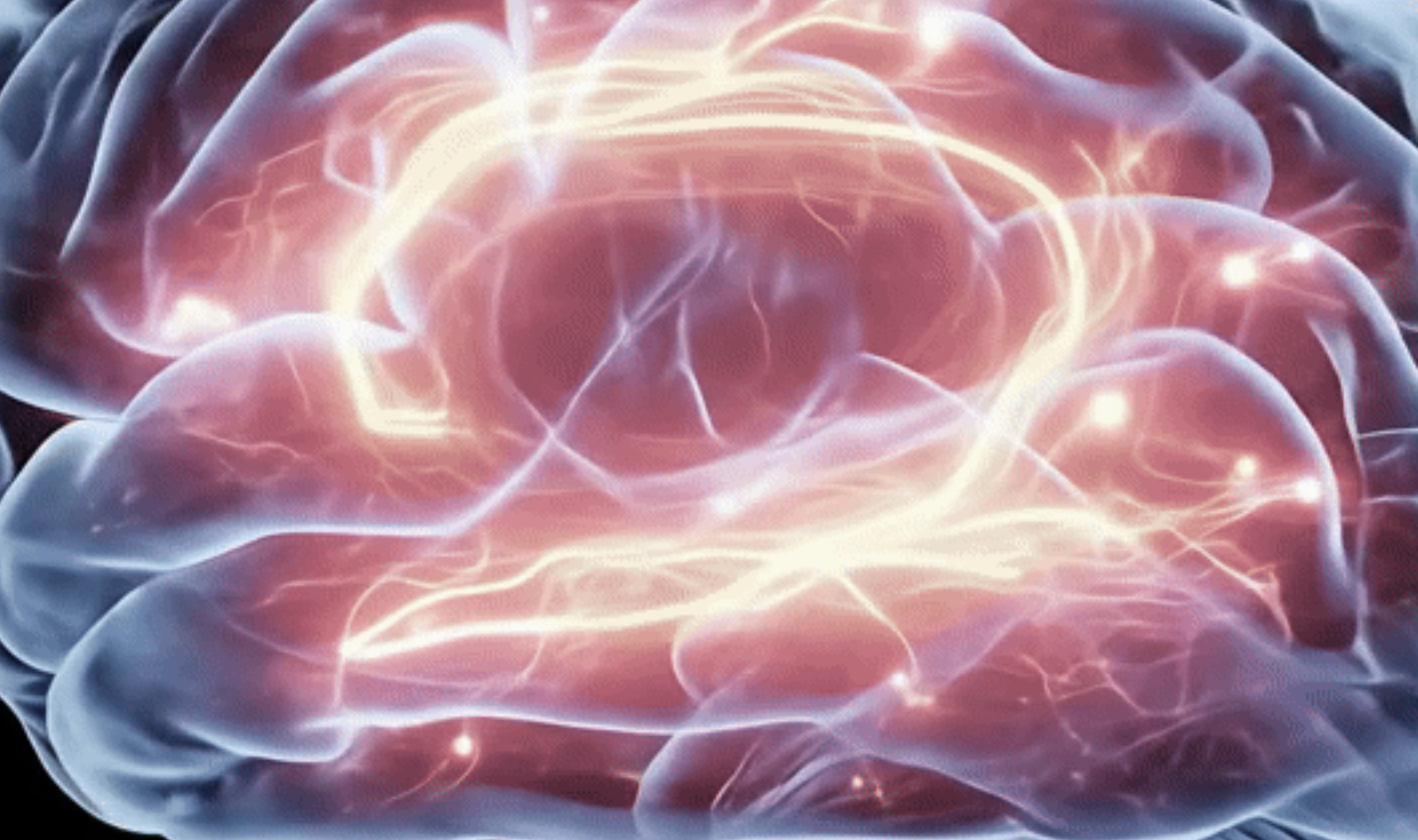
🧠 What Is the Brain?
Your brain is inside your head, protected by your skull. It helps you think, move, feel, and learn — all at the same time!
The brain sends tiny messages called signals all through your body. Those messages travel faster than you can blink.
Your brain weighs about as much as three sticks of butter — but it does more work than any computer ever built!
The brain is your body's command center. It receives information, makes decisions, and sends instructions to every part of your body — all without you even thinking about it.
Signals called nerve impulses travel from your senses to your brain along pathways called nerves. Your brain then figures out what the signals mean and decides what to do.
The human brain is a 3-pound organ made up of roughly 86 billion neurons — specialized cells that communicate through electrical and chemical signals. Every thought, movement, memory, and sensation is the result of neurons firing in complex networks.
The brain is divided into specialized regions, each responsible for different functions. Sensory information — sight, sound, touch, taste, and smell — is processed in specific areas called sensory cortices. Importantly, these regions constantly communicate with each other, allowing your brain to build a unified picture of the world.
🗺️ Parts of Your Brain
Your brain has different parts that do different jobs — just like how different people on a team have different jobs!
Scientists divide the brain into three main regions, each with an important job.
The brain's structure reflects its specialized functions. Each major region processes different types of information, though they work together constantly.
✋ Your Five Senses
Some people have five senses. Perhaps you do too! Tap each card to find out how each one works.
Each sense uses a special body part called a sense organ to collect information and send it to your brain as signals. Tap each card to explore how the signal travels.
Each sensory system follows a similar pathway: a receptor detects a stimulus, converts it into an electrical signal, and sends it along a dedicated nerve to the appropriate region of the cerebral cortex for processing. Tap each card to trace the pathway for each sense.
How You See
Light enters your eyes. Your eyes send a message to your brain, and your brain tells you what you are looking at — colors, shapes, and faces!
How You See
Light enters the eye and hits the retina at the back. Cells in the retina convert light into nerve signals. Those signals travel along the optic nerve to the occipital lobe at the back of your brain, where the image is processed.
The Visual Pathway
Visible light is actually a type of electromagnetic wave — one narrow slice of a much broader spectrum that includes radio waves, infrared, ultraviolet, and gamma rays. Your eyes evolved to detect only this one slice.
Photoreceptors in the retina — rods (low light) and cones (color) — convert light energy into electrical signals. The optic nerve carries these to the thalamus, relaying them to the primary visual cortex in the occipital lobe. Other animals' eyes evolved differently: butterflies can detect ultraviolet waves invisible to us, helping them locate flowers.
Tap to flip back ↩
How You Hear
Sound makes the air wiggle. Those wiggles go into your ears, and your brain figures out whether it's music, a dog barking, or your teacher talking!
How You Hear
Sound creates vibrations in the air. Your ear funnels those vibrations to a tiny structure called the eardrum. It vibrates and passes the signal to three tiny bones, then to the cochlea, which converts it into a nerve signal sent to the temporal lobe.
The Auditory Pathway
Sound waves cause the eardrum to vibrate, moving the three ossicles (malleus, incus, stapes). The stapes transmits vibrations to the fluid-filled cochlea, where hair cells convert mechanical energy into electrical signals carried by the auditory nerve to the temporal lobe's primary auditory cortex.
Tap to flip back ↩
How You Feel Touch
Your skin is covered in tiny sensors. When you touch something soft, rough, hot, or cold, those sensors send a message to your brain right away!
How You Feel Touch
Your skin has millions of touch receptors. Different receptors detect pressure, temperature, pain, and texture. Signals from these receptors travel up the spinal cord to the parietal lobe, where your brain maps out where on your body the sensation came from.
The Somatosensory Pathway
Specialized receptors in the skin — including Meissner's corpuscles (light touch) and Pacinian corpuscles (pressure/vibration) — convert physical stimuli into nerve impulses. These travel through sensory nerves to the spinal cord, then to the thalamus, and finally to the somatosensory cortex in the parietal lobe, which maps every part of the body's surface.
Tap to flip back ↩
How You Taste
Your tongue has tiny bumps with taste sensors inside them. They tell your brain if food is sweet, salty, sour, or bitter!
How You Taste
Your tongue is covered in taste buds, each containing taste receptor cells. When food chemicals contact these cells, signals travel along cranial nerves to the brain. You can detect five basic tastes: sweet, salty, sour, bitter, and umami (savory).
The Gustatory Pathway
Taste receptor cells inside taste buds respond to dissolved chemicals in food. Signals travel via three cranial nerves to the gustatory cortex in the insular and frontal opercular regions. Critically, taste is heavily influenced by smell — without olfactory input, flavor perception drops dramatically, which is why food seems tasteless when you have a stuffy nose.
Tap to flip back ↩
How You Smell
Tiny smell particles float in the air and go into your nose. Sensors inside send a message to your brain, and your brain knows if it smells like cookies or a skunk!
How You Smell
When you breathe in, odor molecules reach olfactory receptors high in your nose. These receptors send signals directly along the olfactory nerve to the brain. Smell is the only sense that bypasses the thalamus and connects directly to the areas involved in memory and emotion.
The Olfactory Pathway
Olfactory receptor neurons in the nasal epithelium detect airborne molecules and send signals directly to the olfactory bulb, bypassing the thalamus entirely. From there signals travel to the olfactory cortex, amygdala, and hippocampus — explaining why certain smells can trigger powerful memories and strong emotions. Humans can detect roughly 1 trillion distinct odors.
Tap to flip back ↩
🔀 When Your Senses Team Up
Your senses don't work alone — your brain uses them all together to help you understand the world!
-
🍕
Pizza tastes better when you can smell it too! Your nose and tongue work as a team so you get the full flavor.
-
🎵
You use your eyes and ears together when you watch a show. Your brain matches up what you see with what you hear.
-
🌊
Your ears help you balance! Deep inside your ear, there's a tiny part that tells your brain which way is up.
Your brain is always combining signals from multiple senses at once. This is called multisensory processing.
-
🤧
Why food is bland when you're sick Hold your nose and eat something — it hardly has any flavor! Smell makes up most of what we call "taste." Your brain combines them to create the full experience.
-
🎬
Your brain can be tricked In movies, sound effects make images feel more real. Your brain mixes what you see and what you hear to create one combined experience — even when the two don't perfectly match.
-
🌀
Your vestibular sense Your inner ear detects motion and gravity and sends balance signals to your brain — a "hidden" sixth sense that keeps you upright!
The brain does not process senses independently — it constantly integrates signals from multiple systems in a process called multisensory integration. This produces a unified perception more reliable than any single sense alone.
-
🧪
The McGurk Effect If you watch a video of someone saying "ga" while the audio plays "ba," your brain often perceives "da" — a compromise between the conflicting signals. Vision and hearing compete, and the brain creates a new perception from both.
-
👃
Flavor Is Mostly Smell About 80% of what we perceive as "flavor" comes from retronasal olfaction — odor molecules traveling from the mouth to the nasal cavity. Taste receptors alone can only detect five basic qualities; the brain merges them with olfactory data to construct the hundreds of flavors we recognize.
-
🌈
Synesthesia Some people's brains cross-wire sensory signals, so they may "see" music as colors or "taste" shapes. This neurological condition, called synesthesia, reveals that sensory categories are not hard boundaries but interpretations the brain constructs.
-
🔥
Your Skin Detects Electromagnetic Waves Touch isn't only about physical pressure. When you stand near a fire and feel warmth without touching it, your skin is actually detecting infrared electromagnetic waves — the same family of waves as visible light, just with a different energy level. Your skin converts that wave energy into a nerve signal; your brain interprets it as heat. For waves our bodies can't detect at all — like radio waves from your wifi router — we rely entirely on technology to translate them into something usable.
🎯 Think · Try · Discuss
Which sense do you use the most during the day? Can you think of a time when two senses helped you at the same time?
Close your eyes and have someone put something in your hand. Can you guess what it is just by feeling it? What does your brain do to figure it out?
What would life be like if you could only use ONE sense? Which one would you choose, and why?
Why do you think smell connects so directly to memory? Can you think of a smell that instantly reminds you of something from a long time ago?
The Taste-Smell Test: Hold your nose tightly and eat a small piece of fruit. Then release your nose. What happens to the flavor? Write or draw what you notice.
Scientists say the brain "predicts" what it will sense before information even arrives. What do you think that means — and can you think of an example?
The brain filters out most sensory information it receives — only a fraction reaches conscious awareness. Why might this filtering system be an advantage? What might the cost be?
Map Your Touch Sensitivity: Use two pencil tips held close together and touch different areas of your arm or fingertip. At what distance can you tell it's two points, not one? The difference between fingertips and the back of your arm reveals the brain's sensory map.
Given what you know about multisensory integration and phenomena like the McGurk Effect, do you think humans can ever fully trust their perception of reality? What are the implications for how we learn and make decisions?