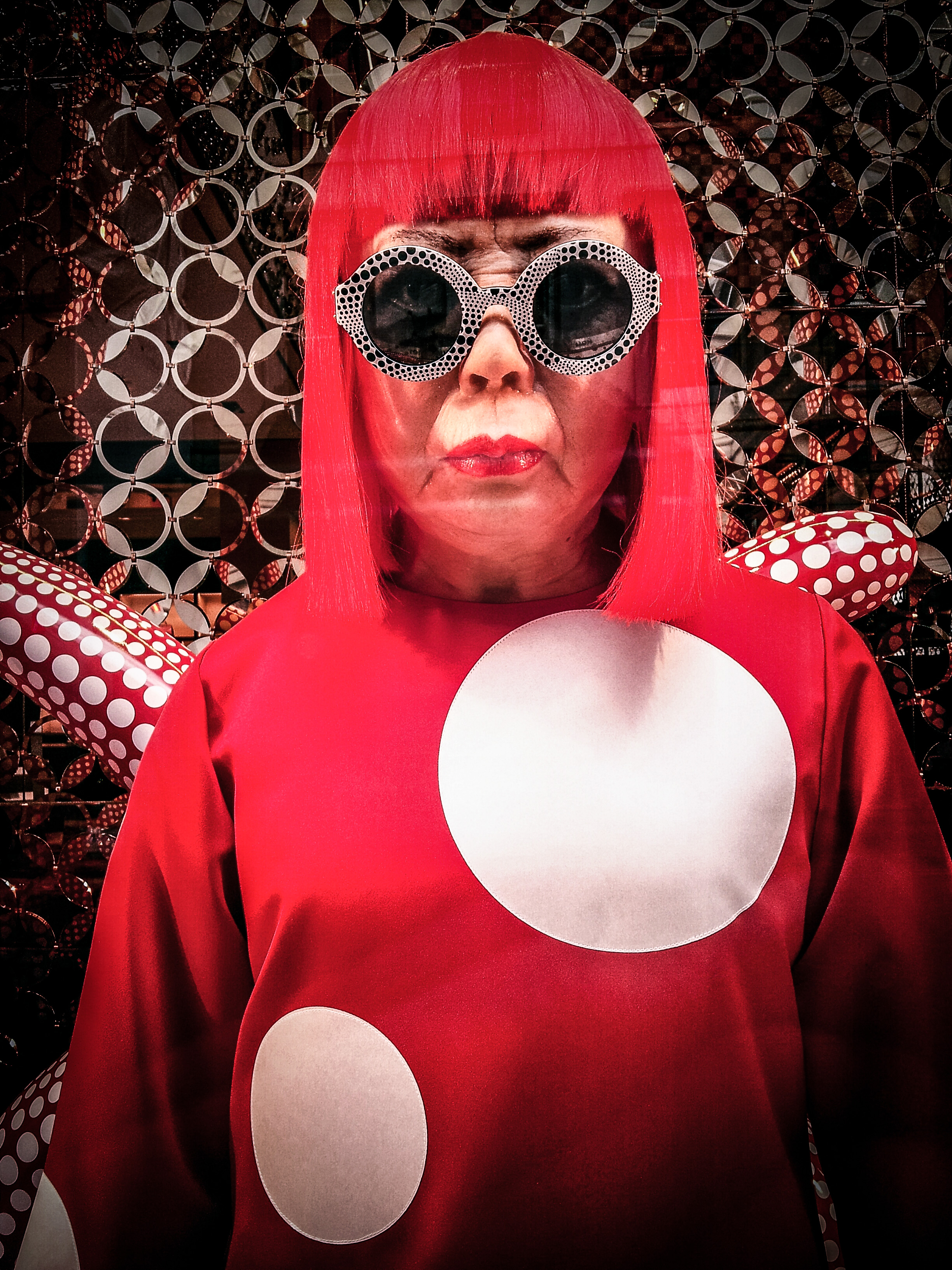
Who Is Yayoi Kusama?
Yayoi Kusama is an artist from Japan who loves polka dots! She was born a long, long time ago, in 1929, and she is still making art today.
She paints dots on everything: on pumpkins, on rooms, on herself, even on the people around her! She says dots make her feel happy and safe.
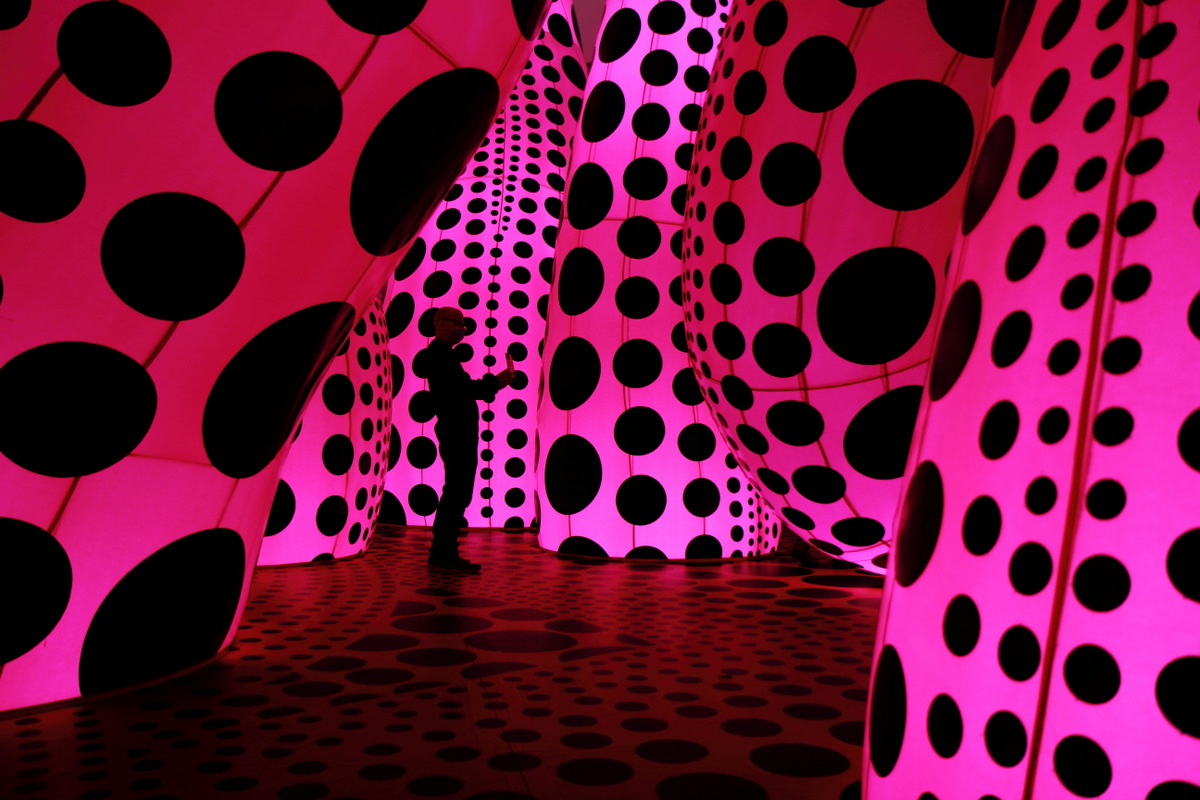
Her most famous rooms are called Infinity Rooms. They are filled with mirrors and lights so it looks like the room goes on forever and ever!
Yayoi Kusama (yah-YOY koo-SAH-mah) is a Japanese artist born on March 22, 1929, in Matsumoto, Japan. She works with sculpture, painting, and large installations (rooms you can actually walk inside)!
Her signature style uses repeating polka dots, bright colors, and patterns that spread across every surface. She calls this "infinity nets" because her patterns seem to go on without end.
Today she is recognized as one of the most successful living artists in the world. Her Infinity Mirror Rooms are visited by millions of people every year, and her spotted pumpkin sculptures are recognized worldwide.
Yayoi Kusama (草間 彌生) was born March 22, 1929, in Matsumoto, Japan. She is a contemporary artist working across sculpture, painting, installation, performance, video art, fashion, poetry, and fiction. It is one of the most wide-ranging creative careers in modern art history.
Her work draws from conceptual art, pop art, minimalism, surrealism, and abstract expressionism. It is deeply personal: Kusama has spoken openly about experiencing visual and auditory hallucinations from childhood, and she uses art as a form of therapy and self-expression, a practice she calls "art medicine."
Kusama lives and works in Tokyo, Japan, where she voluntarily resides in a psychiatric institution and walks to her nearby studio every day to create new work, a routine she has maintained for decades.
Her Amazing Art
Yayoi makes many kinds of art. Here are some of her most famous!
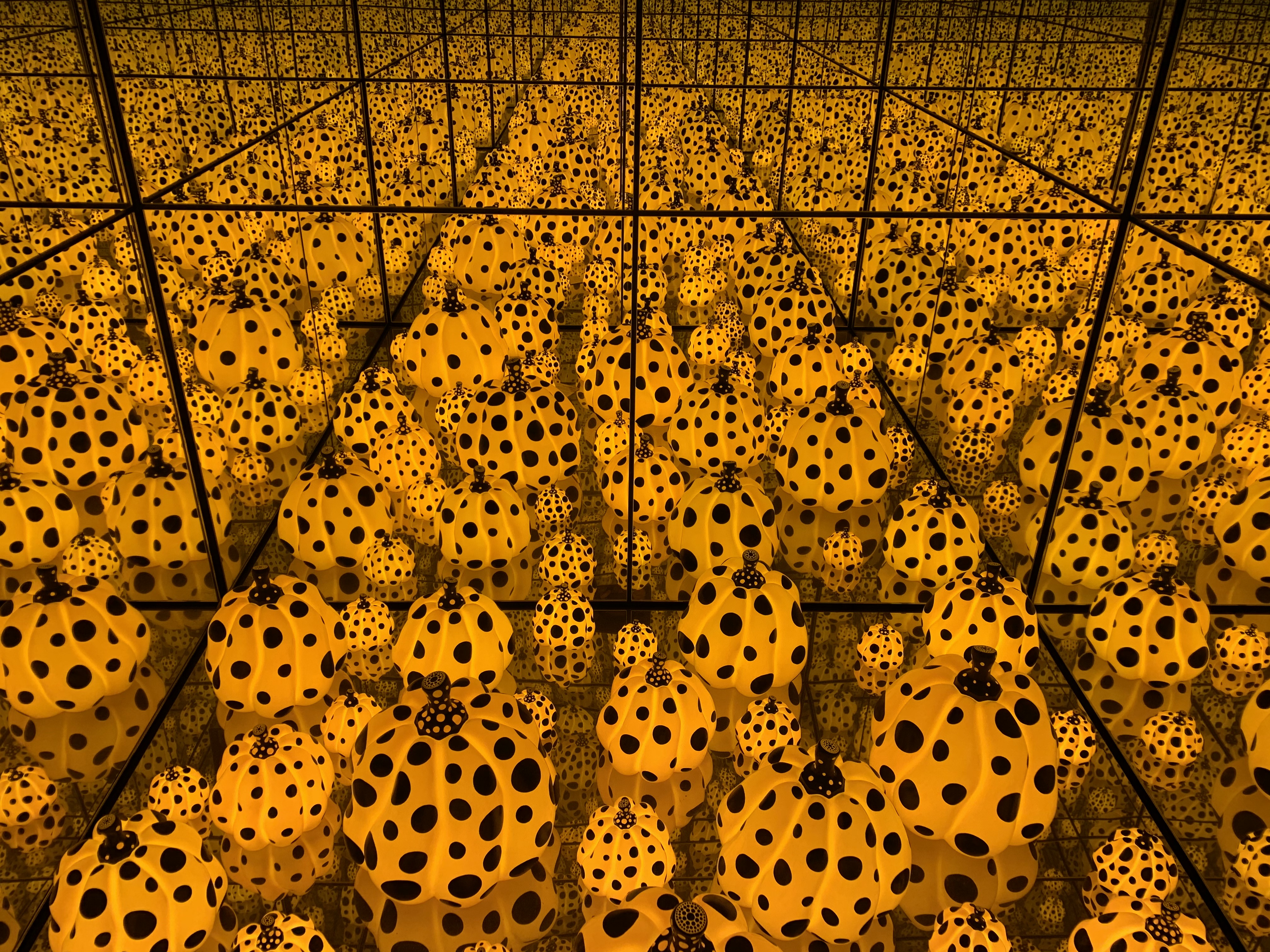
Her giant polka dot pumpkins!
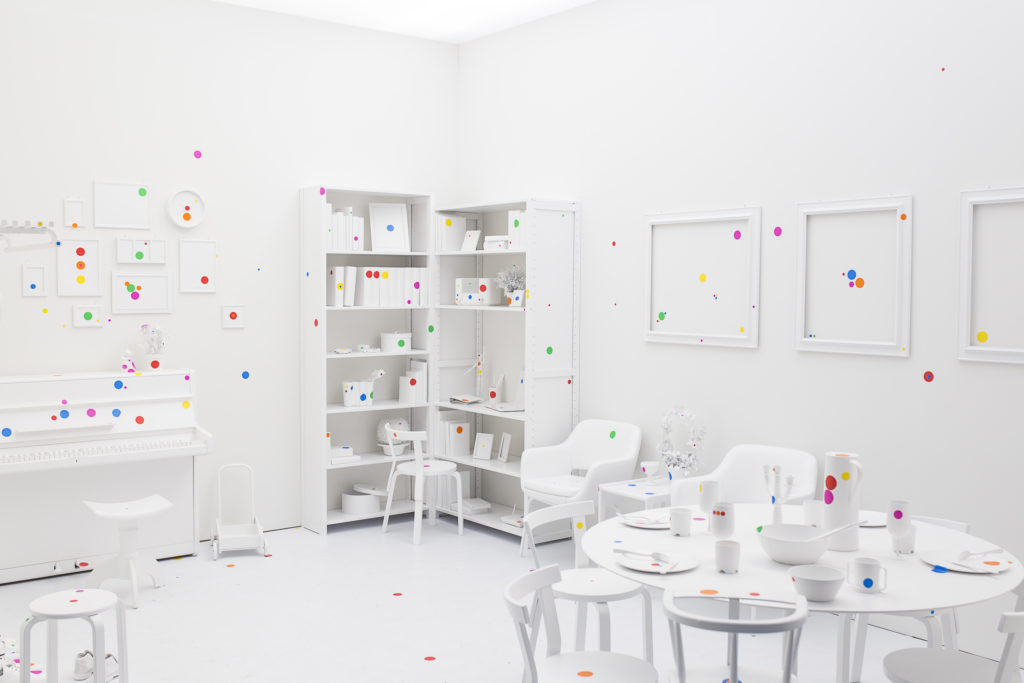
The dot sticker room — visitors add the dots!
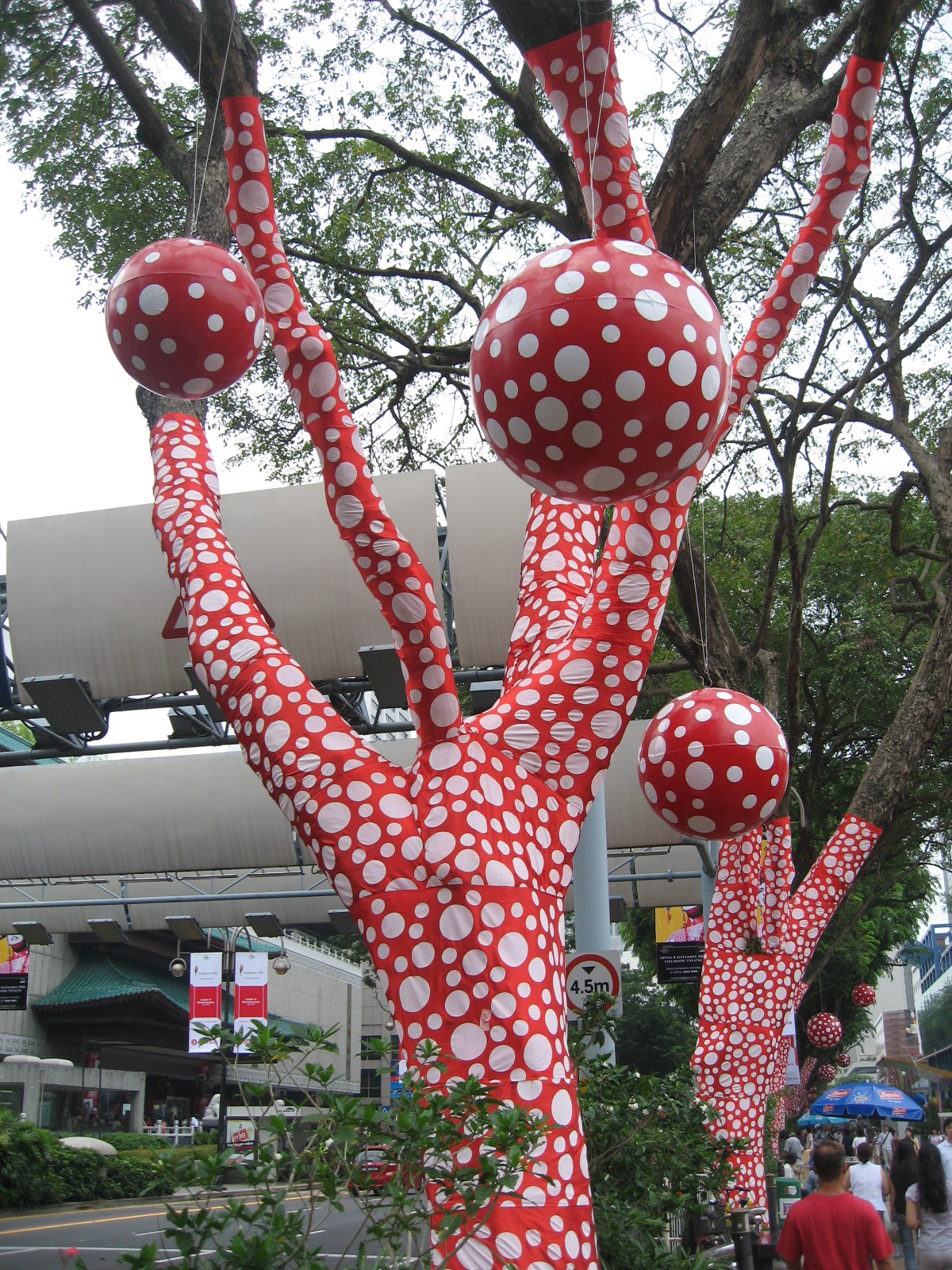
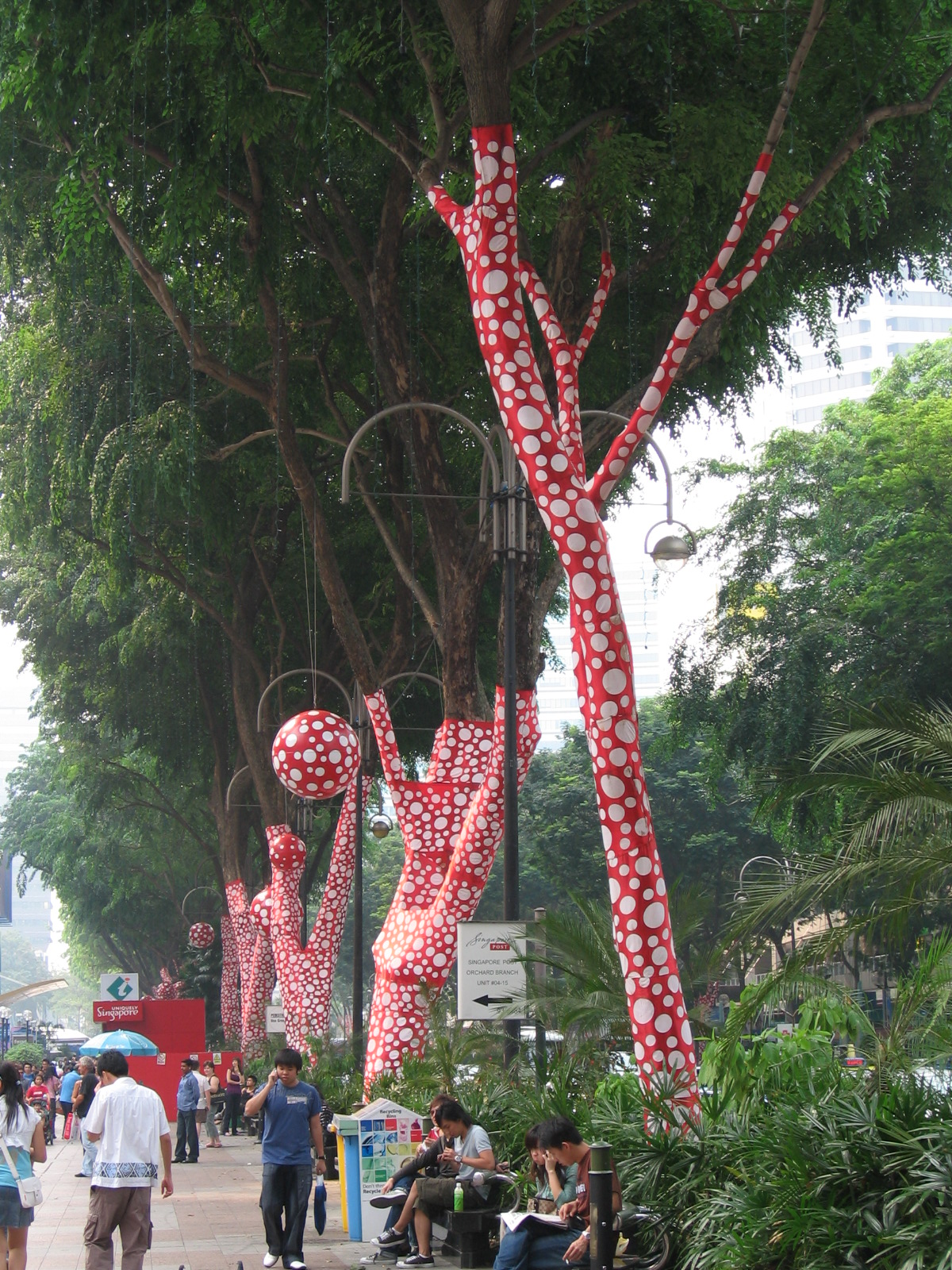
She even puts dots on trees!
Her Obliteration Room is one of the most interactive artworks ever made. A plain white room is set up with all white furniture. Then visitors are handed sheets of colorful dot stickers and invited to place them anywhere they like. Over weeks or months, the room transforms into a riot of color, created by thousands of different people working together!
Her pumpkin sculptures are inspired by the vegetable gardens near where she grew up as a child. She has said pumpkins are "comical and charming," and she has covered them with her signature polka dots in yellow and black.
The Obliteration Room — slowly covered in dots by visitors
Ascension of Polkadots on the Trees — outdoor installation, Inhotim
Kusama's body of work spans over seven decades and defies easy categorization. Several major series define her legacy:
The Obliteration Room — a white domestic space gradually obliterated by visitors' colored dot stickers
The Spirits of the Pumpkins Descended into the Heavens (2015)
Ascension of Polkadots on the Trees — outdoor installation, Inhotim, Brazil
Her Story & Challenges
Yayoi grew up in Japan a long time ago. When she was young, she drew pictures of flowers and dots that seemed to float up all around her, and drawing them made her feel better.
She wanted to be a big artist. So she moved all the way to the United States, a new country far from home, to share her art with the world!
Growing up in Japan in the 1930s and 1940s was not easy. Yayoi's family was not always supportive of her dreams of becoming an artist; her mother sometimes tore up her drawings! But Yayoi refused to stop creating.
In 1958, she moved to New York City, which was one of the most exciting art cities in the world. She worked hard and showed her art in galleries, but as a Japanese woman, she often found it difficult to get the same attention as male artists around her.
Today, she is one of the most celebrated artists alive. Museums around the world hold major collections of her work, and her exhibitions draw record-breaking crowds wherever they travel.
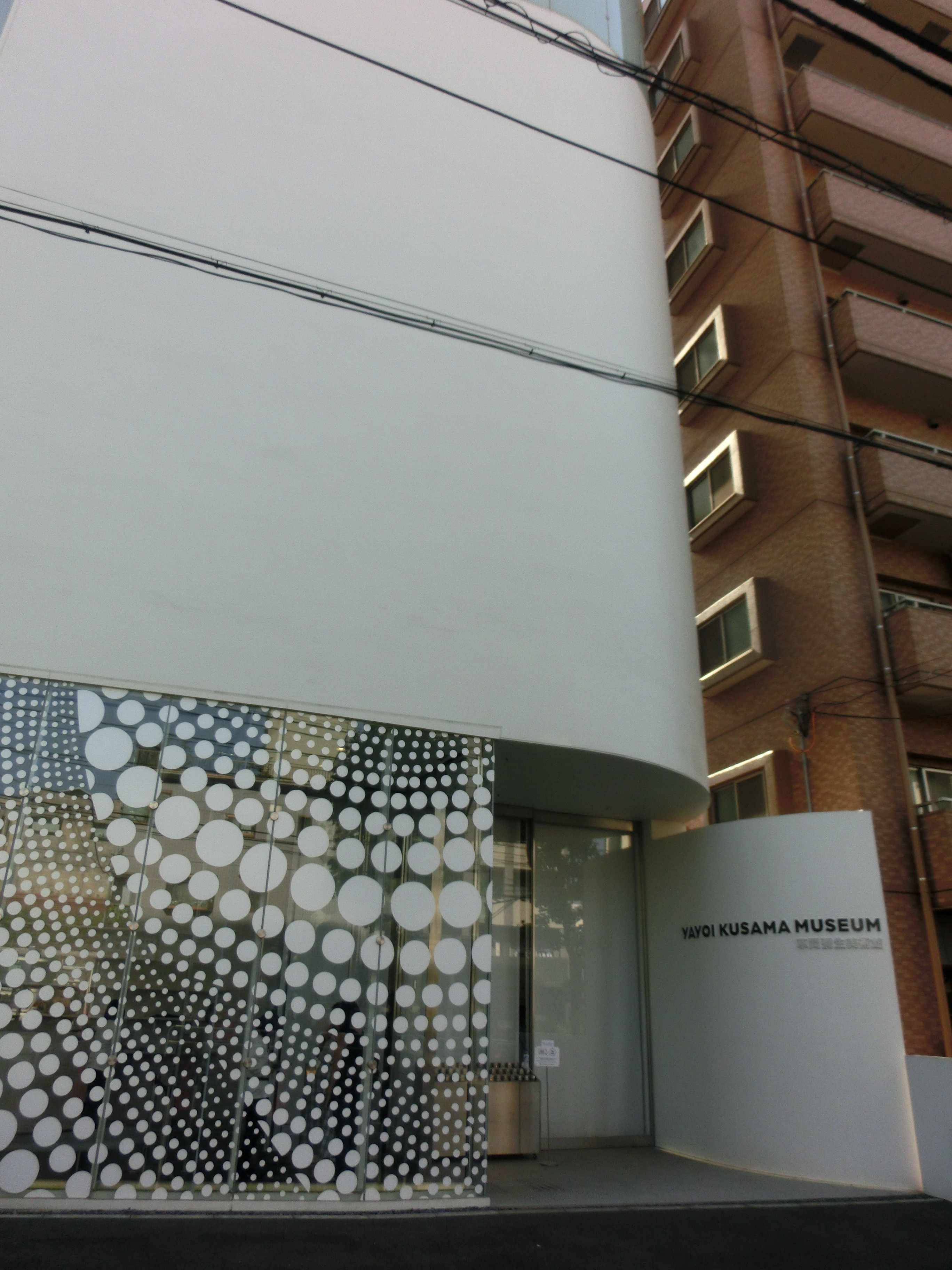
The Yayoi Kusama Museum in Tokyo, which opened in 2017
Kusama's path to recognition was long and shaped by barriers that many women and non-Western artists of her generation faced. She grew up in Matsumoto, Japan, where she began drawing obsessively as a child to process the vivid hallucinations she experienced. After studying in Kyoto, she moved to New York City in 1957 with little money and limited English, determined to make her mark on the art world.
Through the 1960s she created work that was genuinely ahead of its time, building her Infinity Mirror Rooms, organizing public performance events, and developing the ideas around repetition and pattern that would define her legacy. She worked alongside artists like Andy Warhol and Claes Oldenburg and influenced their thinking, yet she consistently received less credit and far less commercial success. By 1973 she had returned to Japan, exhausted, and chose to live in a psychiatric facility in Tokyo, where she has remained ever since, walking to her nearby studio each morning to create.
The turnaround came gradually. Representing Japan at the 1993 Venice Biennale brought renewed international attention, and over the following decades the art world caught up with what she had been doing all along. Today her retrospectives fill museums from Tate Modern to the Whitney, and at 96 she is regarded as one of the most important artists of the past hundred years.
Kusama installation at the Singapore Biennale, 2006
The Yayoi Kusama Museum, Tokyo (opened 2017)
Art is a way of expressing my life, and through it I overcome the darkness and limitations. Art gives me hope to keep going.
— Yayoi Kusama
⏱ Her Life in Time
Click any dot to explore a moment in Yayoi Kusama's journey
Select any dot to read about that moment in her life
Vocabulary to Know
Watch & Explore
Look inside one of Yayoi's magical mirror rooms! 🪞
Step inside one of Kusama's Infinity Mirror Rooms and see how her art makes space feel endless.
An introduction to Kusama's work. 1:37
Courtesy of the Whitney Museum of American Art. Excerpts from Kusama: Princess of Polka Dots (dir. Heather Lenz) — Kusama, gallerist Richard Castellone, and Tate Curator Frances Morris discuss her childhood, her move to New York, and the themes of infinity in her work. 15 min.
Let's Do It!
🎙️ Record your reflection here →
🎙️ Record your oral history here →
Talk About It
- What is your favorite color of dot? If you made a Kusama-style painting, what colors would you use?
- If you could walk inside an Infinity Mirror Room, how do you think you would feel? Happy? Surprised? Something else?
- Kusama draws things from her imagination. What does YOUR imagination look like?
- Why do you think Kusama uses dots and repeating patterns in almost all her artwork? What might that say about her ideas?
- The Obliteration Room is made by everyone together. What does that tell us about how art can be a community activity?
- Kusama moved to a country far from home to follow her dream. What would that feel like? Would you do it?
- What makes Kusama's work feel different from other art you've seen?
- Kusama's Wikipedia biography says her work influenced Andy Warhol, yet Warhol is often more famous. What does this tell us about how history records credit for creative ideas?
- How does knowing that Kusama uses art as "therapy" change how you understand her work? Does personal experience belong in art?
- The theme of "infinity" appears throughout her career. What might infinity represent for someone who grew up experiencing intense visual patterns? What might it represent for viewers?
- Kusama's late-career success came decades after her most innovative early work. What factors, beyond talent, determine when and whether an artist gets recognized?
Educator Resources
Standards alignment and classroom support across grade bands.
Georgia GSE Visual Arts — Kindergarten & Grade 1. Standards support Kusama-inspired dot printmaking, color exploration, and connecting an artist's biography to her cultural context.
Georgia GSE Visual Arts — Grades 2 & 3. Standards support printmaking, mixed-media making, color theory, and reading art in its cultural and historical context.
Georgia GSE Visual Arts — Grades 4 & 5. Standards support original art-making with conceptual intent, sculpture and assemblage, critical interpretation, and connecting art to social and political history.
2–3: RI.2.6 – Identify the main purpose of a text; W.3.1 – Write opinion pieces with reasons and evidence.
4–5: RI.4.3 – Explain events/concepts in a text; RI.5.6 – Analyze multiple accounts of the same topic; W.5.1 – Write opinion/argument essays.
Creating (Cr): Students explore and develop artistic ideas — seen in the polka dot painting, pattern-printing, and assemblage activities.
Responding (Re): Students analyze and interpret art, as in the discussion questions and the art analysis essay activity.
Connecting (Cn): Students relate artistic ideas to personal meaning and external context, connecting Kusama's biography, cultural identity, and mental health to her art choices.
Presenting (Pr): Students develop identity as artists through sharing and exhibiting their own dot and pattern works.
2–3: Written reflection (3–5 sentences) on one of the discussion questions, plus voice recording activity.
4–5: Art analysis paragraph or essay + participation in class discussion on recognition and fairness.