This Month™ Close-up
Vonetta Flowers
Olympic Champion & Barrier Breaker
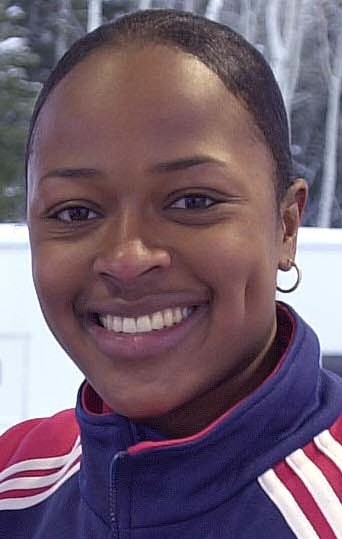
First Black athlete to win a gold medal at the Winter Olympics
Did you know? Vonetta Flowers was the first Black person ever to win a gold medal at the Winter Olympics! She did it in 2002, and people all around the world cheered for her.
Bobsledding is like riding a really fast sled down an icy track! Two people work together in the sled. One person steers and one person helps push the sled to make it go super fast.
🛷 Fun Fact: Bobsleds can go as fast as a car on the highway – about 90 miles per hour!
When Vonetta was young, she loved to run. She ran so fast that she went to college and kept running on a team. She dreamed of going to the Olympics!
But Vonetta didn't make it to the Summer Olympics. She was sad at first. Then she tried something new – bobsledding! This was a winter sport, and Vonetta had never even seen snow sports before.
Important lesson: When one dream doesn't work out, you can try a different dream! Vonetta didn't give up. She tried something new and worked really hard.
In 2002, Vonetta and her teammate Jill Bakken went to the Winter Olympics in Salt Lake City. They practiced and practiced. On race day, they zoomed down the icy track faster than anyone else!
They won the gold medal! Vonetta was so happy she cried tears of joy. She made history that day because no Black person had ever won a Winter Olympic gold medal before.
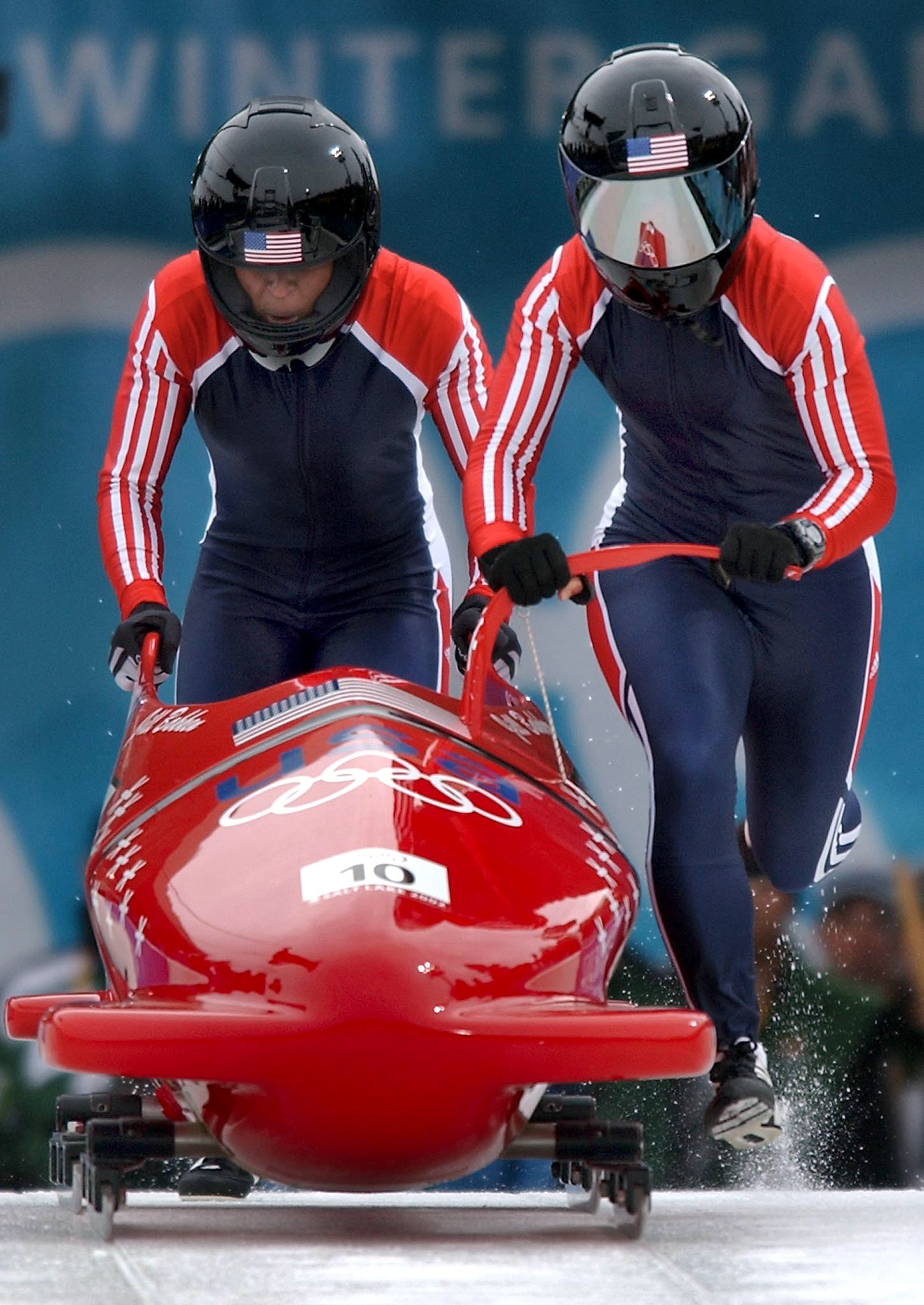
Vonetta Flowers and Jill Bakken celebrating their historic gold medal victory at the 2002 Winter Olympics
Draw Your Own Bobsled!
Use crayons or markers to draw a bobsled racing down a snowy mountain. Don't forget to add:
What colors will you use? Make your bobsled special!
Remember: Vonetta showed us that with hard work and trying new things, we can achieve amazing dreams – even ones we never imagined!
Historic Achievement: On February 19, 2002, Vonetta Flowers became the first Black athlete from any country to win a gold medal at the Winter Olympics. This was an important moment in sports history!
Vonetta Jeffrey was born in Birmingham, Alabama, where she discovered her love of running. She was so talented that she earned a scholarship to the University of Alabama at Birmingham (UAB). There, she competed in track and field, specializing in sprinting and the long jump.
📚 College Success: At UAB, Vonetta was a seven-time All-American athlete. This means she was one of the best college athletes in the whole country!
Vonetta's dream was to compete in the Summer Olympics. She tried out for the 1996 and 2000 Olympic teams but didn't make it. Instead of giving up on her Olympic dream entirely, she made a surprising choice – she decided to try a winter sport she had never done before: bobsledding.
In 2000, Vonetta was invited to try bobsledding. Even though she had grown up in Alabama where there's rarely snow, and even though bobsledding was completely new to her, she decided to give it a chance.
Vonetta begins training in bobsledding
Teams up with driver Jill Bakken
Wins Olympic gold medal in Salt Lake City
In bobsledding, there are different jobs. The driver steers the sled down the track. The brakeman (Vonetta's position) helps push the sled at the start to give it speed, then jumps in. Vonetta's speed and strength from track and field made her perfect for this job!
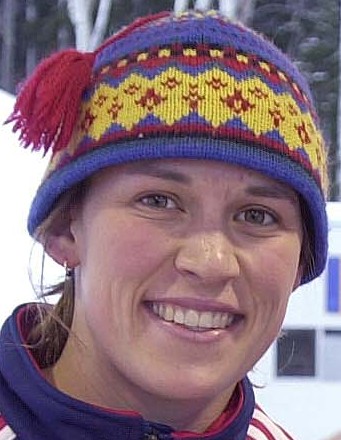
At the 2002 Winter Olympics in Salt Lake City, Utah, Vonetta teamed up with driver Jill Bakken (pictured right). They had only been working together for about a year, but they had great teamwork.
Race Day: The two-woman bobsled competition happened over two days. Teams made two runs each day, and their times were added together. Vonetta and Jill were not the favorites to win – but they gave it their all!
When they crossed the finish line after their final run, they had the fastest total time! They won the gold medal! Vonetta became the first Black athlete ever to win a Winter Olympic gold medal. Her achievement opened doors and inspired many others.
Vonetta Flowers and Jill Bakken celebrating their historic gold medal victory at the 2002 Salt Lake City Winter Olympics
🏆 Breaking Barriers: For over 100 years of Winter Olympics, no Black athlete had won a gold medal. Vonetta's victory was a historic breakthrough and showed that winter sports are for everyone.
Vonetta continued competing in bobsledding. She competed in the 2006 Winter Olympics in Turin, Italy. While she didn't win another medal, she proved that her 2002 victory was no accident – she was truly one of the world's best.
Create a bobsled track layout!
Use paper and colored pencils to design an exciting bobsled track. Include:
Challenge: Label the spots where teamwork is most important. Where does the brakeman need to push hardest? Where does the driver need to steer most carefully?
Vonetta's Legacy: Today, Vonetta Flowers is remembered not just as a champion, but as someone who broke barriers and showed that with determination, you can succeed even when trying something completely new. She proved that Olympic dreams can come true in unexpected ways!
Historic Milestone: On February 19, 2002, at the XIX Olympic Winter Games in Salt Lake City, Utah, Vonetta Flowers became the first Black athlete from any nation to win a gold medal in Winter Olympics history. Her achievement marked a watershed moment in the 78-year history of the Winter Games and challenged long-standing barriers in winter sports.
Vonetta Jeffrey was born on October 29, 1973, in Birmingham, Alabama. Growing up in the South, she had limited exposure to winter sports, yet she would eventually make history in one of the most demanding winter competitions. Her athletic journey began on the track, where she excelled in sprinting and the long jump.
📚 Academic and Athletic Excellence: Vonetta attended the University of Alabama at Birmingham (UAB) on an athletic scholarship, where she became a seven-time All-American in track and field. She competed in the 100-meter hurdles, long jump, and sprint relays, demonstrating the versatility and explosive power that would later serve her in bobsledding.
Like many elite track athletes, Vonetta set her sights on the Summer Olympics. She pursued her dream with determination, competing in qualifying trials for both the 1996 Atlanta Olympics and the 2000 Sydney Olympics. Despite her talent and dedication, she fell short of making either team – a disappointment that would have ended many athletes' Olympic aspirations.
In 2000, at age 27, Vonetta made a bold decision that would alter the course of her life and sports history. She accepted an invitation to try bobsledding, despite having no background in winter sports and coming from a state where snow is rare.
Why bobsledding recruited track athletes: Bobsled teams actively recruit track and field athletes, particularly sprinters, because the explosive power needed for a fast start is crucial to success. The push phase at the beginning of a bobsled run can determine the outcome of the entire race, with fractions of a second making the difference between gold and silver.
Born in Birmingham, Alabama
Competes in track and field at UAB, becomes seven-time All-American
Attempts to qualify for Summer Olympics; falls short both times
Transitions to bobsledding; begins training with USA Bobsled team
Forms partnership with driver Jill Bakken
Wins Olympic gold medal at Salt Lake City Winter Games
Competes at Turin Winter Olympics
Inducted into Alabama Sports Hall of Fame
In the two-woman bobsled event, two athletes work in perfect synchronization. The pilot (driver) sits in front and steers the sled through the intricate course using subtle movements of ropes attached to the front runners. The brakeman sits behind the pilot and has two critical jobs:
⚡ Speed and Physics: Bobsleds can reach speeds exceeding 90 mph (145 km/h) on the fastest tracks. Teams experience forces up to 5Gs in the tightest turns – more than astronauts feel during a shuttle launch! The aerodynamic position, perfect timing, and split-second decisions make bobsledding one of the most demanding winter sports.
After transitioning to bobsledding in 2000, Vonetta had limited time to master the sport before the 2002 Olympics. She trained intensively, learning not just the physical demands but also the mental toughness required to hurtle down an ice track at highway speeds.
In 2001, Vonetta was paired with pilot Jill Bakken (pictured right). Though relatively new partners, they developed strong chemistry and effective communication – essential in a sport where trust between teammates can mean the difference between winning and crashing.
The Underdog Status: Entering the 2002 Olympics, Vonetta and Jill were not favored to win. Other teams had been competing together longer and had more international experience. However, the duo had something special: determination, complementary skills, and the home-field advantage of competing on American ice.
The two-woman bobsled competition at the 2002 Winter Olympics took place on February 19, 2002, at the Utah Olympic Park in Park City. The format consisted of two runs, with teams' times combined to determine the winner.
Vonetta and Jill executed two nearly flawless runs. Vonetta's explosive power from track and field translated into strong push starts, giving them valuable fractions of a second. Jill's precise steering kept them on the optimal racing line through every turn.
Vonetta Flowers and Jill Bakken celebrate their historic gold medal victory at the 2002 Salt Lake City Winter Olympics. This moment marked the first time a Black athlete had won a Winter Olympic gold medal.
🏅 The Final Results: When the competition concluded, Bakken and Flowers had a combined time that put them in first place. They won gold by 0.37 seconds – barely more than a blink of an eye, yet a comfortable margin in bobsledding. Their victory was both an athletic triumph and a historic breakthrough.
The Winter Olympics began in 1924, and for 78 years, no Black athlete had won a gold medal at the Winter Games. Winter sports had long been dominated by athletes from countries with colder climates and strong winter sports traditions. Economic barriers, limited access to winter sports facilities, and lack of representation all contributed to this disparity.
Vonetta's victory was more than a personal achievement – it was a cultural milestone. She proved that excellence in winter sports was not limited by background, geography, or race. Her success inspired a new generation of diverse athletes to pursue winter sports.
Impact on Diversity in Winter Sports: Since Vonetta's historic win, there has been increased attention to diversity in winter sports. While progress continues to be made, her achievement remains a powerful symbol of breaking barriers and creating opportunities for athletes from all backgrounds.
Vonetta didn't rest on her Olympic laurels. She continued competing in bobsledding, participating in World Cup events and returning to the Olympics in 2006 at Turin, Italy. Though she didn't medal at the Turin Games, her continued presence at the elite level demonstrated that her 2002 victory was built on genuine skill and dedication.
In 2011, Vonetta was inducted into the Alabama Sports Hall of Fame, recognizing her contributions to sports and her role as a trailblazer. She has since been involved in promoting sports participation and inspiring young athletes.
🎖️ Recognition and Honors: Beyond the gold medal itself, Vonetta's achievement has been celebrated in numerous ways. She has received awards, given motivational speeches, and served as a role model, particularly for young Black athletes considering winter sports.
Vonetta Flowers's story offers several powerful lessons:
Conduct research on another Olympic barrier-breaker!
Choose one of these athletes (or another barrier-breaking Olympian) and create a presentation:
Your presentation should include:
Extension: Create a timeline showing major barrier-breaking moments in Olympic history. What patterns do you notice? What barriers still need to be broken?
Vonetta's Enduring Impact: More than two decades after her historic victory, Vonetta Flowers remains an inspiration. Her journey from Birmingham track star to Olympic champion demonstrates that with determination, adaptability, and courage, extraordinary achievements are possible. She didn't just win a gold medal – she changed the face of winter sports forever and inspired countless athletes to pursue their dreams, regardless of the obstacles in their path.
Photo and information sources: Olympics.com, AL.com, FIBT records, United States Olympic Committee archives
Understanding sports performance, athletic training, and the physical demands of Olympic-level competition
Civil rights history, breaking social barriers, understanding historic significance of representation
Perseverance, resilience, adapting to change, pursuing goals despite setbacks
Physics of bobsledding (momentum, friction, G-forces), biomechanics of athletic performance
Bobsled Speed Challenge Game: Students can practice comparing race times and build number sense skills with our interactive bobsled game. Play the game here
Companion Lesson Plan: Download our grade-adjustable lesson plan with structured activities to accompany the game. Get the lesson plan
Timely Teaching Opportunity: With the 2026 Winter Olympics currently taking place, this is an ideal moment to study Vonetta Flowers's legacy and observe how winter sports have evolved since her historic achievement.
Note to Educators: This content is designed to be flexible and adaptable to your classroom needs. Feel free to modify activities, adjust grade levels, and extend learning based on your students' interests and abilities. The presence of the current 2026 Winter Olympics provides an authentic, real-time context for learning about Vonetta Flowers's historic achievement!