🏮
🏮
🧧
🧧
🐴
Teacher's Guide to Spring Festival
🏮 🧧 🐴 🧧 🏮
Celebrating Lunar New Year Across Cultures
Chinese Spring Festival • Korean Seollal • Vietnamese Tết

Audience: K-5 Elementary Educators (with focus on Grades 2-3)

Purpose: Culturally authentic guide to teaching about Lunar New Year celebrations across East and Southeast Asia

Approach: Equal coverage of Chinese, Korean, and Vietnamese traditions with emphasis on family reunion, symbolism, modern adaptations, and diaspora experiences

Updated: February 2026 for the Year of the Snake/Horse

Sources: Scholarly articles from The Conversation, cultural experts, and authentic community voices

🌏 Understanding the Spring Festival / Lunar New Year

What Is the Lunar New Year?

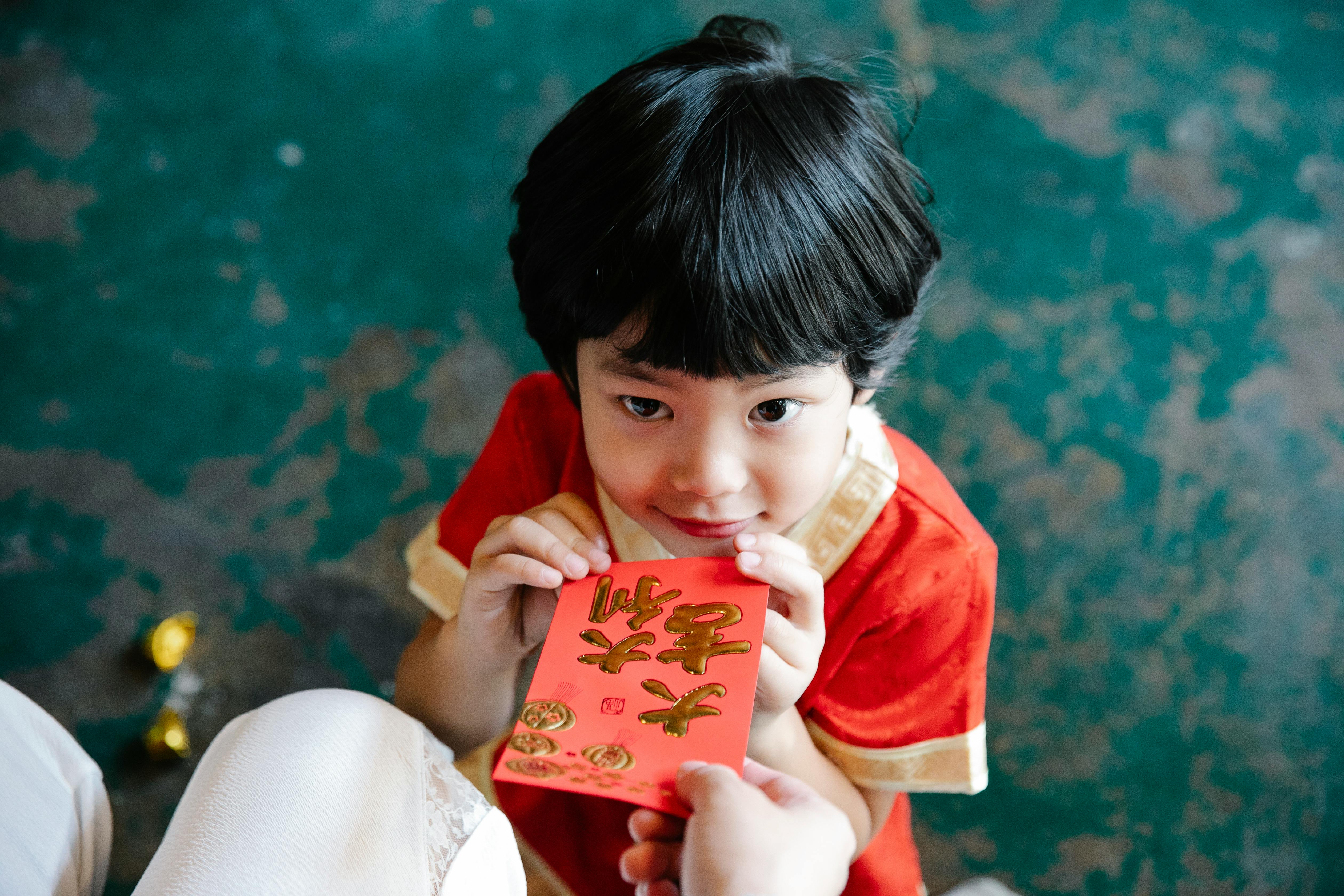
An adult giving a red envelope to a young child during Lunar New Year celebration

Photo: Angela Roma/Pexels, CC BY-SA

The Lunar New Year, also called Spring Festival, marks the beginning of the new year based on the lunar calendar. This celebration is observed across East and Southeast Asia, with each culture bringing its own unique customs, foods, and traditions while sharing common themes of family reunion, renewal, and hope for prosperity.

Important Note: While many people call this celebration "Chinese New Year," this term doesn't capture the full picture. Millions of people in Korea, Vietnam, and other Asian countries celebrate their own distinct versions of this holiday. Using "Lunar New Year" or "Spring Festival" is more inclusive and respectful of all the cultures that observe this important time.

Three Cultural Traditions, One Celebration

Culture Name Pronunciation Literal Meaning
Chinese 春节 (Chūn Jié) or Spring Festival choon jee-eh "Spring Festival" , celebrating the arrival of spring
Korean 설날 (Seollal) sul-lahl "The year of age day" , marking a new year of life
Vietnamese Tết Nguyên Đán tet noo-yen dahn "First morning of the first day" , the beginning of a new period

When Is It Celebrated?

The Lunar New Year falls on different dates each year because it follows the lunar calendar rather than the solar calendar we use daily. It typically occurs between late January and mid-February, on the second new moon after the winter solstice.

In 2026:

  • Chinese Spring Festival: February 17, 2026 (Year of the Horse)
  • Korean Seollal: February 17, 2026 (Year of the Horse)
  • Vietnamese Tết: February 17, 2026 (Year of the Horse)

Note: While the date is often the same across cultures, the zodiac animal can differ , for example, Vietnam uses the cat instead of the rabbit, and the water buffalo instead of the ox.

Shared Themes Across Cultures

🏠 Family Reunion

Across all three cultures, Lunar New Year is fundamentally about family. This is the most important time for families to gather, often involving long journeys home. In China, this creates the world's largest annual human migration. In Korea and Vietnam, highways become congested for days as people travel to their hometowns.

🔄 Renewal and Fresh Starts

The celebration symbolizes leaving behind the old year's troubles and welcoming new opportunities. Homes are cleaned thoroughly, debts are settled, and families wear new clothes to embody this fresh beginning.

🙏 Honoring Ancestors

Each culture has rituals to remember and honor ancestors. This reflects deep respect for those who came before and acknowledges the importance of family continuity across generations.

🍜 Food as Symbol and Connection

Special foods aren't just delicious , they carry meaning. The shapes, colors, and names of dishes symbolize wishes for prosperity, longevity, and happiness. Preparing these foods together strengthens family bonds.

🧧 Generosity and Good Fortune

Giving gifts, especially money in red envelopes to children, symbolizes passing on blessings and good fortune to the next generation.

Why Learning About Multiple Traditions Matters

When we teach about Lunar New Year, it's essential to recognize that this is not one monolithic celebration. By exploring Chinese, Korean, and Vietnamese traditions side by side, students learn to:

  • Appreciate both similarities and differences across cultures
  • Understand that holidays evolve within specific cultural contexts
  • Recognize the diversity within Asian and Asian-American communities
  • Avoid conflating different cultures into a single "Asian" experience
  • Value authentic representation from community members themselves
🤝 Cultural Sensitivity Guidelines

Core Principles for Respectful Teaching

✅ DO:

  • Use inclusive terms like "Lunar New Year" or "Spring Festival" when discussing multiple cultures
  • Acknowledge that these are living traditions that vary by family, region, and generation
  • Invite families from these communities to share their authentic experiences
  • Present each culture's traditions with equal depth and respect
  • Explain that not all Asian families celebrate Lunar New Year
  • Discuss how diaspora communities adapt traditions in new contexts
  • Use proper pronunciation and spelling (Vietnamese diacritical marks, Korean romanization)
  • Center voices from the communities being studied

❌ DON'T:

  • Assume all Asian students celebrate Lunar New Year or celebrate it the same way
  • Use "Chinese New Year" when discussing Korean or Vietnamese traditions
  • Present traditions as exotic, strange, or "other"
  • Conflate different Asian cultures ("They all celebrate it the same way")
  • Teach only about Chinese traditions and ignore Korean and Vietnamese celebrations
  • Make assumptions about students' family practices based on their ethnicity
  • Appropriate sacred or significant cultural symbols for decorations
  • Present stereotypical or outdated depictions of Asian cultures

Addressing Common Misconceptions

Misconception: "All Asian people celebrate Chinese New Year"

Reality: Not all Asian cultures observe Lunar New Year, and those that do celebrate it in culturally distinct ways. Japanese people, for instance, celebrate New Year on January 1st. Thailand, Cambodia, and Laos celebrate their New Year in April. Within East and Southeast Asia, Chinese, Korean, Vietnamese, and other communities have unique traditions.

Misconception: "It's basically the same celebration everywhere"

Reality: While there are shared themes (family reunion, ancestor veneration, symbolic foods), the specific customs, foods, rituals, and meanings differ significantly. Korean ancestral rites (charye) differ from Vietnamese offerings. Tteokguk differs from banh chung. These distinctions matter.

Misconception: "We should call it Chinese New Year since it originated in China"

Reality: While the lunar calendar system has Chinese origins, Korean and Vietnamese cultures have celebrated their own versions of this holiday for thousands of years. These are not borrowed traditions , they are integral parts of Korean and Vietnamese culture with their own deep histories and meanings.

Respecting Students' Diverse Experiences

  • Not all students from Asian backgrounds celebrate Lunar New Year: Some families don't observe it due to religion, regional origin, or personal choice.
  • Celebration styles vary widely: Some families maintain traditional practices, while others create new hybrid traditions. Diaspora families may celebrate differently than relatives in their countries of origin.
  • Economic factors matter: Traditional celebrations can be expensive. Not all families can afford travel, gifts, or elaborate feasts.
  • Generational differences exist: Younger generations may have different relationships to these traditions than their elders.

Working with Families

The best way to teach about Lunar New Year is to partner with families from these communities. Here's how:

Inviting Family Participation

  • Send a welcoming, open invitation (not an assumption) to families who may celebrate
  • Offer multiple ways to participate: in-person visits, recorded videos, written contributions, lending artifacts
  • Be specific about what you're hoping to learn: "Would you be willing to share how your family celebrates Seollal?"
  • Compensate families for their time and expertise when possible
  • Let families guide what they're comfortable sharing , don't push for "exotic" details
  • Follow up with thank-you notes and share how students benefited from their contribution
🐴 Chinese Spring Festival (春节 Chūn Jié)

Overview

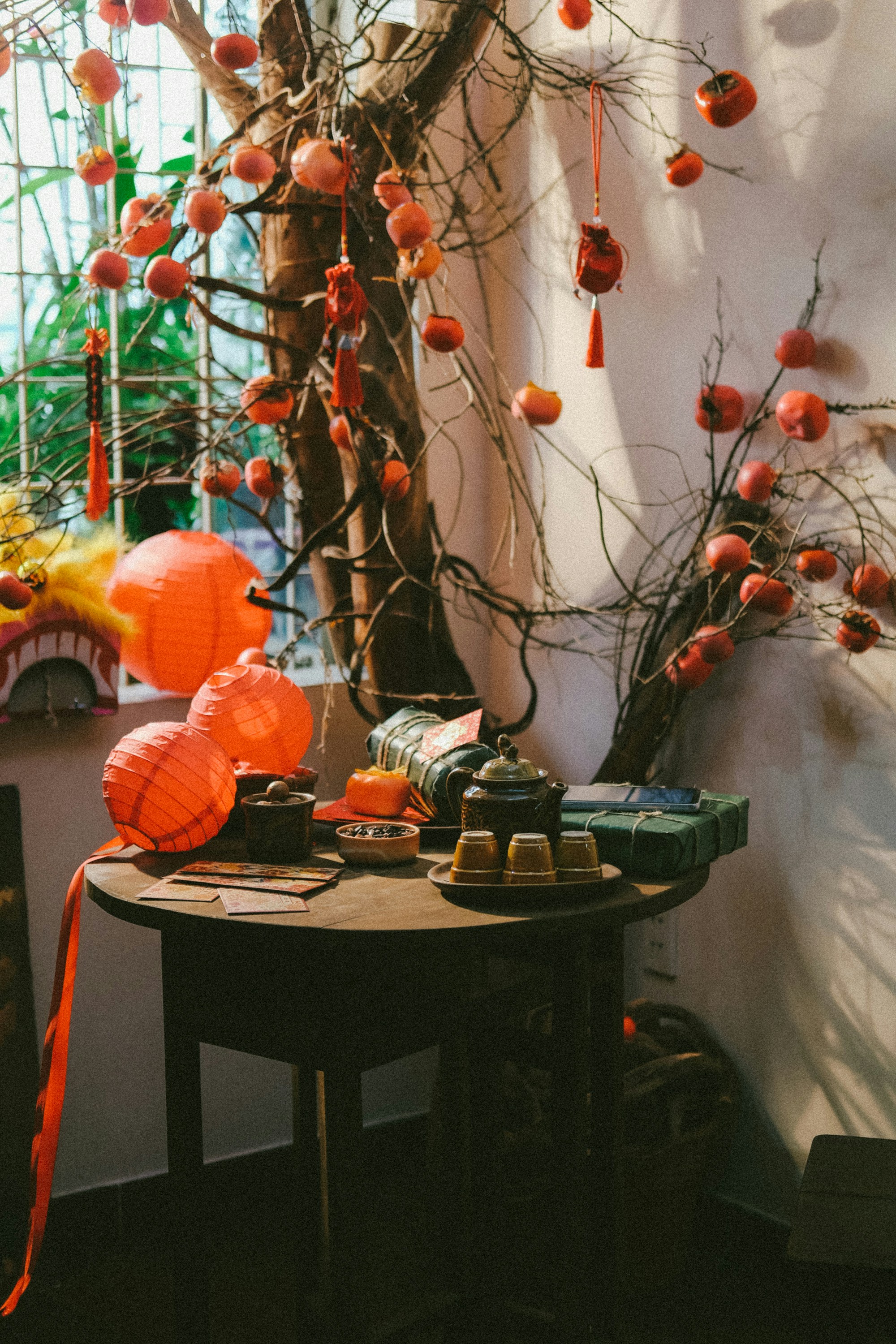
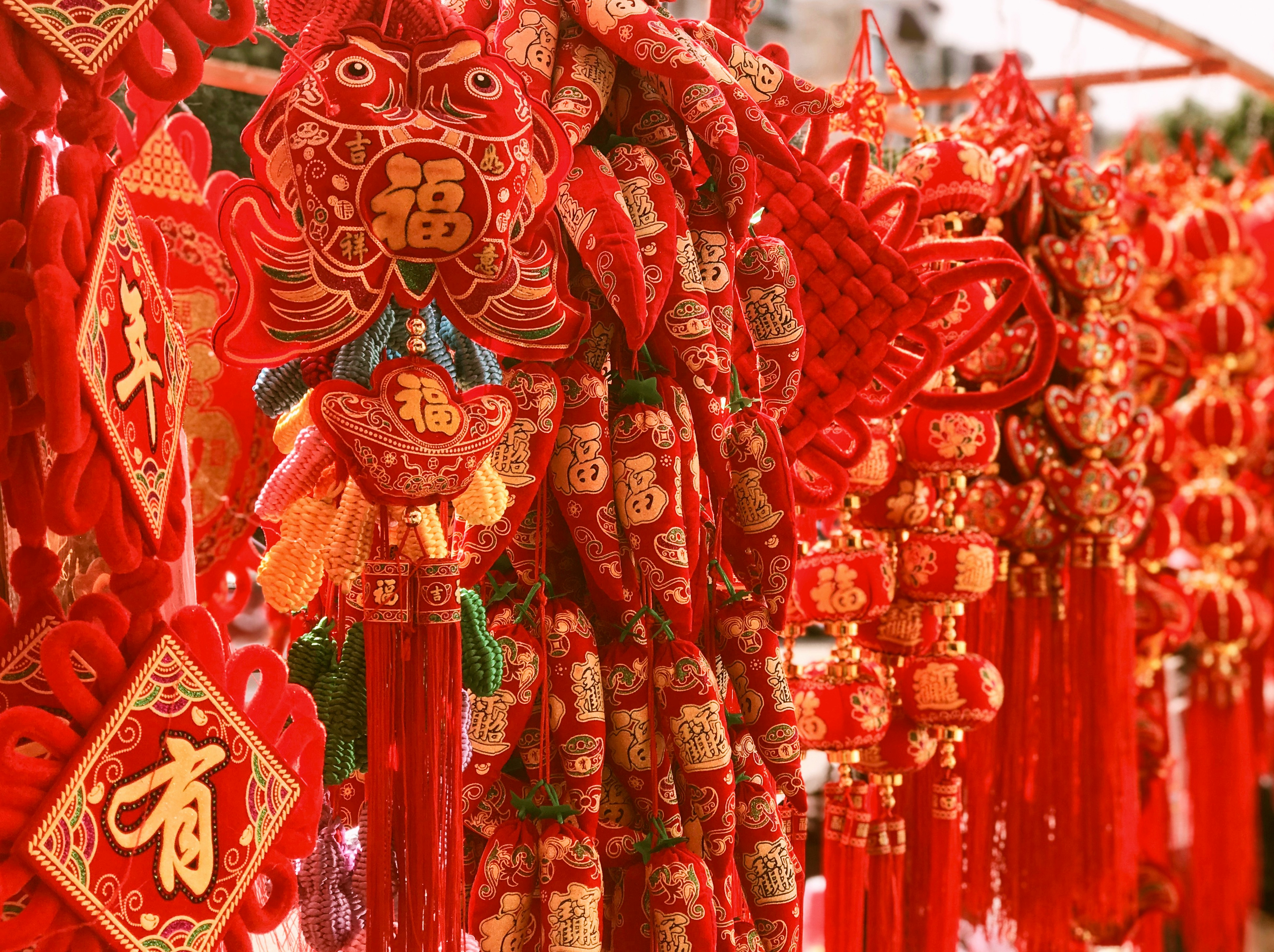
Traditional Chinese New Year decorations including red lanterns and spring couplets

Spring Festival (春节, Chūn Jié) is the most important traditional holiday in Chinese culture. Known internationally as Chinese New Year, it marks the beginning of spring and a new year on the lunar calendar. The celebration emphasizes family reunion, renewal, and hope for prosperity in the year ahead.

Duration: Traditionally 15 days, from New Year's Eve to the Lantern Festival (元宵节)

Peak Celebration: New Year's Eve and the first three days

2026 Date: February 17, 2026 (Year of the Horse 马年)

The Zodiac Animals

Chinese culture follows a 12-year cycle where each year is represented by an animal: Rat, Ox, Tiger, Rabbit, Dragon, Snake, Horse, Goat, Monkey, Rooster, Dog, and Pig. Each animal is believed to influence the characteristics of people born in that year and the fortune of the year itself.

Famous people born in the Year of the Tiger (for classroom discussion): Queen Elizabeth II, Leonardo DiCaprio, Lady Gaga

Preparation Before New Year

House Cleaning (扫尘 sǎo chén)

Families thoroughly clean their homes to sweep away bad luck and make room for good fortune. However, sweeping on New Year's Day itself is taboo , you might sweep away the good luck!

Shopping and Decorating

  • Red decorations everywhere: Red paper-cuts (窗花) on windows, spring couplets (春联) on doors
  • Door god posters: Traditional guardians to protect the home
  • New red clothing: Red symbolizes luck, joy, and happiness
  • Gifts for relatives: Preparing presents shows respect and strengthens relationships

New Year's Eve (除夕 Chúxī)

The most important moment of the celebration. Families gather for a reunion dinner (年夜饭) , often the most significant meal of the year. All family members make an effort to be together, no matter how far they must travel.

The Reunion Dinner

Every dish has symbolic meaning:

  • Fish (鱼 yú): Sounds like "surplus" (余 yú), symbolizing abundance. Tradition says to leave some fish uneaten to ensure prosperity carries into the new year
  • Dumplings (饺子 jiǎozi): Shaped like gold ingots, representing wealth. Northern Chinese families often eat these at midnight
  • Spring rolls: Their golden color resembles gold bars
  • Sticky rice cake (年糕 niángāo): Sounds like "higher year," meaning promotion and advancement
  • Oranges and tangerines (桔 jú): Sound like "luck" (吉 jí)
  • Longevity noodles: Long uncut noodles symbolize long life

Evening Activities

  • Watching Spring Festival Gala on TV: A massive variety show that hundreds of millions watch together
  • Playing games: Mahjong, cards, board games
  • Staying up late: "Guarding the year" (守岁) to welcome the new year
  • Fireworks at midnight: To scare away evil spirits and bad luck

New Year's Day and Beyond

Red Envelopes (红包 hóngbāo)

Adults give children red envelopes filled with money, symbolizing that bad luck is driven away and good fortune is passed on. The red color and the act of giving both carry blessings.

Visiting Relatives and Friends

The first days of the new year are spent visiting family and friends, exchanging blessings and gifts. Common greetings include:

  • 新年快乐 (Xīn Nián Kuài Lè) , "Happy New Year!"
  • 恭喜发财 (Gōng Xǐ Fā Cái) , "Wishing you prosperity!"

The Lantern Festival (元宵节)

The 15th and final day features beautiful lantern displays, lion and dragon dances, and eating sweet rice balls (汤圆 tāngyuán) that symbolize family togetherness.

Modern Adaptations

  • Digital red envelopes: Sent via WeChat and other apps
  • Restaurant dinners: Many urban families now eat reunion dinner at restaurants
  • Recorded fireworks: In cities with bans, recordings play through speakers
  • Virtual gatherings: Video calls connect families across distances

In the Chinese Diaspora

Chinese communities worldwide maintain these traditions, with celebrations in Chinatowns featuring parades with lion and dragon dances, cultural performances, and street festivals. Cities like San Francisco, New York, London, and Sydney host major public celebrations.

For Chinese-American families, Spring Festival becomes a way to maintain cultural identity and pass traditions to children growing up in different cultural contexts. Some families blend Chinese and Western practices, creating unique hybrid celebrations.

🌸 Hong Kong Style Chinese New Year

A Unique Urban Celebration

Hong Kong's Chinese New Year celebration blends traditional Chinese customs with distinctive local traditions and cosmopolitan energy. As a major international city with deep cultural roots, Hong Kong creates a celebration that's both authentically Chinese and uniquely its own.

What Makes Hong Kong Different:

  • Massive flower markets that become the social heart of the celebration
  • World-class night parade on New Year's Day
  • Victoria Harbour fireworks display
  • Horse racing on the third day (a uniquely Hong Kong tradition)
  • A vibrant blend of Cantonese tradition and international influences

The Flower Markets: 行花市 (Hang Fa Shi)

Perhaps Hong Kong's most beloved and distinctive New Year tradition is "hang fa shi" (行花市) , literally "walking the flower market." For about a week leading up to New Year's Day, parks and public spaces across Hong Kong transform into bustling outdoor bazaars filled with auspicious plants, decorations, food, and festive energy.

Victoria Park Flower Market

The largest and most famous is at Victoria Park in Causeway Bay, featuring over 400 stalls. This market becomes a sensory explosion:

  • "Wet goods" stalls: Auspicious flowers and plants
  • "Dry goods" stalls: Decorations, zodiac-themed items, red banners (揮春 fai chun)
  • Food stalls: Traditional snacks, street foods like curry fish balls, stinky tofu
  • Entertainment: Lion dances, traditional performances, free calligraphy

Auspicious Plants and Their Meanings

Plant Chinese Name Symbolism
Peach Blossoms 桃花 (tóu fā) Love, growth, romance (circle the tree 3 times for good luck in love!)
Kumquat Trees 金桔 (gām gwāt) Gold and luck , the name sounds like "gold" and "good fortune"
Narcissus 水仙 (séuì sīn) Good fortune and purity
Orchids 蘭花 (làahn fā) Elegance, prosperity, refinement
Pussy Willows 銀柳 (ngàhn láuh) Prosperity , sounds like "silver" in Cantonese
Lucky Bamboo 富貴竹 (fu gwai juk) Wealth and honor

The Custom of Buying Last Minute

A uniquely Hong Kong tradition: visiting the flower markets throughout the final night before New Year's Day. The atmosphere builds as the evening progresses, with massive crowds filling the markets well into the early morning hours (2am, 3am, even later!). Vendors are eager to sell off their remaining stock, offering steep discounts as the night goes on. Teenagers and young adults especially love this all-night tradition , it's become a social event, a chance to be out with friends celebrating as the new year arrives.

The Chinese New Year Night Parade

Held on the evening of New Year's Day (Day 1), this spectacular parade transforms Tsim Sha Tsui into a moving festival of color, music, and performance. An annual tradition since 1996, it's one of Hong Kong's most anticipated events.

What to Expect

  • Route: Starting at Hong Kong Cultural Centre, winding through Canton Road, Haiphong Road, and Nathan Road
  • Duration: Pre-parade entertainment from 6pm, parade from 8pm-10:30pm
  • Features: Over 30 elaborate floats, traditional Chinese lion and dragon dancers, international performance troupes, acrobats, marching bands
  • Themes: Each year has a theme , for 2026 (Year of the Horse): "Best Fortune. World Party"
  • Participants: Major Hong Kong companies (Cathay Pacific, Hong Kong Disneyland, Ocean Park), international guest performers

Viewing: Free viewing along the parade route, or purchase spectator stand tickets (sell out quickly!). Streets close early as crowds gather for the best viewing spots.

Victoria Harbour Fireworks

On the second day of Chinese New Year, Victoria Harbour blazes with a spectacular fireworks display , one of the world's most stunning waterfront shows. The pyrotechnics are choreographed to music, with lights dancing on the surrounding skyscrapers, creating an unforgettable visual experience.

Best viewing spots: Tsim Sha Tsui waterfront, Victoria Park, Avenue of Stars, or from a harbour cruise.

Temple Visits and Wishes

Like other Chinese communities, Hongkongers visit temples to pray for fortune and blessings:

Wong Tai Sin Temple
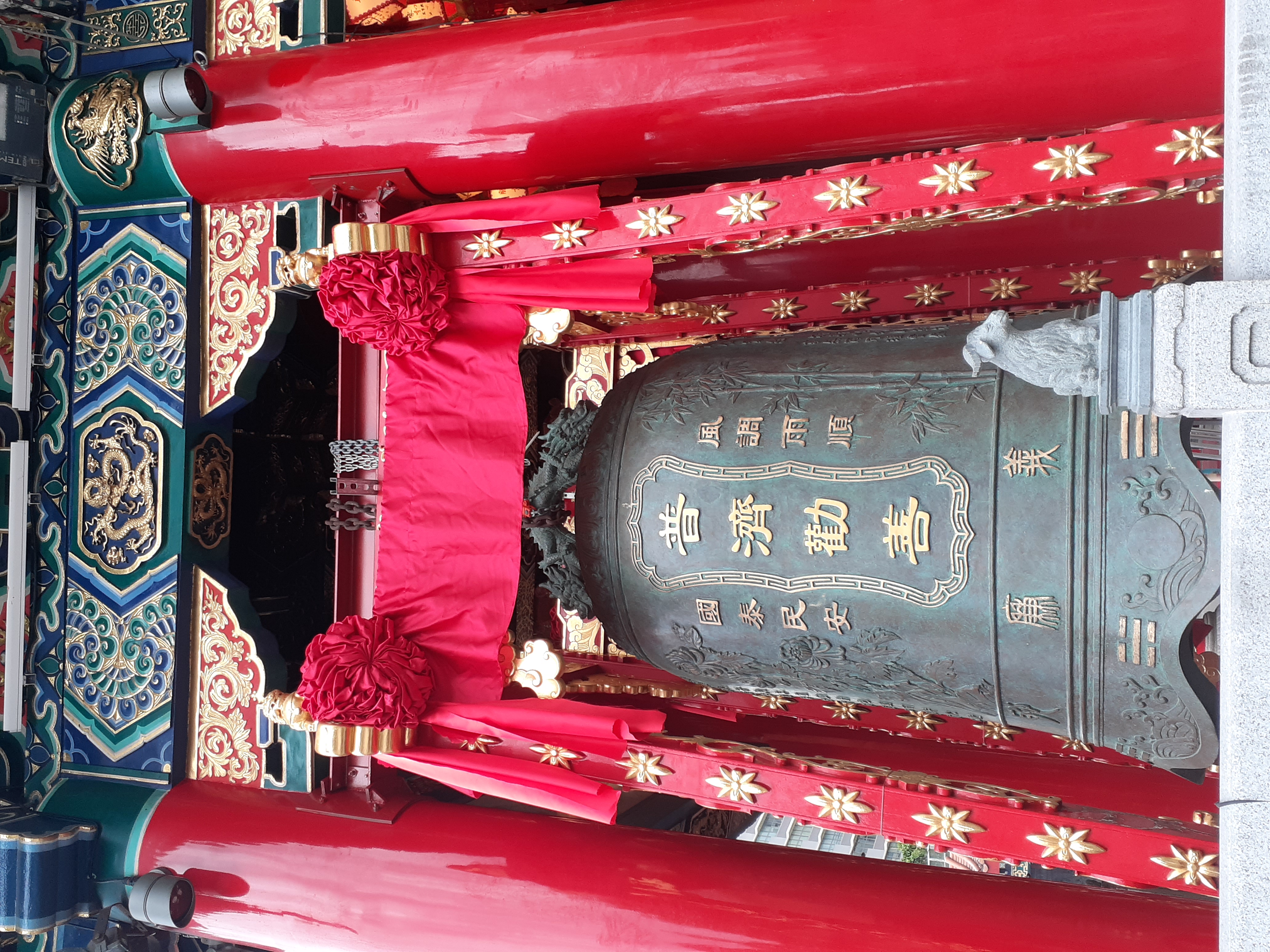
Detail of the ornate bell at Wong Tai Sin Temple in Hong Kong

One of Hong Kong's most important religious sites for Buddhists, Taoists, and Confucianists. Famous for the "kau cim" tradition of shaking fortune-telling sticks from a cylinder. Most crowded on the third day of New Year, which is traditionally considered a day when people might easily say the wrong thing.

Che Kung Temple

Visited on the second day to honor the birthday of General Che Kung, a military commander from the Song Dynasty. Worshippers spin the fan-bladed fortune wheel three times clockwise for good luck.

Lam Tsuen Wishing Trees

In the village of Lam Tsuen (Tai Po), the Hong Kong Well-Wishing Festival runs from February 17 to March 3. Visitors write wishes on joss paper, tie them to oranges, and toss them toward the wishing tree branches. If the paper stays hanging, tradition says the wish will come true!

Year of the Horse Raceday

A distinctly Hong Kong tradition: on the third day of Chinese New Year, horse racing at Sha Tin Racecourse combines thrilling races with festive entertainment, lion dances, and live music. Racing is deeply popular in Hong Kong, and this event is one of the year's biggest racing days, believed to bring good luck for the year ahead.

Superstitions: Wearing red enhances luck. If you're winning, don't wash your hands , you might wash away your good fortune!

Staying Up All Night on New Year's Eve

While the traditional practice of "shousui" (守歲 , keeping watch over the year) involves staying up all night, in Hong Kong this has evolved into a distinctive social tradition, especially among teenagers and young adults:

  • Flower market marathon: Groups of friends visit multiple flower markets across the city throughout the night
  • All-night crowds: The markets remain packed with people well into the early morning hours (2am, 3am, and beyond)
  • Bargain hunting: Vendors dramatically discount flowers and plants as the night progresses
  • Street food crawl: Sampling snacks and treats at different markets
  • Social celebration: Being out with friends through the night as the new year arrives, soaking in the festive energy
  • A unique vibe: The special atmosphere of Hong Kong at night during this celebration

For many Hong Kong teens, this all-night celebration has become a rite of passage , a chance to stay out late, be part of the incredible energy, and start the new year surrounded by friends and festivity.

Hong Kong Foods and Customs

Poon Choi (盆菜)

A traditional multi-layered feast in a large basin, originating from the walled villages of the New Territories. This communal dish has become the go-to for many Hong Kong families during New Year. Ingredients are layered based on their cooking time and value, with the most prized items on top.

Lai See (利是) , Red Packets

In Hong Kong, married people give red packets to unmarried people (not just children!). This includes giving them to service workers like security guards, office cleaners, and building staff as a gesture of goodwill. The seventh day is considered "everyone's birthday," and some people wait until the fifteenth day (Lantern Festival) to open their red packets, believing it accumulates wealth.

Superstitions and Customs

  • Don't clean or sweep during the first three days , you'll sweep away good fortune
  • Don't cut your hair on the first day
  • Wear red for luck
  • Avoid discussing bad news or using words associated with death or misfortune
  • Accept red packets and food offerings from elders graciously

The Hong Kong Blend

What makes Hong Kong's celebration unique is how it weaves together:

  • Cantonese traditions: Foods, language, customs from southern China
  • International city energy: Performers from around the world, global brands participating
  • Dense urban setting: Celebrations adapted to parks, waterfronts, and busy streets
  • Modern innovations: Technology, social media coordination, contemporary entertainment

For Hong Kong families , whether born there, migrants from mainland China, or part of the global diaspora , these celebrations maintain cultural identity while embracing Hong Kong's unique character as an international metropolis.
🎋 Korean Seollal (설날)

Overview

Traditional Korean foods beautifully arranged for Seollal celebration

Seollal (설날) is one of the most important traditional Korean holidays, marking the first day of the Korean lunar calendar. Unlike the solar New Year on January 1st (신정, Sinjeong), which feels like a regular day off, Seollal is a deeply meaningful family holiday centered on honoring ancestors and strengthening family bonds.

Duration: Three days , the day before, the day of, and the day after Seollal

2026 Date: February 17, 2026 (Year of the Horse 말띠해)

Greeting: 새해 복 많이 받으세요! (Sae-hae bok man-i ba-deu-se-yo!) , "Receive a lot of luck in the New Year!"

Preparation: The Journey Home

Seollal creates one of the year's largest mass migrations in Korea, as people travel from cities back to their hometowns (고향, gohyang). This period, called "Seol traffic," can turn a 2-hour drive into 8 hours. Train and bus tickets sell out weeks in advance, and traveling during this time can be expensive and exhausting , but family reunion is worth the effort.

Pre-Seollal Preparations

  • Deep cleaning: Wiping away bad luck and welcoming good fortune
  • Shopping for ingredients: Markets bustle with activity; food prices often increase due to demand
  • New hanbok: Some families have new traditional Korean clothing (한복) made for the occasion
  • Gift purchasing: Common gifts include ginseng, honey, health products, fruit sets, and department store gift cards

Seollal Morning: Charye (차례)

The day begins with charye (차례), a ceremonial rite to honor ancestors. This is a distinctly Korean practice that sets Seollal apart from other Lunar New Year celebrations.

The Ritual

  • Families set up a low table with meticulously arranged dishes
  • Specific foods are placed in specific positions following traditional rules
  • Family members, dressed in hanbok or neat clothing, bow deeply together
  • The ritual expresses gratitude to ancestors for guidance and protection
  • After the ceremony, the family shares the food together

Note: Christian families often skip ancestral rites but still gather for family meals and celebrations.

The Most Important Dish: Tteokguk (떡국)

Tteokguk, or rice cake soup, is THE essential Seollal food. Eating a bowl of tteokguk symbolizes gaining one year of age , Koreans traditionally count their age by how many Seollals they've experienced, not birthdays alone.

Symbolism in Every Element

  • White rice cakes: Represent purity and a clean, fresh start
  • Oval shape: Resembles yeopjeon (엽전), traditional Korean coins, symbolizing prosperity
  • Clear broth: Represents starting the year with a clean mind and body
  • Long rice cake ropes (before slicing): Signify "expansion of good fortune"

Tteokguk Variations

  • Some regions add mandu (만두, dumplings), creating tteokmanduguk
  • Broth can be made from beef, anchovies, or bone broth
  • Toppings include sliced egg, dried seaweed (gim), green onions, and beef

Other Traditional Foods

Jeon (전) , Savory Pancakes

Crispy, fried pancakes with various fillings:

  • Yukjeon (육전) , beef
  • Guljeon (굴전) , oysters
  • Kimchijeon (김치전) , kimchi
  • Pajeon (파전) , green onion

Served with a spicy soy-vinegar dipping sauce

Other Dishes

  • Japchae (잡채): Glass noodles with vegetables and meat
  • Bulgogi (불고기): Sweet and savory marinated beef
  • Galbi jjim (갈비찜): Braised short ribs in rich sauce
  • Various namul (나물): Seasoned vegetable side dishes (note: no garlic or green onions for ancestral offerings, as these are believed to chase away spirits)
  • Yaksik (약식): Sweet rice with chestnuts, jujubes, and pine nuts
  • Sikhye (식혜) and Sujeonggwa (수정과): Traditional sweet beverages

Sebae (세배): The New Year's Bow

After the morning meal, younger family members perform sebae (세배) , a deep, formal bow to their elders.

How It Works

  • Children and younger adults bow deeply, placing their hands together
  • They say "새해 복 많이 받으세요!" (Happy New Year / Receive much luck!)
  • Elders offer blessings, advice, and wishes for the new year
  • Children receive sebaetdon (세뱃돈) , New Year's money in envelopes

Kids' perspective: Children often compete over who received the most sebaetdon! There's a running joke that Korean moms used to "manage" (keep) this money, and when adults ask for it back years later, mothers claim it's gone.

Traditional Games and Activities

  • Yutnori (윷놀이): A board game played with wooden sticks (featured in "Squid Game")
  • Go-stop: A card game
  • Jegichagi: Kicking a paper shuttlecock
  • Yeonnaligi: Kite flying
  • Neolttwigi: Seesaw jumping

Modern Adaptations

  • Simplified ancestral rites: Some families conduct shorter ceremonies with fewer dishes
  • Casual clothing: Many younger people wear modern clothes instead of hanbok
  • Purchased foods: Busy families buy pre-made tteokguk and other dishes
  • Alternative celebrations: Some families vacation during Seollal instead of traveling home
  • Cost concerns: Gift-giving pressure has increased, especially with the 50,000 won bill in circulation

In Korean-American Communities

For Korean-Americans, Seollal serves as an important connection to heritage. Some families maintain traditional practices like charye and wearing hanbok, while others create adapted celebrations that blend Korean and American elements. Korean cultural centers often host public Seollal events with performances, traditional games, and food tastings.

The holiday takes on additional meaning in diaspora , it becomes not just a New Year celebration, but a deliberate act of cultural preservation and transmission to children growing up between two cultures.

🌸 Vietnamese Tết (Tết Nguyên Đán)

Overview

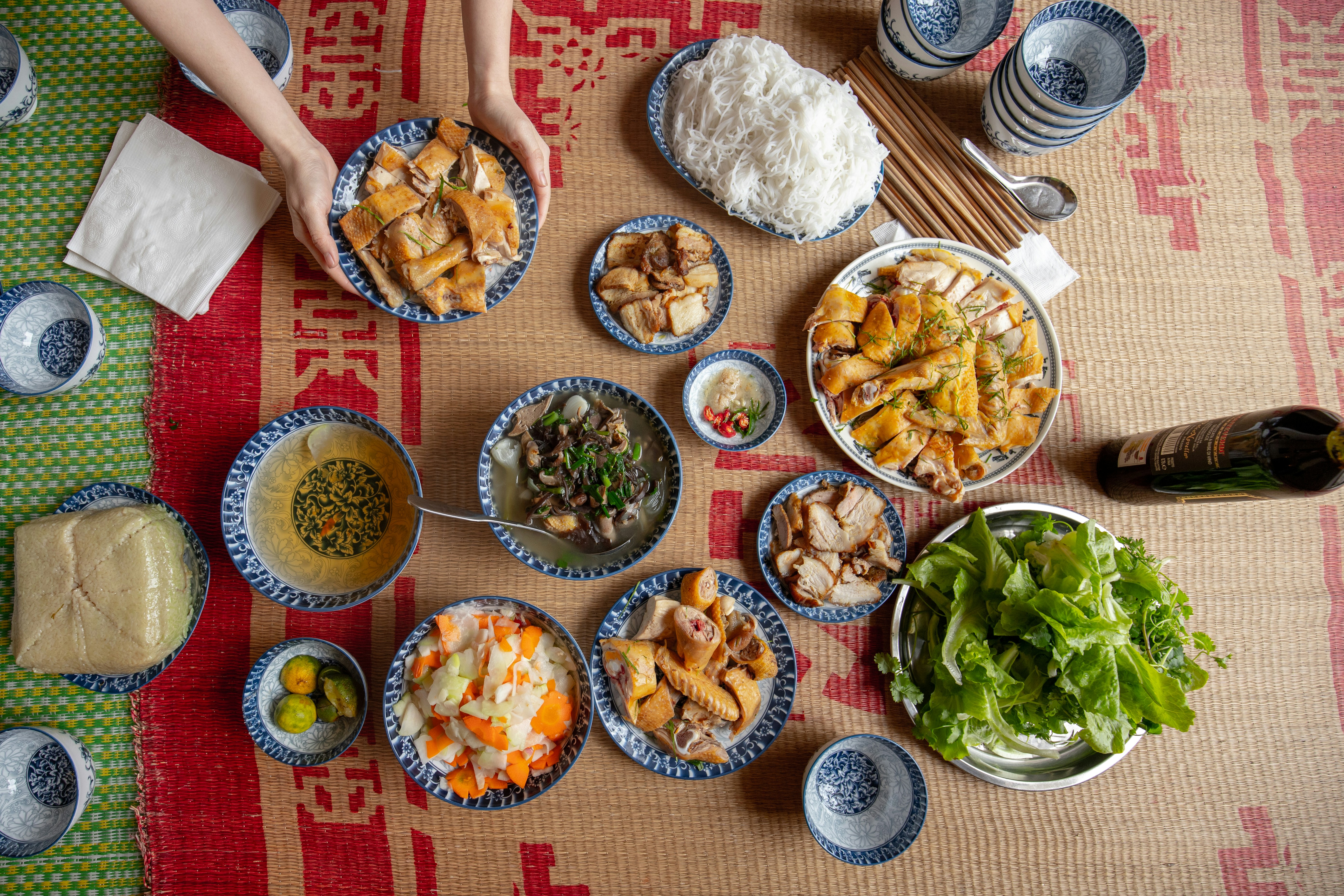
Traditional Vietnamese Tet foods displayed on a festive table

Tết Nguyên Đán (often shortened to Tết) is the most significant festival in Vietnamese culture. The name means "first morning of the first day," marking the beginning of a new lunar period. In Vietnamese, "to celebrate Tết" is expressed as "ăn Tết" , literally "to eat Tết" , highlighting how central food is to this celebration.

Duration: Traditionally 7 days, though many celebrations extend longer

2026 Date: February 17, 2026 (Year of the Horse Năm Ngọ)

Greeting: Chúc Mừng Năm Mới! (chook moong nam moy) , "Happy New Year!"

Preparation: Welcoming Ancestors and Guests

The weeks before Tết are filled with preparation, as families ready themselves to welcome both ancestor spirits and living guests into spotlessly clean, beautifully decorated homes.

Flower Markets

Homes are adorned with symbolic flowering plants:

  • Northern Vietnam: Peach blossoms (Hoa Đào) , pink/red blooms symbolizing spring and renewal
  • Southern Vietnam: Yellow apricot blossoms (Hoa Mai) , golden blooms representing prosperity
  • Kumquat trees: Mini orange trees symbolizing wealth and good fortune

Preparing Traditional Foods

Making Tết foods, especially bánh chưng or bánh tét, is a multi-day family affair. The entire family gathers to prepare these labor-intensive dishes, transforming the work into quality time together.

The Centerpiece: Bánh Chưng and Bánh Tét

These sticky rice cakes are THE essential Tết food, so important they're mentioned in the traditional Tết saying: "Cây nêu, tràng pháo, bánh chưng xanh" (Nêu tree, firecrackers, green bánh chưng).

The Legend of Lang Liêu

According to a 14th-century legend, Prince Lang Liêu created these cakes for his father, the Hùng King, who was searching for a successor. While his brothers brought exotic foods from far away, Lang Liêu made simple cakes from rice, mung beans, and pork , ingredients from the land itself.

He created bánh chưng (square, symbolizing the Earth) and bánh giầy (round, symbolizing the Sky). The king found these not only delicious but also a beautiful representation of respect for ancestors and connection to the land. Lang Liêu became king, and these cakes became traditional Tết foods.

Regional Differences

  • Northern Vietnam: Bánh chưng (square cakes) , more common, traditional
  • Southern & Central Vietnam: Bánh tét (cylindrical cakes) , preferred shape
  • Ingredients: Glutinous sticky rice, mung beans, pork belly, wrapped in banana or dong leaves
  • Cooking time: 8-12 hours of slow boiling over wood fires

The Family Tradition

Making these cakes brings families together around a fire, often overnight. As they tend the boiling pots, family members tell stories, share memories, and strengthen bonds. The cakes aren't just food , they're a vessel for family connection and cultural transmission.

Cultural significance: The green color (from leaves), square/round shapes (earth and sky), and ingredients from the land emphasize the Vietnamese connection to nature and ancestors. Giving these cakes as gifts symbolizes passing on luck and wealth.

Modern Adaptations

Today, smaller urban families often buy bánh from specialty makers rather than making them at home. Craft villages like Tranh Khúc have become famous for their bánh chưng production. However, many families still gather to make them, valuing the tradition over convenience.

Other Essential Tết Foods

Xôi Gấc (Red Sticky Rice)

  • Made with gấc fruit, giving it a vibrant red color
  • Red wards off evil spirits and represents happiness and wealth
  • Slightly sweet taste, served with other dishes

Nem Rán / Chả Giò (Fried Spring Rolls)

  • Crispy rolls filled with pork, shrimp, vegetables, glass noodles
  • Golden color symbolizes good luck and prosperity
  • Served with fresh herbs, lettuce leaves, and fish sauce

Thịt Kho Tàu (Braised Pork with Eggs)

  • Pork belly braised in coconut water with hard-boiled eggs
  • Rich, savory-sweet flavor
  • Keeps well, can be reheated throughout Tết

Other Traditional Dishes

  • Giò lụa and Giò xào: Vietnamese pork sausages
  • Nem chua: Fermented pork , can be eaten raw, grilled, or fried
  • Dưa hành: Pickled spring onions
  • Mứt Tết: Candied fruits and seeds

The Five-Fruit Tray (Mâm Ngũ Quả)

A decorative tray with five types of fruit displayed on the family altar, symbolizing respect for ancestors and wishes for the new year. The fruits vary by region but often include:

  • Watermelon (green outside, red inside , luck and prosperity)
  • Dragon fruit, coconut, papaya, mango, bananas
  • The colors and arrangement are carefully considered for symbolic meaning

Tết Traditions

The First Three Days

These days set the foundation for the entire year. Families focus on joy, avoiding arguments or negative actions.

  • Day 1 , Paternal Side: Most formal day. Visit father's family, offer incense to ancestors, give lì xì (red envelopes). The "first footer" (xông đất) , the first person to enter the house , is believed to determine the family's luck
  • Day 2 , Maternal Side: Visit mother's family. Atmosphere becomes more relaxed
  • Day 3 , Teachers: A Vietnamese proverb says "Father's Tết is the 1st, Mother's Tết is the 2nd, and Teacher's Tết is the 3rd," showing respect for educators

Lì Xì (Lucky Money)

Red envelopes with money given to children, elders, and unmarried adults. The red color and the act of giving both symbolize good luck and blessings for the new year.

Visiting and Greeting

People dress in new clothes (often áo dài for women) and visit extended family, friends, neighbors, and teachers. Common greetings:

  • Chúc Mừng Năm Mới! , Happy New Year!
  • An khang thịnh vượng! , Peace and prosperity!
  • Vạn sự như ý! , May all your wishes come true!

Tết Customs and Beliefs

  • First actions matter: What you do on Tết affects the whole year
  • Avoid negativity: No arguments, no breaking things, no sweeping (you might sweep away luck)
  • Dress well: New clothes symbolize a fresh start
  • Settle debts: Pay what you owe before Tết begins
  • Be generous: Give to those in need

Modern Tết

  • Some families simplify ancestral offerings or skip them entirely
  • Urban professionals may have shorter celebrations due to work
  • Bánh chưng competitions celebrate and preserve tradition
  • Social welfare: Communities donate bánh to families in need
  • Tourism: Major cities host Tết festivals and cultural events

In the Vietnamese Diaspora

For Vietnamese communities in the US, Australia, France, and elsewhere, Tết becomes a powerful connection to heritage. Little Saigon in Orange County, California, hosts major celebrations with parades, lion dances, and street festivals.

Vietnamese-American families often blend traditions: maybe bánh chưng from a specialty shop rather than homemade, or gathering on the weekend nearest to Tết rather than taking time off work. Yet the core meanings , family, ancestors, hope for the future , remain strong.

For children of refugees who fled Vietnam after the war, Tết carries additional layers of meaning: remembering the homeland, honoring ancestors' sacrifices, and ensuring the next generation knows where they come from.

🐅 Zodiac Animals and Cultural Symbolism

Understanding the Zodiac System

Chinese, Korean, and Vietnamese cultures all use a zodiac system with a 12-year cycle, where each year is represented by an animal. However, there are some fascinating differences!

Year Order Chinese (鼠牛虎兔龙蛇马羊猴鸡狗猪) Korean (쥐소호랑이토끼용뱀말양원숭이닭개돼지) Vietnamese
1 Rat Rat (쥐) Rat
2 Ox Ox (소) Water Buffalo
3 Tiger Tiger (호랑이) Tiger
4 Rabbit Rabbit (토끼) Cat
5 Dragon Dragon (용) Dragon
6 Snake Snake (뱀) Snake
7 Horse Horse (말) Horse
8 Goat/Sheep Sheep (양) Goat
9 Monkey Monkey (원숭이) Monkey
10 Rooster Rooster (닭) Rooster
11 Dog Dog (개) Dog
12 Pig Pig (돼지) Pig

Why the Differences?

Vietnam: Cat Instead of Rabbit

There are several theories about why Vietnam has a cat:

  • Linguistic explanation: The Chinese word for rabbit (卯 mǎo) sounds similar to the Vietnamese word for cat (mèo)
  • Cultural relevance: Cats were more important in Vietnamese agricultural life (protecting rice stores from rats) than rabbits
  • Folk stories: Various legends explain why the cat replaced the rabbit in Vietnamese tradition

Vietnam: Water Buffalo Instead of Ox

The water buffalo is central to Vietnamese rice farming culture. This animal represents:

  • Hard work and endurance
  • The agricultural foundation of Vietnamese society
  • Partnership between humans and nature

Teaching About Zodiac Animals

Grades K-1:

  • Focus on the animals themselves , which animals do students know?
  • Create a classroom zodiac with each student's birth year animal
  • Read simple stories about how the zodiac was created
  • Art project: Draw and color your zodiac animal
  • Movement activity: Act out different zodiac animals

Grades 2-3:

  • Discuss personality traits associated with each animal
  • Compare the three systems , why are some animals different?
  • Graph: How many students have each zodiac animal?
  • Research: Famous people born under each animal
  • Creative writing: "If I were born in a different year, what animal would I be?"
  • Critical thinking: How do these animals reflect what was important in each culture?

Grades 4-5:

  • Compare zodiac systems with other cultural calendars (Western zodiac, Mayan calendar)
  • Investigate: Why do cultures create systems to organize time?
  • Analyze the cultural significance of animal choices
  • Debate: Do personality descriptions match reality, or is it just for fun?
  • Research project: How has the zodiac influenced art, literature, and popular culture?

Important Teaching Notes

  • Present the zodiac as a cultural tradition, not a scientific fact
  • Some students' families may not believe in or follow zodiac traditions
  • Avoid statements like "You ARE a tiger" , instead say "In this system, people born in [year] are associated with the tiger"
  • Respect that not all Asian families care about or celebrate zodiac traditions
👨‍👩‍👧‍👦 Family Reunion and Intergenerational Connections

The Heart of the Celebration

Across Chinese, Korean, and Vietnamese traditions, Lunar New Year is fundamentally about family. This isn't just a nice idea , it's so important that hundreds of millions of people undertake difficult, expensive journeys to be with family for this one day of the year.

The Great Migration Home

China: Chunyun (春运)

The world's largest annual human migration. During the 40-day Spring Festival travel season, billions of trips are made as workers return from cities to rural hometowns. Train stations overflow, tickets sell out instantly, and what's normally a few hours can become a day-long journey. Yet people make this trip because family reunion is non-negotiable.

Korea: Seol Traffic

Major highways become parking lots as people drive from Seoul and other cities back to their hometowns (고향, gohyang). A two-hour drive can take eight hours or more. Bus and train tickets sell out weeks in advance. Despite the difficulty and expense, over 80% of Koreans travel for Seollal.

Vietnam: Về Quê (Going Home)

In the days before Tết, cities empty out as people return to their ancestral villages. Motorbikes loaded with gifts, flowers, and family members flood the highways. For many Vietnamese, particularly those who migrated for work, this is the only time they'll see their extended family all year.

Why Family Reunion Matters So Much

Confucian Values

All three cultures were influenced by Confucian philosophy, which emphasizes:

  • Filial piety (孝): Respect and care for parents and elders
  • Family hierarchy: Understanding one's role and responsibilities within the family structure
  • Continuity: The family line extends from ancestors through current generations to descendants
  • Collective over individual: Personal desires take secondary importance to family needs

Ancestor Veneration

The belief that ancestors watch over and influence their descendants' lives makes Lunar New Year a time when:

  • The living and the dead are connected through ritual and remembrance
  • Families express gratitude for what ancestors provided
  • The past, present, and future are linked in one continuous family story

Intergenerational Activities and Traditions

Elders Teaching the Young

  • Food preparation: Grandmothers teaching grandchildren to wrap dumplings, make tteokguk, or wrap bánh chưng
  • Ritual practices: Showing children proper bowing techniques, explaining altar arrangements
  • Stories and history: Sharing family stories, explaining why traditions matter
  • Language preservation: Teaching traditional greetings, songs, and phrases

Youth Showing Respect

  • Formal bows (sebae in Korean): Physical embodiment of respect
  • Serving elders first: At meals, younger family members wait for elders to eat first
  • Listening to advice: Elders offer wisdom and blessings for the new year
  • Helping with preparations: Younger generations assist with cleaning, cooking, decorating

Shared Activities

  • Playing games together: Mahjong in China, yutnori in Korea, traditional games in Vietnam
  • Watching entertainment: Spring Festival Gala, special TV programs
  • Visiting relatives: Multiple generations traveling together
  • Taking family photos: Documenting the gathering

Modern Challenges

Economic Pressures

  • Travel costs during peak season
  • Expected gifts for all family members
  • Pressure to demonstrate financial success
  • Food preparation expenses

Changing Family Structures

  • Smaller families mean fewer people to share preparation work
  • Nuclear families living far from extended family
  • Divorce and blended families complicating traditional hierarchies

Generational Gaps

  • Younger generations may not speak ancestral languages fluently
  • Different values about gender roles and family expectations
  • Technology creating both connection (video calls) and distance (phones at dinner)

Diaspora Experiences

  • Families separated by oceans, making reunion impossible
  • Children growing up in Western contexts, questioning traditional practices
  • Having to take time off work/school for holidays not recognized in their country of residence
  • Navigating between heritage culture and adopted culture

Teaching About Family Connections

Activity: Family Tree Project

  • Have students create family trees showing three or four generations
  • Encourage them to interview older family members about family stories
  • Discuss: How do families pass down traditions? What stories do your families tell?
  • Sensitivity note: Be aware that some students have complex family situations (adoption, foster care, estrangement). Allow flexibility in how they define "family"

Discussion Questions

  • K-1: "Who are the older people in your family? How do you show them you care?"
  • 2-3: "Why do you think families make such big efforts to be together for this holiday?" "What traditions does your family have? Who taught them to you?"
  • 4-5: "How might it feel to be separated from your family during important holidays?" "Why might traditions change over time? Is that okay?" "How do immigrant families balance old traditions with new contexts?"

Connecting to Students' Lives

While not all students celebrate Lunar New Year, they can connect to its themes:

  • Most families have special times for gathering (holidays, birthdays, reunions)
  • Many students have special relationships with grandparents or elders
  • Families of all backgrounds pass down traditions, recipes, and stories
  • Everyone understands the feeling of hope for a fresh start
📚 Age-Appropriate Teaching Approaches

Overview

Teaching about Lunar New Year requires differentiation based on developmental stages. Younger students need concrete, sensory experiences, while older students can handle comparative analysis and abstract concepts.

Grades K-1: Sensory and Concrete

Focus Areas:

  • Colors, especially red and gold
  • Foods students can see, smell, and (with permission/allergy awareness) taste
  • Animals of the zodiac
  • Family gatherings
  • Celebration and happiness

Sample Activities:

  • Color exploration: "Red means luck and happiness in these celebrations. What colors are special to your family?"
  • Zodiac animals: Learn the 12 animals, act them out, find out students' birth year animals
  • Counting with red envelopes: Practice counting money in pretend red envelopes
  • Art projects: Make paper lanterns, dragon puppets, or red envelope crafts
  • Story time: Read picture books about Lunar New Year celebrations
  • Music and movement: Listen to celebration music, try simple dragon dance movements

Language Support:

  • Learn basic greetings in Chinese, Korean, or Vietnamese
  • Keep it simple: "Happy New Year!" in each language
  • Use visuals to support vocabulary (pictures of foods, decorations)

Discussion Questions:

  • "What special days does your family celebrate together?"
  • "How do you think families feel when they see each other after a long time?"
  • "Why might red be a lucky color?"

Grades 2-3: Symbolism and Comparison (PRIMARY FOCUS)

Focus Areas:

  • Symbolic meanings of foods, colors, and traditions
  • Comparing three cultural traditions
  • Understanding why family reunion is important
  • Learning about diaspora experiences
  • Recognizing both similarities and unique differences

Sample Activities:

  • Comparison charts: Venn diagrams showing similarities and differences between Chinese, Korean, and Vietnamese celebrations
  • Symbolism investigation: "Why is fish important in Chinese New Year? Why do Korean rice cakes look like coins?"
  • Food studies: Examine sticky rice, discuss why it's important in multiple cultures
  • Zodiac deep dive: Compare the three zodiac systems, discuss why Vietnam has a cat instead of a rabbit
  • Map work: Locate China, Korea, and Vietnam; discuss migration patterns
  • Interview project: If families celebrate, students can interview them about their traditions
  • Creative writing: "Imagine you're traveling a long way to see your family for New Year. How do you feel?"

Discussion Questions:

  • "Why do you think so many cultures celebrate the new year with special foods?"
  • "What does it mean when we say food has 'symbolic meaning'?"
  • "How are Chinese Spring Festival, Korean Seollal, and Vietnamese Tết similar? How are they different?"
  • "Why might families travel very far just to be together for one day?"
  • "How might celebrating Lunar New Year be different if your family lives in America instead of Asia?"
  • "What traditions does your family have that have special meanings?"

Cross-Curricular Connections:

  • Math: Lunar calendar vs. solar calendar, counting years in the zodiac cycle, money in red envelopes
  • Science: Moon phases, why we have different calendar systems
  • Social Studies: Map skills, cultural geography, migration
  • Language Arts: Reading multicultural literature, learning greetings, writing comparative essays
  • Art: Creating culturally-informed artwork, understanding symbolism in visual culture

Grades 4-5: Historical Context and Complex Concepts

Focus Areas:

  • Historical development of traditions
  • How traditions change over time and across borders
  • Diaspora experiences and identity
  • Economic and social aspects of celebration
  • Critical analysis of cultural representation

Sample Activities:

  • Research projects: Deep dives into specific aspects (history of zodiac, evolution of a particular tradition, diaspora communities)
  • Critical media analysis: How is Lunar New Year represented in media? Is it accurate? Respectful? Complete?
  • Economics study: Analyze the economic impact of Lunar New Year (travel industry, gift-giving, time off work)
  • Interview and oral history: Students interview community members about their experiences
  • Comparative religion/philosophy: Explore how Confucian values, Buddhism, Taoism, and other beliefs influence these celebrations
  • Modern adaptations: Investigate how technology and globalization change traditions

Discussion Questions:

  • "How have Lunar New Year traditions evolved over hundreds of years?"
  • "Why might traditions be different in diaspora communities compared to in Asia?"
  • "What challenges might families face in maintaining traditions across generations?"
  • "How do economic factors influence who can celebrate and how?"
  • "What happens when traditional expectations conflict with modern values?"
  • "Why is it important to learn about these celebrations from people within these communities rather than making assumptions?"

Complex Topics:

  • Gender roles in traditional celebrations and how they're changing
  • Refugee and immigrant experiences maintaining culture in new countries
  • The economics of celebration (gift-giving pressure, travel costs, food prices)
  • How younger generations negotiate between respect for tradition and personal values
🎨 Classroom Activities and Lesson Ideas

This Month™ Lunar New Year Crafts & Activities

Our partner site, This Month™, offers several hands-on crafts and interactive games specifically designed for Lunar New Year celebrations. These activities build fine motor skills, math proficiency, cultural understanding, and creativity:

🧧 Add Up Lucky Money! Interactive Math Game (NEW 2026)

An interactive double-digit addition game featuring red packets (hongbao/lai see). Students practice the partial sums strategy by selecting two red packets and visually breaking numbers into tens and ones. The game includes grouped packets of 10, step-by-step addition practice, and immediate feedback.

Skills: Double-digit addition without regrouping, partial sums strategy, place value understanding, visual math representation

Features: Two difficulty levels (Easy: $10-$20, Medium: $20-$44), festive music, printable assessment receipts with standards alignment

Play Add Up Lucky Money! →

🐴 Year of the Horse Craft (2026)

A cut-and-paste activity perfect for celebrating the current Year of the Fire Horse. Students develop small motor control, hand-eye coordination, spatial reasoning, focus, and patience while creating a festive poster.

Skills: Fine motor skills, following multi-step directions, creative expression

Gallop into the Year of the Fire Horse →

🌸 Spring Character "Chun" Craft

Create a 3D representation of the Chinese character "春" (Chun/Cheung) meaning "Spring." This craft includes an interactive video tutorial with pronunciation in both Mandarin and Cantonese, connecting students to the deeper cultural meaning of renewal, growth, and blossoming associated with the Spring Festival.

Skills: World language learning, understanding symbolism, cultural connections to social-emotional learning themes

Spring as a Symbol of Renewal & Growth →

🏮 Paper Lantern Craft

Traditional paper lantern making activity that connects to the Lantern Festival (元宵节) celebrated on the 15th day of Lunar New Year. A classic craft that completes Lunar New Year education.

Skills: Following directions, measuring, understanding cultural symbols

Lantern Craft Activity →

🐍 Year of the Snake Craft (2025)

Paper puppet snake craft from last year's celebration. Still a valuable resource for teaching about the zodiac cycle and can be adapted for any year's zodiac animal.

Year of the Snake Paper Puppet →

Cross-Curricular Activities

Language Arts

Read Alouds and Literature Circles

  • K-1: Simple picture books showing celebrations
  • 2-3: Books comparing different traditions, stories with cultural depth
  • 4-5: Novels featuring Lunar New Year, poetry from Chinese, Korean, or Vietnamese poets

Important: Choose books by authors from these cultures (own voices), not books about these cultures written by outsiders when possible.

Writing Activities

  • Thank you letters: Write to someone who has taught you something important (connecting to respect for teachers in Tết)
  • New Year wishes: Write wishes for classmates or family members
  • Recipe writing: Document a family recipe with symbolic meaning
  • Compare/contrast essays: Analyzing similarities and differences between the three traditions
  • Creative fiction: Imagine experiencing Lunar New Year in a different time or place

Mathematics

🧧 This Month™ Interactive Game: Add Up Lucky Money!

An engaging digital game where students practice double-digit addition by selecting and adding amounts in red envelopes. Perfect for celebrating Lunar New Year while building math skills!

Grades 2-3 focus: Introduces partial sums strategy with visual representations

Play the Game →

Calendar Mathematics

  • Calculate the difference between lunar and solar calendars
  • Predict when Lunar New Year will fall in upcoming years
  • Create timeline showing the 15-day celebration period
  • Graph: Zodiac animals represented in the classroom

Money and Economics

  • Calculate red envelope amounts (addition, multiplication)
  • Budget for a family celebration (if given X dollars, what would you buy?)
  • Compare currency (Chinese yuan, Korean won, Vietnamese dong, US dollars)
  • Graph travel costs or food price increases during celebration season

Science

Astronomy

  • Study moon phases and lunar cycles
  • Compare lunar and solar calendar systems
  • Observe the moon daily leading up to Lunar New Year
  • Research: Why did ancient cultures use lunar calendars?

Food Science

  • Explore properties of sticky rice vs. regular rice
  • Investigate fermentation (in foods like kimchi or nem chua)
  • Study food preservation methods used for long celebrations

Social Studies

Geography

  • Locate China, Korea, and Vietnam on maps
  • Compare climates and how they affect celebrations
  • Map diaspora communities (Where do people who celebrate live in the US/world?)
  • Study migration patterns for family reunions

Cultural Studies

  • Compare Lunar New Year with other new year celebrations worldwide
  • Investigate how traditions change in diaspora communities
  • Study the influence of Confucian values on family structures
  • Research the historical Silk Road and cultural exchange

Art

Visual Arts

  • Paper cutting: Create window decorations inspired by Chinese paper-cuts (窗花)
  • Lantern making: Construct paper lanterns (research different regional styles)
  • Dragon craft: Collaborative classroom dragon for dragon dance
  • Zodiac art: Draw and paint zodiac animals with symbolic elements
  • Calligraphy: Try Chinese, Korean, or Vietnamese calligraphy (invite a guest teacher if possible)
  • Flower arrangement: Study symbolic flower arrangements (peach blossoms, yellow apricot, kumquats)

Cultural sensitivity note: Frame these as "inspired by" rather than replicating sacred or significant cultural items. Explain the meanings behind symbols before crafting.

Music and Movement

Musical Exploration

  • Listen to traditional Chinese, Korean, and Vietnamese music
  • Compare traditional instruments
  • Learn simple traditional songs (with translations)
  • Watch performances of lion dances, dragon dances, and traditional performances

Movement Activities

  • Practice simple dragon dance movements
  • Learn the formal bow (sebae) with proper respect and context
  • Play adapted versions of traditional games (yutnori, jegichagi)

Whole Class Projects

Cultural Fair

Create stations representing each culture:

  • China station: Spring couplets, zodiac information, red envelope making
  • Korea station: Tteokguk information, yutnori game, hanbok display
  • Vietnam station: Five-fruit tray, bánh chưng information, flower displays

Invite families, administrators, and other classes to visit.

Video Documentary

  • Small groups research different aspects of Lunar New Year
  • Create short video presentations
  • Compile into a class documentary
  • Share with families and school community
💭 Discussion Questions by Grade Level

Guiding Principles for Discussions

  • Create a safe space where all students feel comfortable sharing
  • Validate diverse family experiences
  • Avoid "show and tell" that puts students on the spot as cultural representatives
  • Frame questions to encourage thinking, not just recall
  • Connect to students' own experiences when possible

Grades K-1

  • "What colors do you see in these celebrations? Why do you think red is special?"
  • "These families eat special foods together. What special foods does your family share?"
  • "How do you think children feel when they get a red envelope with money inside?"
  • "Why might families want to be together for New Year?"
  • "If you could be one of the zodiac animals, which would you choose? Why?"
  • "What does 'good luck' mean to you?"
  • "How do you help your family get ready for special days?"

Grades 2-3

  • "We learned that fish, dumplings, and rice cakes all have special meanings. Why do you think people give foods symbolic meanings?"
  • "How are Chinese Spring Festival, Korean Seollal, and Vietnamese Tết the same? How are they different?"
  • "Why might families travel for many hours just to eat one meal together?"
  • "What does it mean to show respect to older family members? How do different cultures show respect?"
  • "If your family moved far away from your relatives, how might you keep your family traditions alive?"
  • "Why do you think Vietnam has a cat in their zodiac instead of a rabbit like China and Korea?"
  • "What traditions does your family have that came from older generations? Who taught them to you?"
  • "How might celebrating Lunar New Year be different if you live in America instead of Asia?"
  • "Why do you think it's important to honor ancestors?"
  • "What does 'fresh start' mean? Why might people want a fresh start at the new year?"

Grades 4-5

  • "How have Lunar New Year traditions changed over hundreds of years? Why do traditions change?"
  • "What challenges might families in diaspora communities face when trying to celebrate traditional holidays?"
  • "We learned that travel for Lunar New Year is expensive and difficult. Why do people do it anyway?"
  • "How might younger generations feel about traditions that are important to their elders? What happens when they disagree?"
  • "Why is it problematic to call all Lunar New Year celebrations 'Chinese New Year'?"
  • "How do economic factors affect who can celebrate and how elaborate their celebrations can be?"
  • "What role does food play in cultural identity and family connection?"
  • "How might second-generation immigrants balance respect for their heritage culture with being part of their adopted culture?"
  • "Why do you think so many different cultures celebrate the new year with themes of renewal, family, and hope?"
  • "What responsibility do we have to represent other cultures accurately and respectfully?"
  • "How can we appreciate and learn from other cultures without appropriating them?"
📖 Resources for Educators

Recommended Books

Picture Books (K-2)

  • "Bringing in the New Year" by Grace Lin , Chinese-American family's celebration
  • "The Runaway Rice Cake" by Ying Chang Compestine , Korean Seollal story
  • "Tết: The New Year" by Phung Nguyen Quang , Vietnamese Tết traditions
  • "Ruby's Chinese New Year" by Vickie Lee , Family gathering story

Chapter Books (3-5)

  • "The Year of the Rat" by Grace Lin , Chinese-American girl's experiences
  • "Where the Mountain Meets the Moon" by Grace Lin , Fantasy with cultural elements
  • "Pie in the Sky" by Rmy Lai , Chinese identity

Videos and Media

  • PBS Learning Media: Lunar New Year videos from multiple cultural perspectives
  • National Geographic Kids: Cultural celebration videos
  • YouTube: Search for authentic family vlogs showing real celebrations (verify appropriateness first)
  • Chinese Spring Festival Gala clips: Performance and cultural entertainment

Online Resources

  • Asia Society: Educational resources about Asian cultures
  • Smithsonian Asian Pacific American Center: Cultural resources and lesson plans
  • The Conversation: Scholarly articles on cultural celebrations
  • Local cultural organizations: Korean Cultural Centers, Chinese American museums, Vietnamese cultural associations

Guest Speakers

The best resource is authentic voices from these communities:

  • Contact local cultural organizations to find speakers
  • Invite family members who celebrate to share their experiences
  • Connect with university international student organizations
  • Reach out to local Asian-owned restaurants for cultural consultants

Professional Development

  • Attend workshops on teaching about Asian cultures
  • Read scholarship on Asian-American experiences
  • Follow educators from these communities on social media
  • Engage with primary sources from these cultures (literature, films, music)

This Month™ Educational Resources

Developed by KMS, EdD , Culturally Responsive Educational Content

Sources: The Conversation articles by Dr. Jingjing Ruan and Catherine Chabert (Cardiff University), scholarly research on Korean Seollal and Vietnamese Tết, community voices, and cultural experts

Updated February 2026